Toronto Star
· collected 2026-09-25 · by Seth Borenstein And Anton L. Delgado The Associated Press
Story summary
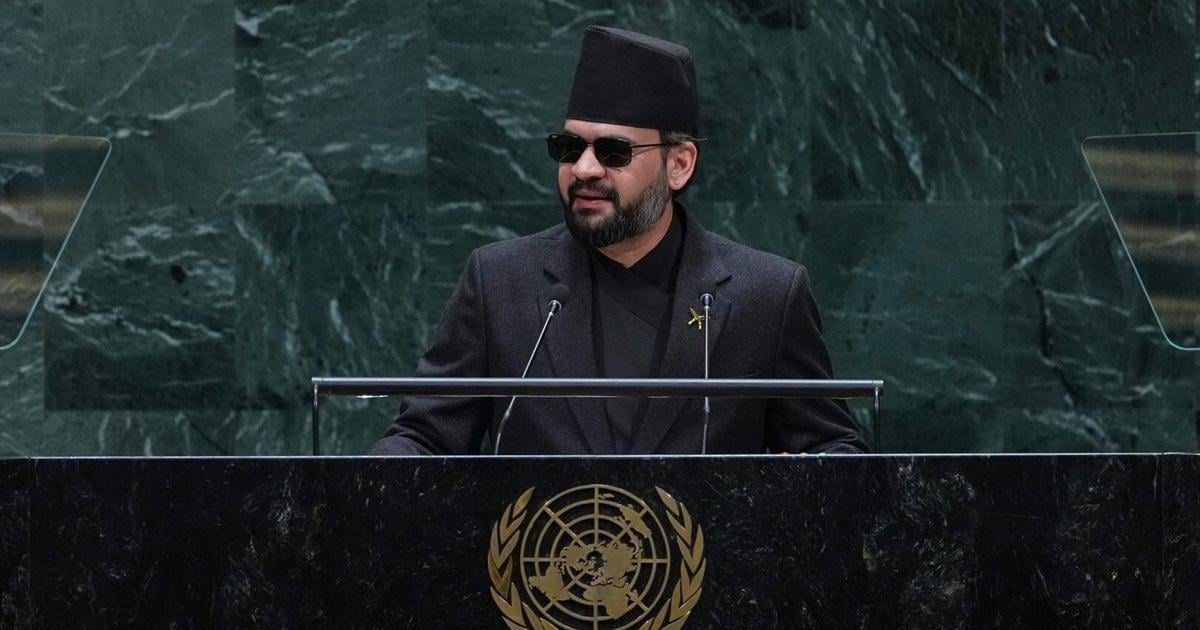
Nepal's Prime Minister Balendra Shah, addressing the 81st session of the UN General Assembly on September 24, 2026, proposed establishing a Himalayan Climate Resilience Mechanism led by Nepal, India, and China. The initiative aims to enhance cooperation in sharing satellite data, monitoring glacial lakes, and strengthening early-warning systems to address climate-related disasters, particularly after the devastating flash floods that killed over 1,450 people and displaced thousands in August 2026.
Shah emphasized these measures as a response to environmental challenges affecting mountainous regions. The proposed mechanism would help mitigate risks from glacial lake outburst floods (GLOFs) and other climate-related threats impacting millions of people across the Himalayan region.
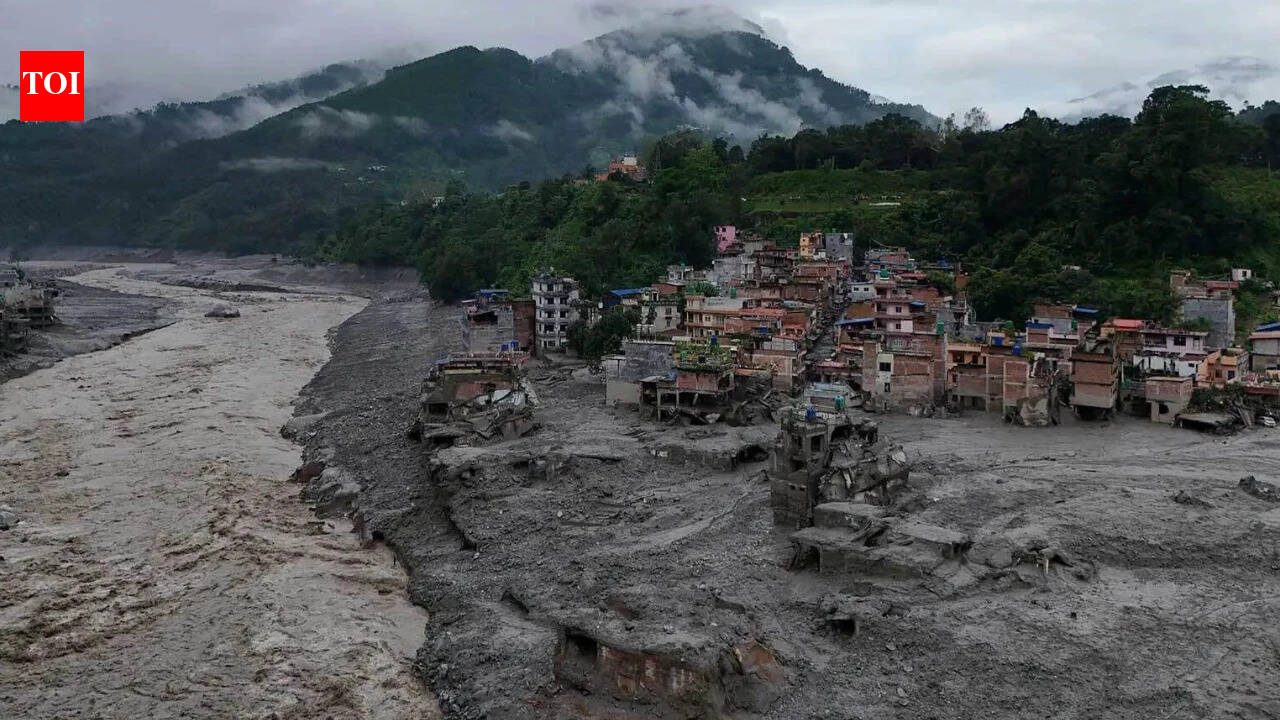
The floods, triggered by a glacial and rock collapse on the Nepal-China border, severely impacted tourism and local economies, with hotels and trekking companies experiencing significant cancellations. According to tour planner Pushpraj Rimal in Kathmandu, "It is still a lockdown kind of situation," reflecting ongoing challenges for recovery.
Additionally, there are pressing needs for humanitarian aid and long-term rebuilding efforts. Dr. Nimesh Dhungana from the University of Manchester's HCRI highlighted the importance of governance and accountability in disaster response and recovery processes. With around 5,285 people still missing and numerous displaced families struggling to find stable housing, initiatives like Shah’s proposal are crucial for sustainable development and resilience against future disasters. The mechanism aims not only at immediate relief but also at long-term planning to protect communities from similar catastrophic events in the future.
Written for “Nepal Floods Climate Impact” on 2026-10-05,
grounded in this article and the 20 other(s) covering the same event.
Nepal’s prime minister scolded fellow world leaders Thursday, saying the nation’s recent deadly flood reminds a warming world that climate change keeps hurting people who didn’t cause the crisis but now need help.
asserted
who → scold → help
And I ask you today: Have you really heard that warning?” Nepali Prime Minister Balendra Shah said at the U.N. General Assembly on Thursday night.
asserted
Shah → ask → night
“Nearly three years ago, standing in the shadow of our Mount Everest, the secretary-general of the United Nations warned about humanity about the madness and impending climate disaster.”
asserted
general → stand → madness
“That cry from the rooftop of the world was not heard enough,” Shah said.
asserted
Shah → hear → world
“We in Nepal heard it.
asserted
We → hear → it
Our communities heard it.
asserted
communities → hear → it
Scientists around the world heard it.
asserted
Scientists → hear → it
They repeated it with evidence.
asserted
They → repeat → evidence
But we, the political leaders, have been negligent to translate those warnings in action at the speed and scale that the vulnerable people require.
asserted
people → translate → that
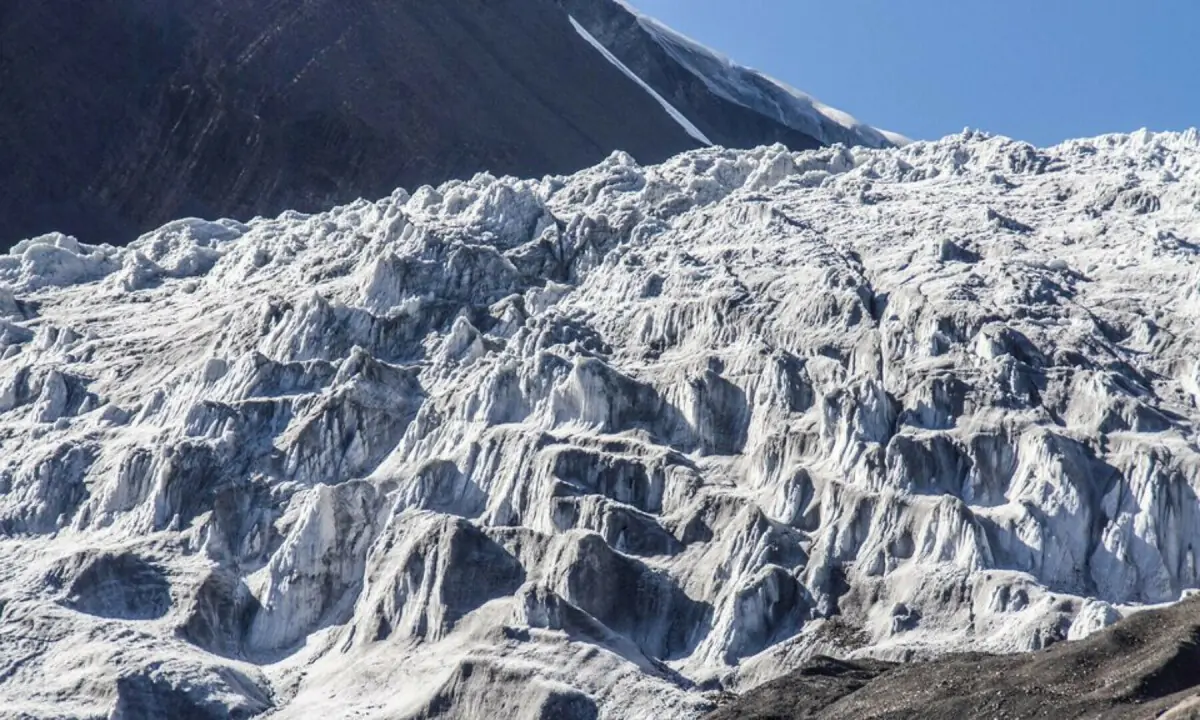
International scientists have connected melting permafrost from climate — caused by burning coal, oil and gas — to the instability of the glacier, which partly collapsed and triggered a massive flood that has killed at least 1,400 people with even more still missing.
asserted
more → connect → people
Shah said that Nepal contributed less than one-tenth of 1% of the heat-trapping gases behind climate change.
asserted
Nepal → say → change
About 99% of Nepal’s electricity comes from hydropower, and many workers were trapped in tunnels by the flooding.
asserted
workers → come → flooding
“We did not create this crisis, yet we are paying a colossal price for it,” said Shah, 36, a former rapper and engineer who is the youngest head of government to address the General Assembly this year.
asserted
who → create → Assembly
“Our glaciers are retreating, our mountain slopes are becoming unstable, our rivers are becoming less predictable, and every major disaster threatens to erase years of development.”
asserted
disaster → retreat → development
He said climate change ‘does not recognize borders’
asserted
change → say → borders
In a black Dhaka topi, a traditional brimless Nepali hat, Shah spoke while wearing his signature dark sunglasses, which he uses for medical reasons.
asserted
he → speak → reasons
He said “the tragic consequences of a warming climate” tells the world that “climate change does not recognize borders.
asserted
change → say → borders
Glaciers and floods do not travel with stamps and passports.”
asserted
Glaciers → travel → stamps
Subeksha Khadka, a humanitarian and former Miss Nepal International, in an online interview, praised Shah’s speech and echoed the warning: “This time Nepal has been on the target, but it could be anyone.
uncertain
it → praise → target
So it’s time to act.”
asserted
it → ’ → ?
Shah didn’t ask for a specific amount in aid, but he called the international financial aid system inadequate and too bureaucratic.
asserted
he → ask → system
This included a loss and damage fund agreed upon a few years ago for poor nations hit by climate disasters not of their own making.
asserted
This → include → making
“Climate finance must not become another bureaucratic maze through which vulnerable countries spend years” maneuvering through when they need help.
asserted
they → become → help
“When the house is burning, we do not ask a family to complete 50 forms.
asserted
we → burn → forms
We act.
asserted
We → act → ?
This is what climate justice means.”
asserted
justice → mean → what
He exhorted the General Assembly to act on relief, rehabilitation, reconstruction — which are traditional international help concepts — but also “responsibility, reparation, resilience.”
asserted
which → exhort → relief
Reparation is a word and an issue that rankles industrial western nations like the United States, which is historically the world’s biggest carbon emitter.
asserted
which → rankle → States
He says it’s ‘not an isolated disaster’
asserted
it → say → ?
Over the past 75 years, the United States has spewed about 1,500 times more carbon into the air than Nepal has, according to the Global Carbon Project, a group of scientists that track greenhouse gas emissions by countries.
uncertain
that → spew → countries
Historical emissions matter because carbon dioxide stays in the atmosphere for more than a century trapping heat.
asserted
dioxide → matter → heat
The U.S. this week announced $31 million in aid to Nepal for flood recovery, which bring America’s total financial help up to $36 million.
asserted
which → announce → million
It’s less than 1% of what they need.
asserted
they → ’ → what
“Preliminary assessments indicate that from recent disaster alone, Nepal has suffered loss of over $5 billion, nearly 15% of our GDP and a third of our annual budget,” Shisir Khanal, Nepal’s foreign minister, said Wednesday at the UN climate summit.
asserted
Khanal → indicate → summit
It is a development emergency dismantling years of progress.
asserted
It → dismantle → progress
It is a justice crisis exposing the inequities of global climate action and it is an existential crisis striking at the very survival of our communities and our future.”
asserted
it → expose → communities
“What happened in Nepal is not an isolated disaster but a preview of what awaits many vulnerable nations,” Khanal said.
asserted
Khanal → happen → nations
Former United States Vice President Al Gore said in an interview that Nepal’s disaster shows that the climate crisis “was getting worse much faster” than people can handle and foreshadows problems with melting glaciers that feed all of the great rivers of Asia, putting the water supply of 2 billion people at risk.
___
Delgado reported from New York.
asserted
Delgado → say → York
Associated Press writer Jennifer McDermott contributed to this report.
asserted
McDermott → contribute → report
 The Aporia