Story summary
Nepal's Prime Minister Balendra Shah, addressing the 81st session of the UN General Assembly on September 24, 2026, proposed establishing a Himalayan Climate Resilience Mechanism led by Nepal, India, and China. The initiative aims to enhance cooperation in sharing satellite data, monitoring glacial lakes, and strengthening early-warning systems to address climate-related disasters, particularly after the devastating flash floods that killed over 1,450 people and displaced thousands in August 2026.
Shah emphasized these measures as a response to environmental challenges affecting mountainous regions. The proposed mechanism would help mitigate risks from glacial lake outburst floods (GLOFs) and other climate-related threats impacting millions of people across the Himalayan region.
The floods, triggered by a glacial and rock collapse on the Nepal-China border, severely impacted tourism and local economies, with hotels and trekking companies experiencing significant cancellations. According to tour planner Pushpraj Rimal in Kathmandu, "It is still a lockdown kind of situation," reflecting ongoing challenges for recovery.
Additionally, there are pressing needs for humanitarian aid and long-term rebuilding efforts. Dr. Nimesh Dhungana from the University of Manchester's HCRI highlighted the importance of governance and accountability in disaster response and recovery processes. With around 5,285 people still missing and numerous displaced families struggling to find stable housing, initiatives like Shah’s proposal are crucial for sustainable development and resilience against future disasters. The mechanism aims not only at immediate relief but also at long-term planning to protect communities from similar catastrophic events in the future.
Written for “Nepal Floods Climate Impact” on 2026-10-05,
grounded in this article and the 20 other(s) covering the same event.
Like every year, Pushpraj Rimal, a tour planner and taxi driver in Nepal’s capital, Kathmandu, was looking forward to September for his business to boom.
asserted
business → look → September
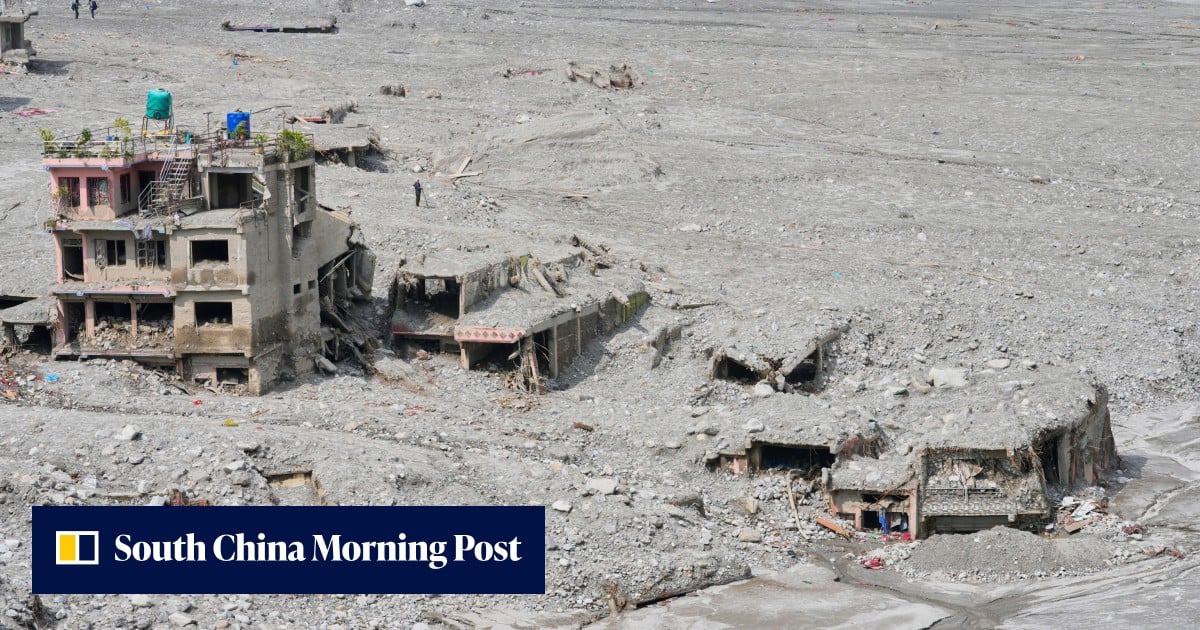
But what he got instead was a series of cancellations by tourists after catastrophic floods last month killed more than 1,450 people and destroyed key highways, deeply impacting the Himalayan nation heavily dependent on tourism.
asserted
floods → get → tourism
Recommended Stories
list of 4 items- list 1 of 4Floods and landslides kill at least 56 people in India, 12 in Nepal
- list 2 of 4Nepal’s leader labels devastating flood a ‘warning to the world’
- list 3 of 4‘Orphaned’ by floods, more than 500 Nepali children face uncertain future
- list 4 of
asserted
children → kill → future
4The Nepal floods question: When the Himalayas collapse, who gets warned?
asserted
who → collapse → ?
“It is still a lockdown kind of situation,” the 42-year-old told Al Jazeera nearly a month after the disaster.
asserted
old → tell → disaster
Pushpraj, who speaks Nepali and Hindi, works on commission for several hotels and trekking companies in Kathmandu and the scenic town of Pokhara, known for its lake nestled in the Annapurna mountain range.
asserted
who → speak → range
Pokhara also serves as a base for Himalayan trekkers.
asserted
Pokhara → serve → trekkers
Nepal’s tourist season peaks after the monsoon ends in August and the skies are clearer.
asserted
skies → end → August
Tourism attracts thousands of international travellers, accounting for nearly 8 percent of Nepal’s gross domestic product and employs more than 1 million people.
asserted
Tourism → attract → people
Last year, Nepal saw more than 1.15 million tourists visiting the country, nearly a third of them during the September-November season.
asserted
tourists → see → season
But the floods this year, triggered by a glacial mountain collapse along the Nepal-Tibet border in the north, have pushed tourists away from the unaffected areas as well.
asserted
floods → trigger → areas
“I had rented two cars for two months, but I have done one fourth of the business I usually do in a season.
asserted
I → rent → season
Tourists generally start pouring in from September, but most of them have cancelled this year,” he said.
asserted
he → start → them
“I will get no commissions from the hotels or trek organisers, nor has the taxi business worked well.
asserted
business → get → hotels
I am now waiting for the season to end.”
asserted
season → wait → ?
Rimal has two children, Hema, 14, and Rahul, 12, whom he had promised a tablet this Dussain, a prominent Hindu festival that usually falls in October.
asserted
that → have → October
“But it seems impossible now.
asserted
it → seem → ?
I will have to break their hearts and my promise to them for the very first time.”
asserted
I → have → time
Seeta Nepali, 61, and her husband, Ramakant Nepali, 68, sell homemade buttermilk on the highway connecting Kathmandu to the tourist towns of Pokhara and Chitwan.
asserted
Nepali → sell → Pokhara
The couple, who also sells cottage cheese in their neighbourhood, depend on these daily sales to make ends meet.
asserted
ends → sell → sales
“Our town may not have been destroyed by the floods, but the floods reached us by way of no buyers.
uncertain
floods → destroy → buyers
We could earn nothing for 11 days after the flood because the road was blocked,” Seeta told Al Jazeera.
uncertain
Seeta → earn → Jazeera
“Even after it reopened, only government vehicles were allowed to pass.
asserted
vehicles → reopen → ?
Now, some tourists are coming in, and we are able to sell, but it is not even half of what we used to sell earlier because there are far fewer people. …
asserted
we → come → what
We are making barely one-fourth of what we would usually do,” she added.
asserted
she → make → what
British national Alexa, who goes by a single name, had planned to visit Pokhara and Dhulikhel, a hill town near Kathmandu known for its cultural experiences and homestays, with five of her friends.
asserted
who → go → friends
But the flooding forced the group to cancel their trip.
asserted
flooding → force → trip
“It was going to be our first time in Nepal, and we had booked two cabs from Kathmandu airport to Pokhara in July itself along with hotels, trekking and camps.
asserted
we → go → hotels
When we learned about the disaster on the 26th [of August], we had to cancel everything,” she told Al Jazeera.
asserted
she → learn → Jazeera
A traveller from Japan, who asked to remain anonymous, said the washed-out roads and bridges were the least of his concerns.
“We could have taken flights, but the situation and environment due to the floods, the stranded dead bodies could be deadly for me and my family, so we chose to cancel this time,” the father of two said.
uncertain
father → ask → two
Others like Tapas Kumar from India changed their itineraries instead of cancelling their trips.
“Our son is based in the United States.
asserted
son → change → States
He was concerned about us and insisted that we cancel Nepal for now.
asserted
we → insist → Nepal
So we found a middle ground.
asserted
we → find → ground
We cancelled Pokhara and extended our Kathmandu stay for all of the seven days,” Kumar, who was travelling with his wife and friends, told Al Jazeera.
asserted
who → cancel → Jazeera
Many foreign tourists said they were also checking travel advisories issued by their embassies in Nepal before cancelling or rescheduling their trips.
asserted
they → say → trips
“Some people also got scared and misunderstood the information and safety measures issued by the embassies of other countries in Nepal and chose to cancel their travel plans.
asserted
people → get → plans
But we want people to know that Nepal is open and safe.
asserted
Nepal → want → ?
Only some parts need to be avoided,” Surendra Thapa, charge d’affaires at the Indian embassy, told Al Jazeera.
asserted
Thapa → need → Jazeera
On the other hand, the embassy of the United Kingdom issued an advisory on September 11, warning that the floods had made many areas unstable and it was difficult to guarantee safe travels within Nepal.
asserted
it → issue → Nepal
The US embassy issued a similar advisory, stating many areas were unsafe and designated no-travel zones.
asserted
areas → issue → zones
…and 13 more, not listed.
 The Aporia