Nepal Prime Minister Balendra Shah proposed establishing a Himalayan Climate Resilience Mechanism during his address to the UN General Assembly on September 24, 2026. The mechanism would be led by Nepal, India, and China, aiming to share satellite data, monitor glacial lakes, and coordinate disaster responses in the face of climate-induced hazards like floods and landslides that impact populations across borders. Shah highlighted the devastating August flash floods in Nepal which killed at least 1,452 people and left thousands missing, underscoring the urgent need for international cooperation to address shared ecological challenges.
Written locally by qwen2.5:14b on 2026-09-25,
using this article's own text rather than the other coverage of the
same event (that is the story summary below).
Story summary
Nepal's Prime Minister Balendra Shah, addressing the 81st session of the UN General Assembly on September 24, 2026, proposed establishing a Himalayan Climate Resilience Mechanism led by Nepal, India, and China. The initiative aims to enhance cooperation in sharing satellite data, monitoring glacial lakes, and strengthening early-warning systems to address climate-related disasters, particularly after the devastating flash floods that killed over 1,450 people and displaced thousands in August 2026.
Shah emphasized these measures as a response to environmental challenges affecting mountainous regions. The proposed mechanism would help mitigate risks from glacial lake outburst floods (GLOFs) and other climate-related threats impacting millions of people across the Himalayan region.
The floods, triggered by a glacial and rock collapse on the Nepal-China border, severely impacted tourism and local economies, with hotels and trekking companies experiencing significant cancellations. According to tour planner Pushpraj Rimal in Kathmandu, "It is still a lockdown kind of situation," reflecting ongoing challenges for recovery.
Additionally, there are pressing needs for humanitarian aid and long-term rebuilding efforts. Dr. Nimesh Dhungana from the University of Manchester's HCRI highlighted the importance of governance and accountability in disaster response and recovery processes. With around 5,285 people still missing and numerous displaced families struggling to find stable housing, initiatives like Shah’s proposal are crucial for sustainable development and resilience against future disasters. The mechanism aims not only at immediate relief but also at long-term planning to protect communities from similar catastrophic events in the future.
Written for “Nepal Floods Climate Impact” on 2026-10-05,
grounded in this article and the 20 other(s) covering the same event.
Nepal Prime Minister Balendra Shah has proposed establishing a Himalayan Climate Resilience Mechanism led by his country as well as India and China, in the wake of the recent devastating flash floods in the area.
asserted
Shah → propose → area
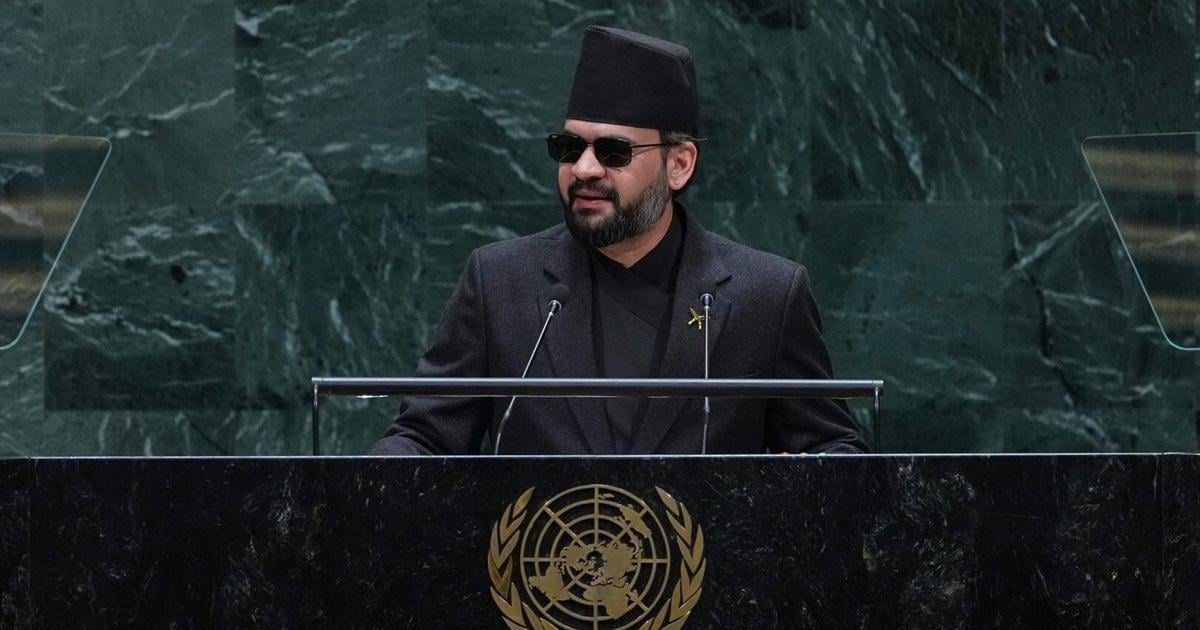
Mr. Shah, in his maiden address to the 81st session of the UN General Assembly on Thursday (September 24, 2026), also told world leaders that a warming climate is destabilising the fragile Himalayan ecology.
asserted
climate → tell → ecology
These mountains provide water, ecosystems, agriculture and livelihoods to populations far beyond Nepal.
asserted
mountains → provide → Nepal
They are part of the planet's life-support system,” Mr. Shah said.
asserted
Shah → say → system
"That is why, as an urgent first step, we propose that we establish a Himalayan Climate Resilience Mechanism, led by Nepal, India and China,” Mr.m Shah said.
asserted
Shah → propose → Nepal
He said the mechanism should be used to share satellite data and expertise.
asserted
mechanism → say → data
Through this mechanism, let us share satellite data and expertise.
asserted
us → let → data
“Let us monitor dangerous glacial lakes.
asserted
us → let → lakes
Let us strengthen joint early-warning systems.
asserted
us → let → systems
And when disaster strikes, let us coordinate assistance across borders.
asserted
us → strike → borders
Let the Himalayas become a laboratory of international cooperation, rather than a frontier of fragmented information,” he said.
asserted
he → let → information
“Melting permafrost is fracturing mountain slopes beneath the glaciers and accelerating the risks of ice-rock avalanches, floods, landslides and other cascading hazards.
asserted
permafrost → melt → avalanches
The resulting devastation unleashed havoc on both sides of the Nepal-China border.
asserted
devastation → result → border
The flood continued downstream towards India,” he said.
asserted
he → continue → India
Mr. Shah said the devastating Nepal floods gave the world a fundamental message that “Climate change does not recognise borders.
asserted
change → say → borders
Glaciers and floods do not travel with a visa stamped on passports.”
asserted
Glaciers → travel → passports
Mr. Shah expressed Nepal's deep gratitude to the countries who came to its aid in the aftermath of the deluge.
asserted
who → express → deluge
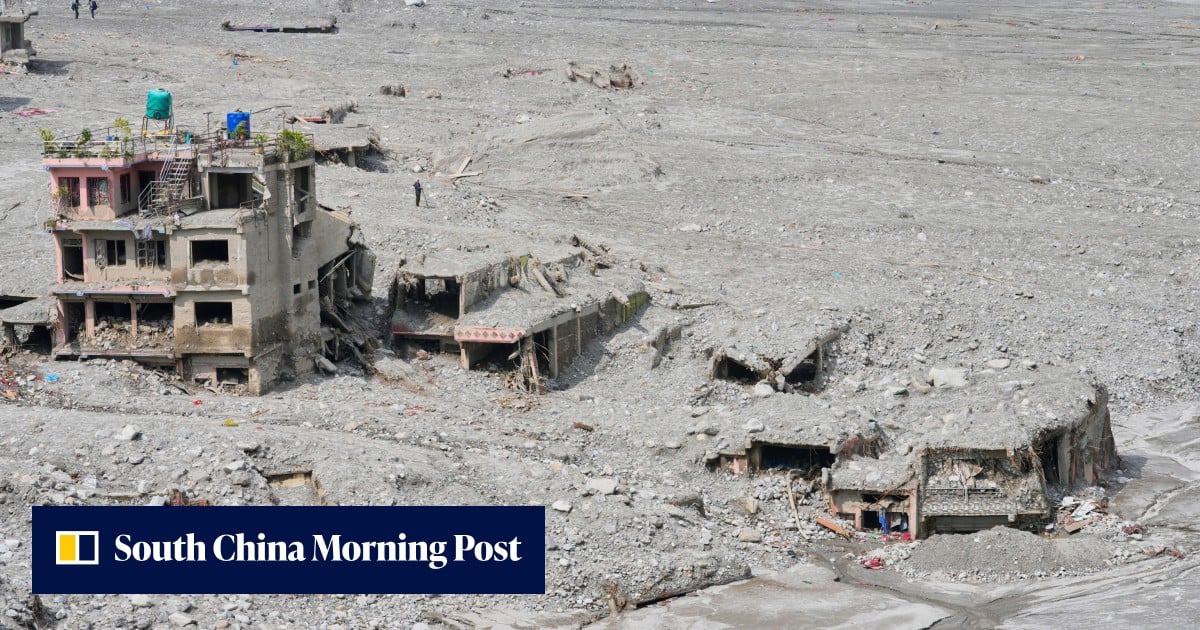
Nepal was struck by a massive flash floods, triggered by an ice-rock avalanche near the Nepal-Tibet border on August 26.
asserted
Nepal → strike → August
The floods devastated towns and villages in northern and central Nepal.
asserted
floods → devastate → Nepal
The death toll from the devastating flood has reached 1,452, with over 4,700 to 6,000 people still reported missing.
asserted
people → devastate → 1,452
Nepal Prime Minister Shah told the UN that Nepal now faces a massive task of recovery and reconstruction.
asserted
Nepal → tell → recovery
Rapid assessments peg physical recovery needs at about 10 percent of GDP.
asserted
assessments → peg → GDP
"Our immediate neighbours, India and China, offered prompt and generous assistance.
asserted
neighbours → offer → assistance
Other friendly countries, the United Nations system, humanitarian agencies, philanthropies and people around the world stood with Nepal,” he said.
asserted
he → stand → Nepal
He said that on the one hand, there are melting glaciers and failing harvests to floods arriving without warning.
asserted
He → say → warning
On the other, a global supply chain punishes poor people for causes beyond reason.
asserted
chain → punish → reason
"Intercontinental missiles arrive on time.
asserted
missiles → arrive → time
Rifles and ammunition cross borders, clear every bottleneck, meet each deadline.
asserted
Rifles → cross → deadline
But a peasant in Nepal cannot procure his fertiliser or fuel at market price at a time of need.
asserted
peasant → procure → need
We have built a world with flawless logistics for war and broken logistics for food,” he said.
asserted
he → build → food
Ask any other country in our region and you will hear the same account: hit by the climate we did not warm, and hit again by the wars we did not start.
asserted
we → ask → wars
This tells us there is a lot more broken than meets the eye in the present order of global cooperation," he said.
asserted
he → tell → cooperation
 The Aporia