Story summary
Nepal's Prime Minister Balendra Shah, addressing the 81st session of the UN General Assembly on September 24, 2026, proposed establishing a Himalayan Climate Resilience Mechanism led by Nepal, India, and China. The initiative aims to enhance cooperation in sharing satellite data, monitoring glacial lakes, and strengthening early-warning systems to address climate-related disasters, particularly after the devastating flash floods that killed over 1,450 people and displaced thousands in August 2026.
Shah emphasized these measures as a response to environmental challenges affecting mountainous regions. The proposed mechanism would help mitigate risks from glacial lake outburst floods (GLOFs) and other climate-related threats impacting millions of people across the Himalayan region.
The floods, triggered by a glacial and rock collapse on the Nepal-China border, severely impacted tourism and local economies, with hotels and trekking companies experiencing significant cancellations. According to tour planner Pushpraj Rimal in Kathmandu, "It is still a lockdown kind of situation," reflecting ongoing challenges for recovery.
Additionally, there are pressing needs for humanitarian aid and long-term rebuilding efforts. Dr. Nimesh Dhungana from the University of Manchester's HCRI highlighted the importance of governance and accountability in disaster response and recovery processes. With around 5,285 people still missing and numerous displaced families struggling to find stable housing, initiatives like Shah’s proposal are crucial for sustainable development and resilience against future disasters. The mechanism aims not only at immediate relief but also at long-term planning to protect communities from similar catastrophic events in the future.
Written for “Nepal Floods Climate Impact” on 2026-10-05,
grounded in this article and the 20 other(s) covering the same event.
Is Nepal's flood a harbinger of what's to come in the Himalayas?
asserted
what → come → Himalayas
On a recent September day, Sumana Shrestha Amatya stood alongside other protesters in the Nepali capital, urging the government to work faster to find their loved ones, trapped inside hydropower plants since flash floods devastated miles of a river valley in late August.
asserted
floods → stand → August
Amatya says she hasn't heard from officials about her husband, Sunil, a geologist.
asserted
she → say → husband
Still, she acknowledged the scale of the disaster that the government was grappling with: "It was like a Himalayan tsunami."
asserted
It → acknowledge → tsunami
It's a description other Nepalis have used for the events of Aug. 26, when a glacier and its bedrock spanning more than 3,800 feet in width collapsed into a river valley, some 4,000 feet below.
asserted
glacier → use → valley
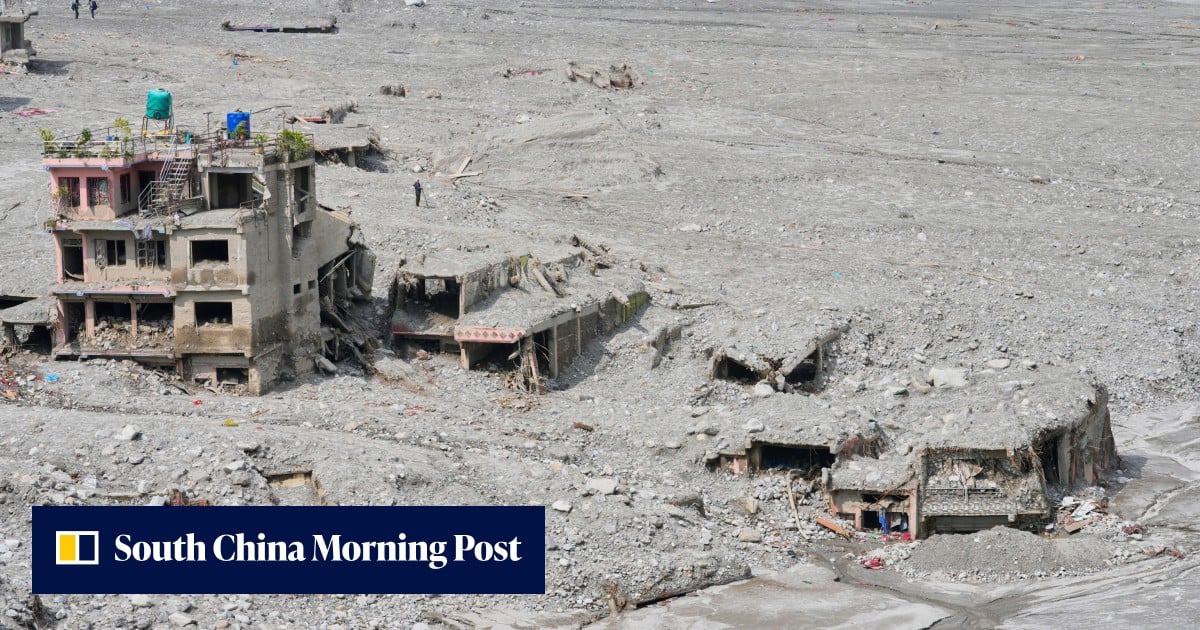
That triggered 30-feet high waves of boulders, water and ice that surged for miles downstream.
asserted
that → trigger → miles
It swept away a multistory border building and some 70 bridges and miles of highway, and buried 12 hydropower plants under mud and boulders along the Trishuli river, which was badly impacted by the floods.
asserted
which → sweep → floods
Some 1,400 bodies have been recovered in Nepal, and more than 5,000 remain unaccounted for.
asserted
5,000 → recover → Nepal
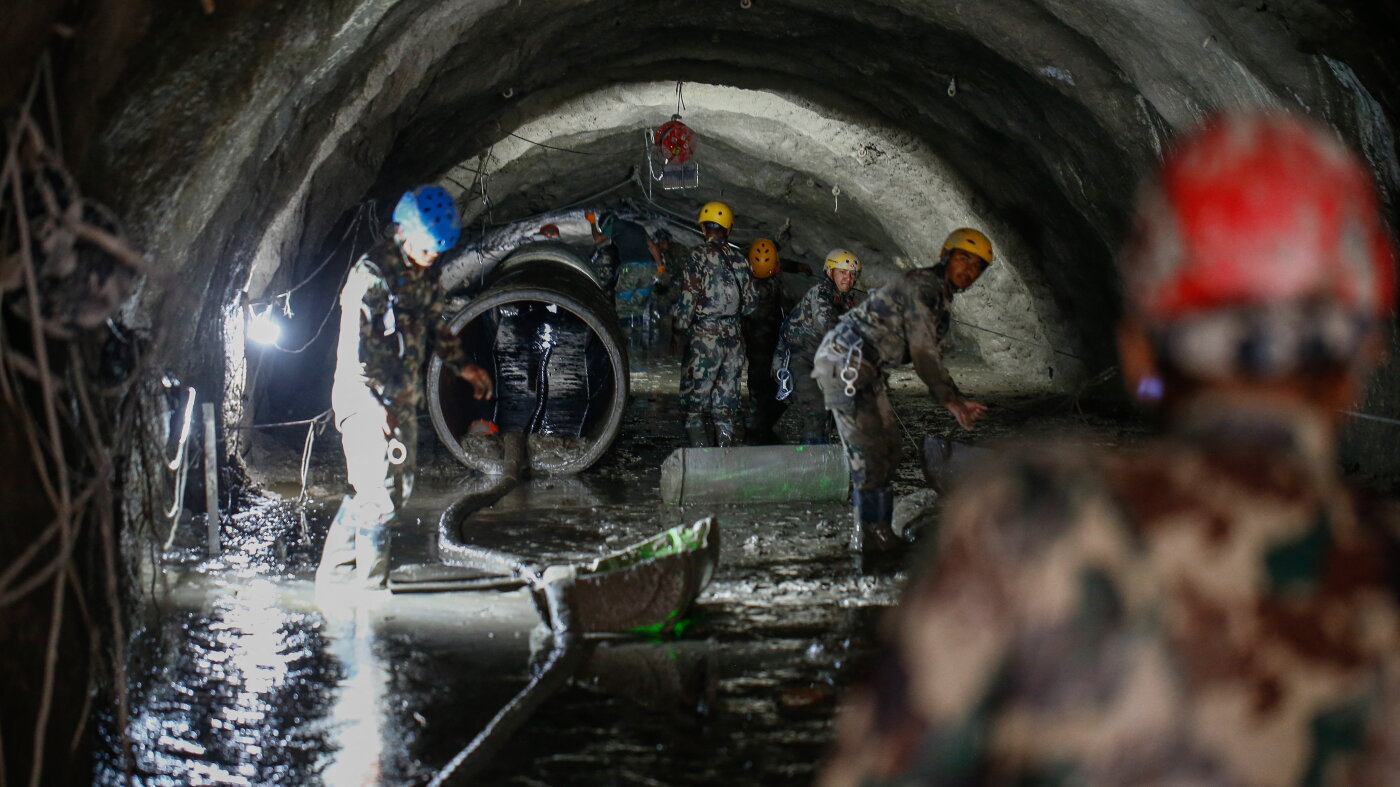
The dead and missing include 121 people who were trapped in hydropower plants, according to Brigadier General Subas Jung Thapa of the Nepali army, which is leading rescue efforts.
uncertain
which → miss → efforts
He spoke in early September.
asserted
He → speak → September
It took days just to find the power plants under the mud.
asserted
It → take → mud
It was like "a bomb's gone off," said Arnold Dix, a tunneling expert helping with rescue efforts.
asserted
Dix → go → efforts
"It's removed the power stations from the surface, like they're just not there."
asserted
they → remove → surface
Only three men were found alive in the plants since rescue efforts began.
asserted
efforts → find → plants
Did hydropower projects add to the risk?
asserted
projects → add → risk
It is those hydropower plants that have received the most scrutiny in regional media since the floods, with experts reviving questions about whether developers had properly assessed the risks of building them in the Himalayas.
asserted
developers → receive → Himalayas
"We need to understand what is happening now in Nepal can happen in other parts of the Himalayas," says C.P. Rajendran, an Indian geoscientist who has been critical of big construction works in the Himalayas.
asserted
who → need → Himalayas
(Rajendran, like many Indians, uses initials for his first name.)
asserted
Rajendran → use → name
Critics have also focused on the role of international institutions like the World Bank, which has long supported some of these hydropower projects and their associated dams.
asserted
which → focus → projects
They include one of the biggest hydropower projects in the river basin, known as the Upper Trishuli-1, which cost Nepal over half a billion dollars.
asserted
which → include → dollars
It was backed by about $300 million in loans and equity by two arms of the World Bank.
asserted
It → back → Bank
Thapa of the Nepali army said in his press briefing that he estimated some 50 people were trapped inside.
asserted
people → say → briefing
On Wednesday, the Kathmandu Post reported the bodies of five men were recovered from the plant.
asserted
bodies → report → plant
"Why did it have to happen in the first place?" asked Parineeta Dandekar, an expert on rivers who has written critically about these projects for the advocacy group South Asia Network on Dams, Rivers and People.
asserted
who → have → Dams
Dandekar accuses the World Bank of producing a flawed risk assessment report for the project from the get-go.
asserted
Dandekar → accuse → go
Its many omissions, Dandekar says, included ignoring "the cumulative disaster risk that can happen after having so many projects across the same river."
asserted
that → say → river
Experts say the Trishuli river basin has 36 hydro power projects — including the dozen now under the mud.
asserted
basin → say → mud
Dandekar says the constant blasting of mountains to build these projects, including for miles-long tunnels, has its own impact.
asserted
blasting → say → impact
It's a region where earthquakes and landslides are common, and where climate change is causing its glaciers to melt more rapidly, making them — and their slopes — more unstable.
asserted
them → cause → ?
Initial analysis suggests global warming exacerbated the melting of the glacier that snapped off in August, triggering flash floods.
uncertain
that → suggest → floods
There's no clear evidence that the construction of these projects had a role in causing the severity of the Aug. 26 disaster.
asserted
construction → be → disaster
But experts like geoscientist Rajendran says construction has caused damage in other communities where hydropower projects are being built, including damaging mountain springs, causing homes to crack and even landslides.
asserted
homes → say → springs
In this case though, says Dipak Gyawali, a hydropower engineer with the Nepal Academy of Science and Technology, "compared to the tectonic forces at play that caused this event, dynamiting is minuscule.
asserted
dynamiting → say → event
It's like scratching your skin.
asserted
It → scratch → skin
But he and other experts said developers were not seriously investigating the risk caused by so many projects built in the same zone.
asserted
developers → say → zone
"These risks have to be properly studied and assessed.
asserted
risks → have → ?
Unfortunately, they have not been," Gyawali said.
asserted
Gyawali → say → ?
Retired Indian ambassador Shyam Saran, who served as the Indian prime minister's special envoy for climate change, says developers typically look at risks that could be triggered by their project, alongside environmental risks to it, and they appear safe.
uncertain
they → serve → it
"But if you do actually a cumulative environmental impact assessment of the whole river system," he says, "then a different picture emerges.
asserted
picture → do → system
And the Trishuli river "is a really high risk area to build [hydropower] dams, says Austin Lord of the Stimson Center, who works on disaster risk reduction in the Himalayan region at the Stimson Center.
asserted
who → build → Center
…and 35 more, not listed.
 The Aporia