On August 26, a massive glacial collapse in Nepal’s Langtang Lirung mountain triggered a deadly flood that swept through the Rasuwagadhi region, burying entire communities under mud and debris. With more than 5,700 people missing and 1,451 confirmed deaths one month later, recovery efforts are hampered by the sheer scale of destruction and logistical challenges in remote areas. Aid organizations, including the UN, have initiated emergency appeals for millions of dollars to assist the nearly 80,000 affected individuals, while identifying victims through DNA has proven difficult due to overwhelmed morgues and mass burials.
Written locally by qwen2.5:14b on 2026-09-24,
using this article's own text rather than the other coverage of the
same event (that is the story summary below).
Story summary
Nepal's Prime Minister Balendra Shah, addressing the 81st session of the UN General Assembly on September 24, 2026, proposed establishing a Himalayan Climate Resilience Mechanism led by Nepal, India, and China. The initiative aims to enhance cooperation in sharing satellite data, monitoring glacial lakes, and strengthening early-warning systems to address climate-related disasters, particularly after the devastating flash floods that killed over 1,450 people and displaced thousands in August 2026.
Shah emphasized these measures as a response to environmental challenges affecting mountainous regions. The proposed mechanism would help mitigate risks from glacial lake outburst floods (GLOFs) and other climate-related threats impacting millions of people across the Himalayan region.
The floods, triggered by a glacial and rock collapse on the Nepal-China border, severely impacted tourism and local economies, with hotels and trekking companies experiencing significant cancellations. According to tour planner Pushpraj Rimal in Kathmandu, "It is still a lockdown kind of situation," reflecting ongoing challenges for recovery.
Additionally, there are pressing needs for humanitarian aid and long-term rebuilding efforts. Dr. Nimesh Dhungana from the University of Manchester's HCRI highlighted the importance of governance and accountability in disaster response and recovery processes. With around 5,285 people still missing and numerous displaced families struggling to find stable housing, initiatives like Shah’s proposal are crucial for sustainable development and resilience against future disasters. The mechanism aims not only at immediate relief but also at long-term planning to protect communities from similar catastrophic events in the future.
Written for “Nepal Floods Climate Impact” on 2026-10-05,
grounded in this article and the 20 other(s) covering the same event.
The tsunami-like flood that cut a swathe of destruction through Nepal on August 26 has left the Himalayan nation grappling with heavy losses and mounting reconstruction needs.
asserted
that → cut → losses
One month on, AFP looks at the scale of the disaster triggered by a high-altitude glacial mountain collapse on the China-Nepal border, which scientists have linked to climate change.
asserted
scientists → look → change
‘Bullet train’ of debris
On August 26, a mass of ice and rock broke away from the north face of Nepal’s Langtang Lirung mountain, sending a huge mass of debris racing down the valley.
asserted
mass → break → valley
The collapse began at an altitude of about 5,200 metres (17,060 feet) with a section more than a kilometre (0.6 miles) wide and extending roughly 700 metres vertically.
asserted
collapse → begin → kilometre
That mass of rock and ice plunged about 800 metres onto a debris-covered glacier, before surging downhill, briefly damming the Lhende River.
asserted
mass → plunge → River
Water and debris then burst downstream.
asserted
Water → burst → ?
The debris travelled about 20 kilometres, dropping 1,700 metres at Rasuwagadhi in only seven minutes, said Sudan Bikash Maharjan, a geologist with the Kathmandu-based International Centre for Integrated Mountain Development.
asserted
Maharjan → travel → Development
“The elevation difference is high, within a very short length,” Maharjan told AFP.
asserted
Maharjan → tell → AFP
“So it just rushed down like a bullet train.”
asserted
it → rush → train
Heavy toll
Nepal’s disaster authority says 1,451 bodies have been recovered from the rubble and mud, while more than 5,700 people are missing.
asserted
people → say → rubble
Among the missing are hundreds of workers from hydropower projects swept away by the disaster, along with hundreds more foreigners including tourists and pilgrims caught in the floodwaters.
asserted
hundreds → miss → floodwaters
Identifying victims through DNA has proved a major challenge for Nepali authorities.
asserted
Identifying → identify → authorities
With morgues overwhelmed, many bodies have been buried in mass graves after their DNA was recorded.
asserted
DNA → overwhelm → graves
So far, only about 100 bodies have been identified.
asserted
bodies → identify → ?
On the Chinese side, where apocalyptic images showed a border post obliterated, state media have reported 43 deaths and 519 people missing.
asserted
people → show → side
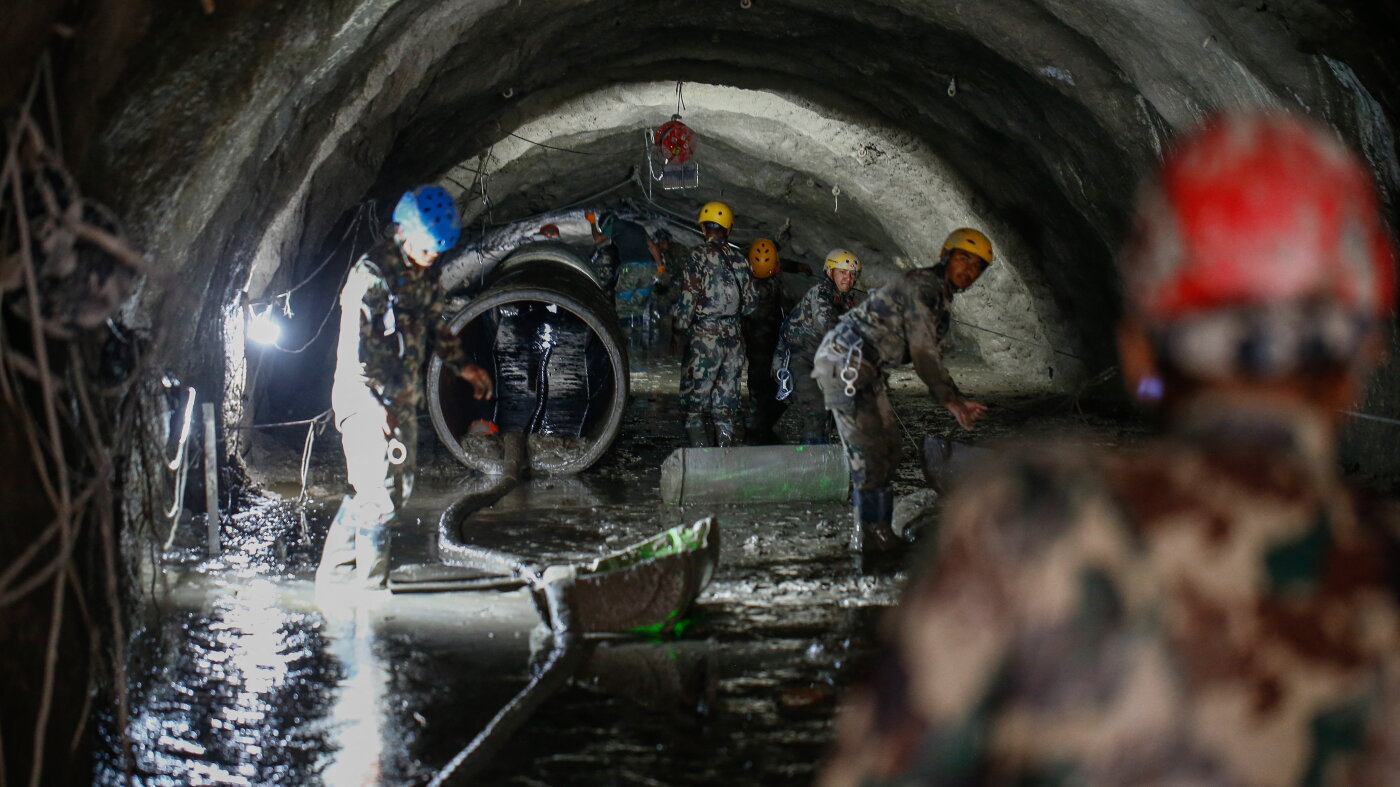
Hundreds of rescuers, many deployed by helicopter, have spent weeks digging through mud and debris in search of survivors.
asserted
many → deploy → survivors
In Nepal, three workers – two Nepalis and a Chinese man – were rescued alive from tunnels under construction where they had been trapped.
asserted
they → rescue → construction
One of them, 30-year-old Sanjay Sah, told AFP he survived 10 days in darkness by drinking muddy water and praying.
asserted
he → tell → water
“I survived thanks to my deep faith and trust,” he said.
asserted
he → survive → faith
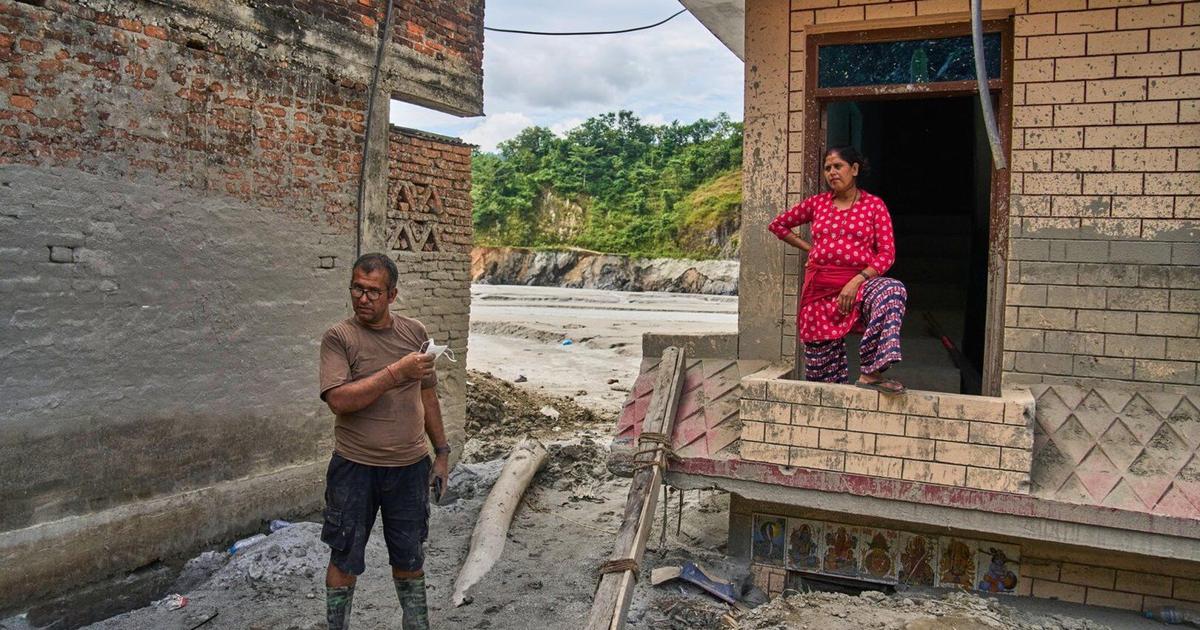
Rescuers continue to recover bodies from the vast expanse of sticky grey mud.
asserted
Rescuers → continue → mud
The disaster has affected more than 80,000 people.
asserted
disaster → affect → people
Thousands who lost everything are living in emergency shelters.
asserted
who → lose → shelters
The United Nations has launched an urgent appeal for nearly $50 million in emergency aid.
asserted
Nations → launch → aid
Many communities near the epicentre remain cut off, with the UN and the Nepali government delivering supplies by helicopter and cargo drone.
asserted
UN → cut → helicopter
Several countries have pledged financial support for Nepal, amounting to a few million dollars —far below the scale of the disaster.
asserted
countries → pledge → disaster
Economic hit
Nepal estimates the reconstruction bill will amount to $4.78bn.
asserted
bill → estimate → 4.78bn
Of that, $57m is needed for short-term reconstruction and recovery over the next six months.
asserted
m → need → months
The floods have cut Nepal’s electricity generation capacity — mainly hydropower — by 10 per cent, with the energy sector accounting for half of the total infrastructure damage from the disaster.
asserted
sector → cut → disaster
The floods have cut Nepal’s hydropower generation capacity as well as total electricity generation capacity by 10 per cent, with the energy sector accounting for half of the total infrastructure damage from the disaster.
asserted
sector → cut → disaster
Nepal’s economy is already under pressure, with limited resources to respond to a disaster of this scale.
asserted
economy → respond → scale
The World Bank estimates 82pc of Nepal’s workforce is in informal employment, with GDP per capita at $1,447 in 2024.
asserted
82pc → estimate → 2024
Climate change
From the first hours after the disaster, experts pointed to climate change as a contributing factor.
asserted
experts → point → factor
Scientists from the World Weather Attribution group said the disaster was not caused by a single extreme weather event, but a “compound crisis” shaped by long-term warming, glacier retreat, permafrost thaw and geological instability.
asserted
disaster → say → warming
“There is no doubt that climate change is one of the drivers,” said Friederike Otto, a professor of climate science at Imperial College London.
asserted
Otto → be → London
Nepal’s leaders say the country needs long-term international support to adapt to a rapidly changing mountain environment.
asserted
country → say → environment
Prime Minister Balendra Shah has urged the world to recognise the dangers of climate change and act quickly.
asserted
Shah → urge → change
 The Aporia