ABC News (AU)
· collected 2026-09-25 · by Meghna Bali and Bhat Burhan
Catastrophic floods caused by a massive ice and rock collapse in the Himalayas have devastated Nepal’s Nuwakot district, leaving over 1,400 people dead and more than 5,700 missing as of August. In Devighat, entire sections of the town are buried under mud and debris, with residents like Maina Pariyar struggling to rebuild their lives while fearing another flood. Despite initial aid efforts, recovery assistance is waning, raising concerns about long-term support for affected communities.
Written locally by qwen2.5:14b on 2026-09-26,
using this article's own text rather than the other coverage of the
same event (that is the story summary below).
Story summary
Nepal's Prime Minister Balendra Shah, addressing the 81st session of the UN General Assembly on September 24, 2026, proposed establishing a Himalayan Climate Resilience Mechanism led by Nepal, India, and China. The initiative aims to enhance cooperation in sharing satellite data, monitoring glacial lakes, and strengthening early-warning systems to address climate-related disasters, particularly after the devastating flash floods that killed over 1,450 people and displaced thousands in August 2026.
Shah emphasized these measures as a response to environmental challenges affecting mountainous regions. The proposed mechanism would help mitigate risks from glacial lake outburst floods (GLOFs) and other climate-related threats impacting millions of people across the Himalayan region.
The floods, triggered by a glacial and rock collapse on the Nepal-China border, severely impacted tourism and local economies, with hotels and trekking companies experiencing significant cancellations. According to tour planner Pushpraj Rimal in Kathmandu, "It is still a lockdown kind of situation," reflecting ongoing challenges for recovery.
Additionally, there are pressing needs for humanitarian aid and long-term rebuilding efforts. Dr. Nimesh Dhungana from the University of Manchester's HCRI highlighted the importance of governance and accountability in disaster response and recovery processes. With around 5,285 people still missing and numerous displaced families struggling to find stable housing, initiatives like Shah’s proposal are crucial for sustainable development and resilience against future disasters. The mechanism aims not only at immediate relief but also at long-term planning to protect communities from similar catastrophic events in the future.
Written for “Nepal Floods Climate Impact” on 2026-10-05,
grounded in this article and the 20 other(s) covering the same event.
A month after catastrophic floods swept through Nepal's Nuwakot district, the town of Devighat still smells of death.
asserted
town → sweep → death
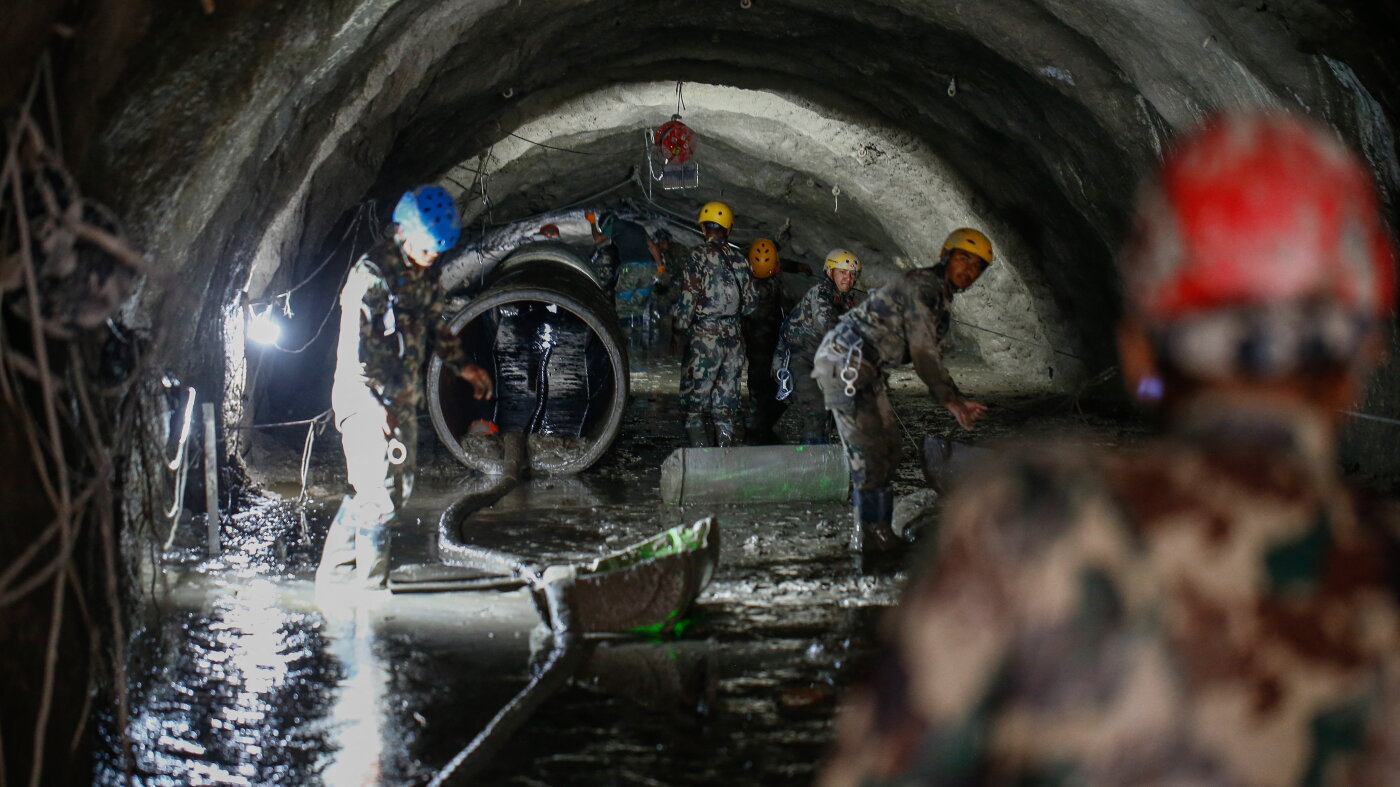
Excavators continue to claw through vast layers of grey mud that swallowed homes, businesses and roads.
asserted
that → continue → homes
As the earth is turned over, the smell of decay rises again.
asserted
smell → turn → decay
From above, entire sections of the town appear to have been erased.
asserted
sections → appear → town
The Trishuli River runs beside a landscape of sludge, broken concrete and twisted metal.
asserted
River → run → sludge
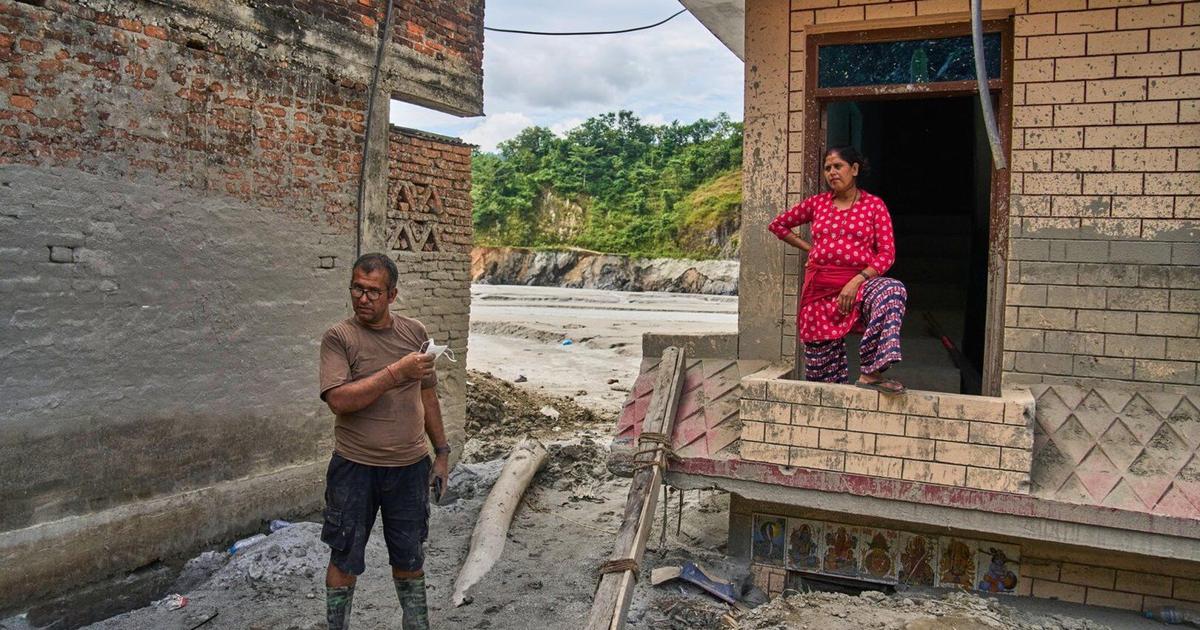
Some homes remain standing but are buried through their lower floors.
asserted
homes → remain → floors
Others have disappeared altogether.
asserted
Others → disappear → ?
The August disaster began when a massive collapse of ice and rock in the Himalayas sent a torrent through the Bhotekoshi and Trishuli river systems, devastating communities on both sides of the Nepal-Tibet border.
asserted
collapse → begin → border
More than 1,400 people have been killed and more than 5,700 remain missing, including 34 Australians.
asserted
5,700 → kill → Australians
A town still buried
Maina Pariyar keeps returning to the patch of mud where her house once stood.
asserted
house → bury → mud
She lived there for more than 35 years and raised eight children.
asserted
She → live → children
Now there is little to show that those decades of family life took place.
asserted
decades → be → place
"I spent so much time, energy and money building my house … all our lifelong hard work is gone," Ms Pariyar said.
asserted
Pariyar → spend → house
"We could not even find a spoon from our house."
uncertain
We → find → house
Ms Pariyar walks slowly through what remains of the neighbourhood, pointing towards places that are no longer recognisable.
asserted
that → walk → places
The flood stripped families of almost everything they owned.
asserted
they → strip → everything
But for many, leaving permanently feels almost as difficult.
asserted
leaving → leave → many
Ms Pariyar now sleeps in a small tent in a relief camp about 10 minutes from her old home.
asserted
Pariyar → sleep → home
Her few remaining possessions fit inside.
asserted
possessions → remain → ?
Days are structured around basic needs — collecting water, keeping the tent clean, lining up for meals and clearing grass around the shelters.
asserted
Days → structure → shelters
Ms Pariyar's children have asked her to move to Kathmandu.
asserted
children → ask → Kathmandu
She has refused.
asserted
She → refuse → ?
"This is the place where I was born.
asserted
I → bear → ?
I don't want to leave my roots," she said.
asserted
she → want → roots
"If I am nearby, at least I would be able to come and see my place."
asserted
I → come → place
Even the temporary camp brings little sense of security.
asserted
camp → bring → security
Ms Pariyar worries about further rain and what would happen if the river rose again at night.
asserted
river → worry → night
"If the flood comes during the day, I can still manage to run and save my life.
asserted
I → come → life
But if it comes at night, how do we even run?" she said.
asserted
she → come → night
"There is no safety anywhere, and our lives are safe nowhere."
asserted
lives → be → ?
Relief is not recovery
Aid poured into the region the immediate aftermath of the disaster.
asserted
Aid → pour → disaster
A Nepal Scout official working in the Bidur and Devighat area said teams had distributed supplies, recovered bodies, helped children return to school and travelled by road and helicopter to communities that were difficult to reach.
asserted
that → work → communities
But a month later the surge is slowing.
asserted
surge → slow → ?
"There were too many efforts then, but right now, it's slowing down," he said.
asserted
he → be → ?
Food, clothes and basic supplies are still being delivered, but Nepal's finance minister has said the country would need $US4-5 billion to properly rebuild.
asserted
country → deliver → billion
The government is seeking $US20 million from the United Nation's loss and damage fund, which was created to provide financial assistance to developing countries impacted by climate change.
asserted
which → seek → change
But what survivors increasingly want is an answer to a much bigger question: where are they supposed to live?
asserted
they → want → question
Parbat Sharma regularly returns to his family's damaged home.
asserted
Sharma → return → home
Six ground-floor rooms were destroyed and thick debris remains inside the first floor.
asserted
debris → destroy → floor
The area has since been declared a red zone, leaving him unsure whether repairing the property would be safe, or even permitted.
asserted
repairing → declare → property
…and 26 more, not listed.
 The Aporia