That is 0 articles you have read today.
The Aporia is free and carries no advertising, so readers are the only
thing paying for it. If you are getting this much out of it, a small
donation is what keeps it independent.
Daily limit reached
You have read 0 articles today.
That is more than the 15 a day The Aporia gives away,
and well past what it can carry on nothing. Your allowance resets at
midnight.
There is no advertising here and nothing about you is sold, so readers
are the only thing paying for it. If the site is worth this much of
your day, it is worth a few dollars.
Everything else stays open: the
maps, the
directory and
search do
not count against this, and neither does re-opening something you have
already read today.
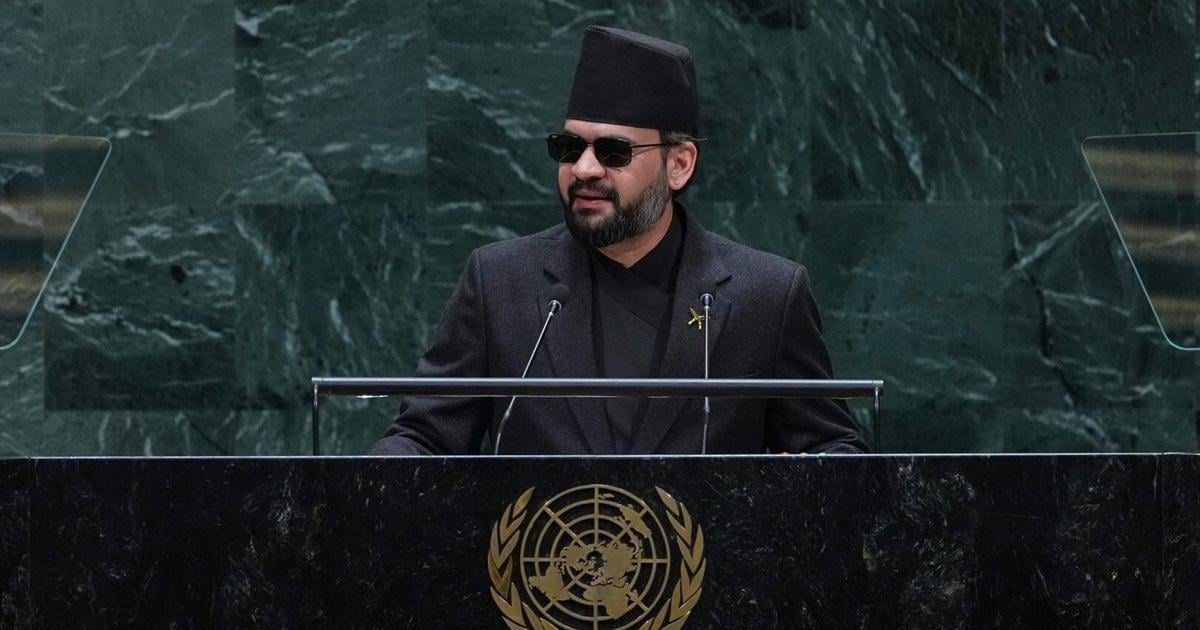
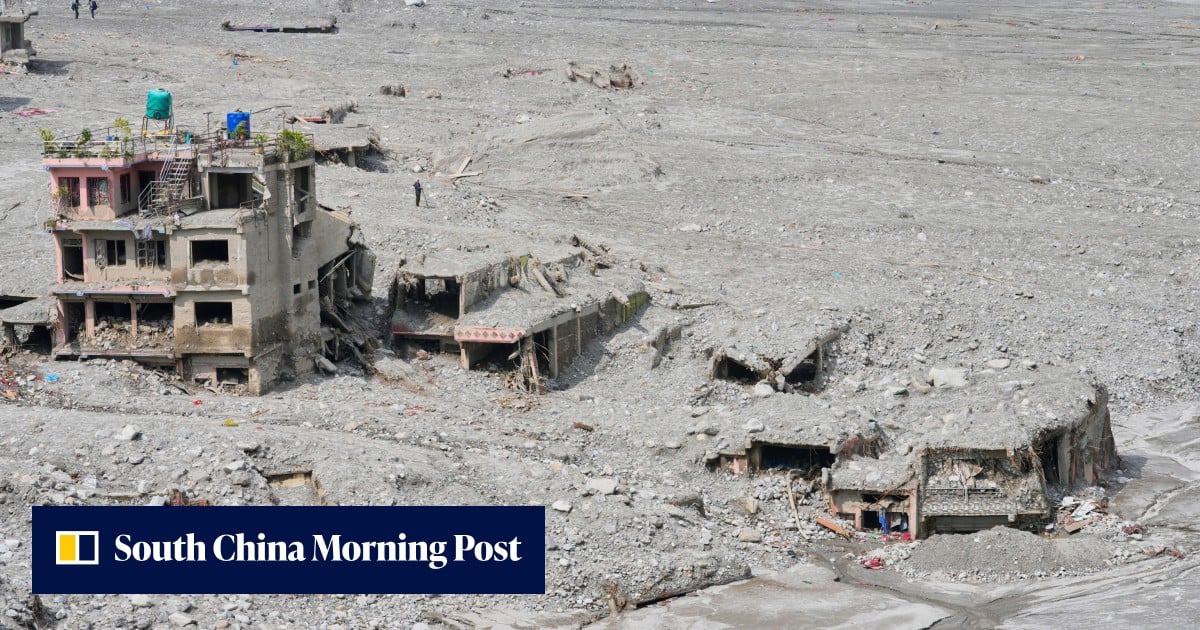
Nepal’s Prime Minister Balendra Shah addressed the UN General Assembly on Thursday night, calling recent devastating floods in Nepal “a warning to the world.” The August disaster killed at least 1,453 people and left 5,500 missing; it was exacerbated by climate change factors such as glacier retreat and permafrost thaw. Shah emphasized that Nepal contributes minimally to global warming yet suffers severely from its impacts, urging international aid for a new ‘Himalaya Climate Resilience Mechanism.’
Written locally by qwen2.5:14b on 2026-09-25,
using this article's own text rather than the other coverage of the
same event (that is the story summary below).
Story summary
Nepal's Prime Minister Balendra Shah, addressing the 81st session of the UN General Assembly on September 24, 2026, proposed establishing a Himalayan Climate Resilience Mechanism led by Nepal, India, and China. The initiative aims to enhance cooperation in sharing satellite data, monitoring glacial lakes, and strengthening early-warning systems to address climate-related disasters, particularly after the devastating flash floods that killed over 1,450 people and displaced thousands in August 2026.
Shah emphasized these measures as a response to environmental challenges affecting mountainous regions. The proposed mechanism would help mitigate risks from glacial lake outburst floods (GLOFs) and other climate-related threats impacting millions of people across the Himalayan region.
The floods, triggered by a glacial and rock collapse on the Nepal-China border, severely impacted tourism and local economies, with hotels and trekking companies experiencing significant cancellations. According to tour planner Pushpraj Rimal in Kathmandu, "It is still a lockdown kind of situation," reflecting ongoing challenges for recovery.
Additionally, there are pressing needs for humanitarian aid and long-term rebuilding efforts. Dr. Nimesh Dhungana from the University of Manchester's HCRI highlighted the importance of governance and accountability in disaster response and recovery processes. With around 5,285 people still missing and numerous displaced families struggling to find stable housing, initiatives like Shah’s proposal are crucial for sustainable development and resilience against future disasters. The mechanism aims not only at immediate relief but also at long-term planning to protect communities from similar catastrophic events in the future.
Written for “Nepal Floods Climate Impact” on 2026-10-05,
grounded in this article and the 20 other(s) covering the same event.
Nepal’s Prime Minister Balendra Shah has appealed for action to combat the rising threat of climate change, calling the flood that devastated his country last month “a warning to the world”.
asserted
that → appeal → world
Shah made the comments during his address to the 81st Session of the United Nations General Assembly in New York on Thursday night.
asserted
Shah → make → night
He told the gathering that the August disaster “was not just a local tragedy”, asking them the question, “Have you really heard that warning?”
Recommended Stories
list of 3 items- list 1 of 3The Nepal floods question: When the Himalayas collapse, who gets warned?
- list 2 of 3Photos: Nepal flood survivors find little trace of former lives
- list 3 of 3‘Orphaned’ by floods, more than 500 Nepali children face uncertain future
asserted
children → tell → future
Political leaders “have been negligent to translate those warnings in action at the speed and scale that the vulnerable people require,” he said.
asserted
he → translate → that
At least 1,453 people died when a torrent of mud, rock and water struck northern Nepal and the China-Tibet border on August 26, triggered by a glacial collapse.
asserted
torrent → die → collapse
According to Nepal’s National Disaster Risk Reduction and Management Authority, 5,500 people were still missing and 13,795 had been rescued.
uncertain
13,795 → accord → Authority
Researchers from the World Weather Attribution (WWA) group said in a report released last week that the disaster was not caused by a single extreme weather event, but rather a “compound crisis” shaped by long-term warming, glacier retreat, permafrost thaw and geological instability.
asserted
disaster → say → warming
Shah said climate change was hurting people not responsible for the crisis but who “are paying a colossal price for it”.
asserted
who → say → it
He said Nepal contributed less than one-tenth of 1 percent of the heat-trapping gases behind climate change.
asserted
Nepal → say → change
About 99 percent of the country’s electricity comes from hydropower, and many workers were trapped in tunnels by the flooding.
asserted
workers → come → flooding
“Our glaciers are retreating, our mountain slopes are becoming unstable, our rivers are becoming less predictable, and every major disaster threatens to erase years of development,” Shah said.
asserted
Shah → retreat → development
Shah urged the international community to help bear the cost of helping Nepal adapt to climate change.
asserted
Nepal → urge → change
He proposed to create a ‘Himalaya Climate Resilience Mechanism’ which would include Nepal and neighbours India and China, and would allow them to share satellite data and expertise, monitor glacial lakes and strengthen joint early warning systems.
asserted
them → propose → systems
Nepal has asked the UN’s loss and damage fund for $20m in aid, the maximum allowed, but a tiny fraction of what it needs.
asserted
it → ask → what
A preliminary assessment by the government has placed the cost of the disaster at $5bn.
asserted
assessment → place → 5bn
The fund, established in 2022 in the aftermath of catastrophic floods in Pakistan, has yet to make even its first disbursement, and observers see Nepal as a key test of its credibility.
asserted
observers → establish → credibility
Earlier this week, the United States pledged an additional $31m in new flood recovery support.
asserted
States → pledge → support
 The Aporia