Buschbacher: Did Prof. Adler File His Amicus Brief for the Wrong Side in Suncor?

Read the original at Reason ↗
Cite

Adler, J. H. (2026, October 1). Buschbacher: Did Prof. Adler File His Amicus Brief for the Wrong Side in Suncor? Reason. https://reason.com/volokh/2026/10/01/buschbacher-did-prof-adler-file-his-amicus-brief-for-the-wrong-side-in-suncor/

Dated when The Aporia collected the article, usually within hours of publication. Check the original for its exact date and byline.

Reason · collected 2026-10-01 · by Jonathan H. Adler

Quick Summary

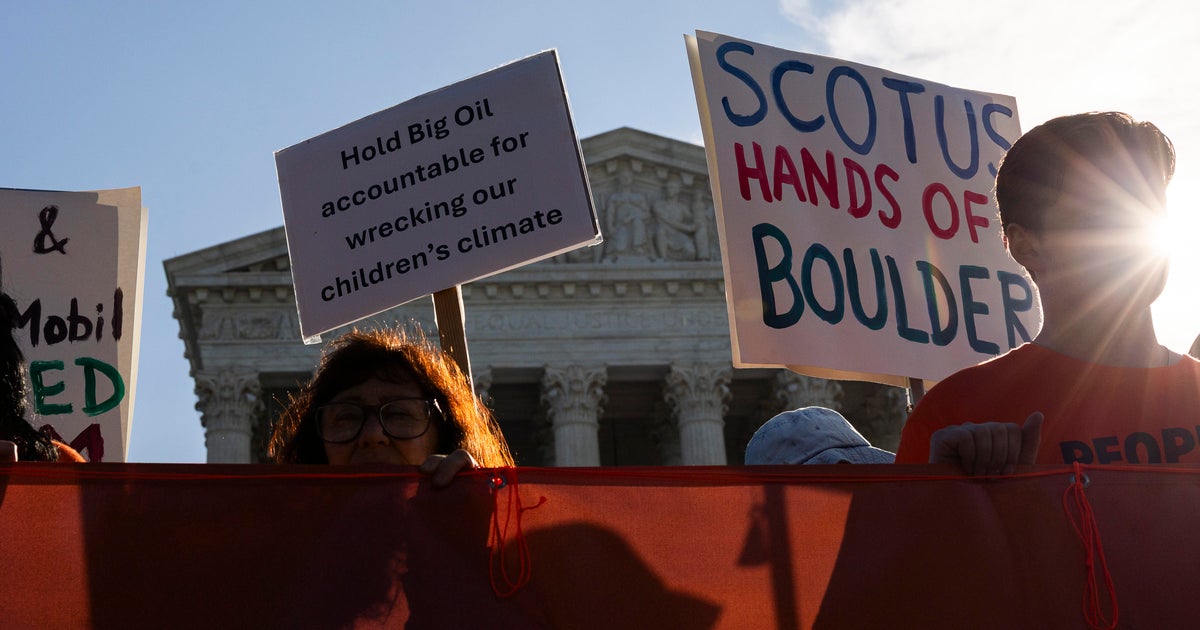
Law professor Jonathan Adler’s amicus brief in the upcoming Supreme Court case Suncor Energy v. Boulder County has drawn criticism from Michael Buschbacher, a managing partner at Boyden Gray PLLC. Buschbacher argues that Adler's brief incorrectly supports Boulder County's position on preemption issues related to climate regulation and litigation. The core of the dispute revolves around whether states or municipalities can regulate greenhouse gas emissions produced outside their jurisdictional boundaries, potentially impacting companies worth nearly $28 trillion in putative damages.
Written by AI on 2026-10-01, from this article's own text only (the story summary below draws on all the coverage).
See how they differ ↓

AI analysis

Story summary

The Supreme Court opened its new term on Monday by hearing arguments in Suncor Energy v. Boulder County, a landmark case that could determine whether states and local governments can sue oil and gas companies for climate change damages. The case, which began in 2018 when Boulder County sued Exxon Mobil and Suncor Energy, accuses these companies of contributing to climate-related harms through their fossil fuel operations. The lawsuit aims to hold the companies financially responsible for local climate impacts using state tort laws.

If the Supreme Court allows such lawsuits, it could set a precedent for similar cases across the nation, potentially affecting industries that emit carbon and leading to increased costs for consumers due to higher legal liabilities. Conversely, if the court rules against Boulder County, it would limit states' ability to use their courts for addressing national policy issues like climate change through tort law, thereby protecting manufacturers from an expanding patchwork of lawsuits based on complex environmental problems.

Written for “Supreme Court Climate Case” on 2026-11-18, grounded in this article and the 35 other(s) covering the same event.

How they differ

12 outlets covered “Supreme Court Climate Case”.

What each outlet says

One AI summary per outlet of its latest article on this story, written from that article alone and checked against it. Open the article for the outlet's own words.

ReasonThis outlet1 Oct

Law professor Jonathan Adler’s amicus brief in the upcoming Supreme Court case Suncor Energy v. Boulder County has drawn criticism from Michael Buschbacher, a managing partner at Boyden Gray PLLC. Buschbacher argues that Adler's brief incorrectly supports Boulder County's position on preemption issues related to climate regulation and litigation. The core of the dispute revolves around whether states or…

Buschbacher: Did Prof. Adler File His Amicus Brief for the Wrong Side in Suncor? (this article)2 articles from Reason on this story
Washington Examiner5 Oct

During a Supreme Court hearing on Suncor Energy v. County Commissioners of Boulder County, Justice Elena Kagan compared Boulder’s climate lawsuit against oil companies to the lawsuits filed against tobacco companies in the 1990s. The case focuses on whether Boulder’s lawsuit can proceed under state law or is preempted by federal regulations regarding air pollution and greenhouse gas emissions. Shanmugam…

Justice Kagan compares Boulder’s climate lawsuit to ‘big tobacco’ lawsuits →9 articles from Washington Examiner on this story
CBS News6 Oct

The U.S. Supreme Court heard oral arguments regarding an attempt by energy companies to prevent a lawsuit filed by Boulder County and the city of Boulder, Colorado. The plaintiffs aim to hold these companies responsible for damages caused by global climate change. Eight justices participated in the hearing.

U.S. Supreme Court wrestles with bid by energy companies to block major climate suit →7 articles from CBS News on this story
Fox News10 Oct

Energy policy experts warn that a Supreme Court decision in favor of climate change lawsuits against oil companies could lead to the bankruptcy of these firms and significant increases in gas prices. The case, Suncor v. Boulder, centers on whether federal law preempts state legal claims seeking damages from fossil fuel producers for alleged climate-related harms. During oral arguments, Justice Clarence Thomas…

Supreme Court climate case could bankrupt oil companies, send gas prices soaring, experts warn →5 articles from Fox News on this story
NPR5 Oct

Today marks the start of a significant Supreme Court term with arguments in a major climate change case where Boulder, Colorado is suing Suncor and Exxon Mobil for misleading the public about fossil fuel harms. Meanwhile, Brazil's presidential race will head to a runoff between Luiz Inácio Lula da Silva and Flávio Bolsonaro after neither candidate secured enough votes in the first round.

SCOTUS hears major climate change case. And, Brazil's presidential race goes to runoff →3 articles from NPR on this story
NBC News5 Oct

The Supreme Court's new term starts with a case where oil companies seek to dismiss lawsuits filed by cities like Boulder, Colorado, claiming the companies should pay damages for climate change impacts. The lawsuit against Exxon Mobil and Suncor Energy alleges these firms misled consumers about greenhouse gas effects, while the defendants deny wrongdoing and argue that federal jurisdiction, not states, is…

New Supreme Court term begins with a climate change case seeking to hold energy companies liable →3 articles from NBC News on this story
Show 6 more outlets
Los Angeles Times5 Oct

During a Supreme Court hearing, justices expressed skepticism about allowing state-based lawsuits against oil producers over climate change damages. Justices Brett Kavanaugh and Elena Kagan suggested that such claims might be preempted by federal law under the Clean Air Act. The case involves Colorado’s ruling that Boulder County can sue for damages in local court, which could impact similar pending litigation in…

Supreme Court sounds wary of state-based climate change suits against oil producers →2 articles from Los Angeles Times on this story
The Straits Times5 Oct

The US Supreme Court is set to hear arguments in Suncor v Boulder on October 5, where plaintiffs from Colorado are suing oil companies for damages related to climate change. The case involves claims that ExxonMobil and Suncor knowingly caused and concealed the dangers of fossil fuels, resulting in significant financial losses due to extreme weather events. At stake is whether federal law pre-empts these state-level…

US Supreme Court hears bid to shut the door on climate suits →
ABC News (US)5 Oct

The Supreme Court's new term starts with significant cases involving climate change, gun rights, and immigration policies. In the climate change case, energy companies Suncor and ExxonMobil seek to block lawsuits in Boulder, Colorado, where local officials claim these companies should contribute financially to damages caused by climate change. The court will also examine challenges to state laws banning certain…

Supreme Court term begins with cases on climate change, immigration and gun rights →
Toronto Star5 Oct

The Supreme Court's new term begins with significant cases addressing climate change, gun control, and immigration policies. Energy companies like Suncor and ExxonMobil are challenging lawsuits in Boulder, Colorado, which seek to hold them financially responsible for damages caused by climate change. Additionally, the court will consider challenges to state laws banning assault-style weapons and Trump's deportation…

A new Supreme Court term begins with cases on climate change, immigration and gun rights →
The Guardian5 Oct

The US Supreme Court will hear arguments on Monday concerning Suncor Energy’s and ExxonMobil’s bid to block climate damage lawsuits brought by Boulder County. Local officials argue that these oil companies should cover some of the costs associated with climate impacts, while the companies assert federal law prevents state courts from handling such cases. If the court rules in favor of the fossil fuel industry, it…

US supreme court to hear big oil’s bid to block climate damage lawsuits →
CBC6 Oct

The U.S. Supreme Court heard arguments on whether local governments can sue oil and gas companies for climate damages in state courts. Boulder, Colorado, is suing Suncor and ExxonMobil to recover costs from climate-related disasters like the Marshall Fire, which caused $2 billion in damage. Chief Justice John Roberts expressed concern about a potential flood of similar lawsuits across the country, while Justice…

What U.S. Supreme Court judges said at a hearing on climate damages from oil and gas →

Where they agree and split

Agreed

AI · cited, from two or more outlets

  • The case involves whether state courts can hear lawsuits against energy companies for damages related to climate change.13
Quoted from the coverage (2)

About a dozen states have banned semiautomatic rifles like AR-15s, which are often called assault weapons.

4 outlets

Justice Elena Kagan compared the climate change lawsuits to previous claims against tobacco and opioid companies brought by states on behalf of their citizens.

4 outlets

Disputed

Picked by our model, which is sometimes wrong

  • CBS News and The Guardian present different perspectives on the potential impact of the Supreme Court's decision, with CBS focusing on the procedural aspects while The Guardian emphasizes the broader implications for climate accountability.13

Framing

How the first headlines put it

  • CBS News and The Straits Times both frame the case as a bid to shut down climate change lawsuits, but CBS focuses more on the procedural aspects while The Straits Times highlights the broader implications.12
  • ABC News frames the Supreme Court's new term with multiple high-profile cases including climate change, immigration, and gun rights, whereas Fox News emphasizes the potential financial impact on oil companies if the court rules in favor of local governments.45
The full story: what happened, how it changed, and all 36 articles →

Compared with similar articles

This article reads unscored and hedges 21% of its claims. Each row says how that neighbour differs.
CBS News
Hedges 6 of 46 claims Outlet record 67/100
Washington Examiner
Hedges 9 of 22 claims Outlet record 67/100
“The articles discuss different aspects of the Suncor Energy v. Boulder County case; one focuses on Prof. Adler's amicus brief and its reception, while the other provides a broader perspective on the implications of the case for energy companies and consumers.”
Reason
Hedges 2 of 10 claims Outlet record 67/100
“The articles refer to different points in time related to the Suncor Energy v. Boulder County case; Article A discusses a brief and attention it received, while Article B mentions the upcoming oral argument.”
Reason
Outlet record 67/100
“The articles discuss different aspects related to Supreme Court activities but do not describe the same specific incident.”
CBS News
Hedges 9 of 102 claims Outlet record 67/100
“Article A discusses Prof. Adler's amicus brief in Suncor Energy v. Boulder County, while Article B is about the broader start of the Supreme Court's new term and mentions a lawsuit on Monday but does not specify it as being related to Suncor.”
Daily Mail
Leans left Hedges 3 of 14 claims Outlet record 70/100
“The articles discuss different aspects related to the Suncor Energy v County Commissioners of Boulder County case but do not describe the same specific incident. Article A covers Justice Alito's recusal, while Article B discusses an amicus brief in relation to the upcoming oral arguments.”
Washington Examiner
Leans right Hedges 3 of 14 claims Outlet record 67/100
“While both articles mention the Suncor Energy v. Boulder County case, Article A describes Justice Alito's recusal from the case a week before oral arguments, while Article B discusses an amicus brief and anticipation for the upcoming oral arguments.”
Washington Examiner
Leans left Hedges 12 of 56 claims Outlet record 67/100
“While both articles discuss the upcoming Supreme Court case Suncor Energy v. Boulder County, Article A covers the general arguments and potential outcomes of the case, whereas Article B focuses on a specific amicus brief and its reception, indicating different aspects or perspectives rather than the same event.”
The Straits Times
Leans left Hedges 6 of 19 claims Outlet record 64/100
“Article A discusses criticism surrounding a legal brief in preparation for an upcoming Supreme Court case, while Article B reports on the actual oral arguments being heard in the Suncor v Boulder case.”
The Guardian
Leans left Hedges 5 of 36 claims Outlet record 64/100
“While both articles discuss the upcoming Supreme Court case of Suncor Energy v. Boulder County, they are describing different aspects: Article A focuses on a law professor's amicus brief and its reception, while Article B covers the broader context and significance of the court hearing.”

Story

Supreme Court Climate Case
Environment · 36 article(s) covering the same event. Compare every outlet's account →
How this article was measured signals, leaning charts, publisher record, byline, topics and claims

Signals How these are calculated →

Claims extracted
87
sentences that state something as happening or true
Uncertain
21%
18 of 87 hedged ("reportedly", "may", "according to")
Leaning
withheld
no quote in the article backed the model's score
Publisher signals
67/100
Reason's corrections and hedging, across everything collected from it. Not a measure of accuracy.
Outlets on this story
36
Environment
Same framing elsewhere
1
articles that frame the event the way this one does
Analyzed 2026-10-01 · how these are computed

How this is being covered How these are calculated →

Article leaning vs. publisher reliability
Source leaning vs. consistency

Publisher

Reason · 1377 article(s) · 4 correction(s) detected
Running correction rate · 4 correction(s)

Who wrote this

Jonathan H. Adler
21 article(s) here · 1 carrying a prediction
Readers may recall the story of Karyann Parkinson, the Williamsburg mother (and law student) who was criminally prosecuted for letting her young child walk to a neighborhood pond to collect goose feathers.
Here is the article's basic claim: When the Supreme Court begins weighing the constitutionality of assault-weapons bans next month, the justices will be guided by the court's own precedent: a landmark ruling that such restrictions are allowed only if a firearm is both "dangerous and unusual."
It means that our current forms of activist anti-Zionism would make the U.S. a place wildly different from the one Washington envisioned.
2026-11-15 · assertive framing · How "Anti-Zionism" Is Creating Zionists
There has been rampant speculation that one of the older conservative justices (namely Justice Sam Alito or Justice Clarence Thomas) might choose to retire before the end of the year so that President Trump could name a replacement while there is still a Republican majority in the Senate.
The winner will receive an award plaque and be recognized at the section's program at the AALS annual meeting in January 2027.
Contributions to the symposium are: - Elizabeth Corey, Fusion: Power Is Not the Last Word; - Richard Morrison, What Fusion Will We Build; - Paul Mueller, Recovering Fusionism; - Veronique de Rugy, Fusionism and the Moral Prerequisites of Citizenship; - Paul Seaton, The Bifurcated Fusionist Regime. For more on the book, and why Fusionism remains relevant today, you can also check out this interview with Slade by James Patterson on Law & Liberty.
2026-10-11 · assertive framing · Fusionism in the Twenty-First Century
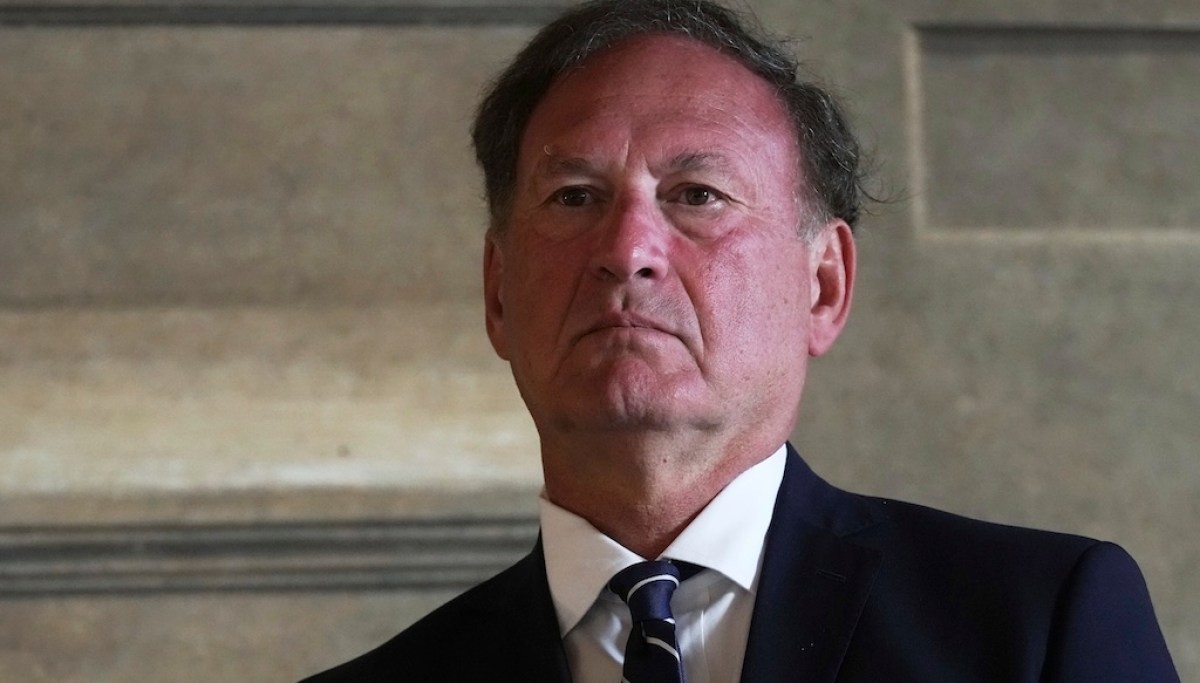
It seems to suggest that the claims made by the petitioners (and their allies) about the potentially catastrophic effects on the oil and gas industry of an adverse ruling in Suncor may have convinced Justice Alito that he needed to recuse, even though he does not own stock in any of the companies that are part of the case.
Mostly law professors | Sometimes contrarian | Often libertarian | Always independent This morning, the Supreme Court will hear oral argument in Suncor Energy v. Boulder County, in which fossil fuel energy companies are asking the Supreme Court to conclude that all state-law-based tort suits over damages allegedly caused by climate change are preempted.
2026-10-05 · assertive framing · Unpacking the Suncor Oral Argument
That may seem a contradiction: The justice often publicly portrayed as unyielding and inflexible is, behind the scenes, the conservative who is uniquely adept at finding common ground on the most divisive issues.
On Monday the Supreme Court will hear oral argument in Suncor Energy v. Boulder County.
Also by Jonathan H. Adler
Nothing else under this byline is closely related to this article, so these are simply their most recent.
All 21 articles by Jonathan H. Adler →

Topics

Boulder County Boyden Gray PLLC Suncor Suncor Energy the Supreme Court

Subjects

Adler PERSON · 7× Suncor ORG · 6× Boulder County GPE · 5× Buschbacher PERSON · 2× Michael Buschbacher PERSON · 2× Boyden Gray PLLC ORG · 1× Suncor Energy ORG · 1× Supreme Court ORG · 1× the Supreme Court ORG · 1× the U.S. Supreme Court ORG · 1×

Narrative

That cuts strongly against Boulder County, since nothing in the Clean Air Act purports to give states any new power to impose their own specific state law on emissions that originate outside their borders, much less authorizes them to do so with the "exceedingly clear language" required if Congress "wishes to significantly alter the balance between federal and state power."
framing: mixed · carried by 1 article(s) · first seen 2026-10-01
On Monday the Supreme Court will hear oral argument in Suncor Energy v. Boulder County.

Claims (87 extracted, 18 hedged)

On Monday the Supreme Court will hear oral argument in Suncor Energy v. Boulder County. asserted
Court → hear → County
My amicus brief in Suncor has received a decent amount of attention--but not all of it favorable. asserted
all → receive → it
Perhaps because I have been critical of much climate regulation and litigation, some were surprised that I believe Boulder County has the better of the preemption arguments here. asserted
County → believe → arguments
Michael Buschbacher, Managing Partner of Boyden Gray PLLC, is among those who think I have erred. asserted
I → think → those
Indeed, he thinks that my work actually supports the other side. asserted
work → think → side
I am unconvinced, and will reply in a follow-up post. asserted
I → reply → post
For now, here is what Buschbacher has to say. asserted
has → say → what
* Prof. Adler Filed His Suncor Amicus Brief in Support of the Wrong Party Michael Buschbacher asserted
Adler → file → Buschbacher
The occasion for this guest post is Prof. Adler's recent amicus brief submitted to the U.S. Supreme Court in Suncor v. Boulder County, set to be argued next month.[1] asserted
occasion → submit → County
By some estimates, the litigation campaign of which Suncor is part asserts some $28 trillion in total putative damages against a select group of energy companies—nearly an entire year of American GDP. asserted
Suncor → assert → GDP
The central question in Suncor is whether states and municipalities can apply their own law to regulate the greenhouse-gas emissions of fuel producers and users, not just for emissions within their own borders, but also for emissions anywhere in the world. asserted
states → apply → world
If that sounds a bit out there, that's because it is. asserted
it → sound → ?
So far, even some of the hand-picked state courts that have heard these claims have been slow to bite. uncertain
that → pick → claims
For example, the Maryland Supreme Court earlier this year rejected similar arguments by the City of Baltimore, concluding that its claims about climate change were all preempted by federal law. uncertain
claims → reject → law
Even the pro-climate litigation dissents in that case agreed that Maryland state law could not reach worldwide emissions directly. uncertain
law → agree → emissions
Several other state courts have reached similar conclusions. asserted
courts → reach → conclusions
Prof. Adler's brief falls to the "left" of these decisions. asserted
brief → fall → decisions
But while his brief is offered in support of Boulder County, it also stops well short of the plaintiffs' position that one state or municipality can apply its own law to the rest of the world. asserted
state → offer → world
Although Prof. Adler opens with broad strokes—"Nothing in federal law, let alone the Constitution, preempts state-law claims seeking relief from injuries allegedly caused or exacerbated by petitioners' conduct," Adler Br. at 2—he later adds a very important caveat: perhaps only the law of the source state (that is, the jurisdiction where the emissions took place) can apply, and everything else is precluded. uncertain
everything → open → place
"No home cooking," as he's put it elsewhere. asserted
he → put → it
There are several points in the brief where I think Prof. Adler errs or leaves key information out, but it's the no-home-cooking caveat that I want to focus on. asserted
I → be → that
In my view, the reading of the Clean Air Act he advocates should require him to take the petitioners' side or, at least, to file on behalf of neither party. asserted
he → advocate → party
As I'll explain below, Prof. Adler comes out on the plaintiffs' side here only by misdescribing (or misapprehending) the case that Boulder County has actually pled. asserted
County → explain → that
As Prof. Adler points out, state power over in-state pollution was historically very broad and remains broad today. asserted
power → point → pollution
What happens in Vegas (or anywhere else) doesn't necessarily stay there. asserted
happens → happen → Vegas
So, although in-state pollution can be governed by state law, interstate pollution—that is, pollution that originates in one jurisdiction and ends up having an alleged effect in another—was exclusively controlled by federal law from time immemorial. asserted
that → govern → time
As my colleague Jared Kelson and I explain in our amicus brief for 74 members of the House, application of this principle to interstate air pollution goes back at least to Georgia v. Tennessee Copper Co., 206 U.S. 230 (1907). asserted
application → explain → Co.
Originally, the federal law in question was federal common law—or "general law," as it was often called, in contrast with specific local law. asserted
it → call → law
Erie Railroad Company v. Tompkins did not abrogate this body of law since rules dealing "with air and water in their ambient or interstate aspects," Illinois v. City of Milwaukee, 406 U.S. 91, 103 (1972), are "matters essentially of federal character," United States v. Standard Oil Co. of Cal., 332 U.S. 301, 307 (1947). asserted
Illinois → abrogate → .
However, the governing federal law changed in the 1970s, when Congress enacted the core environmental regulatory statutes we still have today: the Clean Air Act, the Clean Water Act, etc. asserted
we → govern → statutes
These statutes not only displaced federal common law, they also significantly federalized pollution policy, albeit in a novel way. asserted
they → displace → way
Rather than set uniform national command-and-control regulations as the default rule, the Clean Air Act and Clean Water Act mostly imposed a regime somewhat misleadingly described as "cooperative federalism." asserted
Act → set → federalism
Basically, Congress makes an offer the states can't refuse, using funding strings and sanctions to pressure them to regulate stringently enough to meet federal pollution-control targets set by EPA. asserted
states → make → EPA
Prof. Adler spins all this as Congress "preserving" a large amount of state discretion. asserted
Congress → spin → discretion
That's a rosy version of the history as to traditional areas of state territorial sovereignty—the Clean Air Act in particular drove much American industry overseas contrary to state wishes—but in many areas Congress did at least leave states room to choose how to reduce in-state pollution. asserted
Congress → drive → pollution
As Prof. Adler acknowledges, there are some exceptions where Congress took away even traditional in-state regulatory authority when doing so was necessary to avoid a patchwork of inconsistent state regulations over, e.g., motor vehicle emissions. asserted
doing → acknowledge → emissions
But he's right that, generally, Congress did not disturb the pre-existing balance of federal and state power over emissions regulation. asserted
Congress → disturb → regulation
The problem for Boulder County is that under that pre-existing balance, states had no authority to apply their own law to out-of-state air emissions, which had always been governed by federal common law. asserted
which → have → law
That cuts strongly against Boulder County, since nothing in the Clean Air Act purports to give states any new power to impose their own specific state law on emissions that originate outside their borders, much less authorizes them to do so with the "exceedingly clear language" required if Congress "wishes to significantly alter the balance between federal and state power." asserted
Congress → cut → power
Indeed, the various Clean Air Act provisions that expressly address interstate and international air emissions concerns all presuppose the continued existence of traditional territorial limits on governmental authority. asserted
that → address → authority
…and 47 more, not listed.

Give feedback · no sign-in needed

No sign-in needed for now. Your note is sent without a name, so it cannot be answered.

History Support