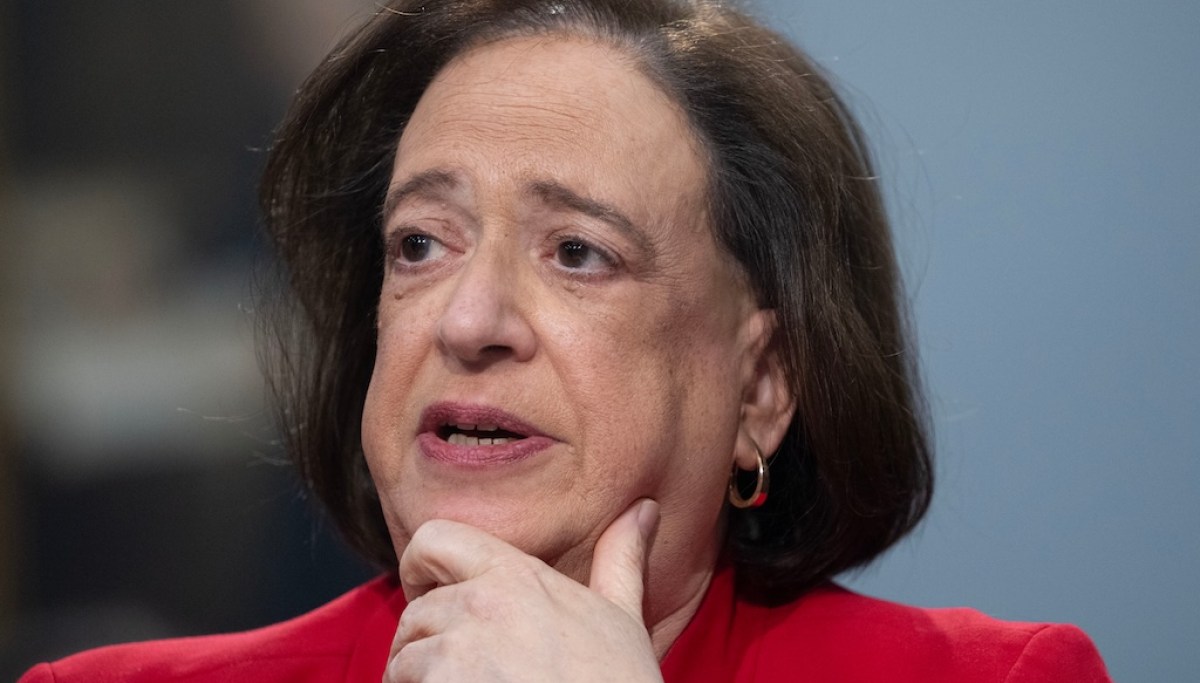
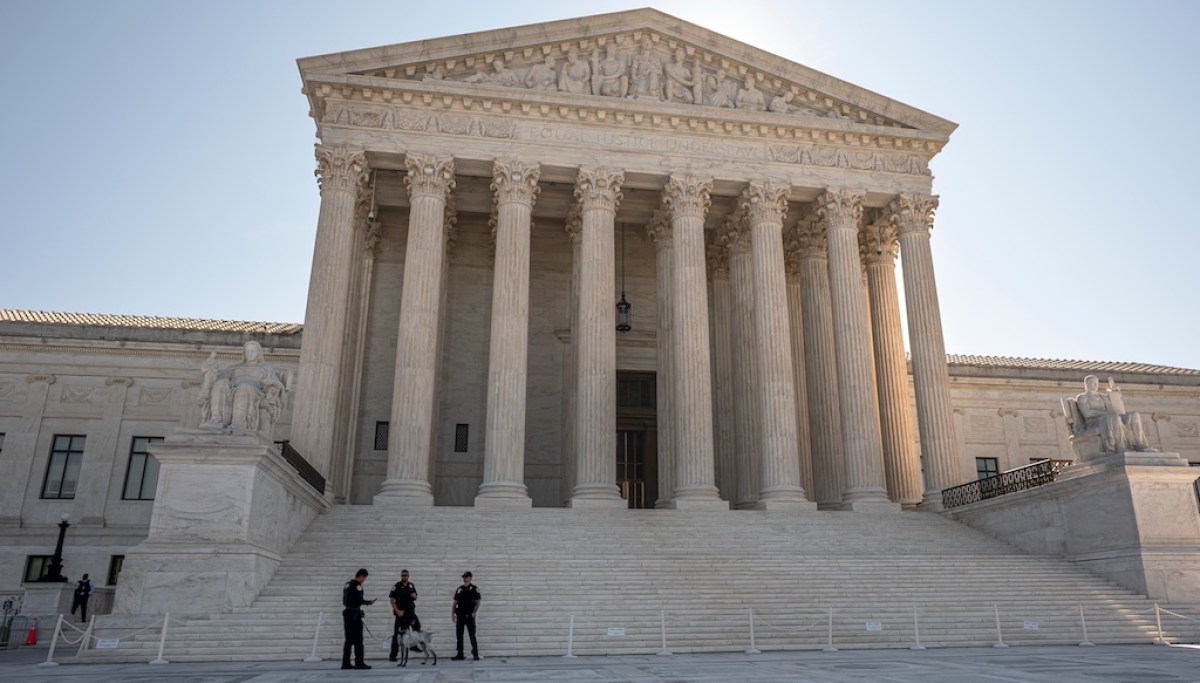
Justice Kagan compares Boulder’s climate lawsuit to ‘big tobacco’ lawsuits

Read the original at Washington Examiner ↗
Washington Examiner · collected 2026-10-05 · by Jack Birle

Quick Summary

During a Supreme Court hearing on Suncor Energy v. County Commissioners of Boulder County, Justice Elena Kagan compared Boulder’s climate lawsuit against oil companies to the lawsuits filed against tobacco companies in the 1990s. The case focuses on whether Boulder’s lawsuit can proceed under state law or is preempted by federal regulations regarding air pollution and greenhouse gas emissions. Shanmugam, representing Suncor Energy, argued that both the Clean Air Act and constitutional principles preclude the lawsuit from going forward, but Kagan questioned why these cases should not be allowed to proceed similarly to how tobacco lawsuits were permitted decades ago.
Written locally by qwen2.5:14b on 2026-10-05, using this article's own text rather than the other coverage of the same event (that is the story summary below).

AI analysis runs on qwen2.5:14b, locally

Story summary

When the Supreme Court begins its new term on Monday, it will consider Suncor Energy v. Boulder County, a landmark case that could determine if state and local governments can sue oil companies for climate change damages. In 2018, Boulder County sued Exxon Mobil and Suncor Energy, alleging their fossil fuel operations contributed to local climate-related harms. The suit argues the companies deceived the public about the dangers of greenhouse gas emissions through deceptive advertising and marketing.

If the Supreme Court allows these lawsuits to proceed, it could set a precedent for other states and municipalities across the country to file similar suits against energy firms, potentially leading to substantial financial liability for the industry. Conversely, if federal law preempts such state-level actions, manufacturers nationwide might face fewer climate-related legal challenges. The case is seen as significant not only for its environmental implications but also for its potential impact on broader issues of federalism and interstate commerce.

Written for “Supreme Court Climate Case” on 2026-10-06, grounded in this article and the 32 other(s) covering the same event.
Why this leaning score
The article's own words the score was based on. Each is quoted verbatim and was checked against the article text before being stored, so you can find it in the original.
Reading Leans left (beta estimate) Confidence high 1 quote(s) discarded as not found in the article
Leaning: leans left for article 58428 (high confidence, 1 verified quote) · logged 2026-10-05

Signals How these are calculated →

Claims extracted
18
claim-shaped sentences
Uncertain
6%
1 of 18 hedged
Leaning
Leans left
of the writing, not the subject · beta estimate
Correction & hedging signals
72.3
corrections and hedging in what we collected; not a measure of accuracy
Outlets on this story
33
Environment
Narrative spread
1
articles carrying this framing
Analyzed 2026-10-05 · how these are computed

Story

📰 Supreme Court Climate Case
Environment · 33 article(s) covering the same event. See how they differ ↓

How this is being covered How these are calculated →

Article leaning vs. publisher reliability
Source leaning vs. consistency

Compared with similar articles

This article reads leans left and hedges 6% of its claims. Each row says how that neighbour differs.
Washington Examiner
⚖️ Leans left 🔴 21% hedged 12 of 56 📰 publisher trust 72
“Both articles discuss the Supreme Court hearing oral arguments on October 5, 2026, in the case Suncor Energy v. County Commissioners of Boulder County regarding climate change lawsuits.”
The Straits Times
⚖️ Leans left 🔴 32% hedged 6 of 19 📰 publisher trust 59
“Both articles describe the US Supreme Court hearing arguments on October 5, 2026, regarding a climate lawsuit initiated by Boulder, Colorado against oil companies.”
Washington Examiner
⚖️ Leans strongly right further right than this 🔴 6% hedged 2 of 34 📰 publisher trust 72
“Both articles describe the Supreme Court hearing oral arguments on the same day in Suncor Energy v. Boulder County regarding the constitutionality and permissibility of the lawsuit under federal law.”
NPR
⚖️ leaning not scored 🔴 15% hedged 8 of 52 📰 publisher trust 60
“Both articles discuss the Supreme Court's oral arguments on the first day of its new term regarding Boulder, Colorado's climate change lawsuit against energy companies.”
NBC News
⚖️ Leans left 🔴 21% hedged 7 of 33 📰 publisher trust 95
“Both articles describe the Supreme Court hearing oral arguments on October 5, 2026 regarding Boulder's climate lawsuit against energy companies.”
Washington Examiner
⚖️ leaning not scored 🔴 41% hedged 9 of 22 📰 publisher trust 72
“Both articles refer to the Supreme Court hearing Suncor Energy v. County Commissioners of Boulder County on October 5, 2026.”
Washington Examiner
⚖️ leaning not scored 🔴 18% hedged 7 of 40 📰 publisher trust 72
“Both articles describe the Supreme Court hearing oral arguments on the same day, in the same case (Suncor Energy v. County Commissioners of Boulder County), regarding whether a climate change lawsuit can proceed.”
Reason
⚖️ leaning not scored 🔴 20% hedged 2 of 10 📰 publisher trust 66
“Both articles refer to the Supreme Court hearing oral arguments on October 5, 2026, in Suncor Energy v. Boulder County regarding climate change lawsuits.”
The Guardian
⚖️ Leans left 🔴 14% hedged 5 of 36 📰 publisher trust 68
“Both articles discuss the Supreme Court hearing arguments on the Suncor Energy versus Boulder County case on the same day.”
Washington Examiner
⚖️ leaning not scored 🔴 10% hedged 2 of 20 📰 publisher trust 72
“Both articles refer to the Supreme Court hearing oral arguments on October 5, 2026, in Suncor Energy v. County Commissioners of Boulder County regarding Boulder's climate change lawsuit.”

Publisher

Washington Examiner · 2018 article(s) · 3 correction(s) detected
Running correction rate · 3 correction(s)
2026-10-03
Tennessee’s prison chief resigns after failed Christa Pike execution, Bill Lee says
2026-10-03
Alito says there’s no perfect time to retire while confirming he will reconsider next year
2026-10-01
Christa Pike was set to be the first woman to be executed in Tennessee in 200 years before botched attempts: What to know

Who wrote this

Jack Birle
19 article(s) here · 1 carrying a prediction
🔮 The case is expected to have sweeping ramifications for similar lawsuits that climate activists and Democrat-led jurisdictions have attempted to bring against oil companies, either broadly allowing them to continue or barring them as a matter of federal law.
🔮 The case is expected to have sweeping ramifications for similar lawsuits that climate activists and Democrat-led jurisdictions have attempted to bring against oil companies, either broadly allowing them to continue or shutting them down as barred by federal law.
🔮 The Supreme Court returns for its new term on Monday, and oral arguments in a major case over the fate of a costly climate change lawsuit brought by Boulder County, Colorado, will kick off a term set to feature several blockbuster legal battles.
🔮 The Supreme Court announced Thursday that it will take up a challenge to the Trump administration’s policy of mandatory detention for illegal immigrants, setting up one of the biggest tests yet for President Donald Trump’s immigration agenda at the high court.
🔮 The panel of 11 U.S. circuit judges that heard Tuesday’s arguments grilled Shumate over his bid to quash Boasberg’s inquiry, questioning why Boasberg could not continue gathering information before determining if he wanted to make a criminal referral for contempt.
🔮 The federal district court judge took issue with immigration officials not allowing the illegal immigrants an opportunity to raise fears of torture or persecution regarding the third country they would be deported to, a ruling the U.S. Court of Appeals for the First Circuit upheld earlier this month.
🔮 The DOT found California noncompliant in January, telling the Golden State it would withhold $160 million in federal funding because it failed to cancel noncompliant CDLs.
🔮 Justice Samuel Alito announced Monday he would be recusing himself from a major Supreme Court climate change case a week before oral arguments, after facing pressure from left-wing groups to do so.
🔮 Supreme Court justices will return to Washington on Monday for their first closed-door conference to discuss cases petitioned to them, a week ahead of the beginning of the high court’s new term featuring several major cases.
🔮 The Supreme Court’s ruling seemingly ends a messy legal saga that has sparked confusion over which congressional map Missouri would present to voters for the general election after the August primary was held using the 2025 map.
Also by Jack Birle
Nothing else under this byline is closely related to this article, so these are simply their most recent.
All 19 articles by Jack Birle →

Topics

Boulder Constitution Suncor the Clean Air Act the Supreme Court

Subjects

Boulder GPE · 6× Kagan PERSON · 5× Shanmugam PERSON · 4× the Supreme Court ORG · 4× Suncor ORG · 3× Congress ORG · 2× Kavanaugh PERSON · 2× Colorado GPE · 1× Elena Kagan PERSON · 1× Suncor Energy v. ORG · 1×

Narrative

“We don’t have to reinvent the wheel because we’ve said this multiple times, and Congress presumably, when doing the Clean Air Act and doing Clean Air Act amendments, has relied on this Court’s precedents establishing that this kind of pollution is a federal law matter unless Congress speaks otherwise,” Kavanaugh said.
framing: assertive · carried by 1 article(s) · first seen 2026-10-05
🔮 The case is expected to have sweeping ramifications for similar lawsuits that climate activists and Democrat-led jurisdictions have attempted to bring against oil companies, either broadly allowing them to continue or barring them as a matter of federal law.
2026-10-05 · Washington Examiner
Justice Kagan compares Boulder’s climate lawsuit to ‘big tobacco’ lawsuits · assertive framing

Claims (18 extracted, 1 hedged)

Justice Elena Kagan likened Boulder, Colorado’s lawsuits against oil companies for alleged climate change damages to the litany of lawsuits filed against “big tobacco” in the 1990s, as the Supreme Court considered Monday whether to allow Boulder’s landmark lawsuit to proceed. asserted
lawsuit → liken → 1990s
The Supreme Court heard oral arguments in Suncor Energy v. County Commissioners of Boulder County over whether the lawsuit is preempted by federal law or not permissible under the Constitution, or if it can proceed to trial in state court. asserted
it → hear → court
The case is expected to have sweeping ramifications for similar lawsuits that climate activists and Democrat-led jurisdictions have attempted to bring against oil companies, either broadly allowing them to continue or barring them as a matter of federal law. asserted
them → expect → law
During Monday’s oral arguments, Kagan questioned Suncor’s lawyer, Kannon Shanmugam, over what prevents Boulder’s lawsuit from going forward, whereas major lawsuits against “big tobacco” and opioid makers were allowed to proceed on what she said were seemingly similar claims. “In multiple respects, this suit appears to be based on the old 1990s tobacco suits that were brought by states and local governments, basically saying that big tobacco had made representations, misrepresentations, which had caused people to to overuse the product, causing harm to those governments,” Kagan said. uncertain
Kagan → question → governments
“I suppose the opioid litigation more recently follows the same model. asserted
litigation → suppose → model
So, if this is Chapter 3, were Chapters 1 and 2 also preempted?” asserted
Chapters → preempt → ?
Kagan added in her question to Shanmugam. asserted
Kagan → add → Shanmugam
Shanmugam rejected that Boulder’s lawsuit was similar to big tobacco lawsuits, saying it is not a new chapter but rather a “different book.” asserted
it → reject → lawsuits
The lawyer for Suncor highlighted differences between the two lawsuits, to which Kagan responded by claiming that she was “waiting to see the distinction,” noting that “this complaint talks a lot about misrepresentations” made by the oil companies. asserted
complaint → highlight → companies
Justice Brett Kavanaugh later followed up on Kagan’s question, asking why Shanmugam did not just assert that the Clean Air Act prevents states and counties from bringing forward lawsuits about air pollution, rather than attempting to make an additional constitutional argument. asserted
Act → follow → argument
“I thought the answer was that this Court has consistently said that air and water pollution are different in our federal enclaves,” Kavanaugh said. asserted
Kavanaugh → think → enclaves
“Why are you resisting that?” asserted
you → resist → that
Shanmugam had argued throughout the hearing that Boulder’s lawsuit should be dismissed both because the Clean Air Act gives the federal government jurisdiction over the regulation of greenhouse gas emissions and air pollution, and because the Constitution does not allow states to regulate matters beyond their borders. asserted
states → argue → borders
Shanmugam heavily emphasized the constitutional argument, leading to pushback from the justices who believed the Clean Air Act was likely the stronger argument. asserted
Act → emphasize → justices
“We don’t have to reinvent the wheel because we’ve said this multiple times, and Congress presumably, when doing the Clean Air Act and doing Clean Air Act amendments, has relied on this Court’s precedents establishing that this kind of pollution is a federal law matter unless Congress speaks otherwise,” Kavanaugh said. asserted
Kavanaugh → have → pollution
The high court appeared split on whether to allow Boulder’s lawsuit to move forward, but a majority appeared open to striking down the lawsuit as preempted by the Clean Air Act. asserted
majority → appear → Act
Because Justice Samuel Alito recused himself from the case, an eight-person bench will decide the case for the Supreme Court, leaving open the possibility of a rare 4-4 deadlock. asserted
bench → recuse → deadlock
The Suncor case was the first the Supreme Court heard in its new term, and the justices are expected to issue a ruling as soon as early 2027. asserted
justices → hear → 2027

💬Give feedback
🕘History 🎫Support