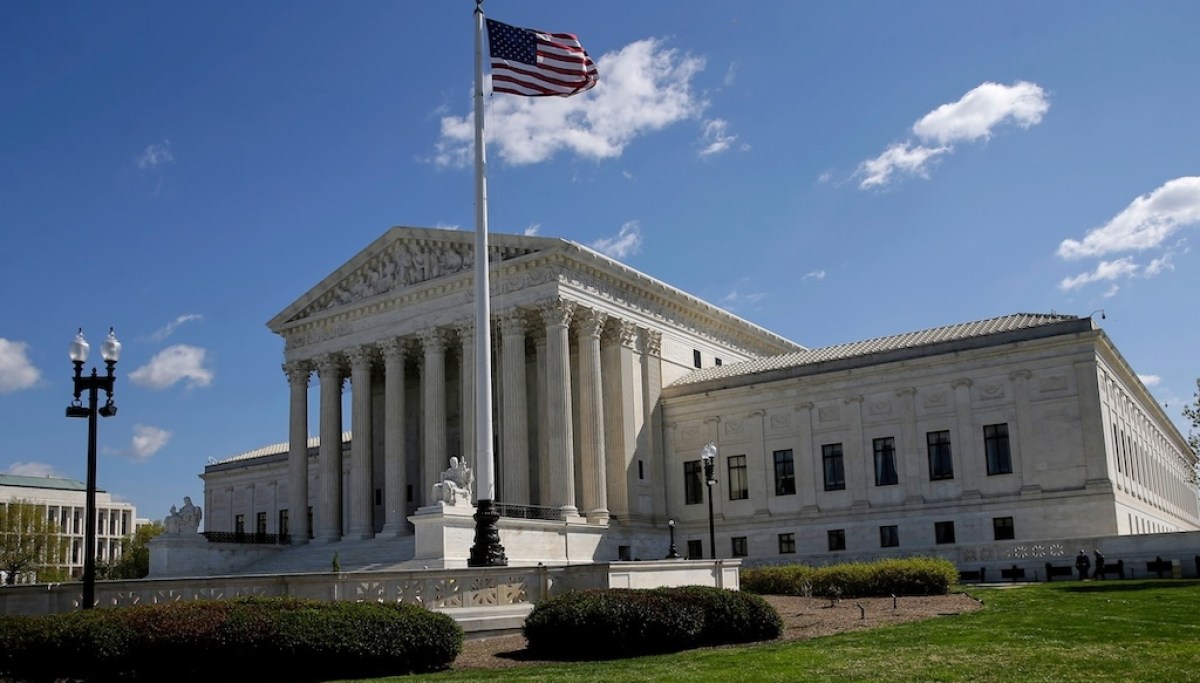
Unpacking the Suncor Oral Argument

Read the original at Reason ↗
Reason · collected 2026-10-05 · by Jonathan H. Adler

Quick Summary

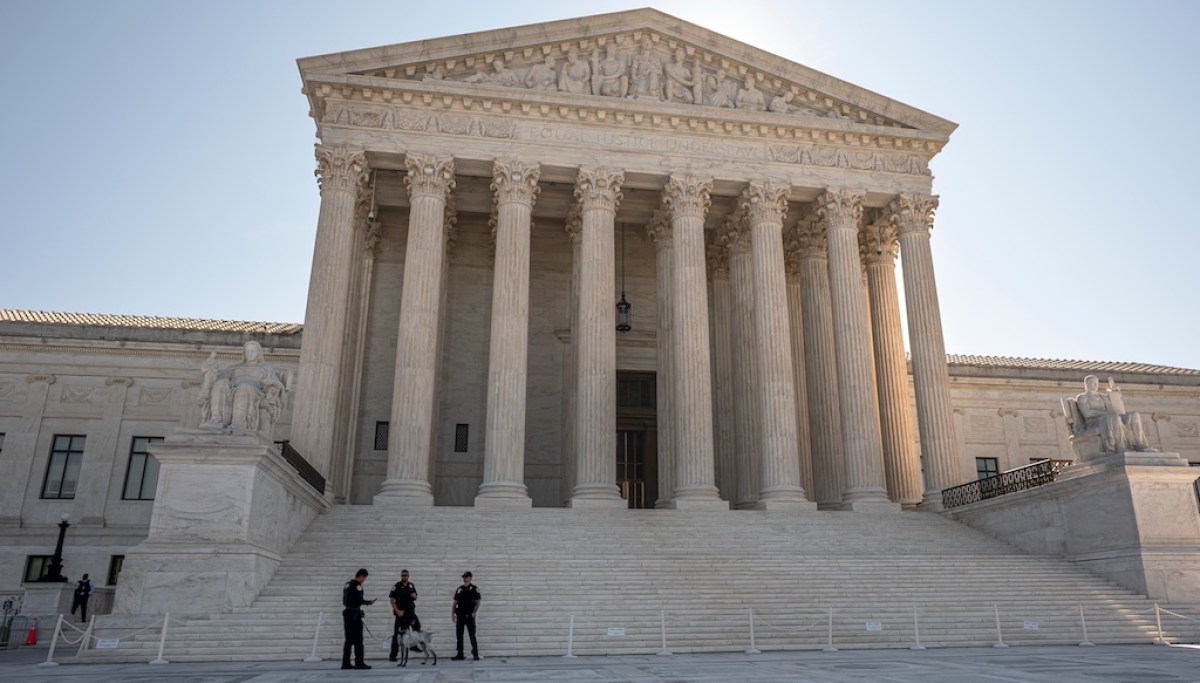
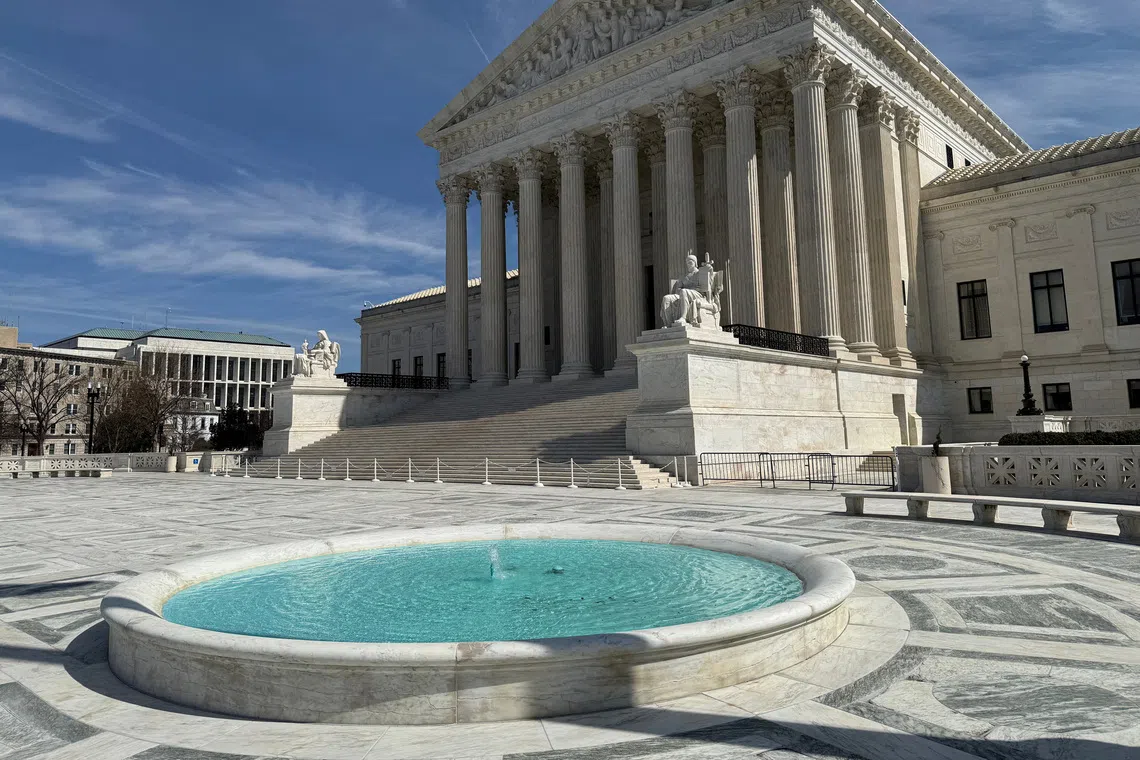
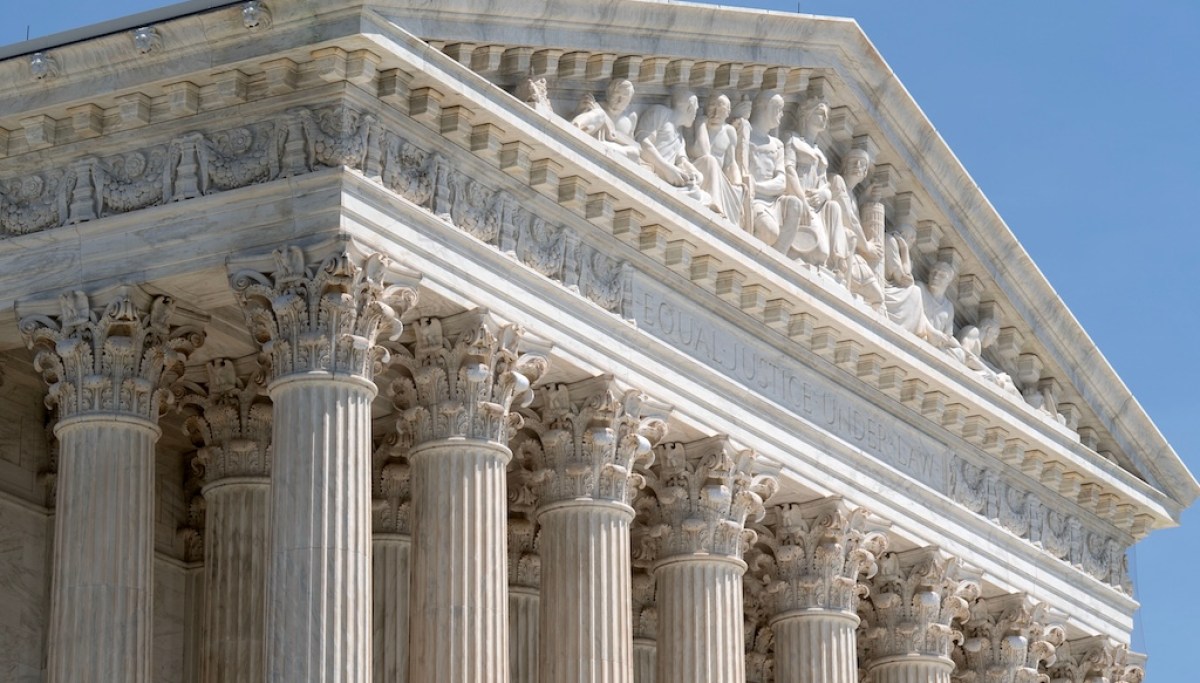
The Supreme Court is set to hear oral arguments in the case of Suncor Energy v. Boulder County on October 9th, where fossil fuel companies are arguing that all state-law-based tort lawsuits regarding climate change damages should be preempted by federal law. This could have significant implications for environmental and climate policy in the United States. The author will discuss this case at two events: one at Penn Carey Law School on Friday, October 9th, and another via webinar hosted by Case Western Reserve University School of Law on Tuesday, October 13th.
Written locally by qwen2.5:14b on 2026-10-05, using this article's own text rather than the other coverage of the same event (that is the story summary below).

AI analysis runs on qwen2.5:14b, locally

Story summary

When the Supreme Court begins its new term on Monday, it will consider Suncor Energy v. Boulder County, a case with significant implications for climate change litigation. The lawsuit, filed by Boulder County, Colorado in 2018, targets oil companies like Suncor and Exxon Mobil over their alleged contributions to climate change-related damages. The county claims the energy firms' production, promotion, and sale of fossil fuels have caused local harm and seeks compensation under state tort laws.

Manufacturers and conservative legal experts argue that allowing such lawsuits could lead to a patchwork of inconsistent rulings across states, hindering national policy-making on complex issues like climate change. Conversely, environmental advocates see this case as an opportunity for localities to hold major polluters accountable through the courts if federal action fails.

The outcome could affect not just energy companies but also other industries potentially sued by municipalities or states in future climate-related cases. The decision is expected early next year and will likely shape how U.S. courts handle similar environmental disputes moving forward.

Written for “Supreme Court Climate Case” on 2026-10-05, grounded in this article and the 20 other(s) covering the same event.
Why this leaning score
This article does not take a side on a contested political question, so it has no leaning score. That is an answer rather than a gap: a match report or a rescue can be warmly or critically written without being left or right, and scoring it anyway is how approval of a subject gets recorded as a political position.
No political leaning scored for article 57275 · logged 2026-10-05

Signals How these are calculated →

Claims extracted
10
claim-shaped sentences
Uncertain
20%
2 of 10 hedged
Leaning
not political
takes no side on a contested political question
Correction & hedging signals
65.9
corrections and hedging in what we collected; not a measure of accuracy
Outlets on this story
21
Politics
Narrative spread
1
articles carrying this framing
Analyzed 2026-10-05 · how these are computed

Story

📰 Supreme Court Climate Case
Politics · 21 article(s) covering the same event. See how they differ ↓

How this is being covered How these are calculated →

Article leaning vs. publisher reliability
Source leaning vs. consistency

Compared with similar articles

This article reads unscored and hedges 20% of its claims. Each row says how that neighbour differs.
Washington Examiner
⚖️ Leans left 🔴 21% hedged 12 of 56 📰 publisher trust 72
“Both articles refer to the same Supreme Court case, Suncor Energy v. Boulder County, and mention the oral arguments on October 5th.”
Los Angeles Times
⚖️ leaning not scored 🔴 33% hedged 19 of 57 📰 publisher trust 95
“Both articles discuss the Supreme Court hearing arguments on whether oil companies can be held liable for climate damage, referencing the same case (Suncor Energy v. Boulder County) and the same day.”
The Straits Times
⚖️ Leans left 🔴 32% hedged 6 of 19 📰 publisher trust 59
“Both articles refer to the US Supreme Court hearing of the case Suncor v. Boulder County on October 5, 2026.”
Washington Examiner
⚖️ Leans strongly right 🔴 6% hedged 2 of 34 📰 publisher trust 72
“Both articles refer to the Supreme Court hearing oral arguments in the case of Suncor Energy v. Boulder County on the same date.”
NPR
⚖️ leaning not scored 🔴 15% hedged 8 of 52 📰 publisher trust 60
“Both articles refer to the Supreme Court hearing an oral argument on October 5, 2026, in a case involving Boulder County's lawsuit against fossil fuel companies over climate change impacts.”
NBC News
⚖️ Leans left 🔴 21% hedged 7 of 33 📰 publisher trust 95
“Both articles describe the Supreme Court hearing an oral argument regarding a climate change case involving Boulder County and Suncor Energy on the same date.”
Washington Examiner
⚖️ leaning not scored 🔴 41% hedged 9 of 22 📰 publisher trust 72
“Both articles refer to the Supreme Court hearing arguments on October 5, 2026, in the case of Suncor Energy v. Boulder County regarding climate change lawsuits against energy companies.”
Washington Examiner
⚖️ leaning not scored 🔴 18% hedged 7 of 40 📰 publisher trust 72
“Both articles describe the Supreme Court hearing oral arguments for the Suncor Energy v. Boulder County case on the same day.”
The Guardian
⚖️ Leans left 🔴 14% hedged 5 of 36 📰 publisher trust 68
“Both articles discuss the Supreme Court's oral argument on October 5, 2026, in Suncor Energy v. Boulder County.”
Reason · 0.87 cosine similarity
⚖️ leaning not scored 🔴 21% hedged 18 of 87 📰 publisher trust 66
“The articles refer to different points in time related to the Suncor Energy v. Boulder County case; Article A discusses a brief and attention it received, while Article B mentions the upcoming oral argument.”

Publisher

Reason · 539 article(s) · 4 correction(s) detected
Running correction rate · 4 correction(s)
2026-10-02
Would a Firing Squad Have Been More 'Humane' for Christa Pike?
2026-09-26
"I Will Not Stand for Being Jerked Around … by Any Lawyer Who Practices Before Me"
2026-09-18
New Article: Landor v. Louisiana Department of Corrections: Bringing Clarity To The Necessary and Proper Clause
2026-09-05
Lawyers' Responsibility for Hallucinations in Briefs That They Sign

Who wrote this

Jonathan H. Adler
14 article(s) here · 1 carrying a prediction
🔮 Mostly law professors | Sometimes contrarian | Often libertarian | Always independent This morning, the Supreme Court will hear oral argument in Suncor Energy v. Boulder County, in which fossil fuel energy companies are asking the Supreme Court to conclude that all state-law-based tort suits over damages allegedly caused by climate change are preempted.
2026-10-05 · assertive framing · Unpacking the Suncor Oral Argument
🔮 That may seem a contradiction: The justice often publicly portrayed as unyielding and inflexible is, behind the scenes, the conservative who is uniquely adept at finding common ground on the most divisive issues.
🔮 On Monday the Supreme Court will hear oral argument in Suncor Energy v. Boulder County.
🔮 Greg Stohr of Bloomberg reports on an interview with Justice Alito explaining the justice's last-minute decision to recuse in Suncor Energy v. Boulder County, the major climate change preemption case the Supreme Court will hear on Monday.
🔮 In 2025, after twenty-five years at Case Western Reserve University, I moved to William & Mary.
🔮 One week from today, the Supreme Court will open its term with oral argument in Suncor Energy v. Boulder County.
2026-09-28 · mixed framing · As Suncor Approaches, Justice Alito Recuses
🔮 Zycher's claim here that "in the context of Section 202(a), 'cause or contribute significantly' is replaced with 'reasonably be anticipated to endanger public health or welfare'" is simply wrong, as a moment's review of the relevant statutory text would have demonstrated.
🔮 My essay begins: It is a "well-established principle" that the Supreme Court "will not decide a constitutional question if there is some other ground upon which to dispose of the case."
2026-09-26 · assertive framing · The Road Not Taken in Trump v. Barbara
🔮 The People of the State of Michigan (Michigan) filed this antitrust action alleging that in the 1970s, the Fossil Fuel Defendants realized that renewable energies would replace fossil fuels under normal market conditions.
🔮 Given the panel's makeup, and the importance of this issue to the Trump Administration, I suspect a petition for en banc rehearing or certiorari will soon follow.
Also by Jonathan H. Adler
Nothing else under this byline is closely related to this article, so these are simply their most recent.
All 14 articles by Jonathan H. Adler →

Topics

American Boulder County Suncor Suncor Energy the Supreme Court

Subjects

Suncor ORG · 4× Boulder County GPE · 3× Suncor Energy ORG · 3× the Supreme Court ORG · 2× American NORP · 1× James Goodwin PERSON · 1× Penn Carey Law School ORG · 1× The Volokh PERSON · 1× the Center for Progressive Reform ORG · 1× the University of Pennsylvania's ORG · 1×

Narrative

For more on the case, here are (some of) my posts on the subject (with more to come): - Climate Change Goes Back to the Supreme Court -- Colorado Edition, Feb. 23, 2026. - Previewing Suncor Energy v. Boulder County, Mar. 6, 2026. - Amicus Brief in Suncor Energy v. County Commissioners of Boulder County, Aug. 3, 2026. - Supreme Court Term to Start Hot, Aug. 6, 2026.
framing: assertive · carried by 1 article(s) · first seen 2026-10-05
🔮 Mostly law professors | Sometimes contrarian | Often libertarian | Always independent This morning, the Supreme Court will hear oral argument in Suncor Energy v. Boulder County, in which fossil fuel energy companies are asking the Supreme Court to conclude that all state-law-based tort suits over damages allegedly caused by climate change are preempted.
2026-10-05 · Reason
Unpacking the Suncor Oral Argument · assertive framing

Claims (10 extracted, 2 hedged)

Mostly law professors | Sometimes contrarian | Often libertarian | Always independent This morning, the Supreme Court will hear oral argument in Suncor Energy v. Boulder County, in which fossil fuel energy companies are asking the Supreme Court to conclude that all state-law-based tort suits over damages allegedly caused by climate change are preempted. uncertain
suits → hear → change
Assuming the Court reaches the merits, its decision could be quite significant for environmental law, climate policy, and American federalism. uncertain
decision → assume → law
I am scheduled to participate in two events analyzing the Suncor oral argument. asserted
I → schedule → argument
On Friday, October 9, I will be talking about the case at the University of Pennsylvania's Penn Carey Law School. asserted
I → talk → School
The event, "Discussing the Scope of Preemption in Emission s Lawsuits," will also feature James Goodwin of the Center for Progressive Reform is sponsored by the law school's Environmental Law Project and is part of Penn's Climate Week. asserted
event → discuss → Week
On Tuesday, October 13, I will again discuss the Suncor argument at the Case Western Reserve University School of Law. asserted
I → discuss → Law
This event, "Hot Times at the High Court: Suncor v. Boulder County and the Future of Climate Litigation," is a webinar (though we will have an in person audience too). asserted
we → have → audience
It will feature Professor Paul Salamanca of the University of Kentucky. asserted
It → feature → Kentucky
For more on the case, here are (some of) my posts on the subject (with more to come): - Climate Change Goes Back to the Supreme Court -- Colorado Edition, Feb. 23, 2026. - Previewing Suncor Energy v. Boulder County, Mar. 6, 2026. - Amicus Brief in Suncor Energy v. County Commissioners of Boulder County, Aug. 3, 2026. - Supreme Court Term to Start Hot, Aug. 6, 2026. asserted
Term → come → County
- As Suncor Approaches, Justice Alito Recuses, Sept. 28, 2026. asserted
Alito → approach → ?

💬Give feedback
🕘History 🎫Support