Toronto Star
· collected 2026-09-26 · by Binaj Gurubacharya And Niranjan Shrestha The Associated Press
Story summary
Nepal's Prime Minister Balendra Shah, addressing the 81st session of the UN General Assembly on September 24, 2026, proposed establishing a Himalayan Climate Resilience Mechanism led by Nepal, India, and China. The initiative aims to enhance cooperation in sharing satellite data, monitoring glacial lakes, and strengthening early-warning systems to address climate-related disasters, particularly after the devastating flash floods that killed over 1,450 people and displaced thousands in August 2026.
Shah emphasized these measures as a response to environmental challenges affecting mountainous regions. The proposed mechanism would help mitigate risks from glacial lake outburst floods (GLOFs) and other climate-related threats impacting millions of people across the Himalayan region.
The floods, triggered by a glacial and rock collapse on the Nepal-China border, severely impacted tourism and local economies, with hotels and trekking companies experiencing significant cancellations. According to tour planner Pushpraj Rimal in Kathmandu, "It is still a lockdown kind of situation," reflecting ongoing challenges for recovery.
Additionally, there are pressing needs for humanitarian aid and long-term rebuilding efforts. Dr. Nimesh Dhungana from the University of Manchester's HCRI highlighted the importance of governance and accountability in disaster response and recovery processes. With around 5,285 people still missing and numerous displaced families struggling to find stable housing, initiatives like Shah’s proposal are crucial for sustainable development and resilience against future disasters. The mechanism aims not only at immediate relief but also at long-term planning to protect communities from similar catastrophic events in the future.
Written for “Nepal Floods Climate Impact” on 2026-10-05,
grounded in this article and the 20 other(s) covering the same event.
After spending five years working in Saudi Arabia, Narayan Prassan returned to his home in Nepal with savings, only to lose his house in the 2015 earthquake.
asserted
Prassan → spend → earthquake
He went abroad again, earned enough to rebuild his home and settled happily with his family.
asserted
He → go → family
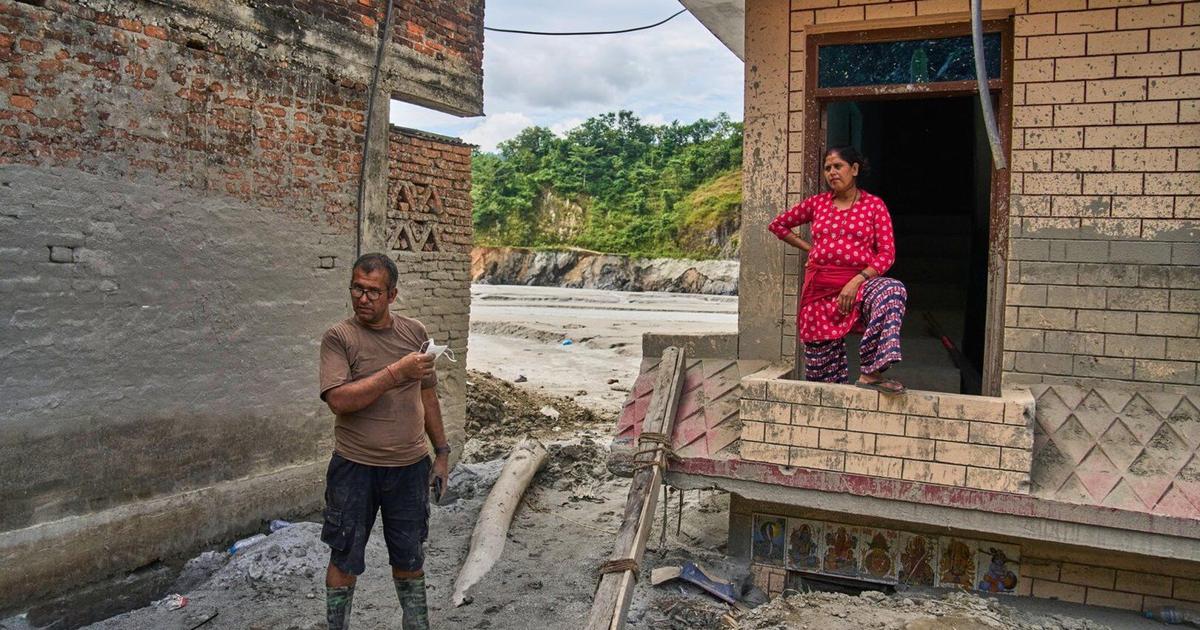
With his home in a designated danger zone and no clear idea of where his family will resettle, Prassan is staying with his wife and children at a relative’s house and mulling another stint overseas.
“This flood has taken everything,” he said.
asserted
he → designate → everything
I don’t know what to do.”
asserted
I → know → what
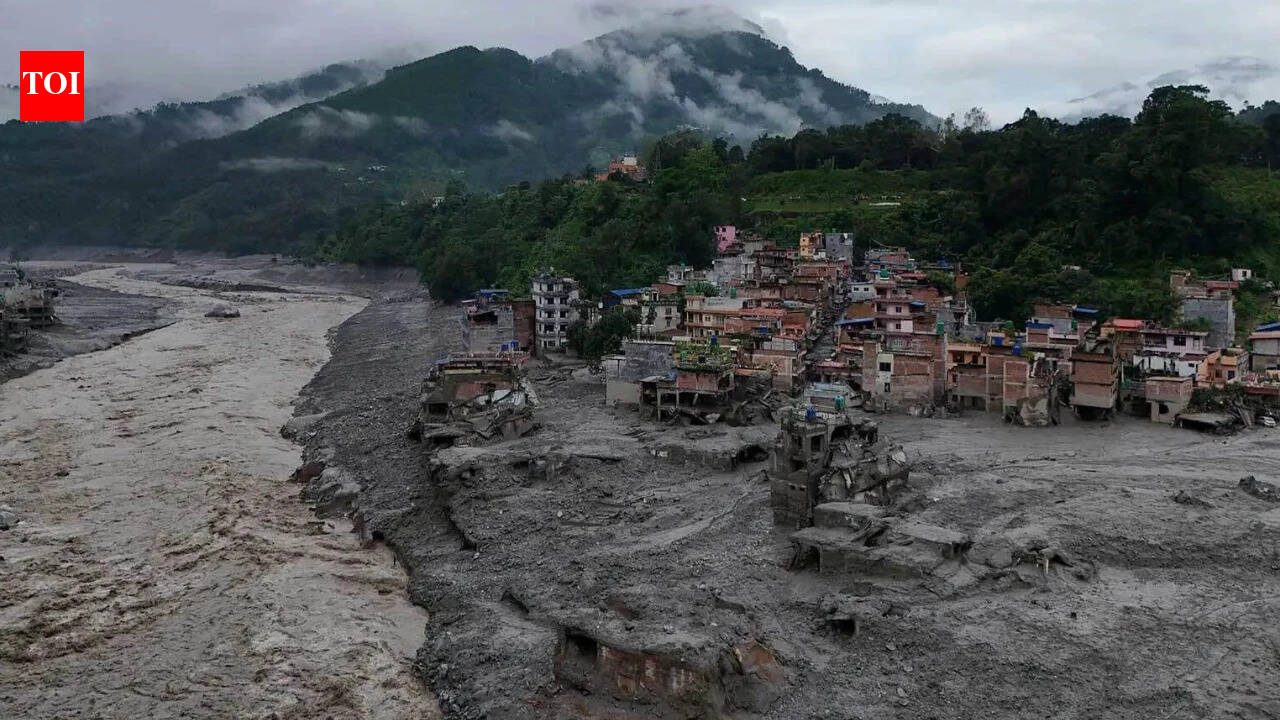
A month after devastating floods swept through parts of Nepal, thousands are displaced like Prassan and rescuers continue searching for thousands others missing, including many believed trapped in six hydropower project tunnels.
asserted
rescuers → sweep → tunnels
The disaster has left the government facing a long and costly recovery, with families confronting the loss of loved ones, homes and livelihoods.
asserted
families → leave → ones
Prime Minister Balendra Shah used his first address to the U.N. General Assembly on Thursday to highlight the flooding as a warning about the growing climate risks facing the Himalayan region.
asserted
Shah → use → region
“The disaster was not just a local tragedy, but a warning to the world,” Shah said.
asserted
Shah → say → world
“I ask you today: Have we really heard that warning?”
asserted
we → ask → warning
Shah also called for greater international support for Nepal’s recovery and stronger regional cooperation to prepare for climate-related disasters.
asserted
Shah → call → disasters
“Climate change does not recognize borders.
asserted
change → recognize → borders
Glaciers and floods do not travel with stamps and passports,” he said.
asserted
he → travel → stamps
DNA testing delays final rites for some families
Nepal’s disaster management agency said 1,453 bodies had been recovered and 5,644 people remained missing.
asserted
people → delay → families
Only 112 bodies had been handed over to relatives, while 1,333 were temporarily buried pending identification.
asserted
1,333 → hand → identification
In neighboring China, officials reported 261 foreign nationals among the missing.
asserted
officials → neighbor → missing
Tents have been set up at the Nepal Police Hospital in Kathmandu, where relatives can provide DNA samples to help identify the dead.
asserted
relatives → set → dead
Authorities are comparing the samples with DNA collected from recovered remains.
asserted
Authorities → compare → remains
Laboratory officials declined to provide details, citing privacy concerns, but said experts from India, China, the United States, Singapore and South Korea were assisting with the work.
asserted
experts → decline → work
Rabi Kumar Thapa Magar, a hydropower worker who lost his wife, brother, sister-in-law and mother, said he identified his wife from a photo of the dead — but authorities had buried her body before the family could see it.
uncertain
family → lose → it
Authorities declined to release the body pending DNA matching, a process they said would take at least a month.
asserted
they → decline → matching
The family later performed symbolic final rites using an effigy.
asserted
family → perform → effigy
Families grieve children lost in the floods
Many others are still processing the grief.
asserted
others → grieve → grief
Pasang Maya Tamang, 32, who lost her young son in the floods, said she still dreams of him pleading for help.
asserted
him → lose → help
“The body of my son has been recovered but I was not able to see him for the last time.
asserted
I → recover → time
I hear in my dreams him saying why I left him alone,” Tamang said at a shelter home in the flood-affected town of Nuwakot.
asserted
Tamang → hear → Nuwakot
Her son had gone to school with a neighbor when the flood hit.
asserted
flood → go → neighbor
By the time she learned what had happened, the school had already been swept away.
asserted
school → learn → time
His body was recovered three days later in a southern district, but she was unable to travel there to see him.
asserted
she → recover → him
The Aug. 26 flood hit in the morning, around the time students were arriving at schools or making their way there.
asserted
students → hit → way
Some children’s bodies were later recovered still wearing ties bearing their school’s logo, said Asta Man Dangol, a resident in Nuwakot.
asserted
Dangol → recover → Nuwakot
“The older students were able to run uphill and escape, but the little ones who were not able to run fast ... were swept away,” he said.
asserted
he → run → ?
Crews work to reconnect communities cut off by the floods
The Nepal government estimates reconstruction and recovery will cost $4.77 billion.
asserted
reconstruction → work → billion
Nearly 33,000 people have been affected, and about 7,500 homes were damaged or destroyed.
asserted
homes → affect → ?
The recovery is now focused on restoring roads and bridges cut off by the floods, particularly in remote areas where damaged infrastructure has made it difficult to deliver aid.
asserted
it → focus → aid
Ishmita Shah, a roads engineer, said crews have been working with Nepal’s army since the second day after the floods to reopen routes in affected areas.
asserted
crews → say → areas
Shah said bridges were being built to improve access to the worst-affected areas and make it easier to transport relief supplies.
asserted
it → say → supplies
But the work remains difficult, with more bad weather expected in the coming days, she said.
asserted
she → remain → days
“The upcoming few days are going to be very challenging because of the weather, but we are fully prepared for that too,” she said.
asserted
she → go → that
 The Aporia