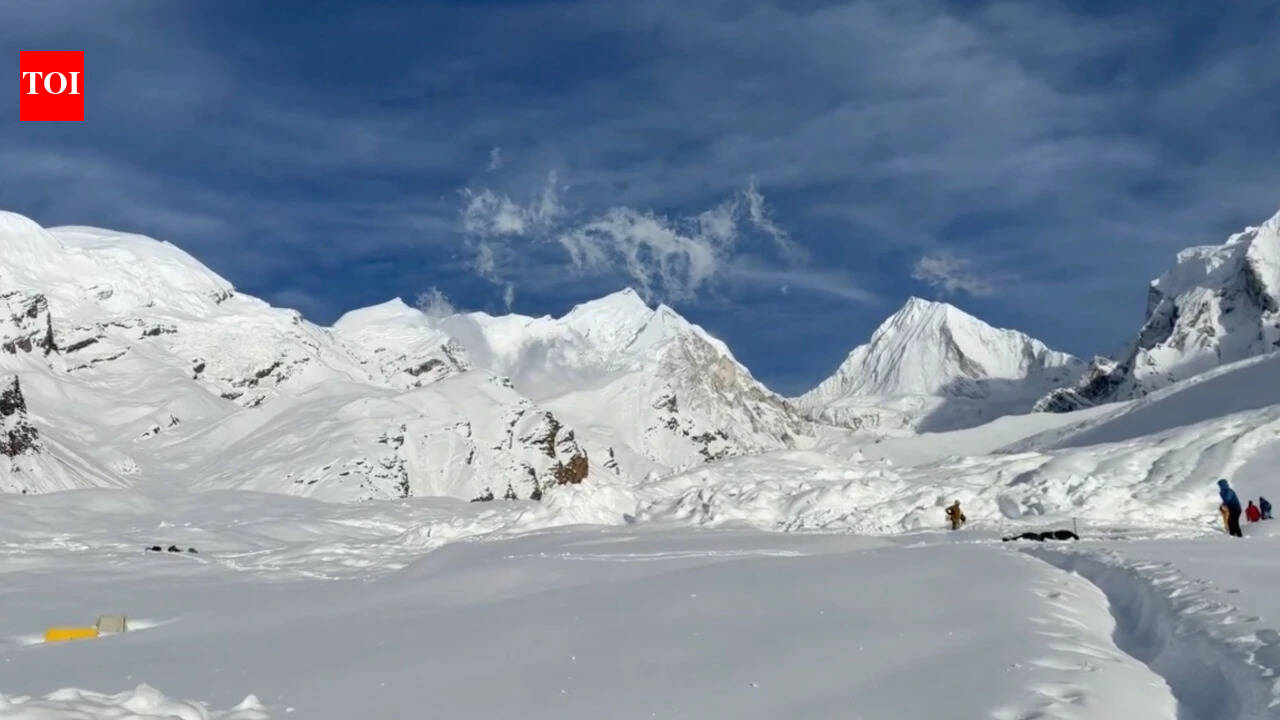
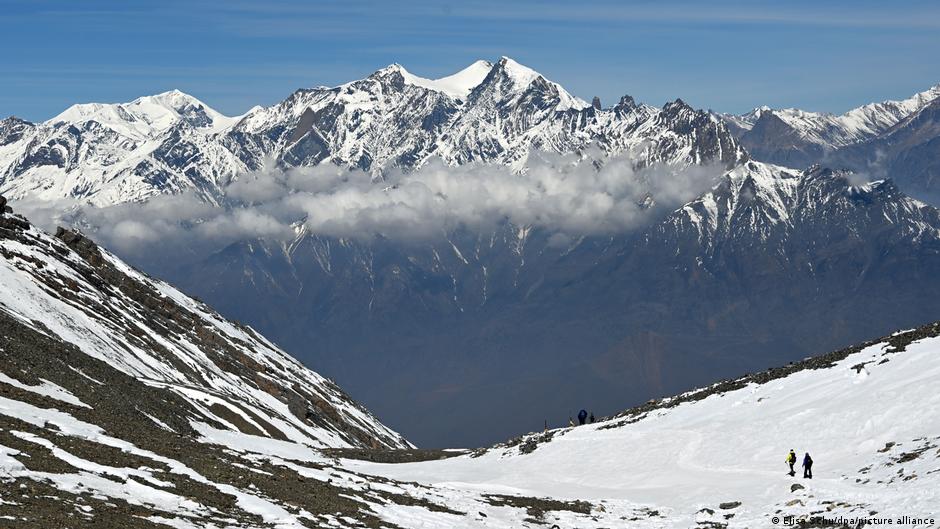
Heavy rainfall since September 24, 2026, in Nepal has caused floods and landslips, leading to the deaths of at least 1,453 people and leaving over 5,000 missing. As of September 26, 13,795 individuals have been rescued according to the National Disaster Risk Reduction and Management Authority (NDRRMA). The report highlights specific incidents such as floodwaters from the Tinau River in Rupandehi district sweeping away six houses and forcing evacuations of about 1,000 residents. Additionally, rivers like the Narayani and streams like the Riu have crossed their danger levels in Chitwan district, leading to further disruptions due to landslips and mudslides.
Written locally by qwen2.5:14b on 2026-09-27,
using this article's own text rather than the other coverage of the
same event (that is the story summary below).
Story summary
Nepal's Prime Minister Balendra Shah, addressing the 81st session of the UN General Assembly on September 24, 2026, proposed establishing a Himalayan Climate Resilience Mechanism led by Nepal, India, and China. The initiative aims to enhance cooperation in sharing satellite data, monitoring glacial lakes, and strengthening early-warning systems to address climate-related disasters, particularly after the devastating flash floods that killed over 1,450 people and displaced thousands in August 2026.
Shah emphasized these measures as a response to environmental challenges affecting mountainous regions. The proposed mechanism would help mitigate risks from glacial lake outburst floods (GLOFs) and other climate-related threats impacting millions of people across the Himalayan region.
The floods, triggered by a glacial and rock collapse on the Nepal-China border, severely impacted tourism and local economies, with hotels and trekking companies experiencing significant cancellations. According to tour planner Pushpraj Rimal in Kathmandu, "It is still a lockdown kind of situation," reflecting ongoing challenges for recovery.
Additionally, there are pressing needs for humanitarian aid and long-term rebuilding efforts. Dr. Nimesh Dhungana from the University of Manchester's HCRI highlighted the importance of governance and accountability in disaster response and recovery processes. With around 5,285 people still missing and numerous displaced families struggling to find stable housing, initiatives like Shah’s proposal are crucial for sustainable development and resilience against future disasters. The mechanism aims not only at immediate relief but also at long-term planning to protect communities from similar catastrophic events in the future.
Written for “Nepal Floods Climate Impact” on 2026-10-05,
grounded in this article and the 20 other(s) covering the same event.
Relentless rainfall across Nepal since Thursday (September 24, 2026) has triggered fresh floods and landslips, swept away houses and disrupted road traffic, according to a media report, as the Himalayan country reels from the disaster that killed at least 1,453 people and more than 5,000 remain missing.
uncertain
5,000 → trigger → people
The bodies of 1,451 people have been recovered till Saturday (September 26, 2026) a month after flash floods, originating near the Nepal-Tibet border, devastated towns and villages in northern and central Nepal, according to the National Disaster Risk Reduction and Management Authority (NDRRMA).
uncertain
floods → recover → Authority
Two others had died while undergoing treatment.
asserted
others → die → treatment
A total of 13,795 people have been rescued till Saturday, the NDRRMA said.
asserted
NDRRMA → rescue → Saturday
In Rupandehi district, a part of Lumbini province, floodwaters from the Tinau River swept away six houses along the riverbank in Butwal on Saturday night as the river rose above its danger level, the Kathmandu Post newspaper reported.
asserted
newspaper → sweep → level
A police official was quoted as saying that around 200 houses along the riverbank in Butwal were at risk, with security personnel evacuating about 1,000 people overnight after the Tinau and nearby streams swelled amid continued rain.
asserted
Tinau → quote → rain
Authorities initially moved around 500 residents from Majhuwa, a high-risk area in Butwal Metropolitan City-13, to the Durga Temple holding centre, the report said.
asserted
report → move → centre
They were later transferred to safer locations, in various schools in Butwal-11.
asserted
They → transfer → Butwal-11
The Tinau River crossed its danger mark at around 8 pm on Saturday, prompting security personnel to begin rescue and evacuation operations.
asserted
River → cross → operations
ALSO WATCH A month after Nepal’s deadly flash floods, what should recovery look like? |
asserted
recovery → watch → what
Climate Economy
Rivers cross danger levels
asserted
Rivers → cross → levels
The Rupandehi district administration has urged people living near rivers and streams to remain alert and move to safer areas if water levels rise further.
asserted
levels → urge → areas
In Chitwan district of Bagmati province, the Narayani River and the Riu stream crossed their danger levels early on Sunday as rain continued.
asserted
rain → cross → Sunday
At the Devghat gauge station, the Narayani River reached 9.23 metres at around 5.15 a.m., according to the Department of Hydrology and Meteorology.
uncertain
River → reach → Hydrology
The Riu, which flows along the boundary of Madi and Chitwan National Park, reached 3.92 metres.
asserted
which → flow → metres
Its warning level is 3.4 metres, and its danger level is 3.8 metres, the Kathmandu Post reported.
asserted
Post → report → ?
The Riu flows through southern Chitwan before joining the Rapti River near Meghauli and eventually draining into the Narayani.
asserted
Riu → flow → Narayani
Heavy rain has also triggered landslips and mudslides at several points in Chitwan, disrupting road traffic.
asserted
rain → trigger → traffic
At Dharapani in Ichchhakamana Rural Municipality-4, part of the road subsided further, and a mud-laden landslip blocked traffic in both directions, a police official said.
asserted
official → subside → directions
A landslip at Simaldhara in the same municipality has also blocked the road in both directions.
asserted
landslip → block → directions
Flood and landslip risks also remain high in Karnali, where river levels have continued to rise.
asserted
levels → remain → Karnali
The Thuli Bheri River in Dolpa had reached 3.46 metres, just below its 3.56-metre warning level and 3.76-metre danger level, with the water level still rising.
asserted
level → reach → level
In Humla, the Karnali River at Sarkegad stood at 2.74 metres, below its 4-metre warning level, but was rising.
asserted
River → stand → level
The Mugu Karnali stood at 5.1 metres, below its 7.5-metre warning level and 9-metre danger level, with the water level rising.
asserted
level → stand → level
A landslip has blocked the Nagna-Gamgadhi road at Jharikhola in Mugu, the report said.
asserted
report → block → Mugu
In Kalikot, a mudslide at Gagne Khola in Shubhakalika Rural Municipality-1 has blocked the Karnali Highway.
asserted
mudslide → block → Highway
The Tila Karnali there stood at 3.27 metres, below its 5-metre warning level and 5.45-metre danger level, with the river level falling.
asserted
level → stand → level
Landslides have also disrupted traffic along the Karnali Corridor at Khaccha in Sarkegad-1, Gopchegauda in Kharpunath-1 and Yalwang in Namkha-4 in Humla.
asserted
Landslides → disrupt → Humla
In Jumla, water levels in the Tila Karnali and Sija rivers remained stable at 3.74 metres and 2.86 metres, respectively.
asserted
levels → remain → metres
With rain continuing, authorities across affected districts have urged residents in flood- and landslip-prone areas to remain alert and move to safety when necessary.
asserted
authorities → continue → safety
On Saturday, flooding from the Narayani and Saptakoshi rivers inundated 389 houses in Nawalparasi West and Saptari districts, forcing hundreds of families to move to safer locations.
asserted
flooding → inundate → locations
 The Aporia