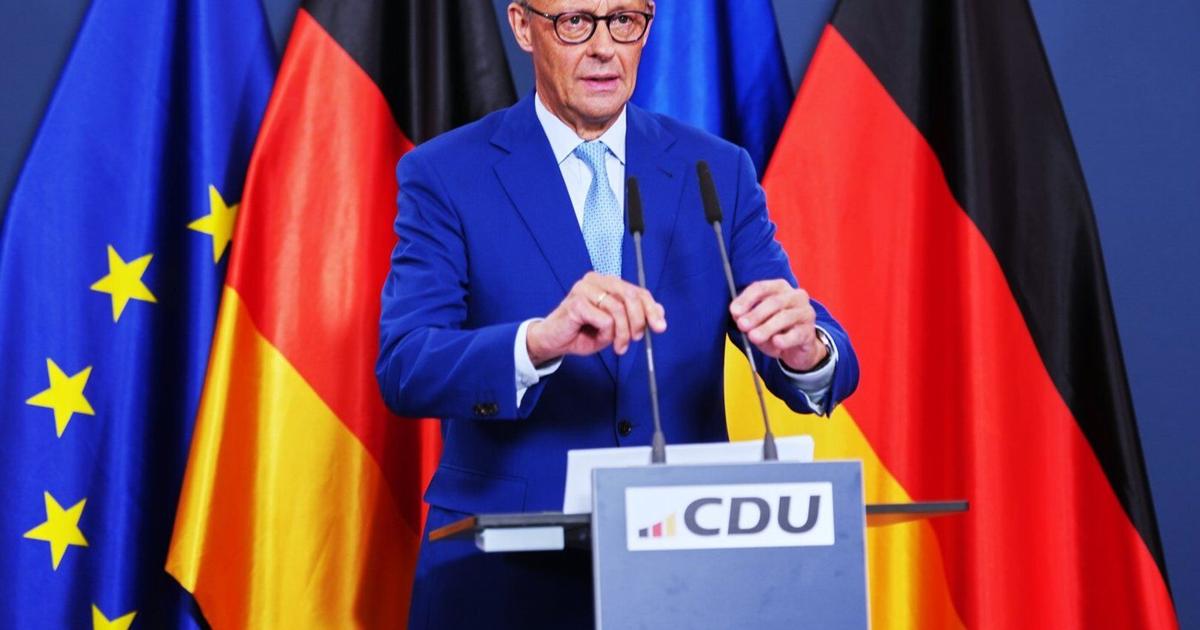
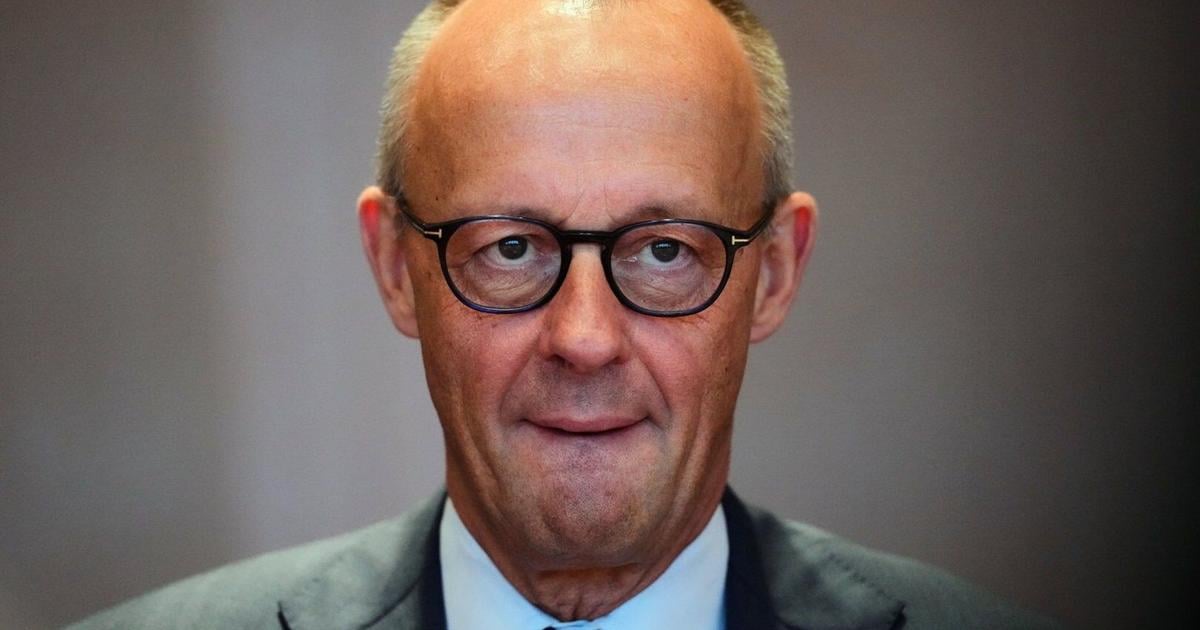
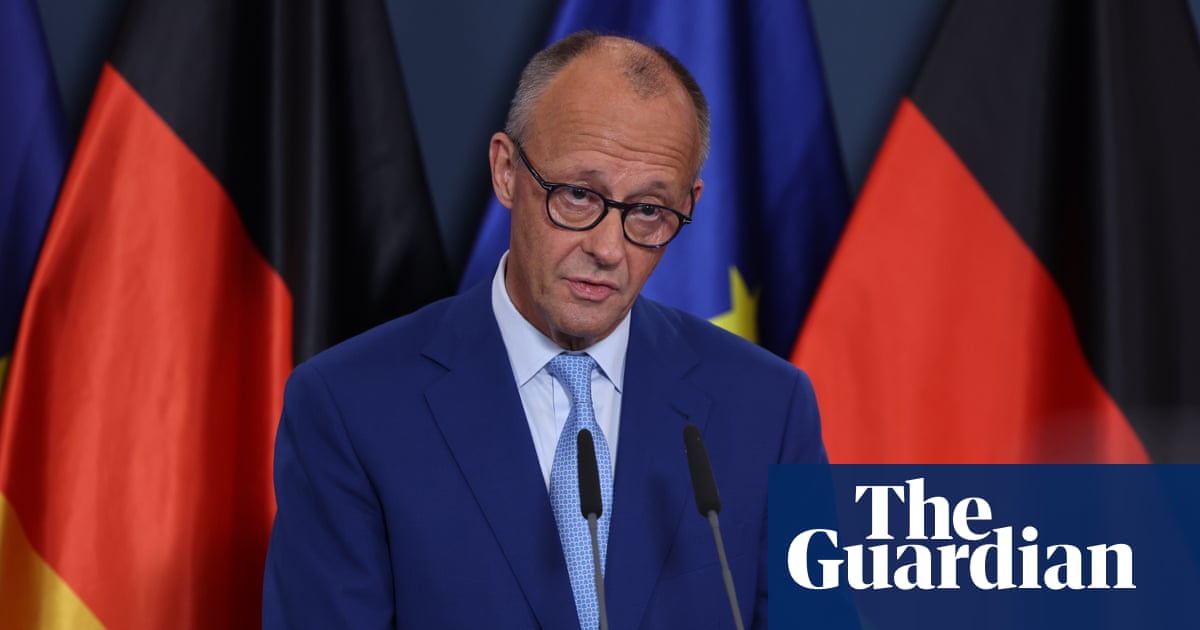
Elections in two German states on Sunday resulted in severe losses for the country's leading Christian Democrats, whose Chancellor Friedrich Merz is facing pressure to keep the far-right Alternative fuer Deutschland party at bay.
asserted
Merz → result → bay
MERZ IS DOWN, BUT NOT (YET) OUT
The results mark a major setback for Merz and his CDU party, whose voters have flocked to the AfD, increasingly doubtful the 70-year-old can revive Germany's economy and bring down the cost of living.
asserted
old → mark → living
Facing the lowest approval ratings for any chancellor since records began, Merz, who himself described the outcome as a "disaster", is under pressure to deliver on his promised reforms as calls mount for him to resign after less than 17 months in the job.
asserted
him → face → job
While Merz signalled he would stay on and continue with his reform agenda, Sunday's losses raise questions about his position within the CDU, whose result in Mecklenburg-Western Pomerania marked its worst in any state election since 1949.
asserted
result → signal → 1949
Merz's weakened position as the leader of the European Union's largest and most powerful member could undermine unity in the bloc, where far-right parties continue to gain while relations with the United States have significantly cooled and economic pressures have intensified.
uncertain
pressures → weaken → States
AFD CONSOLIDATES LEADING POSITION
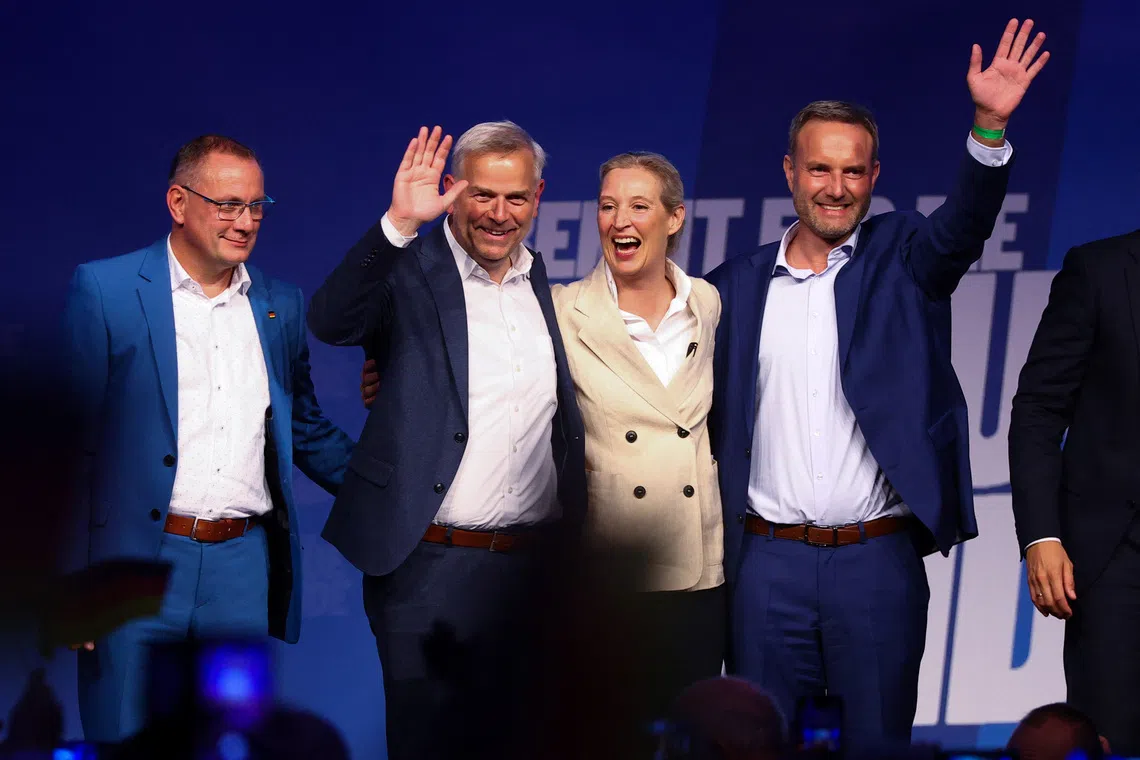
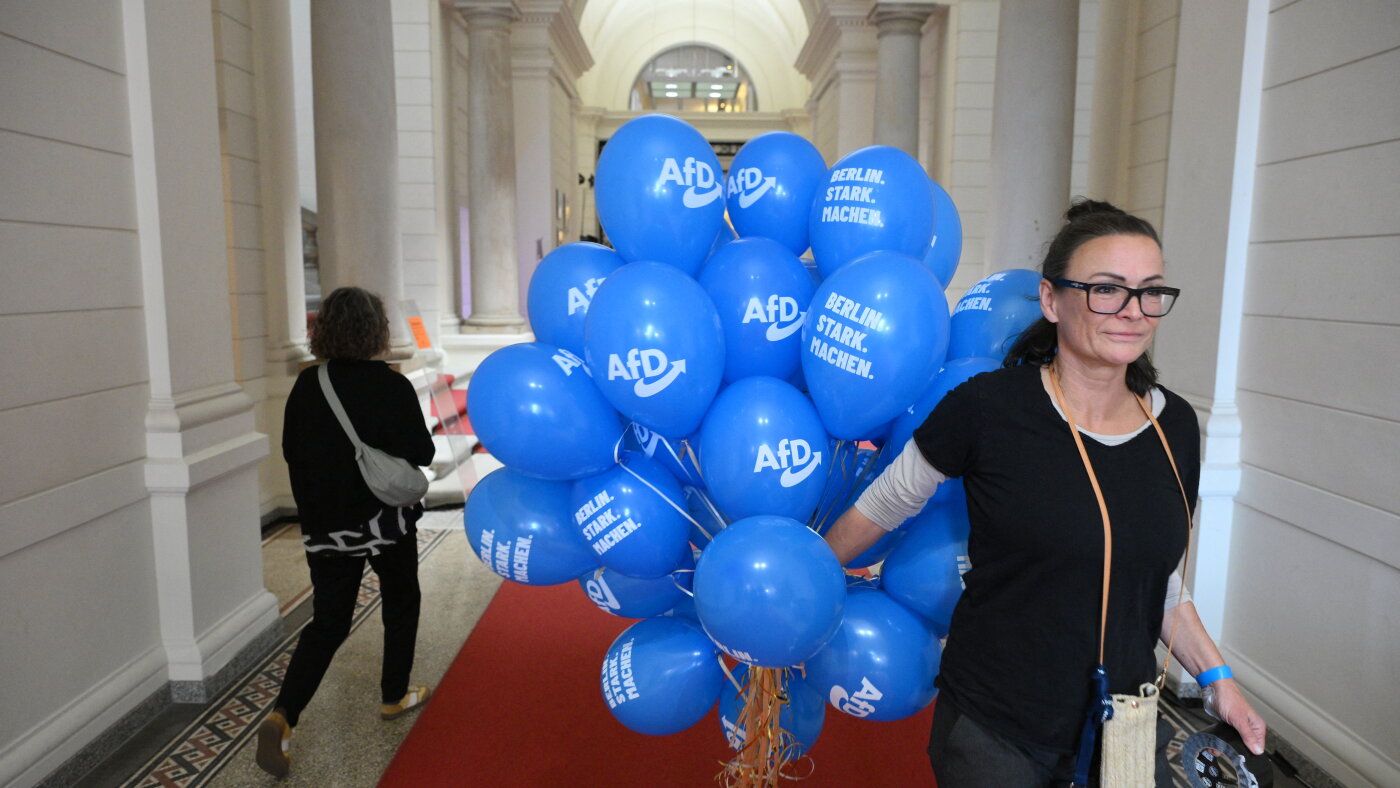
The AfD gained significantly in both states and became the strongest party in Mecklenburg-Western Pomerania, where it more than doubled its result compared with 2021.
asserted
it → lead → 2021
This is the second time in two weeks that the AfD has captured the biggest share of votes in a German state election, after winning in Saxony-Anhalt earlier this month, boosting its momentum ahead of federal elections due in 2029.
asserted
AfD → capture → 2029
The AfD, already the strongest party in nationwide polls with 29%, has drawn support for its pledges of tough action to deport foreigners with no right to stay in Germany, as well as on returning to cheap Russian energy and promoting more conservative values centred around the traditional family model.
asserted
AfD → draw → model
Other big parties, however, are shunning coalitions with the AfD under a "firewall" strategy, making it unlikely that the party will govern in Mecklenburg-Western Pomerania or in Berlin, where it came in third.
asserted
it → shun → Berlin
COALITION-BUILDING IS GETTING TOUGHER
As the AfD gains momentum and voters split across more parties, stable majorities are becoming harder to build.
asserted
majorities → get → parties
Preliminary results show that a future government in Mecklenburg-Western Pomerania would need three parties to function.
asserted
government → show → parties
This splintering will require more willingness to compromise in a country that has traditionally run on two-party governments.
asserted
that → splinter → governments
A three-way "traffic light" coalition in 2021, the first such tie-up on the federal level, dissolved after less than three years.
asserted
coalition → dissolve → years
The firewall strategy has so far kept the AfD from power but the party's broadening appeal to voters has raised questions about whether that strategy is still viable.
asserted
strategy → keep → questions
These changes are forcing rivals to explore alternative coalition arrangements.
asserted
changes → force → arrangements
In Mecklenburg-Western Pomerania, the most likely option appears to be for the second-place Social Democratic Party to add the Greens to their existing coalition with the Left Party.
asserted
Party → appear → Party
In Berlin, the victorious Left Party could form a majority with the SPD and the Greens.
uncertain
Party → form → SPD
ECONOMIC ANXIETY PLAYS OUT AT THE POLLS
Germany's weak economy is becoming a deciding factor at the polls, with voters from across the spectrum frustrated by high living costs and economic uncertainty.
asserted
voters → play → costs
Campaigning in both states took place against a backdrop of surging fuel prices linked to the Middle East conflict and tens of thousands of additional job cuts in German industry.
asserted
Campaigning → take → industry
Years of economic stagnation have prompted some voters to look outside the political centre.
asserted
Years → prompt → centre
In Berlin, the Left Party struck a chord with its focus on the city's housing shortage, pledging to build affordable new homes, forcibly reduce rents on properties that are 20% or more above the local average, and curb holiday rentals.
asserted
that → strike → rentals
The AfD won support with a proposal to revive the Nord Stream gas pipeline from Russia, which terminates in Mecklenburg-Western Pomerania.
asserted
which → win → Pomerania
The party says reviving the pipeline with Russian gas would lower energy costs.
asserted
reviving → say → costs
VOTERS TURN AWAY FROM POLITICAL CENTRE
asserted
VOTERS → turn → CENTRE
The hard-left party Die Linke also scored strong gains, as frustrated voters drifted away from the mainstream.
asserted
voters → score → mainstream
In Mecklenburg-Western Pomerania, Die Linke drew 28,000 voters from Merz's conservative CDU and 45,000 from the centre-left SPD, according to polling by infratest dimap for broadcaster ARD.
uncertain
Linke → draw → ARD
The figures illustrate the party's increasing appeal among the SPD's traditional working-class base.
asserted
figures → illustrate → base
Mecklenburg-Western Pomerania premier Manuela Schwesig of the SPD said opposition to aid to Ukraine and support for the defunct Nord Stream pipeline with Russia were two reasons why voters in the former East German region migrated to the AfD, which is considered Russia-friendly.
asserted
which → say → AfD
In Berlin, the SPD lost some 36,000 voters to the Left Party, according to the preliminary data.
uncertain
SPD → lose → data
The Greens, often a kingmaker in German politics, lost 51,000 voters to that party.
asserted
Greens → lose → party
 The Aporia