That is 0 articles you have read today.
The Aporia is free and carries no advertising, so readers are the only
thing paying for it. If you are getting this much out of it, a small
donation is what keeps it independent.
Daily limit reached
You have read 0 articles today.
That is more than the 15 a day The Aporia gives away,
and well past what it can carry on nothing. Your allowance resets at
midnight.
There is no advertising here and nothing about you is sold, so readers
are the only thing paying for it. If the site is worth this much of
your day, it is worth a few dollars.
Everything else stays open: the
maps, the
directory and
search do
not count against this, and neither does re-opening something you have
already read today.
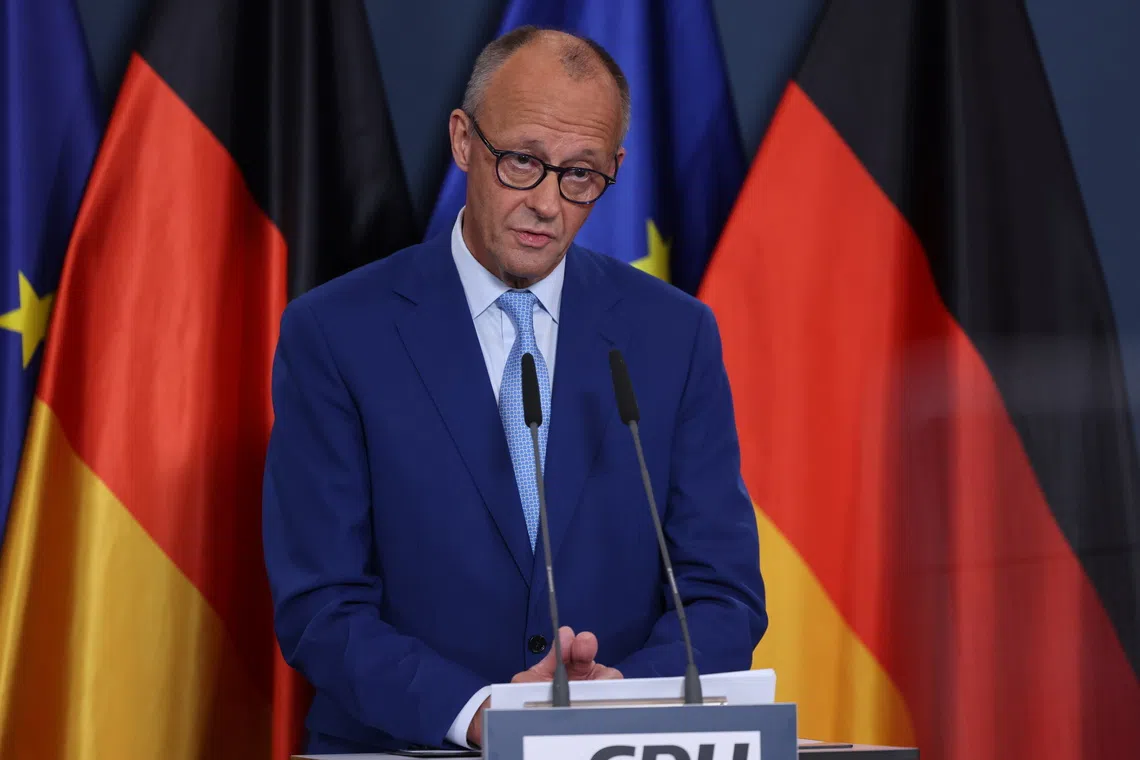
Voters in Berlin and Mecklenburg-Western Pomerania are set to cast ballots on Sunday amid concerns over rising support for far-right parties like the Alternative for Germany (AfD). Chancellor Friedrich Merz faces mounting pressure as his approval ratings dropped to 14%, following the AfD's strong performance in Saxony-Anhalt two weeks prior. In Mecklenburg-Western Pomerania, the CDU’s potential drop below the 5% threshold threatens its parliamentary presence, while in Berlin, the CDU competes closely with the far-left Die Linke over housing and economic issues.
Written locally by qwen2.5:14b on 2026-09-20,
using this article's own text rather than the other coverage of the
same event (that is the story summary below).
Story summary
Chancellor Friedrich Merz faces significant pressure as voters in Berlin and Mecklenburg-Western Pomerania go to the polls on Sunday, following the far-right AfD's major victory in Saxony-Anhalt just two weeks prior where it won nearly 44% of the vote compared to the CDU’s 17%. With about 3.8 million voters eligible across both states, the AfD is expected to make substantial gains at Merz’s expense, potentially undermining his ability to push through promised economic reforms. Polls indicate that Merz's approval ratings have fallen to around 14%, and his CDU party risks losing its status as the largest party in Berlin and falling below the threshold for representation in Mecklenburg-Western Pomerania. These outcomes could further jeopardize Merz’s leadership, especially given the CDU’s recent struggles with unpopular reforms and low public approval.
Written for “German State Elections And Chancellor…” on 2026-10-05,
grounded in this article and the 40 other(s) covering the same event.
Claims extracted
12
claim-shaped sentences
Uncertain
17%
2 of 12 hedged
Leaning
Leans strongly left
of the writing, not the subject · beta estimate
Correction & hedging signals
60.2
corrections and hedging in what we collected;
not a measure of accuracy
Outlets on this story
41
Politics
Narrative spread
1
articles carrying this framing
Voters in two German states will go to the polls on Sunday, as far-right and far-left gains threaten to affect the political standing of Chancellor Friedrich Merz.
asserted
gains → go → Merz
Merz, according to a report by the AFP news agency, has scheduled a crisis meeting of his Christian Democratic Union party (CDU), skipped this week’s UN General Assembly meeting in New York, and cleared his calendar to deal with potential aftershocks from the votes in Berlin and the state of Mecklenburg-Western Pomerania.
uncertain
Merz → accord → Pomerania
Recommended Stories
list of 3 items- list 1 of 3Tens of thousands march across Germany to protest against far-right AfD
- list 2 of 3AfD is rising, but it can still be stopped
- list 3 of 3Germany’s AfD wins in key state: Is far-right on cusp of national rule?
asserted
AfD → protest → rule
Pressure on Merz has been mounting after the far-right Alternative for Germany (AfD) delivered a major defeat to his CDU party two weeks ago in the key state of Saxony-Anhalt.
asserted
Alternative → mount → Anhalt
The AfD fell just short of an absolute majority, which would have allowed it to govern on its own.
asserted
it → fall → own
And after just 16 months in power, Merz’s approval ratings have plunged to about 14 percent, the latest polls suggest, as he struggles to push through promised economic and social welfare reforms with his centre-left coalition partners, the Social Democratic Party (SPD), raising doubts among fellow party members whether he can continue to lead.
asserted
he → plunge → members
About 2.5 million people are eligible to vote in the capital, Berlin, and nearly 1.3 million in the northeastern coastal state of Mecklenburg-Western Pomerania.
asserted
people → vote → Pomerania
Polling booths open at 8am local time and will close at 6pm.
asserted
booths → open → pm
While the AfD was polling at 36 percent against the SPD’s 37 percent, Merz’s CDU, at just 6 percent, was dangerously close to the 5 percent hurdle needed to stay in the state parliament, according to public broadcaster ZDF.
uncertain
CDU → poll → ZDF
In the city-state of Berlin, the ruling CDU is running a tight race against the far-left Die Linke (The Left), which promises drastic measures to solve a dire housing crisis and is popular with young people.
asserted
which → rule → people
A CDU defeat there would be another blow for Merz, especially at the hands of Die Linke, which wants to curb corporate power and leans towards Moscow.
asserted
which → want → Moscow
Regional elections would not usually draw much interest outside Germany, but the AfD’s success in Saxony-Anhalt, which it sees as the first step towards winning federal elections due in 2029, has sent shockwaves through Europe.
asserted
it → draw → Europe
 The Aporia