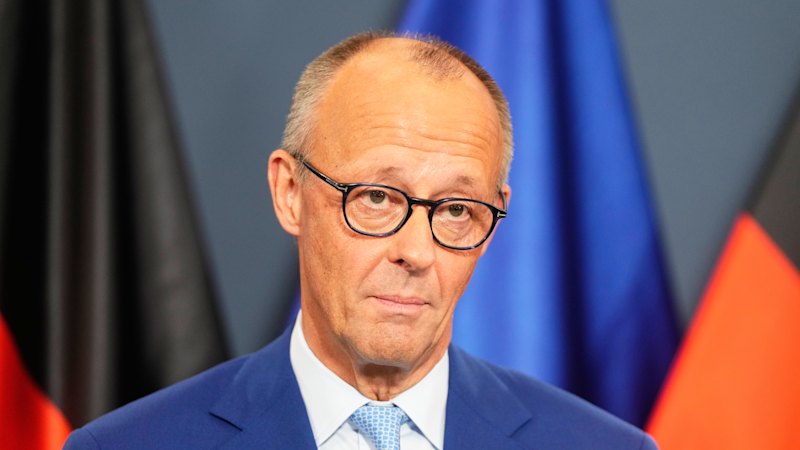
Photo via Persuasion

The Last Nail in the Coffin for Friedrich Merz

Read the original at Persuasion ↗
Cite

Mounk, Y. (2026, September 21). The Last Nail in the Coffin for Friedrich Merz. Persuasion. https://www.persuasion.community/p/the-last-nail-in-the-coffin-for-friedrich

Dated when The Aporia collected the article, usually within hours of publication. Check the original for its exact date and byline.

Persuasion · collected 2026-09-21 · by Yascha Mounk commentary

Quick Summary

In recent German state elections, the far-right Alternative for Germany (AfD) performed strongly, securing representation while the Christian Democrats led by Chancellor Friedrich Merz failed to meet the five percent threshold required for parliamentary seats in Mecklenburg-Vorpommern. This outcome marks a historic decline for the Christian Democrats and signals growing support for extremist parties across democratic nations. The article posits that populism has become a mainstream political force globally, with far-reaching implications for established political structures and leaders like Merz.
Written by AI on 2026-09-21, from this article's own text only (the story summary below draws on all the coverage).
See how they differ ↓

AI analysis

Story summary

Chancellor Friedrich Merz faces significant pressure as voters in Berlin and Mecklenburg-Western Pomerania go to the polls on Sunday, following the far-right AfD's major victory in Saxony-Anhalt just two weeks prior where it won nearly 44% of the vote compared to the CDU’s 17%. With about 3.8 million voters eligible across both states, the AfD is expected to make substantial gains at Merz’s expense, potentially undermining his ability to push through promised economic reforms. Polls indicate that Merz's approval ratings have fallen to around 14%, and his CDU party risks losing its status as the largest party in Berlin and falling below the threshold for representation in Mecklenburg-Western Pomerania. These outcomes could further jeopardize Merz’s leadership, especially given the CDU’s recent struggles with unpopular reforms and low public approval.

Written for “German Chancellor Merz Faces Election Defeats” on 2026-11-18, grounded in this article and the 40 other(s) covering the same event.

How they differ

20 outlets covered “German State Elections”.

What each outlet says

One AI summary per outlet of its latest article on this story, written from that article alone and checked against it. Open the article for the outlet's own words.

PersuasionThis outlet21 Sep

In recent German state elections, the far-right Alternative for Germany (AfD) performed strongly, securing representation while the Christian Democrats led by Chancellor Friedrich Merz failed to meet the five percent threshold required for parliamentary seats in Mecklenburg-Vorpommern. This outcome marks a historic decline for the Christian Democrats and signals growing support for extremist parties across…

The Last Nail in the Coffin for Friedrich Merz (this article)
The Straits Times23 Sep

Chancellor Friedrich Merz faces pressure to revise his reform agenda following recent losses by his conservative party in German state elections in eastern Germany and Berlin. The Social Democrats, who are coalition partners with the CDU, have pushed for a more economically supportive policy approach due to voter concerns over rising inflation and living standards. This includes potential modifications to proposed…

German state election losses risk snarling Merz's reform agenda →5 articles from The Straits Times on this story
The Guardian21 Sep

German Chancellor Friedrich Merz met with senior members of his Christian Democratic Union (CDU) party in Berlin following significant election defeats in two states. The meetings come after the CDU lost control of Mecklenburg-Western Pomerania for the first time and saw a strong showing from far-right and far-left parties, particularly the Alternative für Deutschland (AfD), which won 38% in Mecklenburg. These…

German chancellor meets CDU leaders to shore up support after more defeats →4 articles from The Guardian on this story
BBC21 Sep

German Chancellor Friedrich Merz stated his commitment to maintaining the coalition between his Christian Democratic Unionist (CDU) party and the Social Democratic Party (SPD) despite recent electoral setbacks. Following two state elections where the far-right Alternative for Germany (AfD) made significant gains, Merz described these results as a "profound turning point" but denied that his personal unpopularity was…

Merz vows to keep coalition together for Germany's 'democratic future' →3 articles from BBC on this story
Daily Mail22 Sep

Ruth Sunderland discusses the recent political setbacks Chancellor Friedrich Merz faced in Germany with two regional election defeats where left-wing parties and the far-right Alternative für Deutschland (AfD) performed strongly. She highlights economic challenges such as high energy costs, industrial decline, and competition from China, warning that these issues mirror broader European concerns and could deter…

Germany's political and economic problems are sounding a warning for the UK: RUTH SUNDERLAND →3 articles from Daily Mail on this story
South China Morning Post20 Sep

German Chancellor Friedrich Merz faced a significant electoral defeat when his Christian Democratic Union received only 5% of the vote in the state election of Mecklenburg-Western Pomerania, marking its lowest result since World War II. Despite this setback, Merz vowed to continue pushing for economic reforms, dismissing calls for retreat and emphasizing the need for persistence and patience in addressing Germany's…

Germany’s Merz vows to press ahead with reforms after historic state election defeat →2 articles from South China Morning Post on this story
Show 14 more outlets
Semafor20 Sep

In German regional elections on Sunday, Chancellor Friedrich Merz's CDU experienced its worst performance in 80 years, described by Merz as a "disaster." The far-right AfD also saw an increase in support, suggesting potential success for far-right parties in upcoming European elections. Meanwhile, other countries like Italy and Denmark are responding to right-wing pressures with stricter policies on issues such as…

Merz's CDU collapses in German regional elections 'disaster' →2 articles from Semafor on this story
The Independent20 Sep

German Chancellor Friedrich Merz faced significant political challenges after Sunday's state elections where his Christian Democratic Union (CDU) received record-low support of 5% in Mecklenburg-Western Pomerania and came second with 20% in Berlin, behind the Left party. Meanwhile, the anti-migration AfD made notable gains, securing 37% in Mecklenburg-Western Pomerania and 15.7% in Berlin. Despite these setbacks…

Germany’s Merz vows to press on with reforms after historic state election defeat →2 articles from The Independent on this story
Toronto Star21 Sep

German Chancellor Friedrich Merz is struggling to maintain his position after his Christian Democratic Union (CDU) suffered significant defeats in regional elections in Berlin and Mecklenburg-Western Pomerania, dropping below the 5% threshold needed for representation in one of these regions. This loss marks the first time since Germany’s federal republic was established that the CDU has failed to secure seats in a…

Germany's Merz struggles to stay on track after humiliating regional election defeat →2 articles from Toronto Star on this story
Washington Examiner21 Sep

In Sunday's regional election, Alternative for Germany (AfD) won 38% of the vote in Mecklenburg-Western Pomerania, significantly ahead of Chancellor Friedrich Merz’s Christian Democratic Union, which received only 4.9%. This follows a previous AfD victory in Saxony-Anhalt earlier this year, further undermining Merz's position despite his assertion that he will remain steadfast as chancellor. Merz described the…

Friedrich Merz says he will stay in power despite another loss to AfD: ‘Disaster’ →2 articles from Washington Examiner on this story
NPR21 Sep

German Chancellor Friedrich Merz remained steadfast after his party suffered significant losses in state elections for Mecklenburg-Western Pomerania and Berlin. The CDU received only 4.9% of the vote in Mecklenburg-Western Pomerania, failing to clear the parliamentary threshold, while in Berlin it placed third with just 18.2%. Meanwhile, the far-right AfD made substantial gains, securing 38.2% in Mecklenburg-Western…

German chancellor stands his ground after his party loses in state elections →2 articles from NPR on this story
Times of India21 Sep

In state elections held on Sunday, the far-right Alternative for Germany (AfD) secured first place with 37% of votes in Mecklenburg-Western Pomerania, outperforming Chancellor Friedrich Merz’s conservative party which received only 5.5%. This marked a significant loss for Merz's party, as it is their worst performance since 1949 at the state level. Meanwhile, in Berlin, the AfD gained strength with 16% of the votes…

Far-right tops another German state vote, Merz party routed →2 articles from Times of India on this story
CBC23 Sep

Germany's recent regional elections have seen significant gains for far-right and socialist parties, with the Christian Democratic Union (CDU) experiencing historic losses. In Mecklenburg-Western Pomerania, the far-right Alternative für Deutschland (AfD) won first place, while in Berlin, the democratic socialist Die Linke unseated the CDU. This shift signals growing political polarization and a crisis for Germany's…

Germany is electing far-right and socialist parties. What does it mean for the country's floundering centre? →2 articles from CBC on this story
ABC News (AU)21 Sep

Chancellor Friedrich Merz has vowed to continue leading Germany despite a poor showing by his Christian Democratic Union party in local elections in Mecklenburg-Vorpommern. The CDU failed to secure at least 5% of the vote, preventing it from entering the state parliament. Despite this setback, Mr Merz's position remains stable for now as the Social Democrats have indicated they want to maintain their coalition with…

German leader Merz clings on after election 'disaster' →2 articles from ABC News (AU) on this story
The Hindu23 Sep

On September 20, 2026, the far-right Alternative for Germany (AfD) won 38.2% of the vote in Mecklenburg-Western Pomerania, marking its second major victory after Saxony-Anhalt earlier that month. The Christian Democratic Union (CDU), led by Chancellor Friedrich Merz, failed to win a sufficient share of votes and was barred from representation in the regional parliament for the first time since modern German history…

ANALYSIS | Merz faces pressure after AfD’s recent electoral wins →2 articles from The Hindu on this story
Al Jazeera20 Sep

Voters in Berlin and Mecklenburg-Western Pomerania are set to cast ballots on Sunday amid concerns over rising support for far-right parties like the Alternative for Germany (AfD). Chancellor Friedrich Merz faces mounting pressure as his approval ratings dropped to 14%, following the AfD's strong performance in Saxony-Anhalt two weeks prior. In Mecklenburg-Western Pomerania, the CDU’s potential drop below the 5%…

Two German states go to the polls after far-right gains →
New York Post20 Sep

Voters in Mecklenburg-Western Pomerania and Berlin cast their ballots on Sunday in state elections where the far-right AfD party is expected to make significant gains. Chancellor Friedrich Merz faces challenges from these results, which could affect his ability to push reforms in Germany’s economy. The AfD's success might lead to its forming a regional government for the first time since World War II in…

German state elections open voting as Chancellor Friedrich Merz aims to keep far-right in power →
CBS News20 Sep

In recent German state elections, Chancellor Merz's Christian Democratic Union (CDU) faced a significant defeat, receiving only 5% of the vote in Mecklenburg-Western Pomerania—its lowest result since World War II. Meanwhile, the far-right AfD saw substantial gains with 37% and 15.7% in Mecklenburg-Western Pomerania and Berlin respectively. Despite the losses, Merz vowed to continue pushing for economic reforms…

Germany's Merz remains defiant after historic state elections defeat →
Sydney Morning Herald20 Sep

Friedrich Merz, the German chancellor, faces another electoral setback as his party, the Christian Democratic Union (CDU), lost ground to the far-right Alternative for Germany (AfD) in Mecklenburg-Vorpommern state elections on Sunday. The AfD secured 37% of the vote, while Merz’s approval ratings stand at a low 10%, with voters criticizing his leadership style and failure to curb the rise of the AfD and implement…

Merz stumbles on after another big election defeat. But for how long? →
The Globe and Mail21 Sep

German Chancellor Friedrich Merz announced that despite significant losses in recent state elections, he intends to continue pushing forward with economic reform initiatives for Germany. He reaffirmed his commitment to the current government's agenda aimed at reviving Europe’s largest economy.

Merz vows to press ahead with reforms after historic state election defeat →

Where they agree and split

Agreed

AI · cited, from two or more outlets

  • Merz's CDU party suffered a historic defeat in Mecklenburg-Western Pomerania with just 5% of the vote, its lowest result since World War II.45
Quoted from the coverage (4)

The strong showing of AfD in the Saxony-Anhalt election has further weakened the chancellor's standing on the national level as well, and in the past two weeks there have been calls even from within his own party to replace him as chancellor.

6 outlets

Despite the strong headwinds, he has repeatedly said that he’s determined to stay on and finish his term as chancellor.

6 outlets

The state elections are taking place in Mecklenburg-Western Pomerania, a largely rural region in the formerly communist and less prosperous east, and in the capital, Berlin.

6 outlets

Merz acknowledged the CDU's result as a "disaster" but struck a defiant note, rejecting any retreat from his government's reform agenda.

6 outlets

Disputed

Picked by our model, which is sometimes wrong

  • The Independent reports that Merz’s leadership was hit hard by his party’s heavy defeat in Saxony-Anhalt on September 6th, while the Washington Examiner attributes this to a broader context of political fragmentation and left-right polarization.12

Framing

How the first headlines put it

  • The Independent frames the event as a test for Chancellor Friedrich Merz ahead of state elections, whereas The Washington Examiner presents it as an arrival of Götterdämmerung for political parties under a Marmalade sky.12
  • The Daily Mail headlines predict the imminent fall of Chancellor Merz due to election defeats, while NPR focuses on Merz’s defiant stance despite losses.76
Words to watch (5)

Friedrich Merz vows to stay in office after CDU ‘disaster’ in German state elections The Guardian

Friedrich Merz says he will stay in power despite another loss to AfD: ‘Disaster’ Washington Examiner

Germany's Merz struggles to stay on track after humiliating regional election defeat Toronto Star

Chancellor Merz schedules crisis meeting as German voters go to the polls in state elections amid EU fears of another AfD victory Daily Mail

German leader Merz clings on after election 'disaster' ABC News (Australia)

The full story: what happened, how it changed, and all 41 articles →

Compared with similar articles

This article reads leans strongly right and hedges 10% of its claims. Each row says how that neighbour differs.
NPR
Hedges 1 of 13 claims Outlet record 60/100
CBC News
Leans left further left than this Hedges 1 of 13 claims Outlet record 60/100
Times of India
Leans strongly left further left than this Hedges 3 of 13 claims Outlet record 59/100
The Hindu
Hedges 2 of 25 claims Outlet record 60/100
The Independent
Leans strongly right Hedges 2 of 13 claims Outlet record 59/100
“The articles refer to different state elections in Germany; Article A mentions Berlin and Mecklenburg-Western Pomerania, while Article B discusses Mecklenburg-Vorpommern and Saxony-Anhalt.”
The Sydney Morning Herald
Leans left further left than this Hedges 3 of 28 claims Outlet record 61/100
The Straits Times
Leans left further left than this Hedges 2 of 31 claims Outlet record 64/100
South China Morning Post
Leans right further left than this Hedges 2 of 5 claims Outlet record 62/100
“The articles discuss different state elections in Mecklenburg-Western Pomerania and Saxony-Anhalt, with Article A focusing on an upcoming election while Article B reports on a past one.”
CBS News
Leans right further left than this Hedges 10 of 49 claims Outlet record 67/100
“Article A discusses the aftermath and cancellation of a trip due to an election outcome in Saxony-Anhalt, while Article B describes subsequent elections in Mecklenburg-Vorpommern with different results.”
The Independent
Leans left further left than this Hedges 4 of 36 claims Outlet record 59/100
“Article A discusses upcoming elections in Berlin and recent success of AfD in Saxony-Anhalt, while Article B reports on past results from Mecklenburg-Vorpommern and Saxony-Anhalt.”

Story

German Chancellor Merz Faces Election Defeats
Politics · 41 article(s) covering the same event. Compare every outlet's account →
How this article was measured signals, leaning charts, publisher record, byline, topics and claims

Signals How these are calculated →

Claims extracted
51
sentences that state something as happening or true
Uncertain
10%
5 of 51 hedged ("reportedly", "may", "according to")
Leaning
Leans strongly right
expected in commentary, which argues a position · beta estimate
Publisher signals
not measured
these signals count newsroom corrections; Commentary has none to count
Outlets on this story
41
Politics
Same framing elsewhere
1
articles that frame the event the way this one does
Analyzed 2026-09-21 · how these are computed

How this is being covered How these are calculated →

Article leaning vs. publisher reliability
Source leaning vs. consistency

Publisher

Persuasion · 123 article(s) · 0 correction(s) detected
No corrections detected for this publisher. That may mean careful reporting, or simply that nothing has been checked.

Who wrote this

Yascha Mounk
20 article(s) here · 1 carrying a prediction
In this week’s conversation, Yascha Mounk and Jonathan Haidt discuss what ancient wisdom and modern psychology teach us about how to live a happy life, how the movement to keep children off smartphones and social media is faring, and why artificial intelligence could threaten the very sources of human meaning.
2026-11-14 · assertive framing · Jonathan Haidt on How To Lead a Happy Life
In this week’s conversation, Yascha Mounk and Martin Wolf discuss whether democratic capitalism can recover from the damage done by populists like Donald Trump, how artificial intelligence might upend both the economy and humanity’s control over its own fate, and whether a bursting AI bubble or France’s fiscal woes could trigger the next financial crisis.
2026-11-08 · assertive framing · Martin Wolf on Democratic Capitalism After Trump
We thought we couldn’t quite torture our East Coast contributors at 2 a.m., so we have this amazing West Coast panel.
2026-11-04 · assertive framing · The Good Fight Club: Trump Rebuked
Since 2016, many writers have, time and again, predicted Donald Trump’s demise.
In this week’s conversation, Yascha Mounk and Dan Williams discuss whether AI is a genuinely transformative technology or just another tool, how the temptation to outsource thinking to AI may be eroding the cognitive skills of young people, and why the political battles we are actually having about artificial intelligence are not the important ones.
2026-10-31 · assertive framing · Dan Williams on Why AI (Probably) Won’t Kill Us
I begin the book by saying you undoubtedly live in a state that may be at war, or whose borders have certainly been shaped by war.
Might they even win the Senate?
2026-10-03 · assertive framing · Galen Druke on the Midterms
Then this guy put up his hand and said, Professor Furedi, are you saying that democracy is good in and of itself, and you would even respect democracy if it went against your views?
2026-09-29 · assertive framing · Frank Furedi on the Case for Populism
Once they did that, you were entering into a game in which there was a struggle for supremacy and over who would create their version of the state.
A series of elections held today are unlikely to receive the same attention but may be even more revelatory about Germany’s dire state.
2026-09-21 · assertive framing · The Last Nail in the Coffin for Friedrich Merz
Also by Yascha Mounk
The Good Fight Club: Trump Rebuked
2026-11-04 · Persuasion
Nothing else under this byline is closely related to this article, so these are simply their most recent.
All 20 articles by Yascha Mounk →

Topics

AfD Germany Mecklenburg-Vorpommern The Alternative for Germany the Christian Democrats

Subjects

Germany GPE · 4× AfD ORG · 3× the Christian Democrats NORP · 3× Berlin GPE · 2× Mecklenburg-Vorpommern GPE · 2× The Alternative for Germany ORG · 2× the Federal Republic ORG · 2× Friedrich Merz PERSON · 1× Merz PERSON · 1× Saxony-Anhalt GPE · 1×

Narrative

For ten years, large parts of the political center have told themselves that the success of the extremes is down to foreign interference or social media algorithms or the tactical failings of this or that candidate or perhaps the stupidity or the sexism or the racism of voters.
framing: assertive · carried by 1 article(s) · first seen 2026-09-21
A series of elections held today are unlikely to receive the same attention but may be even more revelatory about Germany’s dire state.
2026-09-21 · Persuasion
The Last Nail in the Coffin for Friedrich Merz · assertive framing

Claims (51 extracted, 5 hedged)

Two weeks ago, a seemingly minor election in Germany made global headlines: The Alternative for Germany (AfD) took 44 percent of the vote in state elections in Saxony-Anhalt, putting the far right within a stone’s throw of government for the first time since World War II. asserted
Alternative → make → II
A series of elections held today are unlikely to receive the same attention but may be even more revelatory about Germany’s dire state. uncertain
series → hold → state
The AfD once again had a very strong night in the northeastern state of Mecklenburg-Vorpommern. asserted
AfD → have → Vorpommern
Just as strikingly, the Christian Democrats fell short of five percent of the vote. asserted
Democrats → fall → vote
As a result, the party of Chancellor Friedrich Merz will be denied any representation in the state’s parliament, the first time this has happened in the history of the Federal Republic. asserted
this → deny → Republic
For Merz, this is the last nail in the coffin: He may cling to office for another few weeks or months. uncertain
He → cling → weeks
But his authority is now gone, his ability to shape the country totally depleted. asserted
ability → go → country
In political terms, he is a dead man walking. asserted
he → walk → terms
The importance of this historic rout extends beyond one person. asserted
importance → extend → person
Its members have ruled the Federal Republic for 53 out of the last 77 years. asserted
members → rule → years
From Konrad Adenauer to Helmut Kohl to Angela Merkel, they put their imprimatur on every aspect of the country. asserted
they → put → country
But the era in which catch-all parties like the Christian Democrats could shape the political landscape is rapidly coming to an end. uncertain
parties → shape → end
The void they are leaving behind is quickly filling with extremists of every stripe—not just in Germany, but all around the democratic world. asserted
they → leave → world
Here’s the single question I have been asked most often over the course of the last ten years: “Is the populist wave here to stay—or is it about to crest?” asserted
it → ’ → years
The answer seemed obvious to me in the summer of 2016, when Donald Trump became the Republican nominee and Britain voted to leave the European Union. asserted
Britain → seem → Union
Now, it has grown undeniable: The populists are here to stay. asserted
populists → grow → ?
What seemed abnormal a few years ago has—like it or hate it—become mainstream. asserted
seemed → seem → it
Politicians who fall into this bucket are now in power in the United States, in India, in Turkey, and in many other parts of the democratic world. asserted
who → fall → world
They have a high chance of taking office in France and Brazil over the course of the coming months.1 asserted
They → have → course
Even in places where they are likely to remain in the opposition for at least a few years, they have now grown sufficiently powerful to destroy any sense of business-as-usual. asserted
they → remain → business
The best recent illustration of that reality comes from the country that has resisted the trend the longest. asserted
that → come → trend
Back in the fall of 2016, leading politicians in Berlin were still privately assuring me that the Alternative for Germany would never manage to enter the Bundestag. asserted
Alternative → assure → Bundestag
Today, the AfD is leading in national polls. asserted
AfD → lead → polls
In Mecklenburg-Vorpommern, the party once again came out on top, taking about 38 percent of the vote. asserted
party → come → vote
Because a panoply of other parties failed to clear the five percent hurdle for representation in parliament, a broad left-wing coalition obtained just enough votes to govern the state. asserted
coalition → fail → state
But this is an electoral accident which is unlikely to be repeated in the future—and a difference of a few thousand votes would have made the state completely ungovernable. asserted
state → repeat → votes
As in many other countries, the rise of one extreme party is fueling the rise of another. asserted
rise → fuel → another
The Linke (Left), which was the big winner in another election held today in the city-state of Berlin, descends from the Socialist Unity Party (SED) which governed East Germany with an iron fist. asserted
which → hold → fist
In the first years after reunification, it mostly spoke to older voters who were nostalgic for the security of the communist regime. asserted
who → speak → regime
Over recent years, the party has refashioned itself in the image of the global illiberal left. asserted
party → refashion → left
During the recent electoral campaign in Berlin, some of its supporters were filmed chanting “Yalla, Yalla Intifada!” asserted
some → film → Intifada
On the night of the election, the head of an infamous criminal clan visited the Left’s election party, gleefully telling the media about his feeling of kinship with it. asserted
head → visit → it
On Sunday, the Left Party won 26 percent of the vote. asserted
Party → win → vote
Though a variety of coalitions remains arithmetically possible, the party’s leader is now likely to become the next mayor of Berlin, the first time that the successors of the SED have captured power in the nation’s capital. asserted
successors → remain → capital
Most of the support for the Social Democrats and Christian Democrats who once dominated Germany’s political landscape came from pensioners. asserted
who → dominate → pensioners
Among voters below 35, The Left and the AfD held an unassailable majority in both Berlin and Mecklenburg-Vorpommern. asserted
Left → hold → Berlin
This suggests that an even greater lurch to the extremes is likely in the offing over the course of the coming years. uncertain
lurch → suggest → years
While Germany’s Social Democrats had once enjoyed over 40 percent of support, for example, they were going from record low to record low. asserted
they → enjoy → low
In retrospect, it is clear that the fate of the major center-left parties was but a leading indicator for a much broader crisis of the political center: in time, the Christian Democrats duly followed suit. asserted
Democrats → follow → suit
The era of what Germans still call Volksparteien—catch-all parties capable of mobilizing a large portion of the vote—is effectively over. asserted
Germans → call → vote
…and 11 more, not listed.
Give feedback · no sign-in needed

No sign-in needed for now. Your note is sent without a name, so it cannot be answered.

History Support