That is 0 articles you have read today.
The Aporia is free and carries no advertising, so readers are the only
thing paying for it. If you are getting this much out of it, a small
donation is what keeps it independent.
Daily limit reached
You have read 0 articles today.
That is more than the 15 a day The Aporia gives away,
and well past what it can carry on nothing. Your allowance resets at
midnight.
There is no advertising here and nothing about you is sold, so readers
are the only thing paying for it. If the site is worth this much of
your day, it is worth a few dollars.
Everything else stays open: the
maps, the
directory and
search do
not count against this, and neither does re-opening something you have
already read today.
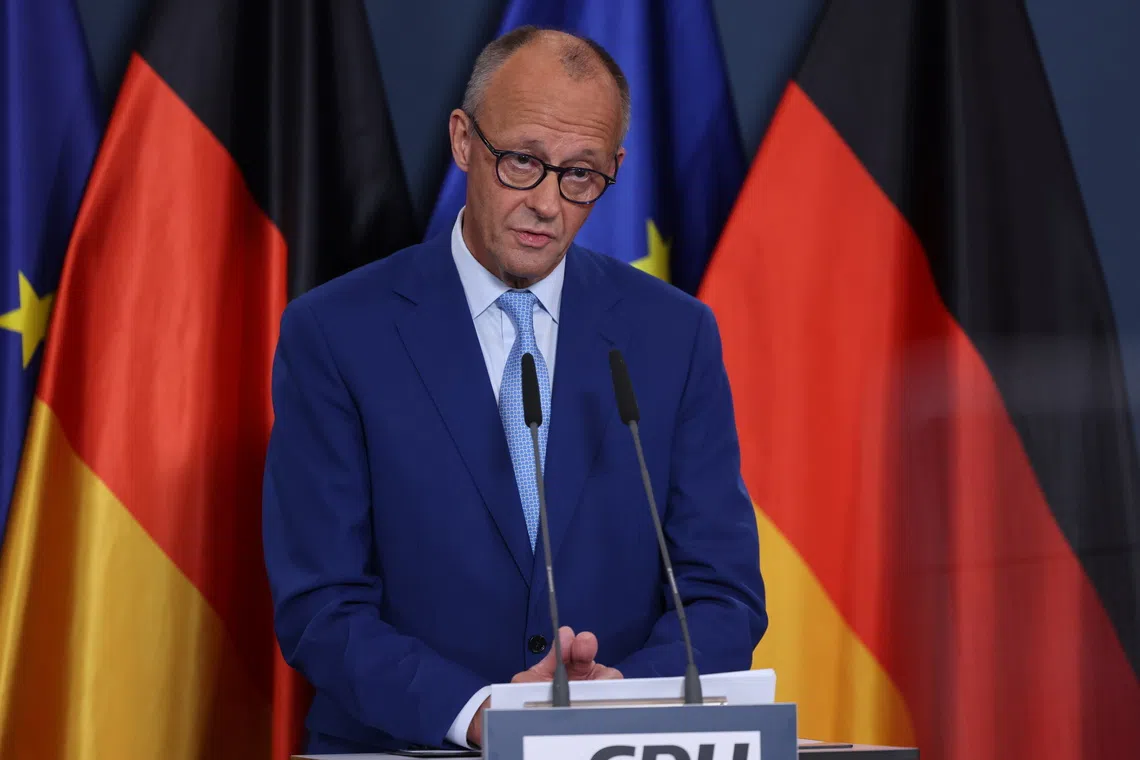
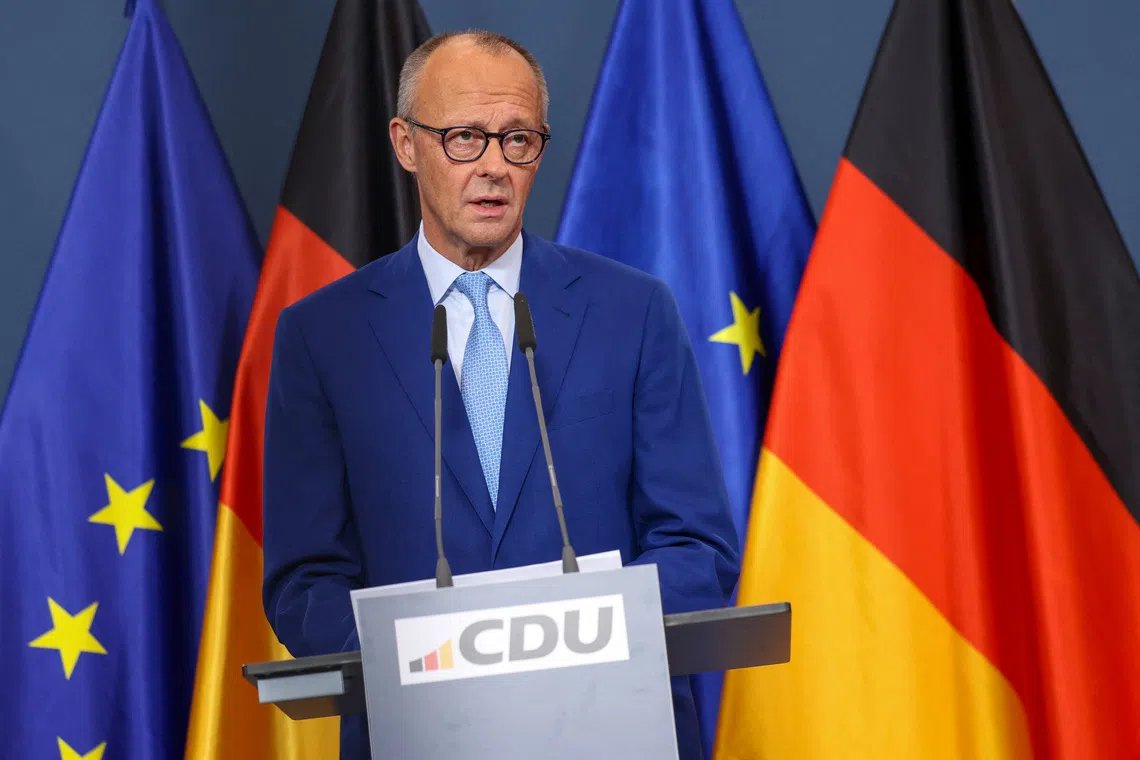
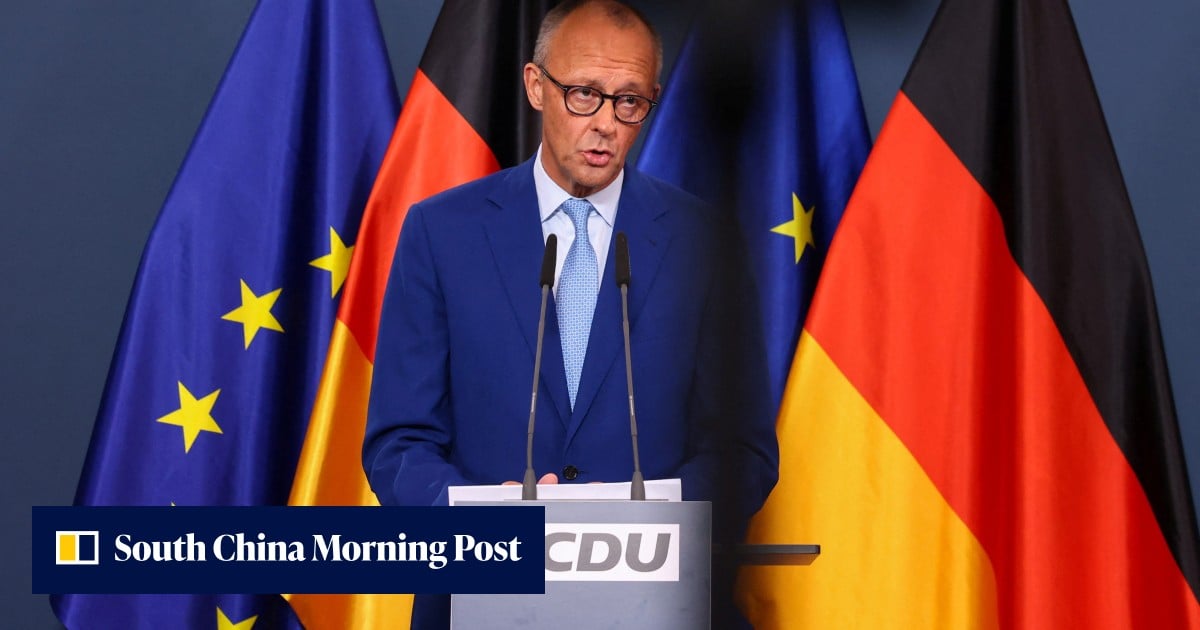
In state elections held on Sunday, the far-right Alternative for Germany (AfD) secured first place with 37% of votes in Mecklenburg-Western Pomerania, outperforming Chancellor Friedrich Merz’s conservative party which received only 5.5%. This marked a significant loss for Merz's party, as it is their worst performance since 1949 at the state level. Meanwhile, in Berlin, the AfD gained strength with 16% of the votes, further solidifying its rise across Germany despite mainstream parties' reluctance to collaborate with them.
Written locally by qwen2.5:14b on 2026-09-21,
using this article's own text rather than the other coverage of the
same event (that is the story summary below).
Story summary
Chancellor Friedrich Merz faces significant pressure as voters in Berlin and Mecklenburg-Western Pomerania go to the polls on Sunday, following the far-right AfD's major victory in Saxony-Anhalt just two weeks prior where it won nearly 44% of the vote compared to the CDU’s 17%. With about 3.8 million voters eligible across both states, the AfD is expected to make substantial gains at Merz’s expense, potentially undermining his ability to push through promised economic reforms. Polls indicate that Merz's approval ratings have fallen to around 14%, and his CDU party risks losing its status as the largest party in Berlin and falling below the threshold for representation in Mecklenburg-Western Pomerania. These outcomes could further jeopardize Merz’s leadership, especially given the CDU’s recent struggles with unpopular reforms and low public approval.
Written for “German State Elections And Chancellor…” on 2026-10-05,
grounded in this article and the 40 other(s) covering the same event.
Claims extracted
13
claim-shaped sentences
Uncertain
23%
3 of 13 hedged
Leaning
Leans strongly left
of the writing, not the subject · beta estimate
Correction & hedging signals
59.1
corrections and hedging in what we collected;
not a measure of accuracy
Outlets on this story
41
Politics
Narrative spread
1
articles carrying this framing
The Alternative for Germany (AfD) took first place in state elections in northeastern Germany Sunday, exit polls showed, delivering a "disaster" for Chancellor Friedrich Merz, who vowed to push ahead with his reform agenda.
asserted
who → take → agenda
The AfD was set to win 37% in the state of Mecklenburg-Western Pomerania, ahead of the centre-left Social Democrats on 35.5% and far in front of Merz's conservatives, who got 5.5% and barely crossed the threshold to enter the state parliament, according to exit polls on ARD public television.
uncertain
who → set → television
But the far-right party is unlikely to govern as the other main parties rule out working with it.
asserted
parties → govern → it
If confirmed, Sunday's result would be the worst in any state election for Merz's party since 1949.
asserted
result → confirm → 1949
It would also be another first-place finish at state level in a month for the AfD party, which is shunned by mainstream parties but is topping national opinion polls.
asserted
which → shun → polls
"It's a disaster," Merz said in televised remarks, but signalled that he would fight on as chancellor after speculation that a bad result could prompt him to resign.
uncertain
result → say → him
In another election in the capital Berlin that also took place Sunday, the far-left Linke party was on 24.5%, while Merz's conservatives were on 20% and the AfD also gained in strength, hitting 16%.
asserted
AfD → take → %
Sunday's results may not prove a knock-out blow for Merz.
uncertain
results → prove → Merz
But his low approval ratings, unpopular reforms and the triumph of the AfD in an earlier state election in Saxony-Anhalt have left his future in the balance.
asserted
ratings → leave → balance
Merz has called a party meeting for Sunday to discuss the way forward.
asserted
Merz → call → way
The elections in Mecklenburg-Western Pomerania, a largely rural state in the formerly communist east, and the capital Berlin follow the Sept 6 election in Saxony-Anhalt, where the AfD came close to the rare feat of winning an absolute majority.
asserted
AfD → follow → majority
Elections in the two states would not usually draw much interest outside Germany, but the AfD's success in Saxony-Anhalt, which it sees as the first step towards winning federal elections due in 2029, has sent shock waves through Europe.
asserted
it → draw → Europe
In just over a decade, the party, which wants to take tough action to deport foreigners with no right to stay in Germany, restore energy ties with Russia and quit the euro, has transformed itself from a fringe eurosceptic movement to the country's most popular party.
asserted
which → want → party
 The Aporia