Why the Outcome of Russia's First Parliamentary Elections in Years Is All But Assured

Read the original at TIME ↗
TIME · collected 2026-09-18 · by Connor Greene

Quick Summary

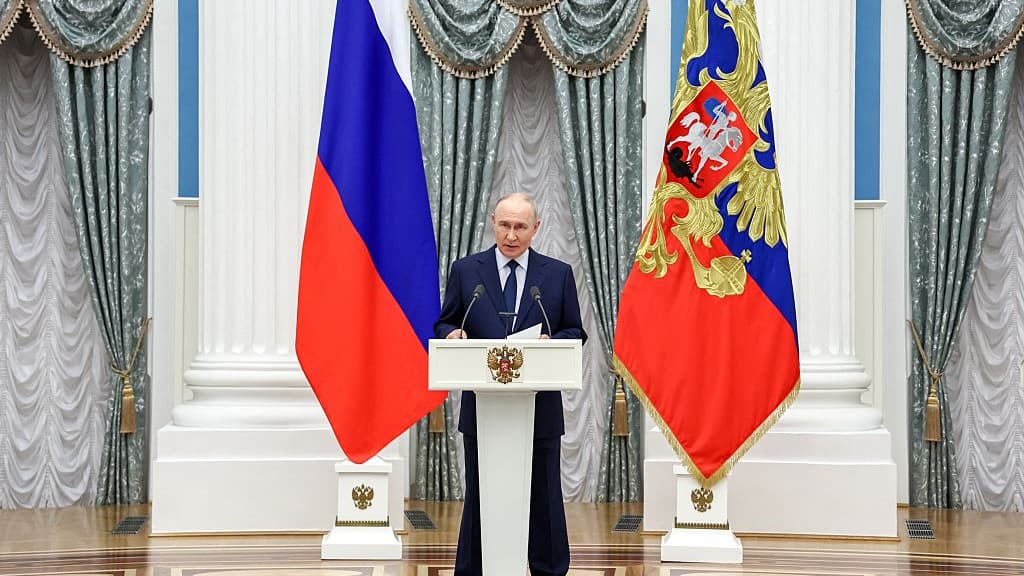
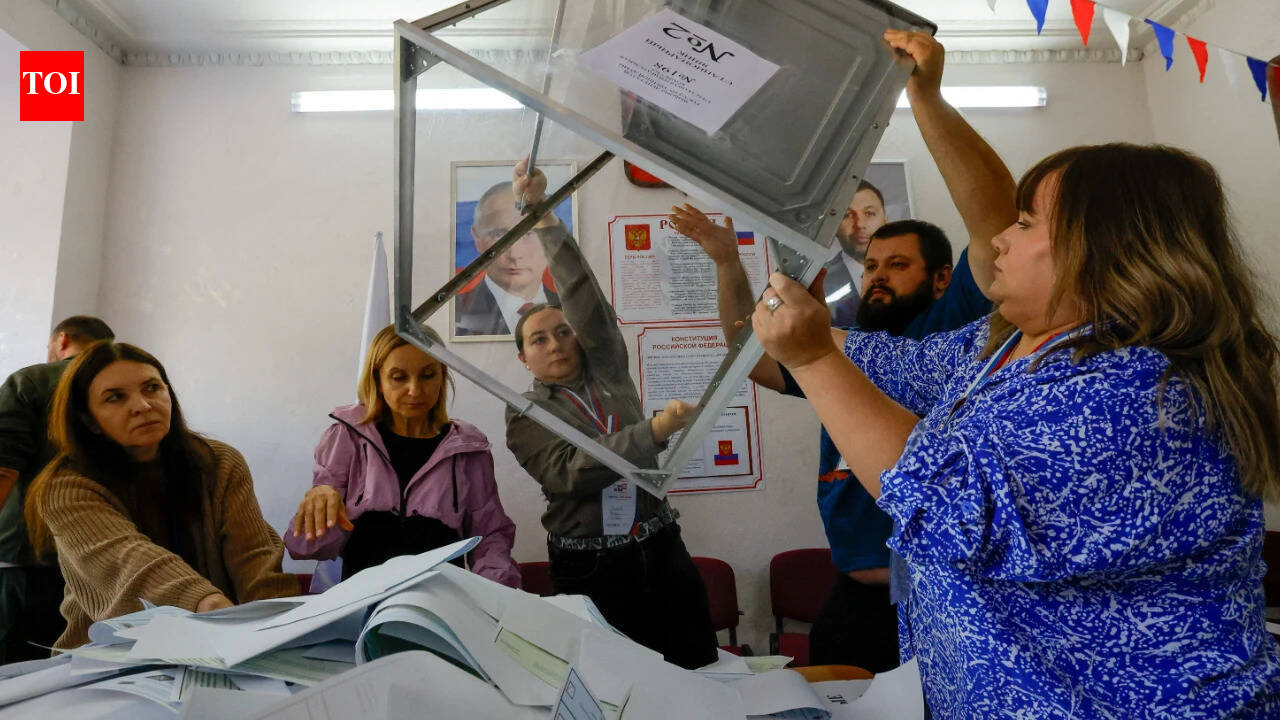
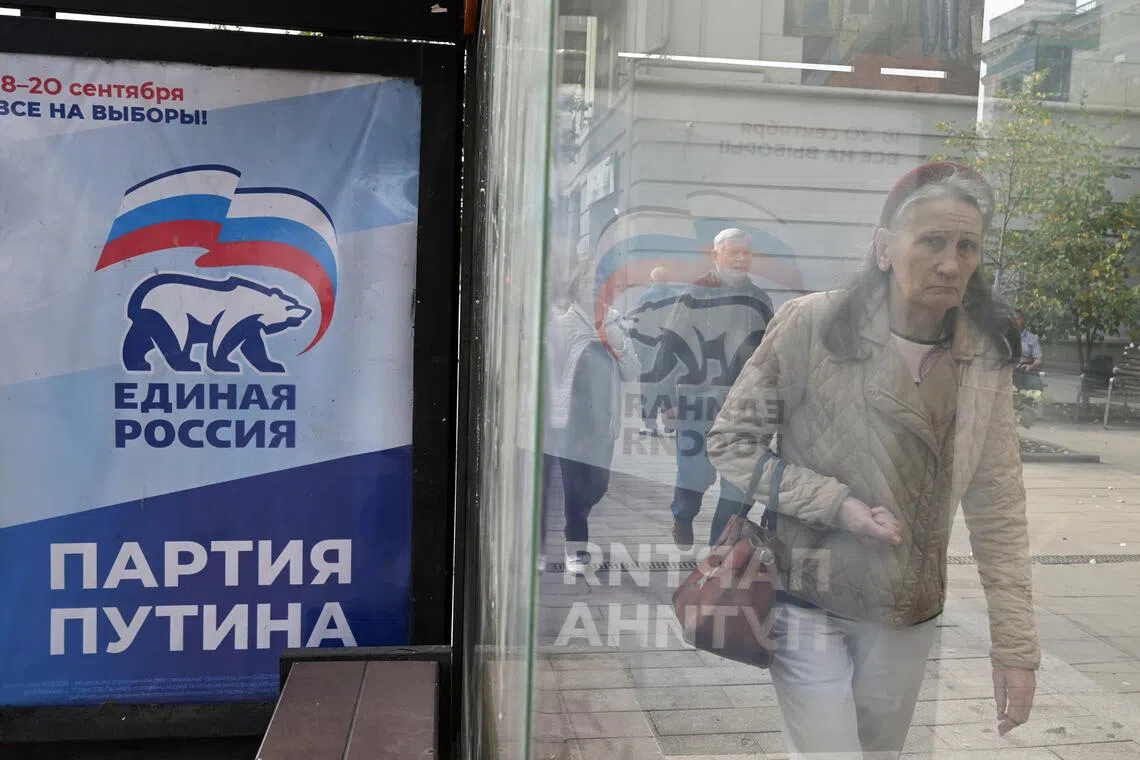
Russia is holding its first parliamentary elections since 2021, but the outcome is largely predetermined due to the overwhelming dominance of the Kremlin-aligned United Russia party. United Russia currently holds 310 out of 450 seats in the State Duma and needs at least 300 seats for a supermajority. Other parties represented are also pro-Kremlin and supportive of the war in Ukraine, further cementing control over legislative decisions. Critics argue that these elections lack freedom and fairness due to restrictions on opposition parties like Yabloko, which was barred from participating by Russia’s Supreme Court following a lawsuit from another Kremlin-friendly party.
Written locally by qwen2.5:14b on 2026-09-18, using this article's own text rather than the other coverage of the same event (that is the story summary below).

AI analysis runs on qwen2.5:14b, locally

Story summary

Russian parliamentary elections, held from September 18-20, were widely expected to see United Russia, President Vladimir Putin's party, maintain its dominance over the State Duma (lower house of parliament). Despite critics arguing that the outcome was predetermined and would have no significant impact on the country’s future, Russian authorities made persistent efforts to ensure high voter participation under current electoral law. The elections came amidst increasing war fatigue and economic hardship due to Ukraine's drone strikes targeting oil refineries and warehouses within Russia, causing fuel shortages and internet blackouts.

Exit polls conducted by independent groups at embassies and consulates abroad revealed starkly different results from those inside Russia: New People, an opposition party, garnered around 45% of the votes compared to United Russia’s reported near-58% support domestically. These discrepancies highlight a divergence between domestic and international perceptions of Putin's popularity, with many Russian expatriates opposing the war and expressing anxiety over its economic and social consequences.

Critics argue that these elections are more about demonstrating the regime's resilience than reflecting genuine public sentiment or political contestation, given the tight control exercised by the Kremlin.

Written for “Russia's Wartime Elections” on 2026-10-05, grounded in this article and the 64 other(s) covering the same event.

Signals How these are calculated →

Claims extracted
44
claim-shaped sentences
Uncertain
7%
3 of 44 hedged
Leaning
Leans left
of the writing, not the subject · beta estimate
Correction & hedging signals
59.5
corrections and hedging in what we collected; not a measure of accuracy
Outlets on this story
65
Politics
Narrative spread
1
articles carrying this framing
Analyzed 2026-09-18 · how these are computed

Story

📰 Russia's Wartime Elections
Politics · 65 article(s) covering the same event. See how they differ ↓

How this is being covered How these are calculated →

Article leaning vs. publisher reliability
Source leaning vs. consistency

Compared with similar articles

This article reads leans left and hedges 7% of its claims. Each row says how that neighbour differs.
The Hindu · 0.86 cosine similarity
⚖️ Leans strongly left further left than this 🔴 12% hedged 1 of 8 📰 publisher trust 60
“Both articles describe early results from Russia's first parliamentary election since 2022, focusing on the overwhelming dominance of the United Russia party.”
Al Jazeera
⚖️ Leans right further right than this 🔴 5% hedged 2 of 42 📰 publisher trust 60
“Both articles discuss Russia's parliamentary elections held on September 18, 2026.”
The Hindu
⚖️ Leans right further right than this 🔴 24% hedged 4 of 17 📰 publisher trust 60
“Both articles describe the same parliamentary elections in Russia occurring September 2026.”
Times of India
⚖️ Leans right further right than this 🔴 17% hedged 4 of 24 📰 publisher trust 59
“Both articles describe the same parliamentary elections for Russia's State Duma in September 2026, with United Russia leading polls and maintaining dominance.”
Dawn
⚖️ leaning not scored 🔴 13% hedged 4 of 31 📰 publisher trust 77
“Both articles describe the outcome of Russia's parliamentary elections held from September 18 to September 20, 2026, focusing on the overwhelming victory of United Russia and mentioning cyberattacks and drone strikes.”
BBC News
⚖️ leaning not scored 🔴 25% hedged 1 of 4 📰 publisher trust 78
“Both articles report on the same parliamentary election in Russia held from September 18-20, 2026, with United Russia maintaining dominance.”
Toronto Star
⚖️ Leans left 🔴 33% hedged 1 of 3 📰 publisher trust 63
“Both articles describe the outcome of the same parliamentary elections in Russia held from September 17-19, 2026.”
Al Jazeera · 0.89 cosine similarity
⚖️ Leans right further right than this 🔴 4% hedged 2 of 52 📰 publisher trust 60
“Both articles discuss the same ongoing parliamentary election in Russia taking place from September 16-18, 2026.”
The Straits Times
⚖️ Leans left 🔴 9% hedged 5 of 53 📰 publisher trust 59
“Both articles describe Russia's parliamentary elections taking place from September 18-20, 2026, with a focus on the expected outcome for United Russia.”
The Straits Times
⚖️ leaning not scored 🔴 5% hedged 1 of 20 📰 publisher trust 59
“Both articles describe Russia's parliamentary election occurring from September 18-20, 2026, with United Russia expected to maintain dominance.”

Publisher

TIME · 445 article(s) · 1 correction(s) detected
Running correction rate · 1 correction(s)
2026-09-17
Kerry James Marshall

Who wrote this

Connor Greene
12 article(s) here · 1 carrying a prediction
🔮 He announced a platform students can use to submit proposals for education reform, which he said will be evaluated and used for a “national report.”
🔮 The applicant must show that irreparable harm may occur if a lower court’s order is not paused, or that approval would serve in the public’s interest.
🔮 Included on the panel were Scott Kirby, chief executive officer of United Airlines; Ruth Porat, president and chief investment officer of Alphabet, the parent company of Google; and William Ford, executive chair of automotive company Ford, which sponsored the event.
🔮 Netanyahu sharply criticized New York Mayor Zohran Mamdani during his speech, calling him “the antisemitic mayor of New York” and placing him among “all those spreading these lies about my country and about our brave soldiers.”
🔮 Wherever I will be, whatever I will be doing, I will keep championing the conviction that peace is possible," he said.
🔮 Trump Administration officials on Tuesday announced that they would terminate the Obamacare coverage of 760,000 enrollees, alleging widespread fraud in enrollment.
🔮 Delegations from the U.S. and Iran are traveling to New York for the world’s largest diplomatic gathering this week in what experts say could be a key moment for determining the direction of the Iran war nearly seven months in.
🔮 Russia is just one day into three-day elections that will determine the makeup of the lower house of the country’s parliament, the State Duma.
🔮 A State Department official confirms to TIME that the department notified Congress that $52 million in foreign military funding for Iraq, North Macedonia, Slovakia, and Tunisia will be diverted to Colombia, Ecuador, Panama, and Peru, and that the funds will be used to “combat narcoterrorism in our own backyard and help continue to secure the Panama Canal.”
🔮 Trump tapped Schroyer to be the next ICE director in June, calling him a “PATRIOT with real operational experience, and proven leader with DECADES of experience locking up the worst of the worst,” and saying that he would play a “vital role” in the Administration’s immigration crackdown.
Also by Connor Greene
Nothing else under this byline is closely related to this article, so these are simply their most recent.
All 12 articles by Connor Greene →

Topics

Kremlin Russia Ukraine United Russia Yabloko

Subjects

Kremlin ORG · 6× Russia GPE · 6× Russian NORP · 4× Szakonyi PERSON · 3× Ukraine GPE · 3× United Russia GPE · 3× Yabloko ORG · 3× Duma ORG · 2× TIME ORG · 2× the State Duma ORG · 1×

Narrative

Maria Telalian, director of the OSCE’s election-monitoring office, the Office for Democratic Institutions and Human Rights, said in a statement last month that the decision not to invite any OSCE monitors was “deeply regrettable, particularly as it continues a pattern of not implementing the commitments that every OSCE participating State has undertaken towards its own citizens and the international community.” The ongoing vote marks the third nationwide election in Russia to take place without OSCE observation.
framing: assertive · carried by 1 article(s) · first seen 2026-09-18
🔮 Russia is just one day into three-day elections that will determine the makeup of the lower house of the country’s parliament, the State Duma.

Claims (44 extracted, 3 hedged)

Russia is just one day into three-day elections that will determine the makeup of the lower house of the country’s parliament, the State Duma. asserted
that → determine → parliament
But the outcome of the vote has been all but guaranteed since before the first ballots were cast. asserted
ballots → guarantee → vote
The elections, the first parliamentary vote the country has held since its invasion of Ukraine in 2022, are widely expected to result in the Kremlin-aligned United Russia party maintaining its overwhelming dominance in the Duma. asserted
party → hold → Duma
The party currently holds 310 of the 450 seats in the chamber, giving it a supermajority and the power to make major legislative decisions without the input of other parties. asserted
party → hold → parties
It needs to keep at least 300 seats to retain that supermajority. asserted
It → need → supermajority
Four other political parties are also expected to be represented in the Duma following the election, all of which generally vote in line with United Russia and support the war in Ukraine. asserted
all → expect → Ukraine
Democracy watchdogs and foreign governments have denounced Russia’s elections as being neither free nor fair. asserted
governments → denounce → elections
Russian officials have rejected such claims in the past, saying that the country carries out its voting process in line with the law. uncertain
country → reject → law
But experts tell TIME that the Russian government exerts its influence in ways that all but predetermine the results of elections and ensure that President Vladimir Putin and United Russia maintain control. asserted
Putin → tell → control
And this year’s vote, says David Szakonyi, an expert on Russia and election fraud who is professor at George Washington University, is “occurring in the most repressive political environment in Russia's post-Soviet history.” asserted
who → occur → history
Here's what experts have to say about how the Kremlin ensures elections result in its desired outcome—and why it continues to hold them. Restricting opposition The Kremlin uses multiple levers to influence elections on the government level, at the polls, and in daily civilian life, according to Szakonyi. uncertain
uses → say → Szakonyi
“Without a doubt, the most powerful tool” in the Kremlin’s arsenal, Szakonyi says, is limiting which candidates appear on the ballot in the first place. asserted
candidates → say → place
In the case of the ongoing parliamentary vote, the one anti-war party that was registered by the Central Election Commission, the Yabloko party, was prohibited from participating in the election by Russia’s Supreme Court. asserted
that → register → Court
The high court ordered that the party be removed from the ballot last month in response to a lawsuit from the pro-Kremlin Rodina party that accused the Yabloko party, which has garnered support from young Russians and those opposed to the war in Ukraine, of copyright infringement, receiving foreign funding, and extremism. asserted
which → order → funding
Szakoni says that the Kremlin has the ability to “harness the judicial system to pass rulings” such as the Supreme Court’s decision against the Yabloko party, which it uses as a “legal veneer” that shields the influence of Putin’s government over the ballot. asserted
that → say → ballot
This screening of anti-war and other opposition parties, he says, comes months in advance of elections, creating a list of candidates that includes little or no meaningful opposition at all. The Kremlin has also labeled opposition figures who oppose the war as “foreign agents,” a designation that prevents them from holding public office. asserted
that → say → office
In other instances, opposition leaders and activists such as Alexei Navalny have been prosecuted and imprisoned. asserted
leaders → prosecute → Navalny
Still others have fled the country. asserted
others → flee → country
Experts tell TIME that the Russian government has also exercised its influence more directly on vote counts to achieve its desired election results. asserted
government → tell → results
“Historically,” Szakonyi says, Russian electoral officials have “intervened regularly to deliver votes to the ruling party and take them away from competitors.” asserted
officials → say → competitors
In the past, this was done via “crude ballot box stuffing,” he says; now, he asserts it is also performed by altering the results of online votes. asserted
it → do → votes
Online voting is used in more than a third of Russia’s regions, which Szakonyi asserts puts more power in the government’s hands since it eliminates the physical tally represented by paper ballots. asserted
it → use → ballots
“The way that the electronic votes are being counted is almost completely a black box for the rest of society,” he says. asserted
he → count → society
Regina Smyth, an expert on Russia and authoritarian regimes who is a professor at Indiana University, says that “falsification,” or the practice of altering the number of votes that are counted, occurs at precinct election commissions, of which there are over 90,000, all across Russia, that she says are “mostly staffed by loyalists, and they will simply report false numbers.” asserted
they → say → numbers
There is also fraud, Smyth alleges, in “mobile voting,” when officials deliver and pick up ballots from people in their homes who are, for example, disabled or ill and unable to vote otherwise. asserted
who → be → example
On a deeper level, an “implicit threat” stemming from the Russian government sways countless votes each election cycle, Szakonyi contends. asserted
Szakonyi → stem → votes
“Many Russian voters do not have the autonomy to cast an independent vote. asserted
voters → have → vote
They work for the state,” he says. asserted
he → work → state
He argues that many university students, healthcare workers, and teachers, whose livelihoods depend on state-run organizations, belong to a “block of captive, vulnerable voters” who fear prosecution by the Kremlin more than they value the influence of their ballot. asserted
they → argue → ballot
Voting is also taking place this year in Russian-controlled areas of Ukraine: in Crimea, which Russia annexed in 2014, and in the Luhansk, Donetsk, Kherson, and Zaporizhzhia regions. asserted
Russia → take → regions
“In the occupied territories of Ukraine, where the elections are being held in these illegally occupied territories, soldiers, heavily armed soldiers, travel from house to house coercing people to vote,” Smyth tells TIME. asserted
Smyth → occupy → TIME
A lack of independent election oversight On top of the various methods the Kremlin allegedly uses to achieve the voting results it wants, there are slim to no oversight mechanisms in place to document election interference in the country. uncertain
it → use → country
Golos, which was the only independent election watchdog within Russia, shuttered in 2025 following years of governmental pressure after its chairman was found guilty of working with an "undesirable organization" and imprisoned in a penal colony. asserted
chairman → shutter → colony
Szakonyi describes Golos’ loss as the “biggest blow toward any type of accountability” for the Kremlin, saying it was “the biggest tool that civil society had to identify, uncover, and publicize the fraud that was basically happening in every single electoral cycle.” asserted
that → describe → cycle
Russia has also refused to invite international election monitors from the Organization for Security and Co-operation in Europe (OSCE), the world’s largest regional security organization, to observe this year’s elections. asserted
Russia → refuse → elections
Maria Telalian, director of the OSCE’s election-monitoring office, the Office for Democratic Institutions and Human Rights, said in a statement last month that the decision not to invite any OSCE monitors was “deeply regrettable, particularly as it continues a pattern of not implementing the commitments that every OSCE participating State has undertaken towards its own citizens and the international community.” The ongoing vote marks the third nationwide election in Russia to take place without OSCE observation. asserted
vote → monitor → observation
Russia previously imposed severe limits on OSCE election observation in 2021 that the organization said made monitoring that year’s parliamentary elections in the country impossible. asserted
monitoring → impose → country
It did not invite the group’s monitors to the 2024 presidential election at all. asserted
It → invite → election
So why is Russia holding elections at all? asserted
Russia → hold → elections
Despite the results of the parliamentary elections being all but determined, they carry a symbolic weight crucial to Putin’s legitimacy in the public eye and his desire to continue the war against Ukraine, experts tell TIME. asserted
experts → carry → TIME
…and 4 more, not listed.

💬Give feedback
🕘History 🎫Support