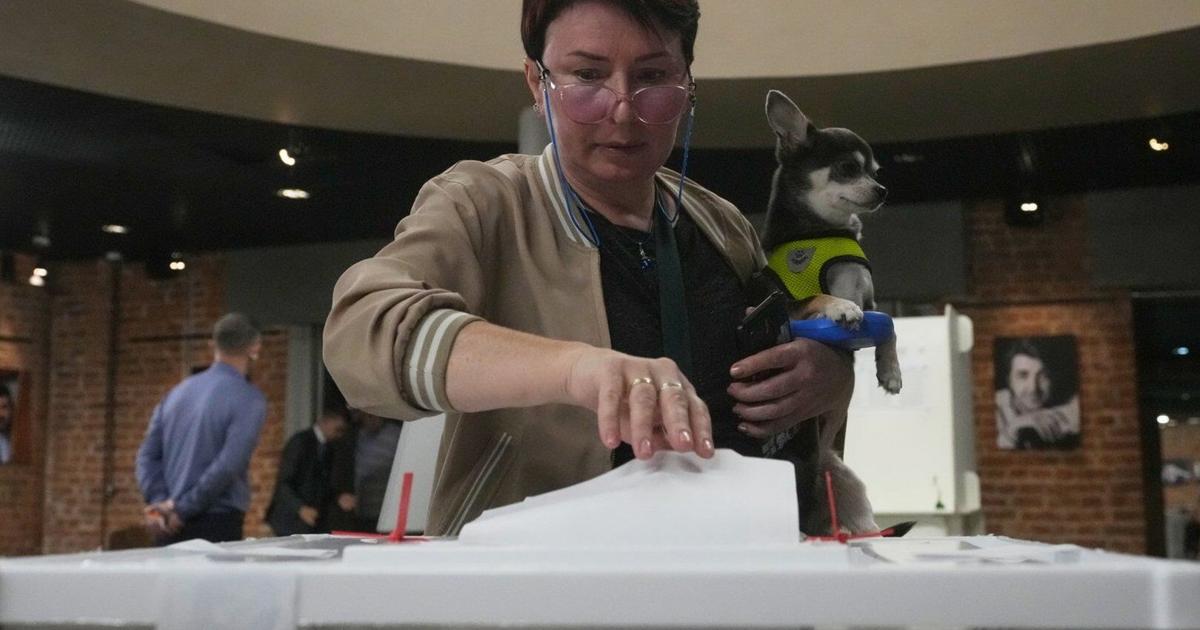
Vladimir Putin’s party is set to win by a comfortable majority as voting closed in the country’s tightly-controlled parliamentary elections, widely branded a sham.
asserted
voting → set → elections
Initial data from Russia’s Central Election Commission suggests the leader’s United Russia party is in the lead to win with 57.8 per cent of the votes and over 90 per cent of the ballots processed.
uncertain
party → suggest → ballots
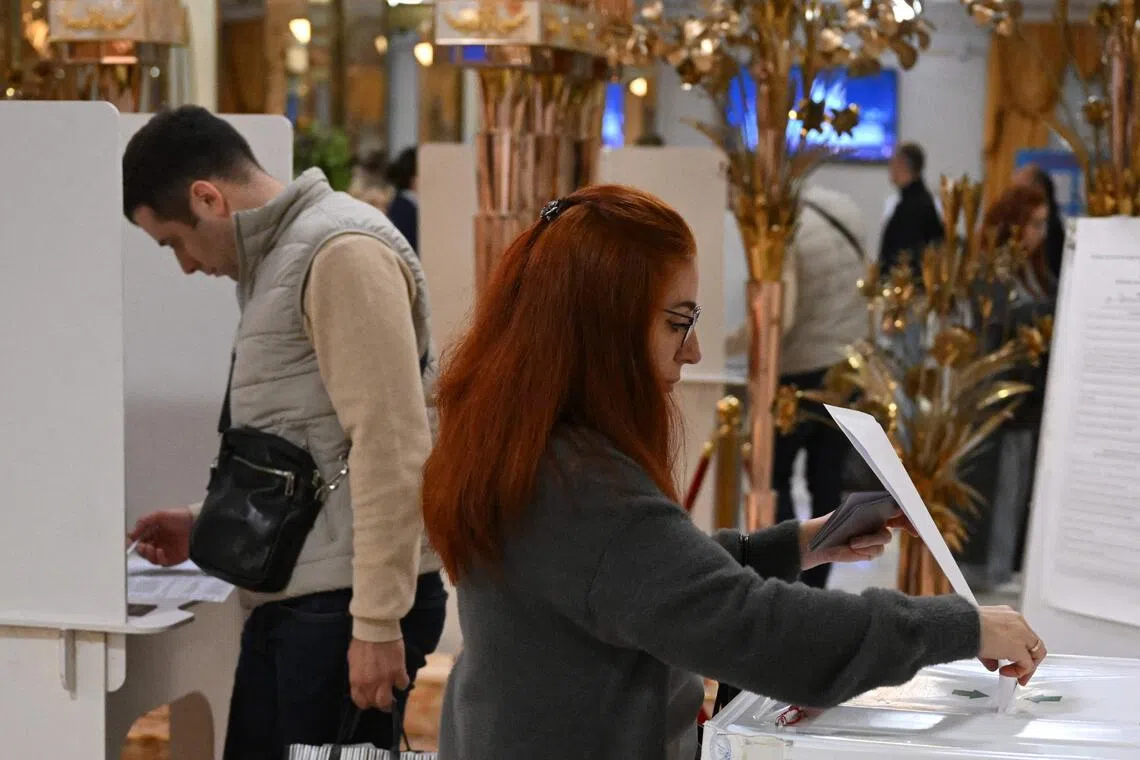
The Commission claimed turnout was at a record high with over 56.6 per cent of Russians casting their vote, up from around 52 per cent in 2021.
asserted
cent → claim → 2021
Putin won the most recent presidential elections in 2024 with 88.5 per cent of the public vote and is not set to stand again until 2030.
asserted
Putin → win → 2030
However, the elections, which took place between Friday and Sunday, were held in strict and militarised conditions with some voters barred and observers detained at poll booths, according to reports.
uncertain
observers → take → reports
Armed soldiers at ballot boxes
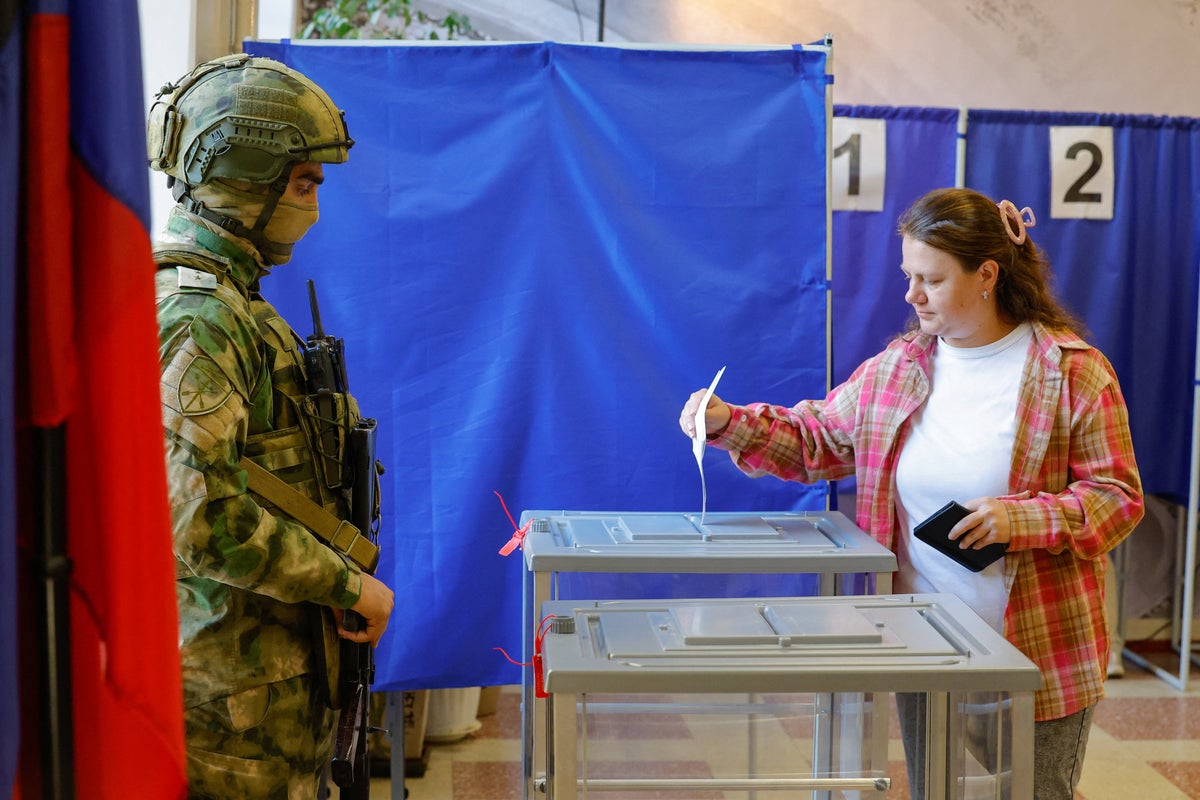
Images released on Friday showed voters casting their ballot at apparent gunpoint with fully armed soldiers standing in local voting centres.
asserted
soldiers → release → centres
In comments, broadcast ahead of the voting, Putin said: “Your choice and determination will show once again that millions of people are backing our fighters and that we stand together, united by shared values, our historical memory, love for our Motherland.”
asserted
we → broadcast → Motherland
The Kremlin is expected to use the win to insist that the Russian people support Putin and his war with Ukraine, despite minimal territorial gains, mounting casualties and declining support for the president.
asserted
people → expect → president
Voters were seen dropping their ballots in a box as armed Russian solders stood by and watched in the Donetsk region.
asserted
solders → see → region
Independent observers turned away
Independent European observers were turned away from the polls after Russia’s foreign ministry accused the Organisation for Security and Cooperation in Europe of “double standards” for its criticism of Russia.
asserted
ministry → turn → Russia
The OSCE parliamentary assembly president Pere Joan Pons said that the decision to turn observers away is a breach of Russia’s commitments as a member state.
asserted
decision → say → state
In a statement released last month ahead of the elections, the Maria Telalian, director of the Office for Democratic Institutions and Human Rights called the decision “deeply regrettable” adding that it “continues a pattern of not implementing the commitments that every OSCE participating State has undertaken towards its own citizens and the international community.”
“The absence of independent and impartial international election observation by the OSCE deprives voters, electoral stakeholders and the wider international community, of an objective assessment of the electoral process, reducing transparency and public confidence,” she said.
asserted
she → release → transparency
Opposition parties ‘jailed, exiled, excluded or dead’
Yabloko, the liberal opposition party, said that one of its observers lost consciousness while being arrested by police after officials accused him of trying to “disrupt the election” at a polling station in St Petersburg on Saturday.
asserted
officials → jail → Saturday
The Communist Party also said many of their observers had been turned away.
asserted
many → say → observers
Parties also reported violations including sealed ballot boxes being opened and polling station doors not being secured overnight.
asserted
doors → report → violations
Some said there had been a refusal to issue paper ballots in some instances.
asserted
Some → say → instances
The claims could not be independently verified.
uncertain
claims → verify → ?
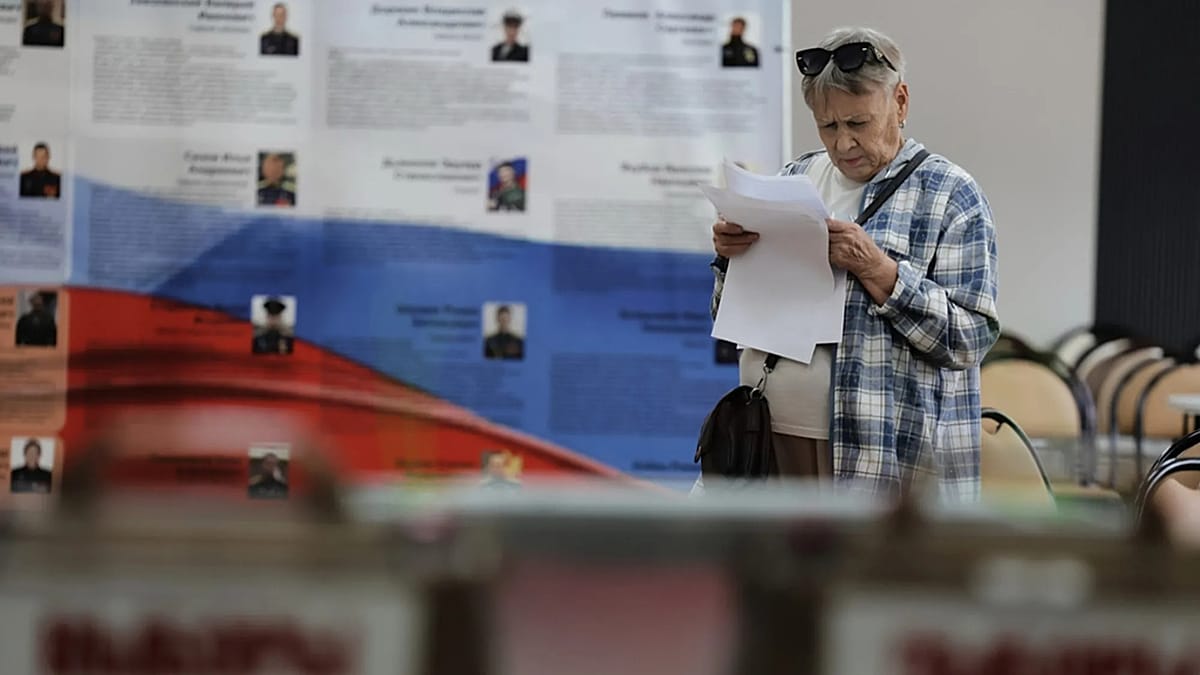
Critics have said that there are few available avenues for genuine dissent in Russia, with the European Policy Centre calling it an “election without real choice”.
asserted
Centre → say → choice
Amanda Paul, deputy head of the Europe in the world programme at the EPC, said that the vote “took place in a system where dissent is not tolerated and meaningful opposition has been squeezed out”.
asserted
opposition → say → system
She noted that any meaningful opposition to Putin’s party are “jailed, exiled, excluded or dead”.
asserted
opposition → note → party
Last month, Russia’s supreme court barred Yabloko from standing in the party ballot, cutting out the only party to oppose the invasion of Ukraine.
‘Another front for the war’ as UK and Canada criticise ‘sham’ elections
Paul says that recent Russian drone attacks were framed as an attempt by the “Zelensky junta and its Western sponsors” to disrupt the vote.
asserted
attacks → bar → vote
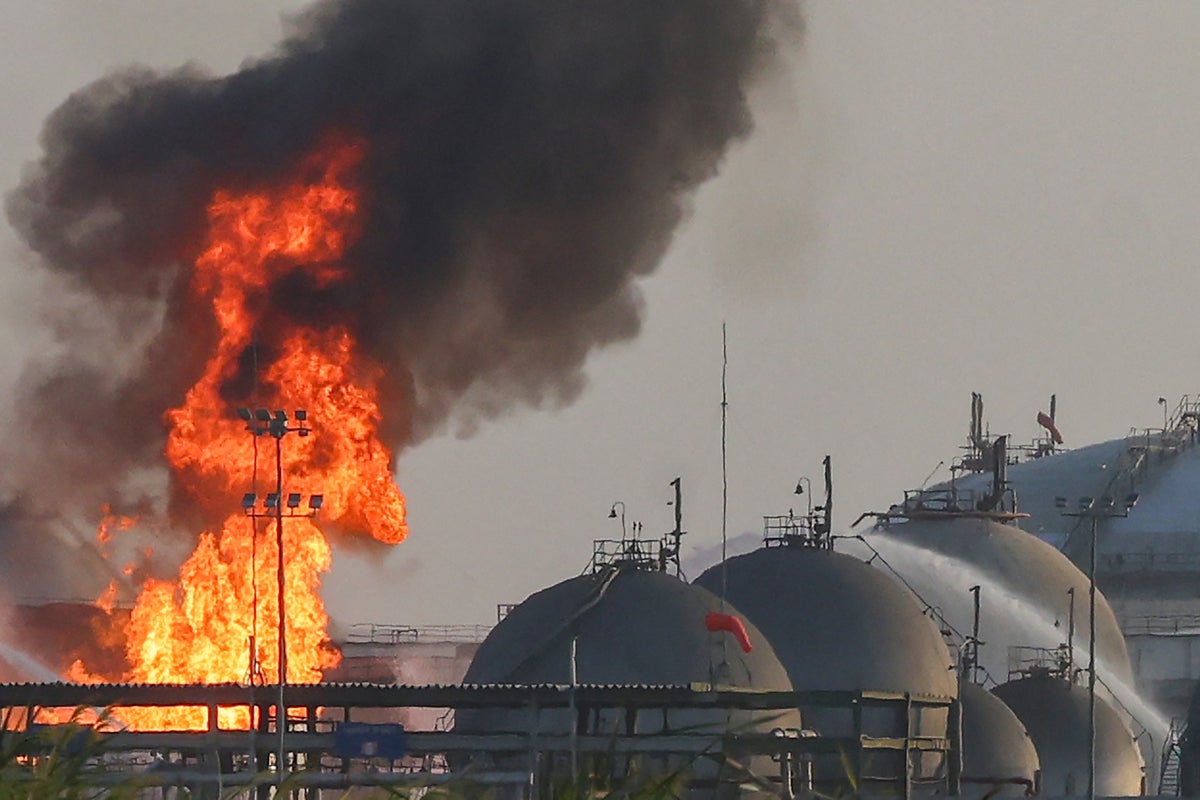
The elections came as Ukraine launched one of its biggest attack on Moscow since the invasion with over 1,110 drones launched across Russia.
asserted
drones → come → Russia
Dramatic images and footage from the scene show large plumes of smoke covering the city as well as huge fires.
asserted
images → show → city
The Kremlin vowed to “intensify” its attacks on Ukraine in response.
asserted
Kremlin → vow → response
“The message was clear: this was not simply an election, but another front in the war,” Paul wrote.
asserted
Paul → write → war
Ballots were also staged in Ukraine’s occupied territories which were condemned by Britain, Australia, Canada, New Zealand and Norway.
asserted
which → stag → Britain
“These sham elections are part of a wider system of occupation: the imposition of Russian administration, law, media, education, language and citizenship, backed by coercion and repression,” they said in a statement.
asserted
they → back → statement
“This includes reports of the enforced disappearance, detention, and torture of thousands of Ukrainian citizens.”
asserted
This → include → citizens
Voting was held for the second time in the annexed Crimean Pensisula and for the first in Donetsk, Kherson, Luhansk and Zaporizhzhia.
asserted
Voting → hold → Donetsk
The statement continued: “These regions are part of Ukraine and holding sham elections cannot alter the status of these territories under international law.”
asserted
holding → continue → law
Anti-Putin protests took place outside the Russian embassy in Berlin and London over the weekend to protest against the invasion of Ukraine and his leadership.
asserted
protests → take → Ukraine
Russia’s exiled opposition, including the widow of Alexei Navalny, Yulia Navalnaya, called on anti-war Russians to cast their votes.
asserted
opposition → exile → votes
Mark Podberezin, a journalist, said members of the election commission in Yerevan, the capital of Armenia, made remarks that felt like “outright intimidation".
asserted
that → say → intimidation
He said he had heard comments "along the lines of, ‘You’ll have to return to Russia sooner or later, keep that in mind.’”
asserted
You → say → mind
Ella Pamfilova, chair of Russia’s Central Election Commission, said that the vote was “clean” amid the allegations from opposition activists that the elections hasd been rigged.
asserted
elections → say → activists
Issues with electronic voting
Pamfilova also said that the electronic voting system in Moscow had been targeted by cyberattacks and blamed one of the “systemic parties” for glitches.
asserted
system → say → glitches
People were not issued paper ballots in some areas and were asked to vote via an electronic terminal, SotaVision, an independent Russian news outlet said on Telegram.
asserted
outlet → issue → Telegram
Leonid Volkov, a close associate of Navalny said that the breakdown of the system used to issue paper ballots may have been deliberate and urged voters to “demand a paper ballot!”
uncertain
breakdown → say → ballot
Lines formed outside polling stations as many voters refused to vote electronically.
asserted
voters → form → stations
 The Aporia