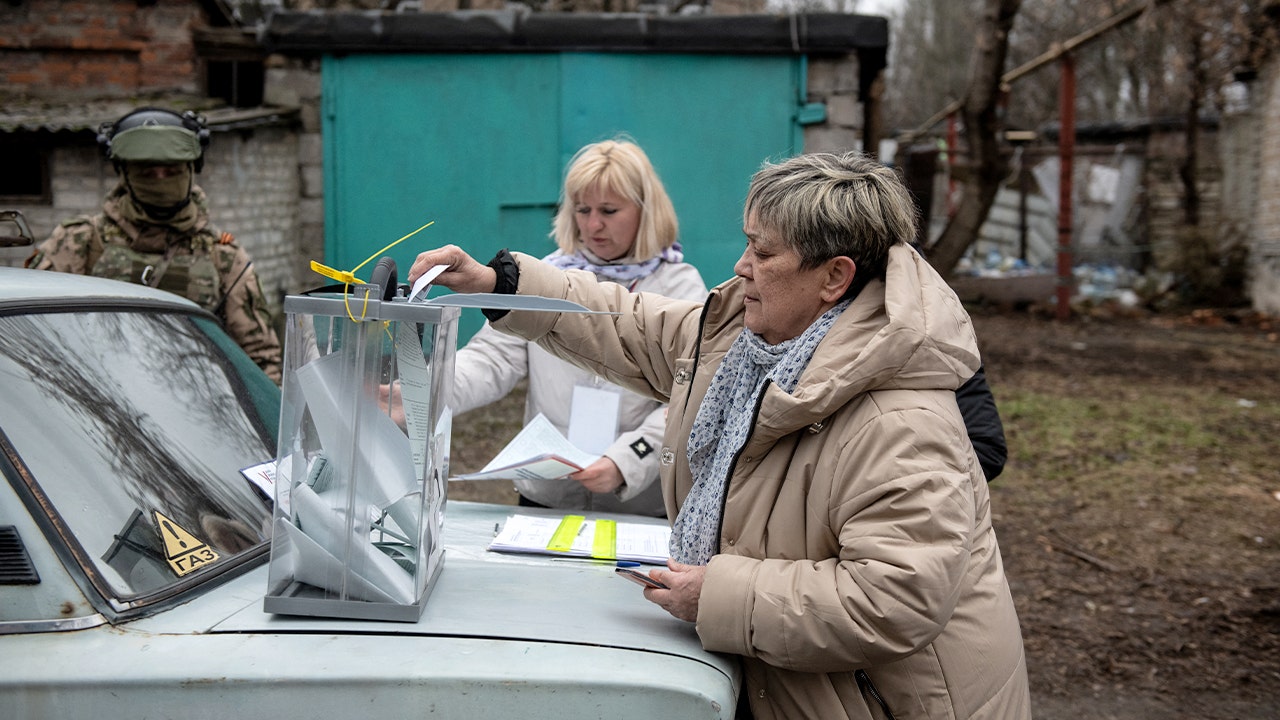
Russia’s parliamentary elections offer an excellent opportunity for a new round in the information war between the West and Russia.
asserted
elections → offer → West
Western politicians, experts and journalists have been given yet another convenient occasion to tell their target audiences that democracy has long ceased to exist in Russia; that the federal parliament, like any other representative body, in practice determines nothing in Russian life; and that all genuinely important decisions for the country are made not even by the government but exclusively in the Kremlin, by an extremely narrow circle of individuals accountable to no one.
asserted
decisions → give → one
Therefore, in the view of many critics of the Russian authorities, elections in Russia need not have been held at all: their outcome was predetermined by Kremlin political strategists and, in any event, will have no significant impact on the country’s future.
And yet even the most biased outside observer could hardly fail to notice the obvious: the Russian authorities made consistent and persistent efforts to ensure that these elections attracted the highest possible participation and were conducted successfully under current electoral law.
uncertain
elections → hold → law
For at least the past several months, the country had experienced heightened political activity.
asserted
country → experience → activity
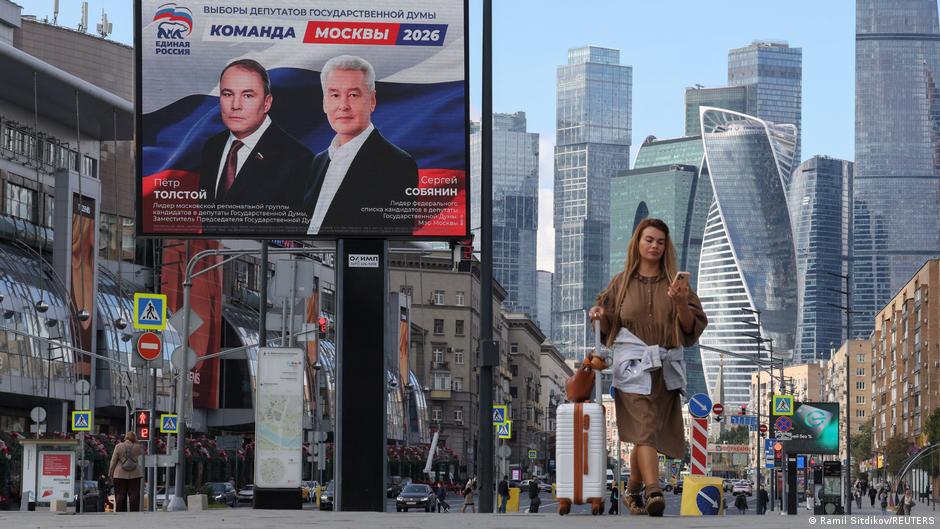
Leading politicians and state officials constantly reminded the electorate of the importance of the coming elections.
asserted
politicians → lead → elections
Governors of politically “problematic” regions were urgently allocated additional subsidies.
asserted
Governors → allocate → subsidies
Payments to certain categories of public-sector employees and pensioners were hastily indexed.
asserted
Payments → index → employees
And inevitable but unpopular or painful decisions for the public – for example, the forthcoming significant nationwide increase in housing and utility tariffs – were postponed until after the elections.
asserted
decisions → postpone → elections
Even possible shifts in Russia’s position on the conflict with Ukraine and future relations with the West were often linked in public and political discussions to the results of the September elections, which were supposedly meant to “untie the hands” of the Russian leadership, although there were very different, sometimes diametrically opposed, views about how exactly the leadership would use these “untied hands”.
asserted
leadership → link → hands
In any case, it must be acknowledged that the Kremlin did not take the easy path of its opponents in Kyiv, who simply postponed the 2024 Ukrainian presidential election until better, “postwar” times, despite clear discontent and muted grumbling from part of Ukraine’s political class.
asserted
who → acknowledge → class
What is going on here?
asserted
What → go → ?
Why should the Kremlin invest so much energy and so many resources in what is often interpreted outside Russia as little more than an unconvincing simulation of genuine political competition?
asserted
what → invest → competition
Why launch a new full electoral cycle while a large-scale military conflict has yet to end, when the normal boundaries of peacetime political democracy tend, one way or another, to narrow?
asserted
boundaries → launch → democracy
It is difficult to suppose that holding elections in Russia is driven solely by Kremlin strategists’ obsessive desire to impress, at all costs, either their external opponents or their partners abroad.
asserted
holding → suppose → opponents
As for the former, they would not change their views about the nature of the Russian political system, even in the hypothetical event that the elections ended in a complete triumph for the radical opposition and a crushing defeat for all pro-Kremlin candidates.
asserted
elections → change → candidates
Such a scenario would most likely lead to endless speculation about yet another “cunning Putin plan”, intended to mislead a credulous Western public and conceal the consistently authoritarian nature of Russia’s political regime.
asserted
scenario → lead → regime
As for the latter, it is hard to imagine that the leaders of Iran, North Korea, Belarus or China are seriously concerned about the state or future of Russian democracy.
asserted
leaders → imagine → democracy
The political systems of their countries, like those of many other foreign friends and partners of Russia, to put it mildly, do not entirely conform to the classical standards of Western liberal democracies.
asserted
systems → put → democracies
It is doubtful that Kim Jong Un, Alexander Lukashenko or, say, Mohammed bin Salman, or even Donald Trump, would suddenly decide to offer Vladimir Putin wise advice on how to organise polling stations properly and count votes.
asserted
Un → decide → votes
It is hardly likely that the Kremlin felt an urgent need to erect elaborate and expensive but not especially durable scenery on the Russian political stage when the reaction of the potential audience to the forthcoming theatrical production was known in advance.
asserted
reaction → feel → advance
It seems more logical to assume that the Russian authorities need elections not as cosmetic decoration for the façade of their political system, designed to attract the indifferent gaze of an outside observer, but as a quite effective and, above all, much-needed mechanism for maintaining dialogue between the authorities and society in the difficult geopolitical and socio-economic conditions of autumn 2026.
asserted
authorities → seem → autumn
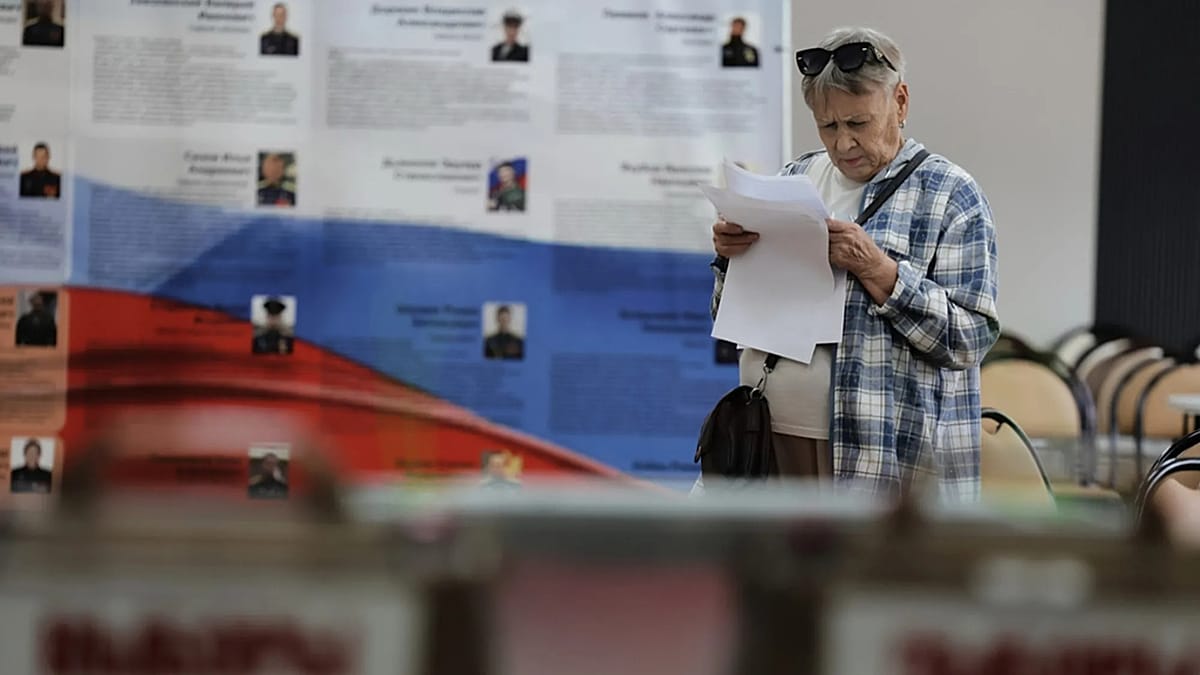
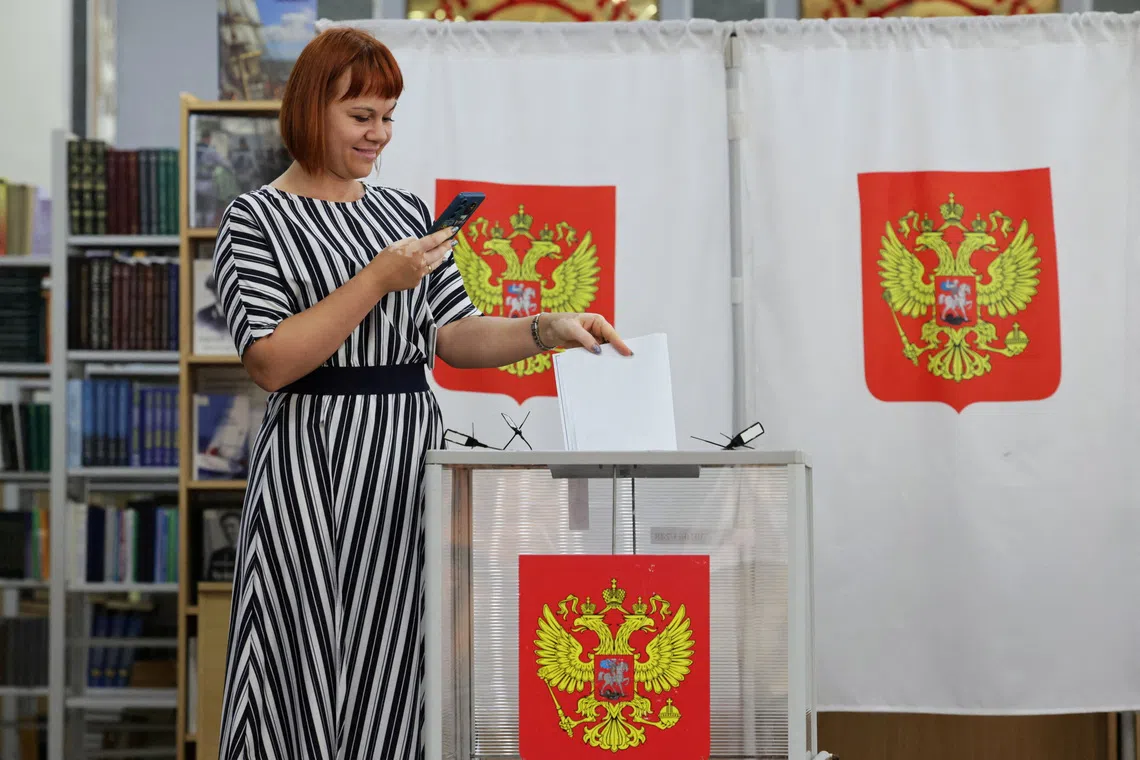
First and foremost, the Russian authorities are fighting hard for a high turnout, creating the most comfortable possible conditions for their voters to cast their ballots.
asserted
voters → fight → ballots
A high turnout is convincing evidence of the population’s continued political activity and of the fact that Russian society has not descended into political apathy and wholesale cynicism.
asserted
society → descend → apathy
In this sense, even a vote against the main “party of power”, United Russia, is clearly preferable to the alternative of a significant part of the electorate conspicuously choosing not to participate in the elections.
asserted
part → choose → elections
No less important, the authorities need the election results as a barometer of current public preferences, something even the most accurate opinion polls or in-depth sociological research cannot replace.
asserted
polls → need → preferences
Contemporary Russia undoubtedly has its own, albeit relatively narrow, political spectrum of “systemic opposition” parties reflecting the differing interests and expectations of various social, economic, age and regional groups.
asserted
Russia → have → groups
The constantly changing balance of power between these parties must, one way or another, be taken into account by the authorities when determining the future priorities of their strategy.
asserted
balance → change → strategy
For example, relative success for the Communist Party, A Just Russia and candidates from other left-wing parties would be a signal that the authorities should pay more attention to social programmes, the fight against economic inequality and social polarisation, and to countering the many remnants of “wild capitalism” left over from the 1990s.
asserted
authorities → pay → 1990s
Conversely, a large number of votes cast for the New People party and other right-wing candidates would provide grounds for accelerating structural economic reforms and creating additional opportunities for the private sector, including small and medium-sized businesses.
asserted
number → cast → businesses
Strong electoral results for the Liberal Democratic Party would indicate growing nationalist tendencies in Russian society.
asserted
results → indicate → society
The authorities may respond to such political signals in different ways, but they cannot ignore them and must therefore read shifts in public sentiment correctly.
uncertain
they → respond → sentiment
Moreover, it can be assumed with a considerable degree of confidence that the State Duma elections will, one way or another, lead to substantial changes in the composition of not only the lower house of the Russian parliament but also Russia’s federal government.
asserted
elections → assume → parliament
Following the elections, significant personnel changes are likely to take place in the executive branch – both at the federal level and at other levels.
asserted
changes → follow → levels
Such personnel changes, in turn, will make room for fresh ideas, innovative programmes, unconventional projects and proposals.
asserted
changes → make → ideas
Parliamentary elections are one way of responding convincingly to this demand without calling into question the stability of the state’s overall strategy or its senior leadership.
asserted
elections → respond → strategy
The Duma elections are the first parliamentary elections held during the special military operation, during which Russian society has changed considerably.
asserted
society → hold → which
In a sense, they can be called a large-scale political experiment whose outcome remains difficult to predict with precision.
asserted
outcome → call → precision
For example, it is still difficult to determine with confidence which political force will be supported by the majority of people who have participated in the special military operation or who remain on the line of contact.
asserted
who → determine → contact
No less uncertainty remains regarding the likely political preferences of many residents of the new Russian regions, for whom the September elections will be their first State Duma election in their new status.
asserted
elections → remain → status
Such an experiment probably carries a degree of risk for the Russian leadership.
asserted
experiment → carry → leadership
…and 2 more, not listed.
 The Aporia