What’s at stake for Putin in Russia’s wartime election?
asserted
What → ’ → election
Russians are set to go to the polls to elect a new Lower House of Parliament for the first time since President Vladimir Putin ordered the 2022 full-scale invasion of Ukraine.
asserted
Putin → set → Ukraine
There’s little doubt about what will be the broad outcome of the Sept 18 to Sept 20 vote as the Kremlin maintains a tight control over the election campaign.
asserted
Kremlin → ’ → campaign
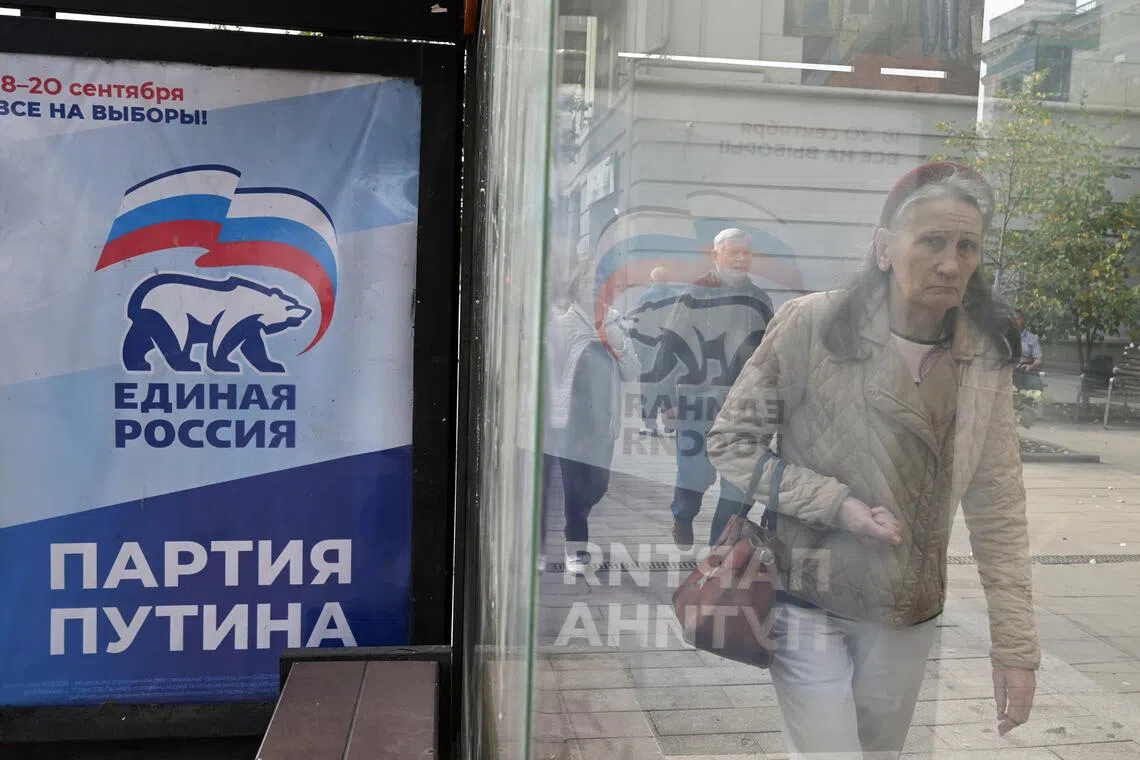
The ruling United Russia party, which presents itself as the party of Putin, faces no realistic prospect of losing the majority it has held in the State Duma for 23 years.
asserted
it → rule → years
Nonetheless, the election will provide an indicator of the public mood at a time when ordinary Russians are increasingly feeling the economic and social consequences of Putin’s years-long war in Ukraine.
asserted
Russians → provide → Ukraine
Does Putin face any pressure in this election?
asserted
Putin → face → election
As Russia’s elections are stage-managed by the Kremlin, the upcoming vote is less a political contest for Putin and more about whether the result can be harnessed to demonstrate his regime’s resilience and cement a narrative of stability.
asserted
result → manage → stability
None of the parties running in the election are in opposition to Putin, even as some criticise the government or accuse United Russia of inaction on key issues.
asserted
some → run → issues
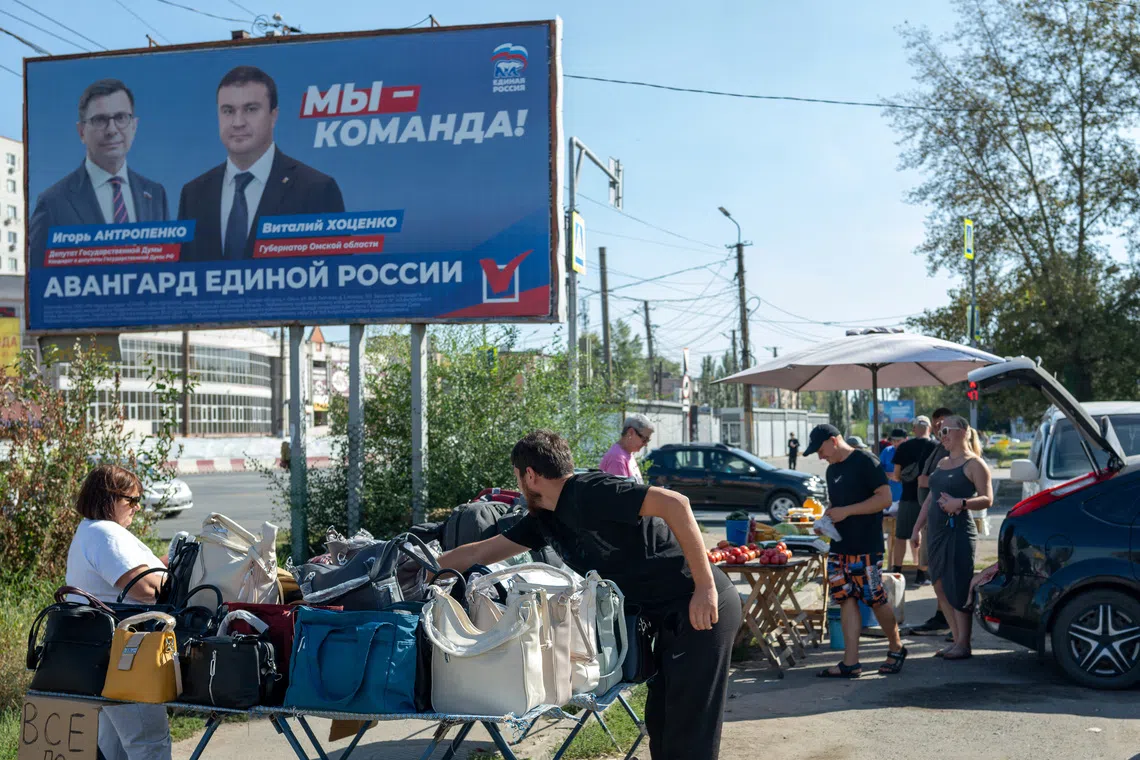
Parties often tailor their campaign messages to tap voter discontent on particular issues without ever assigning blame to the president.
asserted
Parties → tailor → president
The Kremlin also scrutinises candidates ahead of the election to ensure only acceptable contenders make it into Parliament.
asserted
contenders → scrutinise → Parliament
The main challenge for the Kremlin is to ensure a high turnout as voter apathy would be viewed as a signal of popular discontent.
asserted
apathy → ensure → discontent
Turnout in the 2021 election was around 52 per cent, according to the Central Election Commission.
uncertain
Turnout → accord → Commission
Government and local officials typically resort to what’s called the “administrative resource,” pressuring state sector workers and employees of major companies to go to the polls to avoid punishment.
asserted
what → resort → punishment
The Kremlin will also be looking for a high level of support for United Russia to use as a vote of confidence in Putin’s leadership.
asserted
Kremlin → look → leadership
Putin isn’t officially a member of a political party but he has aligned himself more directly with United Russia than in recent years.
asserted
he → align → years
He attended the party’s conference in August, while United Russia has branded itself as “the party of the president” and its campaign slogans include “being for Putin is the basic minimum.”
asserted
being → attend → Putin
There are signs that Russians are increasingly weary of a war that is now in its fifth year and that they’re concerned about the economic consequences.
asserted
they → be → consequences
In August, Russia’s central bank cut its forecast for GDP growth in 2026 to 0 per cent to 1 per cent.
asserted
bank → cut → cent
The war is becoming a more visible part of everyday life as Ukrainian drone attacks target Russia’s oil refineries, factories and e-commerce warehouses, as well as ports and ships in the Black Sea.
asserted
attacks → become → Sea
The refinery strikes have pushed up petrol prices and triggered widespread fuel shortages and rationing, meaning Russians in many areas are lining up for hours to fill their vehicles.
asserted
Russians → push → vehicles
Putin has acknowledged that Ukraine’s strikes “inflict economic damage” but has insisted that Russia’s offensive will continue.
asserted
offensive → acknowledge → damage
There are limited options for Russians to voice any desire for change.
asserted
Russians → be → change
With independent media shut down and prominent opposition figures mostly imprisoned, in exile or barred from running for office, there’s no organised political force inside Russia campaigning for an immediate halt to the war.
asserted
figures → shut → war
Harsh repression of even mild criticism of the regime and its war effort means there’s little incentive to show anything but unwavering support.
asserted
repression → mean → support
There’s no public debate over whether Putin was mistaken to start the war or of the massive casualties and economic damage that Russia has incurred.
asserted
Russia → ’ → that
Nor are candidates advocating for a halt to the fighting in Europe’s worst conflict since World War II on any other terms but Russia’s victory.
asserted
candidates → advocate → terms
Instead, the parties running have made promises to raise living standards, maintain social spending and curb price increases for essential goods.
asserted
parties → run → goods
They’re also competing to present themselves as the most patriotic and supportive of veterans, focussing on issues such as social and medical benefits for soldiers who have fought in Ukraine.
asserted
who → compete → Ukraine
Some parties have included veterans high on their list of candidates, seeking to capture support from millions of families whose relatives have fought in the military.
asserted
relatives → include → military
Will occupied areas of Ukraine be part of the vote?
asserted
areas → occupy → vote
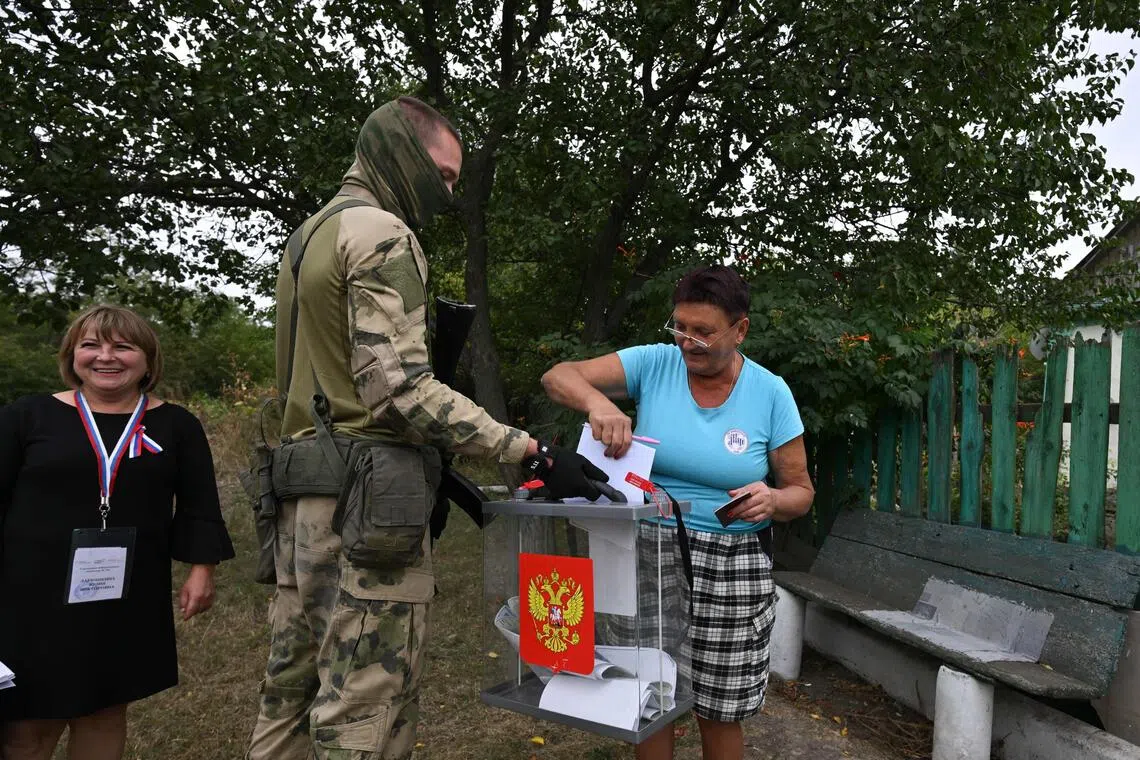
Russia plans to organise voting in the territories it occupies in eastern and southern Ukraine, including parts of the Donetsk, Luhansk, Zaporizhzhia and Kherson regions, as well as Crimea.
asserted
it → plan → regions
Voting in these places will be tightly controlled by Russia’s security services.
asserted
Voting → control → services
The Kremlin is using this election to try to reinforce Russia’s territorial claims as it continues to wage a campaign to erase Ukraine’s presence in these regions.
uncertain
it → use → regions
Putin annexed Crimea in 2014.
asserted
Putin → annex → 2014
He’s also laid claim to the entirety of the other four Ukrainian regions, even as his forces have never managed to fully occupy them.
uncertain
forces → lay → them
The Duma possesses formal constitutional powers that include initiating and passing legislation, approving the state budget and confirming the appointment of the prime minister and members of the government.
asserted
that → possess → government
In practice, the chamber is firmly under the Kremlin’s direction, approving Bills that are often handed down by officials and ministers with little or no detailed scrutiny.
asserted
that → approve → scrutiny
Still, members of the Duma, known as deputies, do occasionally give a voice to public anger on issues such as the cost of living and rising prices, tightening internet restrictions and poor standards of social services.
asserted
members → know → services
United Russia currently holds a constitutional majority with 310 of the Duma’s 450 seats.
asserted
Russia → hold → seats
That means it’s been able to pass any constitutional amendment or key legislation without support from anyone else.
asserted
it → mean → anyone
…and 13 more, not listed.
 The Aporia