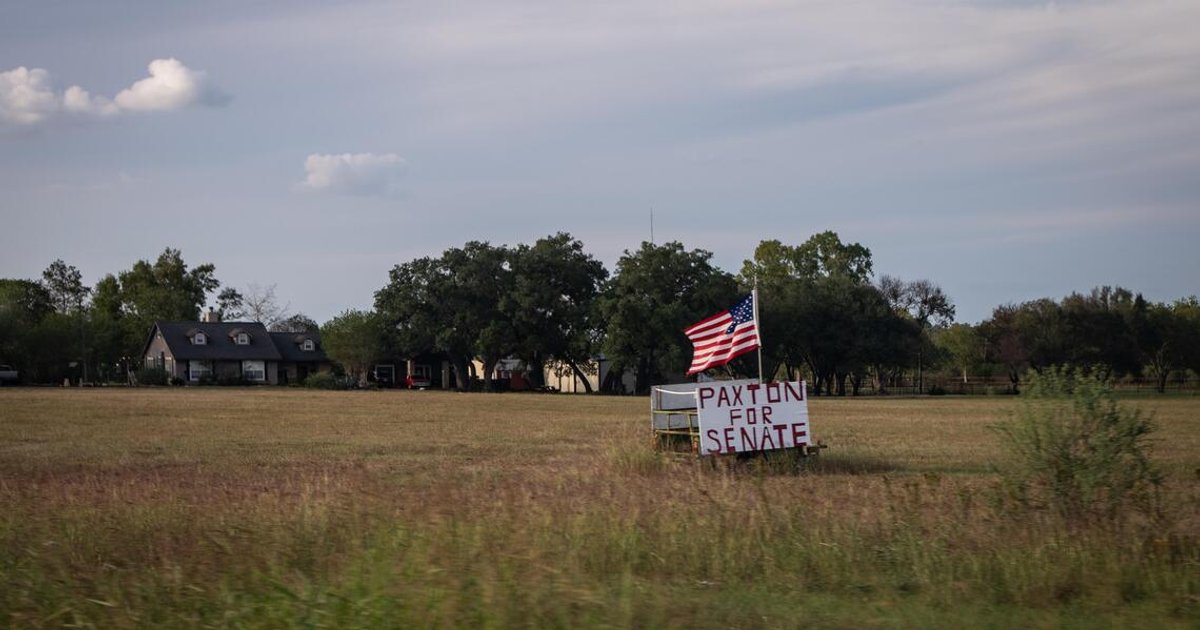
Texas has long been led by Republicans, from its governor’s mansion and state legislature down to many of its locally held offices.
asserted
Texas → lead → offices
But this year’s elections have abruptly turned the ruby-red state blue, with sweeping implications for Texas’ laws and the lives of its more than 30 million residents.
asserted
elections → turn → residents
Democrats scored a series of historic victories in Texas state politics earlier this month, winning every statewide race on the ballot and a number of more local contests to boot.
asserted
Democrats → score → contests
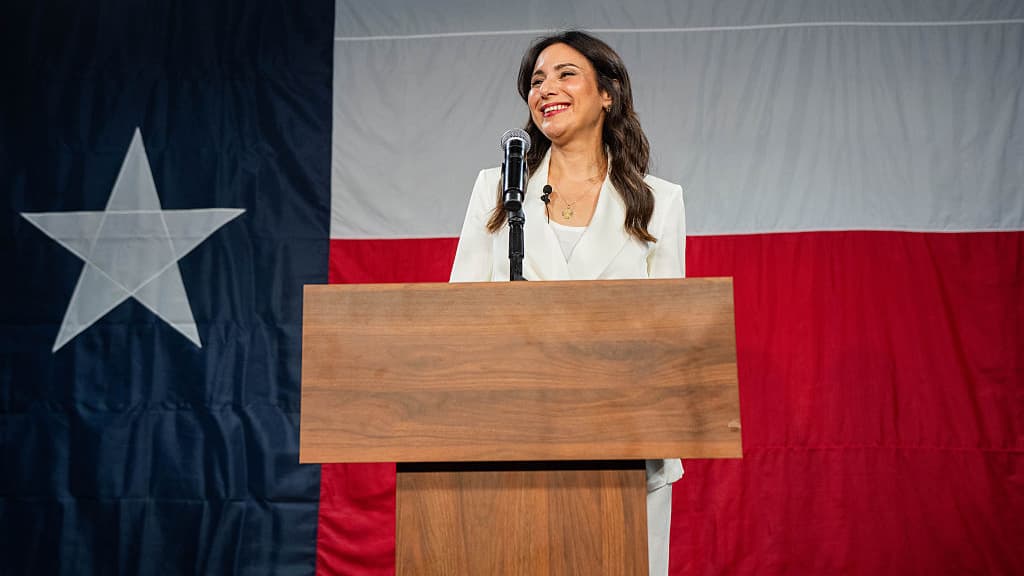
Gina Hinojosa upset Gov. Greg Abbott to become the state’s first-ever Latina governor and the first Democrat elected to the position since the 1990s.
asserted
Hinojosa → upset → 1990s
Democratic candidates swept up key posts in the races for lieutenant governor, attorney general, comptroller, and land and agricultural commissioners.
asserted
candidates → sweep → governor
In the state House, Democrats won a majority for the first time in over two decades.
asserted
Democrats → win → decades
On a statewide level, only the Texas Senate, the state’s Supreme Court and court of criminal appeals, and the railroad commission remain under Republican control.
asserted
Senate → remain → control
And while they didn’t win the majority in the latter three bodies, Democrats gained significant ground there, too.
asserted
Democrats → win → ground
For the first time since 1990, the party claimed one of the state’s three railroad commissioner positions.
asserted
party → claim → positions
In the races for Texas’ state courts, meanwhile, Democratic candidates managed to secure three of nine seats on the criminal appeals court and four of nine on the state Supreme Court, smashing another decades-long streak of Republican victories several times over.
asserted
candidates → manage → victories
The last time any Democrat had been elected to either court was in 1994.
asserted
Democrat → elect → 1994
Experts tell TIME that these victories could impact Texans across the state in a variety of areas—and soon.
uncertain
victories → tell → areas
In January, newly elected officials in Texas’ executive branch will begin their terms.
asserted
officials → elect → terms
The new slate of Texas lawmakers will also convene that month for their first legislative session, in which they will propose and vote on legislation.
asserted
they → convene → legislation
Here are some of the most significant—and quickest—ways in which the state’s blue takeover could affect Texans’ lives.
uncertain
takeover → affect → lives
Immigration
One area in which newly elected Texas Democrats have indicated they will change course: combatting President Donald Trump’s aggressive immigration crackdown.
asserted
they → elect → crackdown
During her gubernatorial campaign, Hinojosa accused Abbott of facilitating “fatal ICE operations” in the state and called on the governor to “lead with responsibility and decency by refusing to provide state resources until DHS stops killing U.S. citizens and detaining our children.”
asserted
DHS → accuse → children
Shortly after Trump returned to the White House last year, Abbott issued multiple Executive Orders directing state agencies to coordinate and assist with the Trump Administration’s immigration operations.
asserted
Abbott → return → operations
The Republican governor also previously signed into law a controversial measure, SB 4, that requires cities and counties to share information regarding the immigration status of detained individuals with federal officers.
asserted
that → sign → officers
Abbott has pursued a hard-line immigration agenda of his own in recent years as well, transporting migrants from Texas to Democratic-led cities and launching an initiative aimed at combatting illegal immigration in the state, Operation Lone Star, that has seen thousands of Texas National Guard and Department of Public Safety (DPS) officers deployed to the southern border and the state work to erect a number of physical barriers there.
asserted
state → pursue → barriers
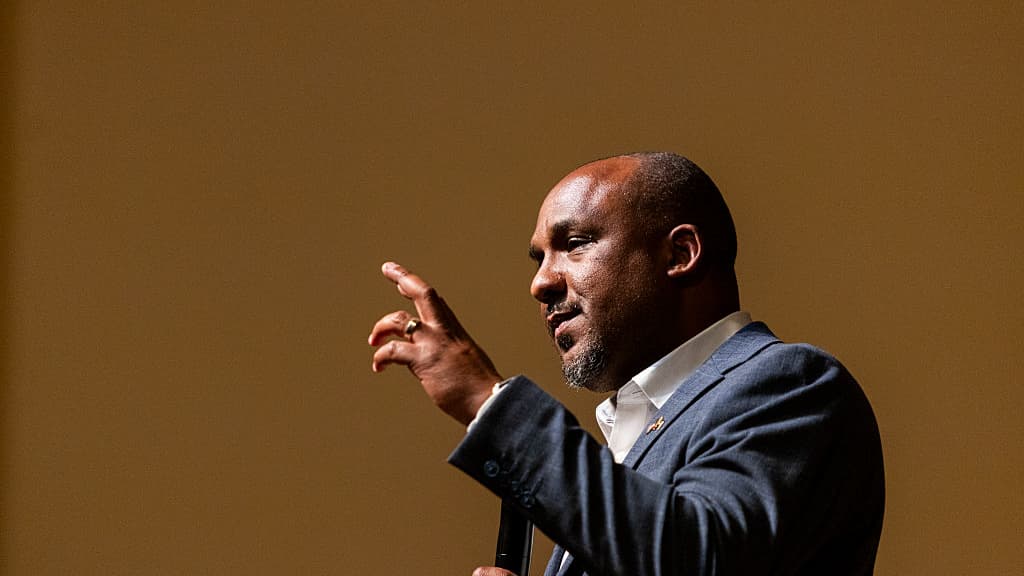
Attorney General-elect Nathan Johnson has said that he would review state agreements with Immigration and Customs enforcement (ICE), allowing him to have “private individual investigative authority over actions by ICE committed in my state.”
asserted
him → say → state
And following the elections earlier this month, Houston Mayor John Whitmire has already instructed city police to limit cooperation with ICE officers through an Executive Order.
asserted
Whitmire → follow → Order
Josiah Heyman, a professor of border studies at the University of Texas El Paso, notes that SB 4 “is still in place,” but says that “certainly a great deal matters in terms of how it's carried out, how it's interpreted.”
“What they could change would be the ways that the Texas law enforcement cooperates with the ICE and Customs and Border Protection.
uncertain
enforcement → note → ICE
I think that's far and away the most important thing that could be done,” Heyman tells TIME.
uncertain
Heyman → think → TIME
He says that Democratic leaders may increasingly push back against SB 4 by directing reduced cooperation with ICE, and eventually attempt to repeal the law entirely.
uncertain
leaders → say → law
“There's an enormous amount of discretion that could be exercised in assigning officers,” he says.
uncertain
he → be → officers
He cautions, however, that “it's going to take a while for changes to take place in the actual laws themselves.”
asserted
changes → caution → laws
Faisal Al Juburi, the co-CEO of RAICES, a non-profit legal aid organization serving the Texas immigrant community, tells TIME that there could also be an end to family detention in Texas following the change in the state’s leadership, noting that this is “one of the key areas that has appeared to be a focus” for Hinojosa.
uncertain
that → serve → Hinojosa
The governor-elect has vowed to stop private prison companies from holding children and their families in immigration detention in the state.
asserted
elect → vow → state
Al Juburi says that the South Texas Family Residential Center in Dilley, Texas, currently the sole migrant family detention facility in the U.S., could potentially be shuttered shortly after Democratic officials take office.
uncertain
officials → say → office
‘That is an area where there's the potential for some action to happen right out of the gate,” he says.
asserted
he → be → gate
Several newly elected officials have also promised to restrict the rapid growth of data centers, which have been a source of discontent for many Texans, who have expressed concerns over the centers draining water supplies, driving up energy costs, and creating unwanted noise and pollution.
asserted
centers → elect → noise
Hinojosa said last month that she would issue a moratorium on all data center approvals and proposed requirements for companies to show that their facilities would not drive up water and electricity costs for residents living nearby.
asserted
facilities → say → residents
Lieutenant governor-elect Vikki Goodwin has also vowed to “prioritize bills that regulate data centers and protect our water, land, health, and access to electricity,” while Agriculture Commissioner-elect Clayton Tucker said that he would issue impact studies on data centers’ effect on Texas water and farmlands.
asserted
he → vow → water
“I stand with the Texas Farmers Union, the people of Hill County, and all of the Texans who are calling to stop data centers,” Tucker said.
asserted
Tucker → stand → centers
Kenneth Medlock, a senior director at Rice University’s Center for Energy Studies, tells TIME that data centers are going to be at the “top of the ledger” when it comes to creating new energy-related policy.
asserted
it → tell → policy
He notes, however, that Hinojosa’s promised moratorium could only apply to new projects, and that there isn’t much she could do about those that are ongoing.
uncertain
that → note → those
“Anything, even on the data center front, that's already under construction, is not going to get suspended or disrupted,” he says.
asserted
he → go → construction
“This is really going to be more about how things change going forward.”
asserted
things → go → ?
Due to data centers’ contributions to the state’s economy, though, Medlock also doesn’t see a version of Texas in which data centers cease to exist entirely.
asserted
centers → see → which
…and 40 more, not listed.
 The Aporia