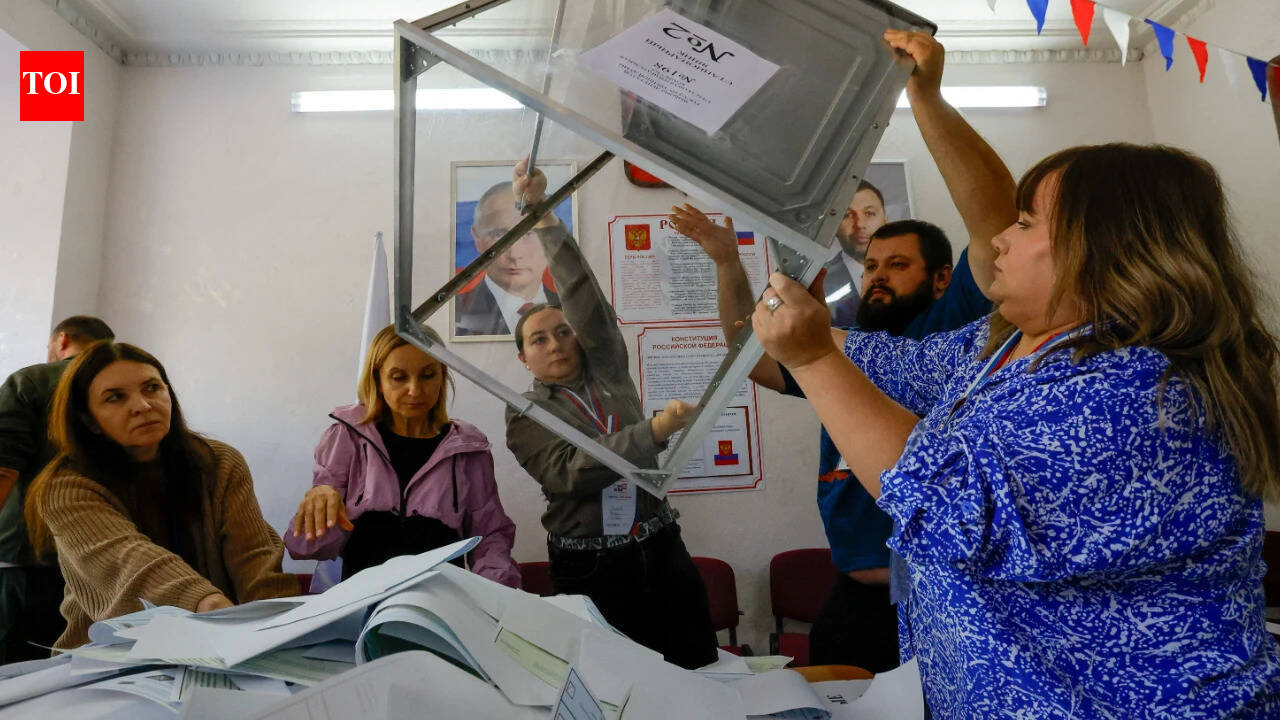
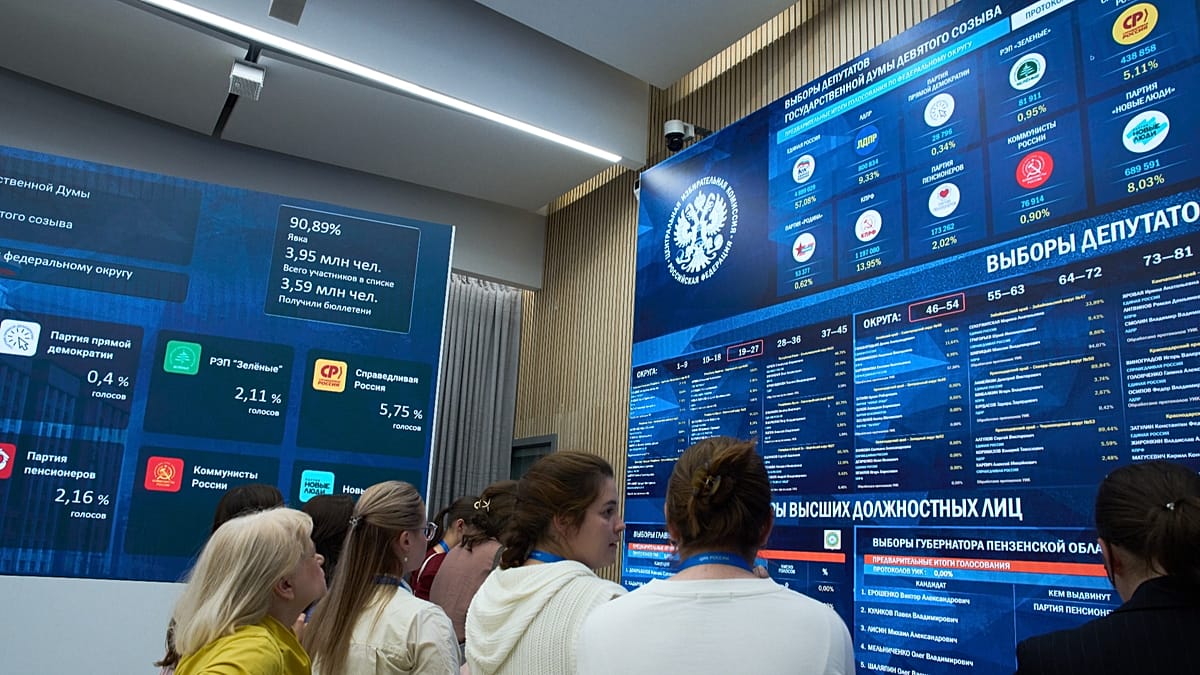
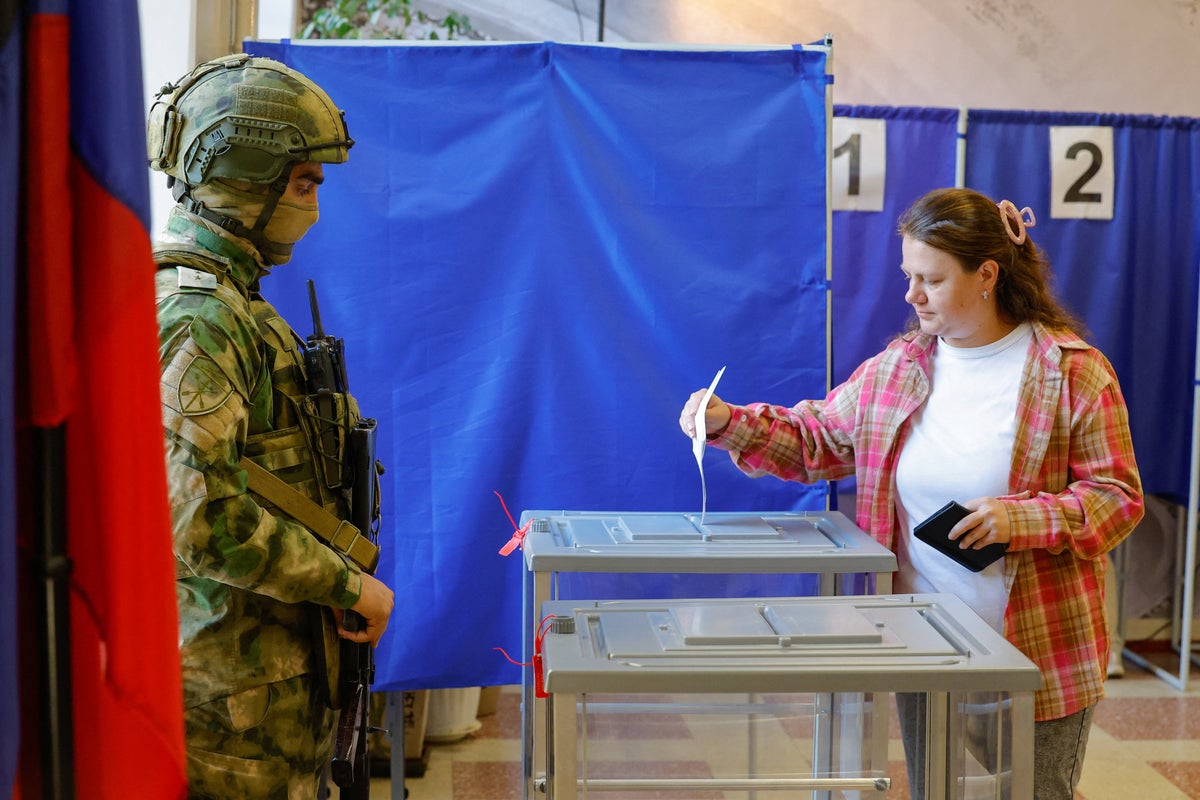
Russians abroad voted eight to one against Putin's party, defying official results

Read the original at Euronews ↗
Euronews · collected 2026-09-22 · by Ioulia Poukhli, Serguei Doubine

Quick Summary

Independent exit polls conducted during recent State Duma elections found that Russian voters abroad overwhelmingly supported the liberal New People party with around 45%, while barely 3% voted for Vladimir Putin's United Russia. In stark contrast, official results from within Russia showed United Russia winning nearly 58%. These discrepancies highlight a significant divide between Russians living inside and outside the country regarding support for the government.
Written locally by qwen2.5:14b on 2026-09-22, using this article's own text rather than the other coverage of the same event (that is the story summary below).

AI analysis runs on qwen2.5:14b, locally

Story summary

Russian parliamentary elections, held from September 18-20, were widely expected to see United Russia, President Vladimir Putin's party, maintain its dominance over the State Duma (lower house of parliament). Despite critics arguing that the outcome was predetermined and would have no significant impact on the country’s future, Russian authorities made persistent efforts to ensure high voter participation under current electoral law. The elections came amidst increasing war fatigue and economic hardship due to Ukraine's drone strikes targeting oil refineries and warehouses within Russia, causing fuel shortages and internet blackouts.

Exit polls conducted by independent groups at embassies and consulates abroad revealed starkly different results from those inside Russia: New People, an opposition party, garnered around 45% of the votes compared to United Russia’s reported near-58% support domestically. These discrepancies highlight a divergence between domestic and international perceptions of Putin's popularity, with many Russian expatriates opposing the war and expressing anxiety over its economic and social consequences.

Critics argue that these elections are more about demonstrating the regime's resilience than reflecting genuine public sentiment or political contestation, given the tight control exercised by the Kremlin.

Written for “Russia's Wartime Elections” on 2026-10-05, grounded in this article and the 64 other(s) covering the same event.

Signals How these are calculated →

Claims extracted
52
claim-shaped sentences
Uncertain
8%
4 of 52 hedged
Leaning
withheld
no quote in the article backed the model's score
Correction & hedging signals
60.1
corrections and hedging in what we collected; not a measure of accuracy
Outlets on this story
65
Politics
Narrative spread
1
articles carrying this framing
Analyzed 2026-09-22 · how these are computed

Story

📰 Russia's Wartime Elections
Politics · 65 article(s) covering the same event. See how they differ ↓

How this is being covered How these are calculated →

Article leaning vs. publisher reliability
Source leaning vs. consistency

Compared with similar articles

This article reads unscored and hedges 8% of its claims. Each row says how that neighbour differs.
Times of India
⚖️ Leans right 🔴 0% hedged 0 of 12 📰 publisher trust 59
“Both articles describe voting in the same Russian parliamentary election on September 17-20, 2026.”
Al Jazeera
⚖️ Leans right 🔴 5% hedged 1 of 21 📰 publisher trust 60
“Both articles describe the closing and aftermath of the same parliamentary election in Russia on September 20, 2026.”
South China Morning Post
⚖️ Leans strongly left 🔴 0% hedged 0 of 5 📰 publisher trust 67
“While both articles discuss the Russian parliamentary election, Article A focuses on voting within Russia while Article B covers voting by Russians abroad, describing different aspects of the overall event.”
TIME
⚖️ Leans left 🔴 7% hedged 3 of 44 📰 publisher trust 60
“While both articles discuss the Russian parliamentary election, they cover different aspects: Article A focuses on the overall expected outcome within Russia, while Article B highlights an exit poll of Russians voting abroad that contradicts official results.”
Daily Mail
⚖️ Leans right 🔴 14% hedged 1 of 7 📰 publisher trust 65
“The articles describe different aspects of the same election but report on separate events: one covers exit polls within Russia predicting a victory for United Russia, while the other reports independent exit polls showing Russians abroad overwhelmingly supporting an opposing party.”
Times of India
⚖️ Leans right 🔴 17% hedged 4 of 24 📰 publisher trust 59
“Both articles discuss the same State Duma election in Russia on September 21, 2026.”
Euronews
⚖️ leaning not scored 🔴 16% hedged 4 of 25 📰 publisher trust 60
“Both articles discuss the same parliamentary election in Russia on September 21, 2026, involving Vladimir Putin's United Russia party and opposition parties.”
The Independent
⚖️ Leans strongly left 🔴 10% hedged 4 of 39 📰 publisher trust 59
“The articles describe different aspects of the same broader election but report on distinct findings (official vs. exit polls abroad).”
The Hindu
⚖️ Leans left 🔴 5% hedged 1 of 22 📰 publisher trust 60
“The articles describe different aspects of the election: one focuses on exit polls from Russians abroad showing opposition to Putin's party, while the other reports official results inside Russia confirming Kremlin control.”
Al Jazeera
⚖️ Leans right 🔴 4% hedged 2 of 52 📰 publisher trust 60
“While both articles discuss the Russian parliamentary election, Article B focuses on exit polls and voting patterns among Russians abroad, whereas Article A discusses the overall context and expected results within Russia.”

Publisher

Euronews · 621 article(s) · 1 correction(s) detected
Running correction rate · 1 correction(s)
2026-10-01
Death-row inmate Christa Pike seen during murder trial

Who wrote this

Ioulia Poukhli
2 article(s) here · 1 carrying a prediction
🔮 Under legislative changes introduced in 2024, they could vote only on the federal party list, not for single-mandate constituency candidates — a change human rights organisations criticised as violating voters' equality.
🔮 Experts called it "hybrid nationalisation," warning it would be used to seize assets from companies under the pretext of security failure.
Also by Ioulia Poukhli
Nothing else under this byline is closely related to this article, so these are simply their most recent.
Serguei Doubine
5 article(s) here · 1 carrying a prediction
🔮 Our missions continue to operate in full, and Hungary will maintain its diplomatic presence in Russia," the Hungarian foreign ministry wrote on X. Foreign Minister Anita Orbán said at the time of the initial expulsion that the Russian diplomats "had been engaged in activities in Hungary that are unacceptable for diplomats under the Vienna Convention."
🔮 No food has reached the city through regular channels since May of this year, according to ground reports.
🔮 Under legislative changes introduced in 2024, they could vote only on the federal party list, not for single-mandate constituency candidates — a change human rights organisations criticised as violating voters' equality.
🔮 The three-day vote will fill 450 Duma seats and 11 regional governorships, with only parties backing Putin and Russia's ongoing war in Ukraine on the ballot.
🔮 The police will be overwhelmed, and then the police will be running around with sketches of the chickens," the video said.
Also by Serguei Doubine
Nothing else under this byline is closely related to this article, so these are simply their most recent.

Topics

Duma New People Russia United Russia the Communist Party

Subjects

New People ORG · 6× Russia GPE · 6× United Russia GPE · 6× Duma ORG · 3× Russian NORP · 3× the Communist Party ORG · 3× Progress ORG · 2× Putin PERSON · 2× Russians NORP · 2× Yabloko ORG · 2×

Narrative

But they are important: they show a completely different reality and destroy the image of supposed support for the authorities." Many Russians who left the country after the 2022 invasion oppose the war, and the only anti-war party Yabloko was barred from the election on a procedural pretext and excluded from the federal ballot entirely.
framing: assertive · carried by 1 article(s) · first seen 2026-09-22
🔮 Under legislative changes introduced in 2024, they could vote only on the federal party list, not for single-mandate constituency candidates — a change human rights organisations criticised as violating voters' equality.

Claims (52 extracted, 4 hedged)

Two independent exit polls covering 27 countries put New People first with around 45% and United Russia as low as 2.8%, the reverse of official results inside Russia, where Putin's party took nearly 58%. asserted
party → cover → %
Exit poll organisers said the gap "destroys the image of supposed support for the authorities." asserted
gap → say → authorities
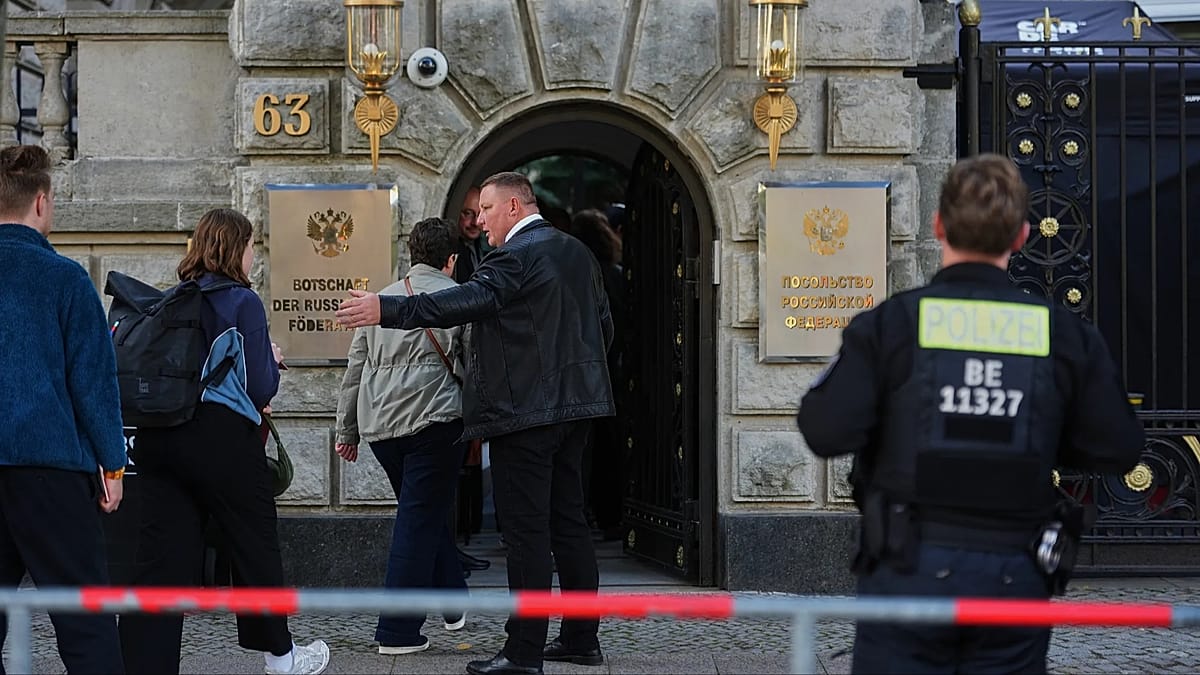
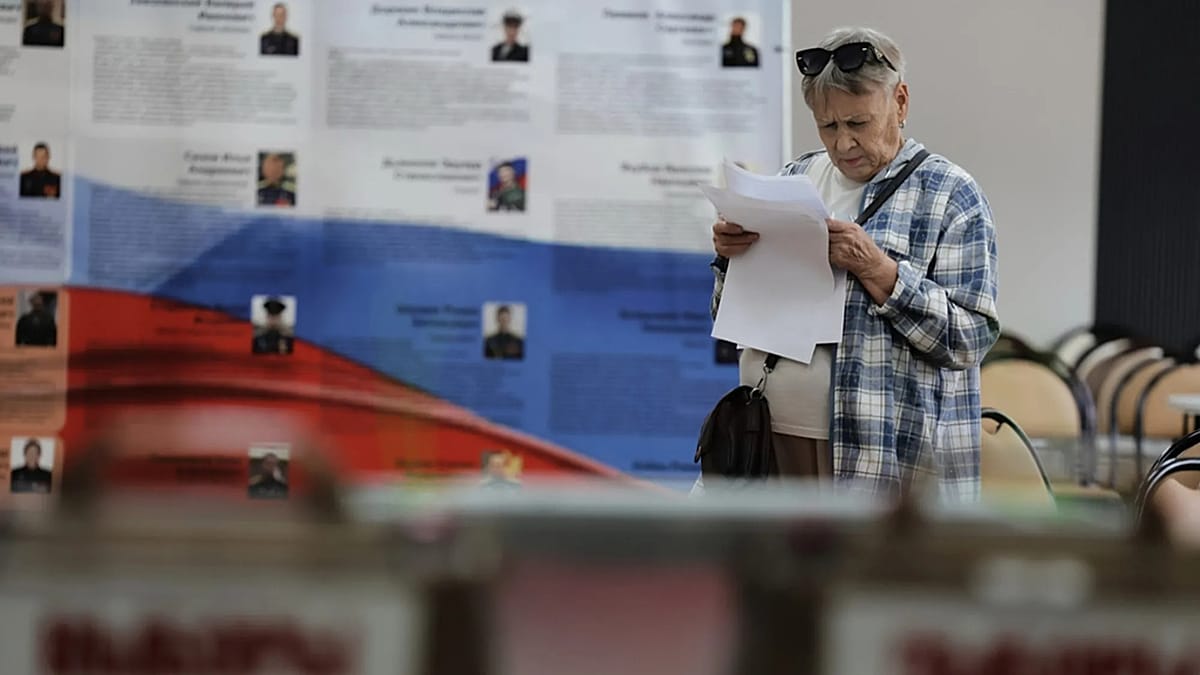
Russians voting at embassies and consulates abroad backed the liberal New People party over Vladimir Putin's United Russia by a margin of eight to one, according to two independent exit polls conducted during this weekend's State Duma elections — the reverse of official results from inside Russia, where Putin's party took nearly 58% of the vote. uncertain
party → vote → vote
The Vote Abroad project, which surveyed almost 15,700 voters at 27 polling stations across 22 countries, put New People at 43%, the Communist Party at 18.3% and United Russia at 5.5%. asserted
which → survey → %
In 10 countries, including Armenia, Germany and Finland, United Russia failed to clear the 5% threshold required to win Duma seats. asserted
Russia → include → seats
A separate exit poll by opposition movement Vesna and the Progress project, covering 18 stations in 17 countries, put New People first at every location with 47.3%, the Communist Party second at 19.2% and United Russia at 2.8%. asserted
Russia → cover → %
Inside Russia, the Central Election Commission reported United Russia winning nearly 58%, the Communist Party at 14%, the LDPR at almost 9% and New People below 8%. asserted
Russia → report → %
"The contrast is indeed very stark," Ivan Zhdanov, director of the Progress project and a former head of Alexei Navalny's Anti-Corruption Foundation, told Euronews. asserted
Zhdanov → tell → Euronews
"83.5% of those who answered our question on trust do not fully or mostly trust the official results," Zhdanov added. asserted
Zhdanov → answer → results
"In purely arithmetic terms, votes cast abroad are hardly going to determine the composition of the Duma," he said. " asserted
he → cast → Duma
But they are important: they show a completely different reality and destroy the image of supposed support for the authorities." Many Russians who left the country after the 2022 invasion oppose the war, and the only anti-war party Yabloko was barred from the election on a procedural pretext and excluded from the federal ballot entirely. asserted
party → show → ballot
Those abroad who opposed the war had no Yabloko option and predominantly voted New People instead, exit poll workers said. asserted
workers → oppose → People
"The aim of our civic initiative is to provide a truthful picture of the electoral process abroad," said Irina Kh, part of the active core of Vote Abroad alongside around 15 other activists. asserted
Kh → provide → activists
"We use no party symbols and have no affiliation with political organisations — we carry out our surveys impartially and independently." asserted
we → use → surveys
The project was launched in 2021 and has conducted exit polls at Russian elections since, including the 2024 presidential vote. asserted
project → launch → vote
Volunteers use anonymous written questionnaires of five questions, drawn up and analysed by professional sociologists, including at a German university. asserted
Volunteers → use → university
The project is self-funded. asserted
project → fund → ?
No major incidents Voting abroad was largely calm, exit poll workers said, in contrast to reports from inside Russia of ballot stuffing and obstruction of observers. asserted
workers → vote → observers
CEC chair Ella Pamfilova said only two cases of ballot stuffing had been recorded nationwide, a claim independent monitors disputed. uncertain
monitors → say → claim
Russia's ambassador to Switzerland branded exit poll participants "anti-Russian agitators" and "representatives of foreign organisations designated as undesirable in Russia." asserted
ambassador → brand → Russia
In Geneva, local authorities required volunteers to stand at least 150 metres from the consulate entrance after bowing to the consulate's wishes. asserted
authorities → require → wishes
In Bern, a Russian embassy guard approached one volunteer during the day, pointed at the passport of the person being interviewed and jabbed a finger at her computer screen — apparently intended as a warning about consequences. asserted
guard → approach → consequences
At some embassies, volunteers said they were recognised from previous elections and admitted without difficulty. asserted
they → say → difficulty
At others they had to make themselves known. asserted
themselves → have → others
"In most diplomatic missions, the Russian authorities try not to attract attention and to ensure everything runs smoothly, since they are in another country," Irina Kh said. asserted
Kh → try → country
"For the Kremlin, the image matters, the facade." asserted
image → matter → Kremlin
Volunteer Milena, who worked in Geneva, said the exit poll "precisely disrupts this idyllic picture", pointing to the reaction of the Russian ambassador in Bern as evidence of how much the Kremlin wanted to control appearances. asserted
Kremlin → work → appearances
Supporters of United Russia arrived at polling stations smartly dressed, volunteers observed — "in the best Soviet traditions", one said. asserted
one → arrive → traditions
Most were either young tourists abroad by chance or people over 45 who had left Russia long ago. asserted
who → leave → Russia
Some were hostile to the volunteers, demanding to know whether they held Russian passports and telling them to "get a proper job." asserted
they → demand → job
Others who had voted for United Russia saw the exit poll as an opportunity to confirm the CEC's figures. asserted
who → vote → figures
In a number of European cities, voters arrived carrying apples, which they handed to other voters and left at polling stations. asserted
they → arrive → stations
Most told exit poll workers that opposition to the war was their main criterion and that they had voted New People because Yabloko had been removed from the federal ballot. asserted
Yabloko → tell → ballot
"Many spoke warmly with us, said they follow the Vote Abroad community and welcome the exit polls, as they do not trust elections in Russia," Irina Kh said. asserted
Kh → speak → Russia
Some, having voted and answered the questionnaire, returned with friends or family members. asserted
Some → vote → friends
In Helsinki, a grandmother arrived wearing a T-shirt bearing Putin's portrait and spoke to all the volunteers. asserted
grandmother → arrive → volunteers
"I'll collect my pension in Finland and then go to Russia to live out my years," she told them. asserted
she → collect → them
Russians abroad were given a more restricted ballot than in 2021. asserted
Russians → give → 2021
Under legislative changes introduced in 2024, they could vote only on the federal party list, not for single-mandate constituency candidates — a change human rights organisations criticised as violating voters' equality. uncertain
organisations → introduce → equality
The authorities said the amendment was intended to simplify logistics and counting. asserted
amendment → say → logistics
…and 12 more, not listed.

💬Give feedback
🕘History 🎫Support