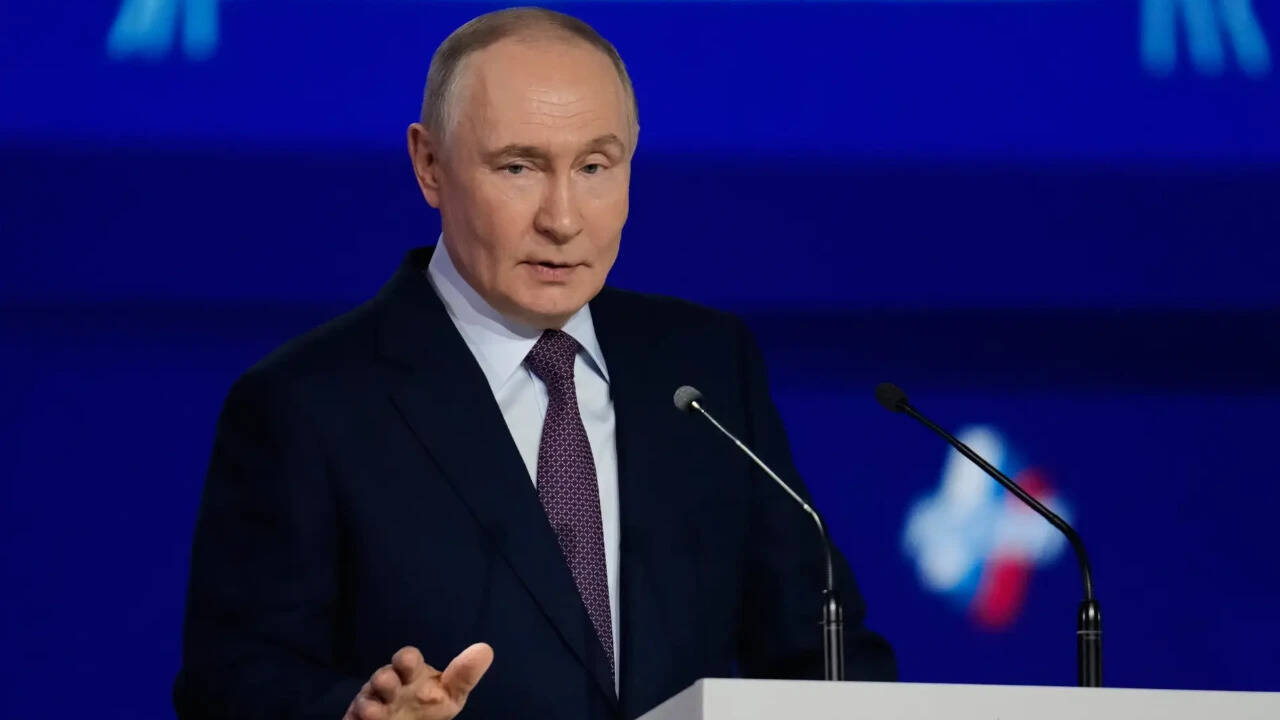
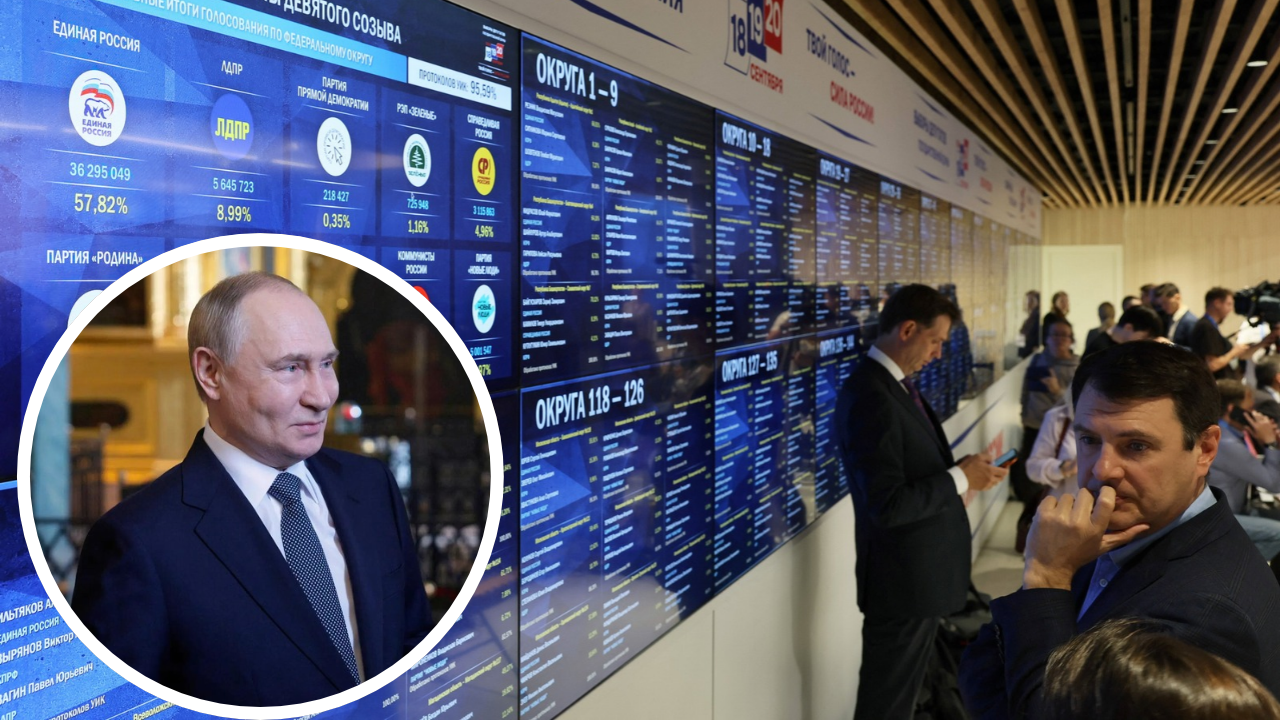
Photo via Washington Examiner

Putin claims a landslide, but he can’t hide the smoke over Moscow

Read the original at Washington Examiner ↗
Cite

Stradner, I. (2026, September 28). Putin claims a landslide, but he can’t hide the smoke over Moscow. Washington Examiner. https://www.washingtonexaminer.com/op-eds/4742997/russia-election-2026-putin-sham-vote-ukraine-aid-misused-resources-weaken-anti-war-message/

Dated when The Aporia collected the article, usually within hours of publication. Check the original for its exact date and byline.

Washington Examiner · collected 2026-09-28 · by Ivana Stradner

Quick Summary

The Russian parliament recently held elections where President Vladimir Putin’s party, United Russia, won 57.83% of the preliminary vote and secured 355 out of 450 seats. The election was criticized for lacking genuine competition, with opposition parties like Yabloko barred from participating. Critics allege that the Kremlin used government resources to undermine anti-war movements and limit voter access to unbiased information, while also pressuring citizens, particularly public-sector employees and students, to vote.
Written by AI on 2026-09-28, from this article's own text only (the story summary below draws on all the coverage).
See how they differ ↓

AI analysis

Story summary

On September 15, 2026, Russia began early voting in areas of Ukraine it occupies, ahead of the national parliamentary election. Mobile polling teams visited homes in rural areas, allowing residents to cast their ballots, overseen by Russian electoral officials, servicemen, and police. This voting process took place under martial law imposed by Moscow, despite warnings from Ukraine’s Security Service (SBU) advising residents against participation, as organizing or promoting these elections could be punishable by up to 10 years in prison under Ukrainian law.

The parliamentary election, held from September 20 to 22, 2026, saw the main Kremlin party, United Russia, secure over three-fourths of the seats in the State Duma, a record high. This election was the first since President Vladimir Putin's full-scale invasion of Ukraine in 2022 and included residents of four Ukrainian regions annexed by Russia that year. The Kremlin celebrated the election of 46 veterans of the war in Ukraine to the State Duma, while most anti-war candidates were barred from running. Putin claimed a landslide victory, but the election was overshadowed by a Kyiv strike on a Moscow oil refinery, highlighting the limitations of Putin's image as an untouchable ruler.

Written for “Putin's Party Wins Russian Elections” on 2026-11-18, grounded in this article and the 69 other(s) covering the same event.

How they differ

21 outlets covered “Putin's Party Wins Russian Elections”.

What each outlet says

One AI summary per outlet of its latest article on this story, written from that article alone and checked against it. Open the article for the outlet's own words.

Washington ExaminerThis outlet28 Sep

The Russian parliament recently held elections where President Vladimir Putin’s party, United Russia, won 57.83% of the preliminary vote and secured 355 out of 450 seats. The election was criticized for lacking genuine competition, with opposition parties like Yabloko barred from participating. Critics allege that the Kremlin used government resources to undermine anti-war movements and limit voter access to…

Putin claims a landslide, but he can’t hide the smoke over Moscow (this article)3 articles from Washington Examiner on this story
The Straits Times25 Sep

The Kremlin celebrated the election of 46 war veterans from Russia's conflict in Ukraine to the State Duma, representing over 10% of its membership. Kremlin spokesman Dmitry Peskov praised their experience and predicted they would contribute significantly to lawmaking. The ruling United Russia party secured 349 seats out of 450 in the new parliament, with high overall voter turnout reported at nearly 60%.

Kremlin hails election of nearly 50 Ukraine war veterans to Russian parliament →8 articles from The Straits Times on this story
Euronews22 Sep

Independent exit polls conducted during recent State Duma elections found that Russian voters abroad overwhelmingly supported the liberal New People party with around 45%, while barely 3% voted for Vladimir Putin's United Russia. In stark contrast, official results from within Russia showed United Russia winning nearly 58%. These discrepancies highlight a significant divide between Russians living inside and outside…

Russians abroad voted eight to one against Putin's party, defying official results →7 articles from Euronews on this story
Al Jazeera20 Sep

Russian polls have closed for parliamentary elections held during wartime conditions since the start of the invasion of Ukraine in 2022. The ruling United Russia party is expected to dominate, reflecting popular support for President Putin's policies as claimed by the Kremlin. Initial results indicate high turnout at 56.66%, with voting occurring across all Russian territories including illegally annexed parts of…

Polls close in Russian wartime election with ruling party set to dominate →7 articles from Al Jazeera on this story
The Hindu25 Sep

Russian authorities released full results from the September 2026 parliamentary election, showing that President Vladimir Putin's United Russia party secured over three-fourths of seats in the State Duma with nearly 58% voter support. The Central Election Commission reported a record turnout of almost 60%, facilitated by extended voting days and online options. Despite economic challenges and ongoing Ukrainian drone…

Full results from Russia's parliamentary election confirm Kremlin's dominance →7 articles from The Hindu on this story
The Independent21 Sep

Vladimir Putin's United Russia party is projected to win Russia’s parliamentary elections with 57.8% of the vote, amid allegations that the process was rigged and lacked transparency. Armed soldiers were stationed at polling stations, and independent European observers were barred from monitoring the election. Opposition parties have reported arrests and detentions of their supporters during the voting period. The…

Arrests, armed soldiers and opposition parties banned: How Putin controlled Russia’s ‘sham’ elections →5 articles from The Independent on this story
Show 14 more outlets
Toronto Star21 Sep

Election officials announced on Monday that Russia’s ruling Kremlin party, United Russia, has maintained its majority control over the parliament following a closely managed voting process which limited opposition participation. With more than 95% of polling stations reporting, United Russia secured nearly 58% of votes for the 225 seats allocated through proportional representation and leads in single-ballot races…

Main Kremlin party keeps control of Russia’s parliament after a carefully orchestrated vote →4 articles from Toronto Star on this story
Times of India23 Sep

Russian President Vladimir Putin announced on Wednesday that his ruling United Russia party achieved a record parliamentary majority in recent elections, securing over three-fourths of the 450 State Duma seats with more than 57% of the vote. With an official turnout rate of 59.3%, Putin claimed this high participation indicated public support for his military policies and efforts in Ukraine. The election occurred…

Putin says record turnout shows Russians back his military agenda in Ukraine →4 articles from Times of India on this story
Daily Mail22 Sep

Fears are rising that Russian President Vladimir Putin may order another mass mobilization to strengthen his military forces following United Russia's record victory in recent parliamentary elections. The party now holds 355 out of 450 seats in the Duma, granting Putin's administration significant power for potential constitutional changes. Despite claims by the Kremlin that the results reflect societal unity around…

Fears Putin will trigger new mass mobilisation to bolster meatgrinder frontline forces after his record win in sham elections →4 articles from Daily Mail on this story
BBC21 Sep

Preliminary results from Russia's parliamentary election indicate that President Vladimir Putin's United Russia party will continue its control over parliament. According to BBC Russia editor Steve Rosenberg, this outcome is unsurprising. The elections took place against the backdrop of ongoing conflict with Ukraine, which has led to significant military setbacks and economic difficulties for Russians. Additionally…

'No surprises' as results emerge in Russian parliamentary election →3 articles from BBC on this story
The Guardian21 Sep

In Russia's recent parliamentary elections, the ruling United Russia party secured a super-majority with 355 out of 450 seats in the Duma. This outcome further strengthens Vladimir Putin’s control over the government and includes at least 49 deputies who are veterans of Russia's war against Ukraine. Critics both within and outside Russia view these elections as undemocratic, noting the absence of opposition parties…

Putin consolidates grip on Russia as 49 Ukraine war veterans elected to parliament →2 articles from The Guardian on this story
CBC20 Sep

Voting took place during a Russian parliamentary election amid a drone attack by Ukraine on Moscow. Partial results showed Putin’s ruling United Russia party leading with 57.5% of the vote, far ahead of other parties. Officials accused Ukraine of attempting to disrupt the election but claimed that the voting process was largely smooth despite cyberattacks and military strikes. The outcome is seen as a test of…

Putin's ruling party on track to comfortably win wartime Russian election →2 articles from CBC on this story
Sydney Morning Herald21 Sep

Vladimir Putin's allies won 80% of seats in Russia’s parliamentary elections, securing United Russia control with 355 out of 450 Duma seats. The results were predictable and controlled, with opposition voices suppressed from the ballot. European leaders condemned the election as fraudulent, while Russian officials claimed it demonstrated public support for Putin. Meanwhile, Putin's strategy includes escalating…

Surprise! Putin just won the Russian elections. But his biggest win was elsewhere →2 articles from Sydney Morning Herald on this story
Deutsche Welle17 Sep

Russian voters head to the polls from September 18 to 20 for parliamentary elections amid growing anxiety and war fatigue due to economic hardships and uncertainty caused by Russia's ongoing conflict with Ukraine. According to independent polling, nearly half of Russians feel alarmed about their daily lives because of the war’s negative impacts, including rising prices and internet restrictions. The Kremlin closely…

A war-fatigued and anxious Russia picks a new parliament →
South China Morning Post18 Sep

Russians started voting on Friday in a three-day parliamentary election, with polling stations opening first in the Far East. The Kremlin's United Russia party is expected to maintain control of the Duma alongside other Putin-aligned groups. This election, taking place in the fifth year of war with Ukraine, marks the first since Moscow invaded in February 2022, resulting in hundreds of thousands of casualties. Only…

Russians begin voting in parliamentary election in shadow of war →
Fox News18 Sep

Russian State Duma elections began on Friday, marking the first such election since Russia’s invasion of Ukraine in 2022. These elections include regions of Ukraine under Russian occupation, where Russia aims to demonstrate popular support for its annexation and ongoing war efforts. The OSCE, however, is not invited to monitor these elections, a move critics argue indicates that Russia intends to conduct neither…

‘Voters get to choose — just not the result’: Russia’s parliamentary election reaches occupied Ukraine →
Time18 Sep

Russia is holding its first parliamentary elections since 2021, but the outcome is largely predetermined due to the overwhelming dominance of the Kremlin-aligned United Russia party. United Russia currently holds 310 out of 450 seats in the State Duma and needs at least 300 seats for a supermajority. Other parties represented are also pro-Kremlin and supportive of the war in Ukraine, further cementing control over…

Why the Outcome of Russia's First Parliamentary Elections in Years Is All But Assured →
NPR19 Sep

Russia held parliamentary elections that included residents of regions it illegally seized from Ukraine, part of Moscow’s efforts to consolidate control over these areas. The election began earlier this month in parts of Donetsk, Luhansk, Kherson, and Zaporizhzhia, with voting continuing until Sunday. Russian officials claim there are over 3.5 million voters in these annexed territories, though the international…

Russia holds parliamentary vote in areas it seized from Ukraine in the war →
ABC News (AU)19 Sep

Russian authorities reported multiple cyber attacks on voting systems during the three-day parliamentary election from September 18 to 20, including an attack on the online voting system in Moscow and another attempt to sabotage communication lines in the Far East. The Central Election Commission's head stated that while all attacks were being repelled, the situation remained under control. Additionally, Russia’s…

Russia reports cyber attacks on voting system during parliamentary election →
Dawn21 Sep

Vladimir Putin’s United Russia party won a significant majority in Russia's parliamentary elections, according to state media reports. The election saw low opposition participation due to the exclusion of anti-war parties like Yabloko and took place amidst cyberattacks and Ukrainian drone strikes that killed two people and damaged an oil refinery in Moscow. With 57.5% of votes counted, United Russia secured over…

Putin's party set to retain power after Russia vote hit by cyberattacks, drones →

Compared with similar articles

This article reads leans strongly left and hedges 11% of its claims. Each row says how that neighbour differs.
Times of India
Hedges 2 of 24 claims Outlet record 59/100
The Hindu
Leans left further right than this Hedges 1 of 22 claims Outlet record 60/100
Times of India
Leans left further right than this Hedges 9 of 102 claims Outlet record 59/100
BBC News
Leans strongly right further right than this Hedges 3 of 48 claims Outlet record 65/100
“The articles discuss different aspects of Putin's actions and strategies, with Article A focusing on the parliamentary election results and Article B on Putin addressing Russia's parliament about his war in Ukraine.”

Story

Putin's Party Wins Russian Elections
Politics · 70 article(s) covering the same event. See how they differ ↑
How this article was measured signals, leaning charts, publisher record, byline, topics and claims

Signals How these are calculated →

Claims extracted
35
sentences that state something as happening or true
Uncertain
11%
4 of 35 hedged ("reportedly", "may", "according to")
Leaning
Leans strongly left
of the writing, not the subject · beta estimate
Publisher signals
67/100
Washington Examiner's corrections and hedging, across everything collected from it. Not a measure of accuracy.
Outlets on this story
70
Politics
Same framing elsewhere
1
articles that frame the event the way this one does
Analyzed 2026-09-28 · how these are computed

How this is being covered How these are calculated →

Article leaning vs. publisher reliability
Source leaning vs. consistency

Publisher

Washington Examiner · 5103 article(s) · 11 correction(s) detected
Running correction rate · 11 correction(s)

Who wrote this

Ivana Stradner
1 article(s) here · 1 carrying a prediction
The Kremlin may have discovered the perfect election strategy: eliminate the possibility of losing.
The only article under this byline in the corpus.

Topics

Kremlin Russia Russians Ukraine United Russia

Subjects

Putin PERSON · 8× Kremlin ORG · 6× Russia GPE · 6× Ukraine GPE · 5× Russians NORP · 4× Russian NORP · 2× United Russia ORG · 2× Vladimir Putin PERSON · 1× Yabloko ORG · 1× the Russian Supreme Court ORG · 1×

Narrative

Yet that image took a hit on election day, when Kyiv brought the war to Moscow’s doorstep, striking an oil refinery and sending smoke into the capital’s skies … an embarrassing reminder that Putin’s carefully cultivated image of an untouchable ruler has its limits.
framing: assertive · carried by 1 article(s) · first seen 2026-09-28
The Kremlin may have discovered the perfect election strategy: eliminate the possibility of losing.
2026-09-28 · Washington Examiner
Putin claims a landslide, but he can’t hide the smoke over Moscow · assertive framing

Claims (35 extracted, 4 hedged)

The Kremlin may have discovered the perfect election strategy: eliminate the possibility of losing. uncertain
Kremlin → discover → possibility
Why bother with opposition or the unpredictability of a free vote when you can simply remove the competition? asserted
you → bother → competition
Russia’s first parliamentary election since Russian President Vladimir Putin’s full-scale invasion had all the familiar trappings of democracy, such as ballots, polling stations, multiple parties, and even three days to vote. asserted
election → have → ballots
It just lacked one small detail: a choice. asserted
It → lack → detail
Unsurprisingly, preliminary results show a landslide win for Putin’s party, United Russia, which won 57.83% of the preliminary party-list vote and won 355 of 450 seats. asserted
which → show → seats
But the outcome was shaped long before election day. asserted
outcome → shape → day
On Aug. 10, the Russian Supreme Court barred the participation of the anti-war Yabloko party in the elections. asserted
Court → bar → elections
Stacking the ballot was only the beginning. asserted
Stacking → stack → ballot
Reports before the election found that the Kremlin misused government resources to weaken anti-war movements and limit voter access to information, while outside observers were prohibited from monitoring the elections to ensure fairness. asserted
observers → find → fairness
The Kremlin pressured citizens, particularly public-sector employees and students, to participate. asserted
Kremlin → pressure → citizens
The Kremlin also staged the election in occupied Ukraine, turning polling stations into another tool for Putin to project his claim that the territories belong to Russia. uncertain
territories → stag → Russia
Many election campaigns focused on pro-war messaging. asserted
campaigns → focus → messaging
Nearly 200 total candidates, including around 80 from United Russia, were veterans who had served in Ukraine: The Kremlin promoted them as Russia’s “true elite” and they were featured in campaign videos. asserted
they → include → videos
Putin’s propaganda has succeeded in gaining majority support for the war in polls. asserted
propaganda → succeed → polls
In February 2026, 72% of Russians told the Leveda Center they support the military’s actions in Ukraine, and support is highest among those who get their news from television. asserted
who → tell → television
But only 24%, a record low, want the fighting to continue, and 67% now favor peace talks. asserted
% → want → talks
The 2026 election is simply the latest performance in a political theater Putin has been staging for years. asserted
Putin → stag → years
In 2011, allegations of vote-rigging in the parliamentary election brought tens of thousands of citizens to the streets of Russia in the largest protests of his rule. asserted
allegations → bring → rule
In 2017, the election commission barred Alexei Navalny, Putin’s most prominent opponent, from the 2018 presidential race. asserted
commission → bar → race
In 2020, constitutional amendments reset Putin’s term count, allowing him to run again until 2036. asserted
him → reset → 2036
Election rigging worsened in 2024. asserted
rigging → worsen → 2024
Navalny, barred again, died in prison weeks before the vote asserted
Navalny → bar → vote
, the antiwar candidate Boris Nadezhdin was removed from the ballot over supposed signature problems, and for the first time, no Organization for Security and Co-operation in Europe observers were allowed. asserted
observers → remove → Europe
Following the recent parliamentary election, Russians are increasingly fearful of mobilization, and a growing number of Russians left in anticipation of the election to avoid possible restrictions on leaving the country. asserted
number → follow → country
Meanwhile, European governments have increasingly warned that Russia’s aggression and hybrid operations could extend beyond Ukraine. uncertain
aggression → warn → Ukraine
The staged victory also gives Putin a convenient talking point: he can now claim the war has the “will of the Russian people” behind it. uncertain
war → stag → it
The ballot box is only one piece of Putin’s larger vision: restoring Russia as a dominant empire and himself as its modern-day “tsar.” asserted
box → restore → tsar
He has praised Stalin’s leadership, while in 2005 he called the collapse of the Soviet Union the biggest geopolitical catastrophe of the century and argued in 2021 that Russians and Ukrainians are one people, questioning the legitimacy of Ukraine’s borders. asserted
Russians → praise → borders
A tsar, after all, is supposed to project strength and control. asserted
tsar → suppose → strength
Yet that image took a hit on election day, when Kyiv brought the war to Moscow’s doorstep, striking an oil refinery and sending smoke into the capital’s skies … an embarrassing reminder that Putin’s carefully cultivated image of an untouchable ruler has its limits. asserted
image → take → limits
Western governments have condemned Putin’s sham election, citing the suppression of opposition, independent media, and dissent. asserted
governments → condemn → opposition
But statements alone are just empty words if they are not followed by action. asserted
they → follow → action
Instead of wringing their hands over a predetermined outcome, the West should send weapons to Ukraine and keep the sanctions on. asserted
West → wring → sanctions
If the West wants Ukraine to remain free and democratic, the time to act is now — before Putin has the chance to bring it under his rule. asserted
Putin → want → rule
Dr. Ivana Stradner serves as a research fellow at the FDD’s Barish Center for Media Integrity. asserted
Stradner → serve → Integrity
Give feedback · no sign-in needed

No sign-in needed for now. Your note is sent without a name, so it cannot be answered.

History Support