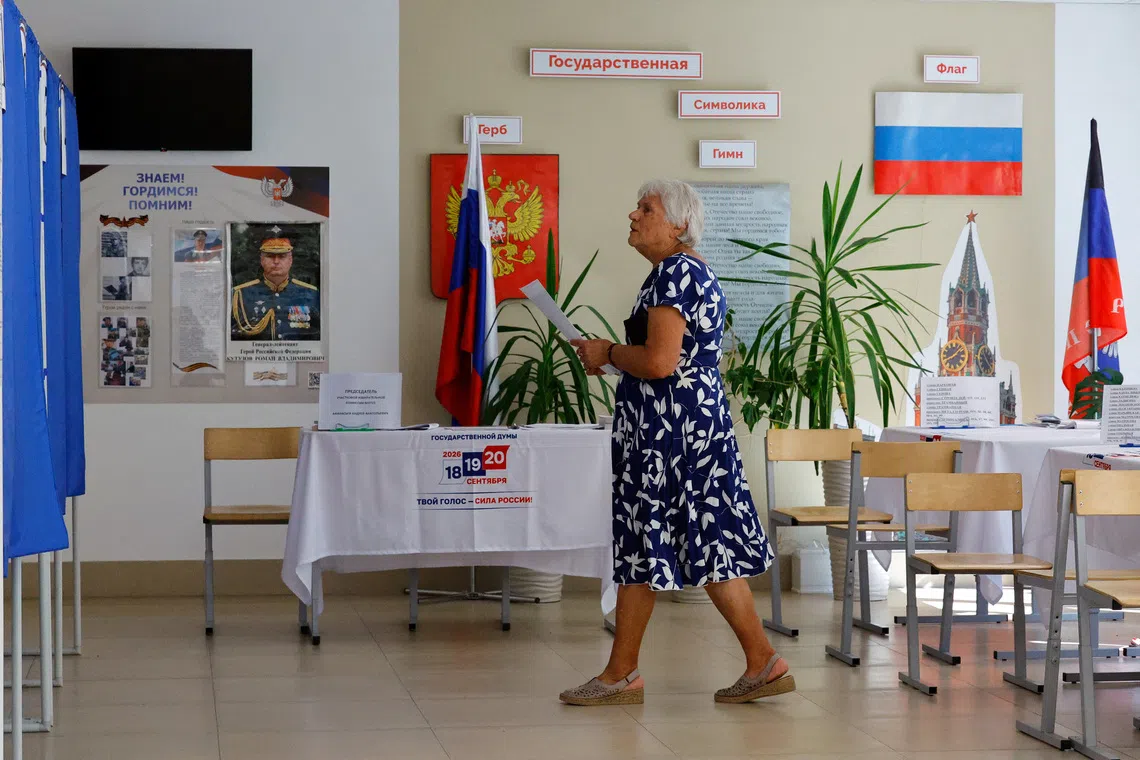
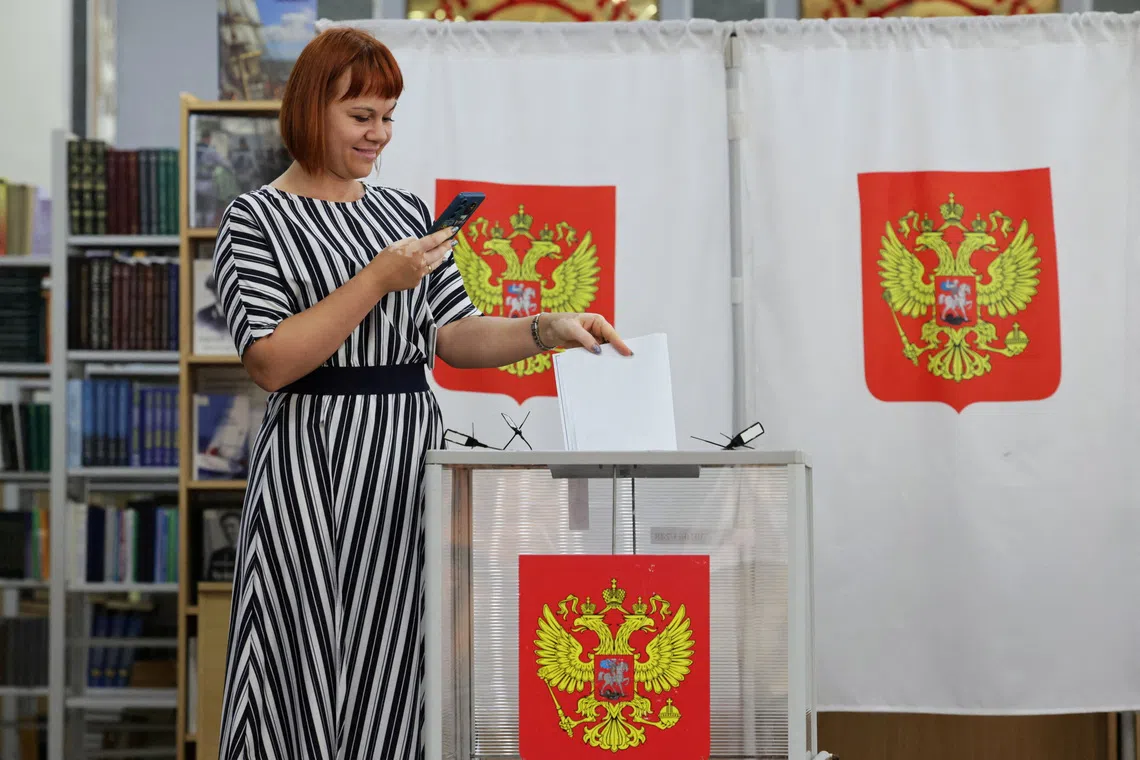
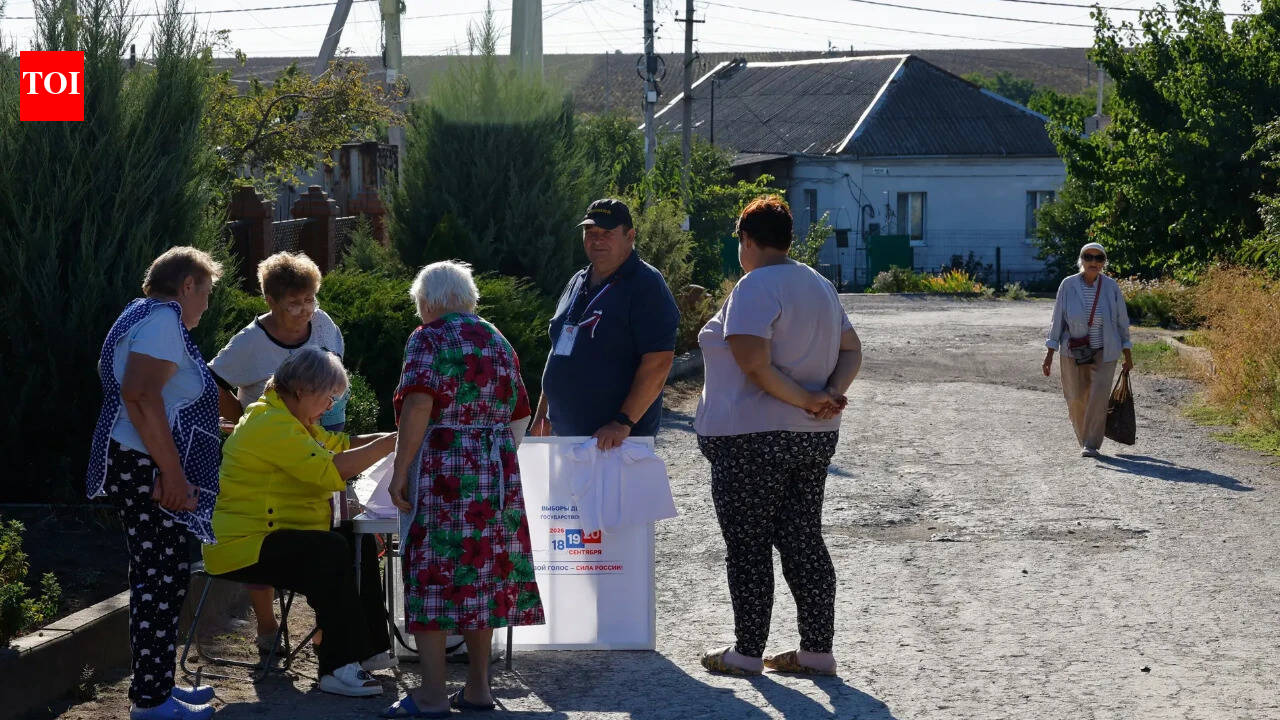
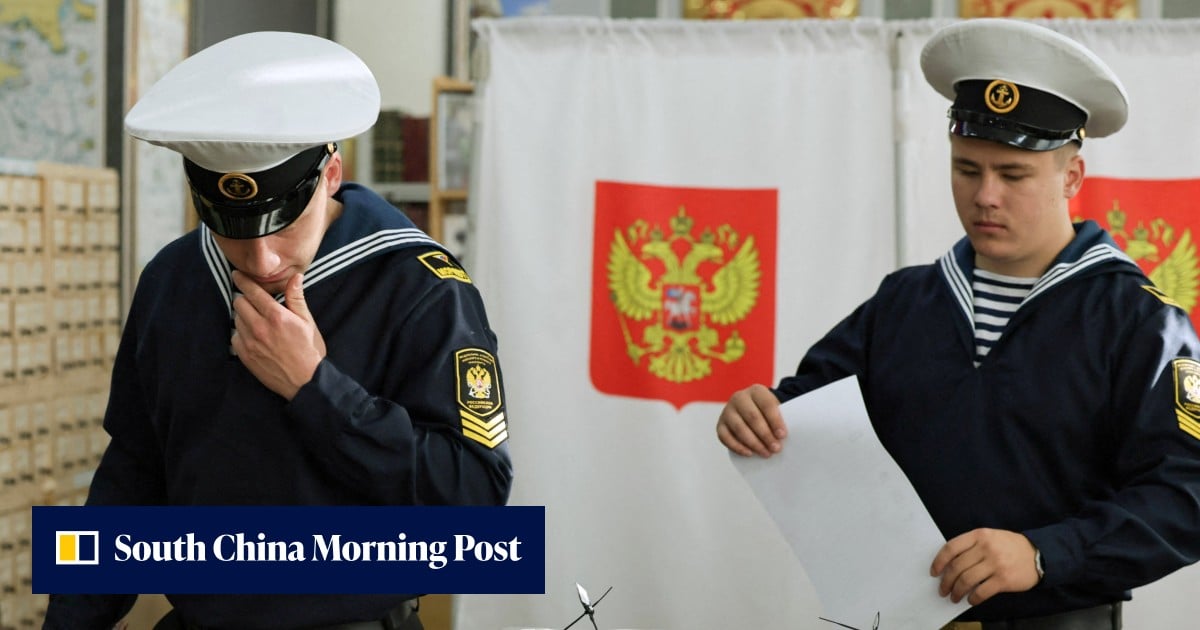
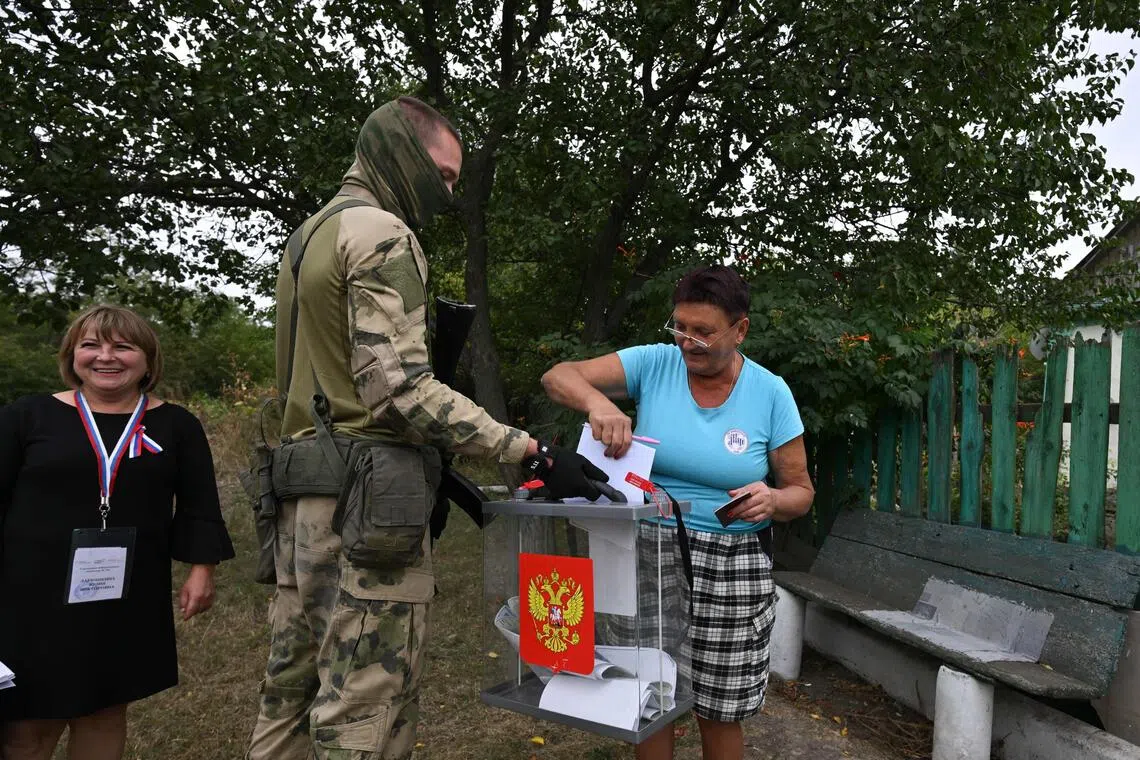
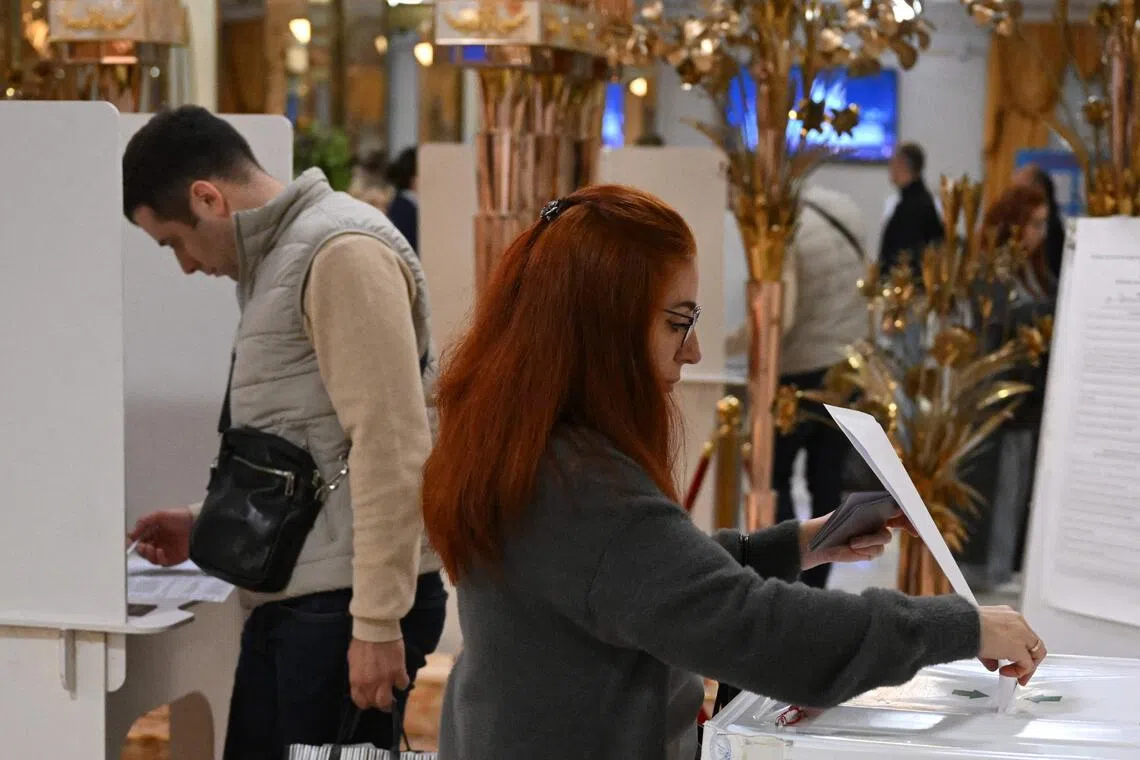
On September 20, 2026, Russia's parliamentary election concluded its third and final day, serving as a referendum on President Vladimir Putin’s policies, particularly his ongoing military campaign in Ukraine. The ruling United Russia party is projected to maintain control amid a political climate that stifles dissent; anti-war candidates were largely excluded from the ballot, and those who ran faced legal repercussions for criticizing the war. Critics argue that permitted opposition parties like the Communist Party and New People could attract voters frustrated by economic hardships caused by the conflict, potentially complicating Putin’s narrative of unwavering public support.
Written locally by qwen2.5:14b on 2026-09-20,
using this article's own text rather than the other coverage of the
same event (that is the story summary below).
Story summary
Russian parliamentary elections, held from September 18-20, were widely expected to see United Russia, President Vladimir Putin's party, maintain its dominance over the State Duma (lower house of parliament). Despite critics arguing that the outcome was predetermined and would have no significant impact on the country’s future, Russian authorities made persistent efforts to ensure high voter participation under current electoral law. The elections came amidst increasing war fatigue and economic hardship due to Ukraine's drone strikes targeting oil refineries and warehouses within Russia, causing fuel shortages and internet blackouts.
Exit polls conducted by independent groups at embassies and consulates abroad revealed starkly different results from those inside Russia: New People, an opposition party, garnered around 45% of the votes compared to United Russia’s reported near-58% support domestically. These discrepancies highlight a divergence between domestic and international perceptions of Putin's popularity, with many Russian expatriates opposing the war and expressing anxiety over its economic and social consequences.
Critics argue that these elections are more about demonstrating the regime's resilience than reflecting genuine public sentiment or political contestation, given the tight control exercised by the Kremlin.
Written for “Russia's Wartime Elections” on 2026-10-05,
grounded in this article and the 64 other(s) covering the same event.
A parliamentary election that President Vladimir Putin has cast as a test of support for Russia’s war in Ukraine entered its third and final day on Sunday (September 20, 2026), with the ruling United Russia party expected to retain its dominance in a political system critics say does not tolerate dissent.
asserted
critics → cast → dissent
The State Duma vote, the first since Russia launched its full-scale war in Ukraine in February 2022, is likely to be presented by the Kremlin as evidence of public backing for Mr. Putin’s policies and for the war, Europe’s deadliest conflict since World War Two, now in its fifth year with no sign of ending soon.
asserted
Russia → launch → sign
Most anti-war candidates were barred from the ballot.
asserted
candidates → bar → ballot
Those who did run from the liberal Yabloko party, which has polled in the single digits in recent years but hoped to tap into war fatigue, said they feared for their freedom after courts handed long jail terms to two senior party figures before the vote for comments about the conflict deemed illegal by authorities.
asserted
courts → run → authorities
Discrediting the army or spreading what authorities regard as fake news are punishable by lengthy prison sentences.
asserted
authorities → discredit → sentences
The Kremlin says national unity and some censorship are necessary during what it calls its special military operation in Ukraine.
asserted
it → say → Ukraine
It casts the conflict as part of an existential struggle with a hostile West and says Ukrainian intelligence services and other enemies are stepping up efforts to stir unrest inside Russia.
asserted
services → cast → Russia
Permitted opposition parties could benifit
Mr. Putin on Friday (September 18, 2026) accused Ukraine of trying to interfere in the election, citing what he said was a Ukrainian strike on the home of an election official in the Russian-controlled part of Ukraine’s Zaporizhzhia region that killed Elena Astanina, the official.
uncertain
that → benifit → Astanina
Reuters could not independently verify details of the attack and there was no immediate comment from Kyiv.
uncertain
Reuters → verify → Kyiv
Russian electoral officials also said on Saturday (September 19, 2026) that an online voting system in Moscow had come under cyberattack.
asserted
system → say → cyberattack
Kyiv, which has suspended elections under martial law, has dismissed the Russian vote as a “pseudo election”.
asserted
which → suspend → election
Despite what most experts see as the election’s predictable outcome, the NEST think-tank in Berlin, co-founded by Kremlin critic Mikhail Khodorkovsky, whom Russian authorities have designated “a foreign agent”, said the vote could still produce awkward moments for the Kremlin at a time of economic strain.
“The consequences of the war are increasingly being felt within the country, and accumulated anxiety and frustration may translate into votes for the systemic opposition parties that the Kremlin has allowed to remain on the ballot,” it said in a note.
uncertain
it → see → note
It said the Communist party and the New People party could attract votes the authorities would prefer to go to United Russia.
uncertain
authorities → say → Russia
Both parties have consistently voted in line with United Russia on major issues.
asserted
parties → vote → issues
Mr. Putin told the nation in a televised address before the election that the vote would underline support for Russian troops fighting in Ukraine.
asserted
vote → tell → Ukraine
“Your choice, and your will, will once again demonstrate that millions of people stand behind our soldiers, that we are a united people bound together by shared values, historical memory, and love for our homeland, and that no one will succeed in dividing or intimidating us,” said Mr. Putin.
asserted
Putin → demonstrate → us
Initial results are expected to start emerging at around 1800 GMT on Sunday (September 20, 2026), with more complete results available on Monday (September 21, 2026).
asserted
results → expect → Monday
 The Aporia