Climate policy belongs to Congress, not Colorado

Read the original at Washington Examiner ↗
Washington Examiner · collected 2026-10-05 · by Washington Examiner

Quick Summary

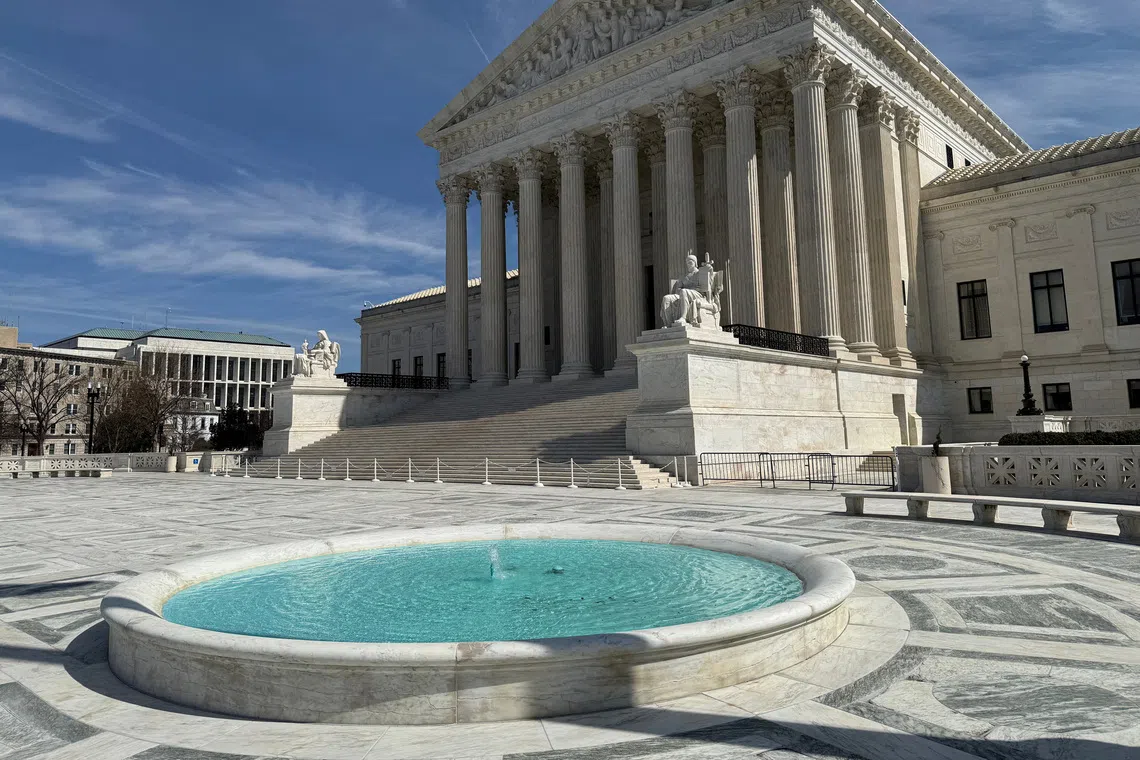
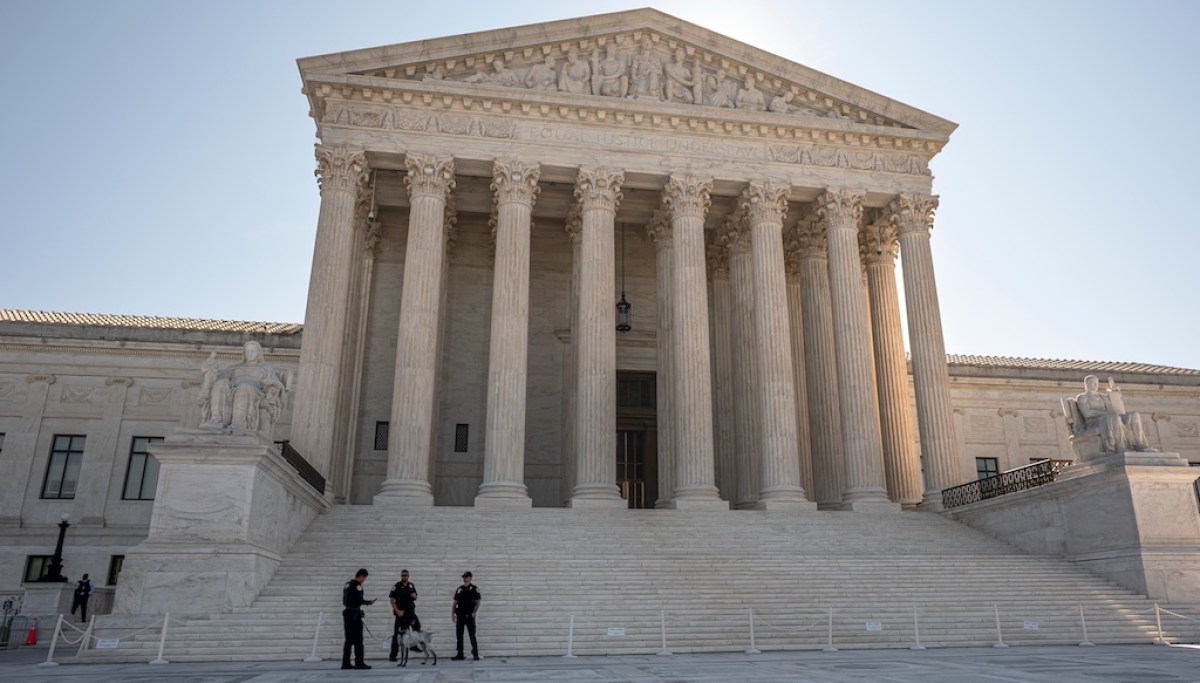
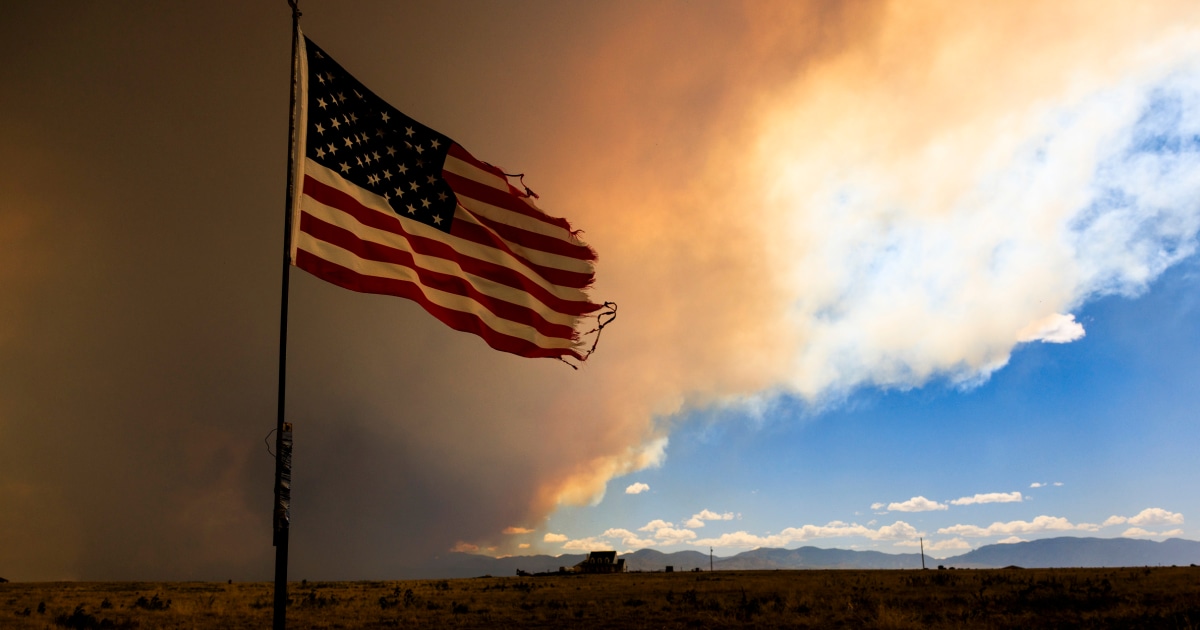
The Supreme Court will hear oral arguments in Suncor Energy v. Boulder County on Monday, questioning whether state courts can regulate global industries and hold companies responsible for climate-related damages. Boulder County sued Exxon Mobil and Suncor Energy for costs associated with climate impacts like wildfires and infrastructure damage, despite these two companies accounting for only about 1.5% of global greenhouse gas emissions in 2024. The case challenges the legal basis for attributing specific environmental disasters to climate change caused by particular companies, as scientific studies suggest no significant increase in disaster frequency or intensity over time.
Written locally by qwen2.5:14b on 2026-10-05, using this article's own text rather than the other coverage of the same event (that is the story summary below).

AI analysis runs on qwen2.5:14b, locally

Story summary

When the U.S. Supreme Court begins its new term on Monday, it will consider Suncor Energy v. Boulder County, which could determine if states can sue oil companies for damages related to climate change. In 2018, Boulder County and City of Boulder sued Exxon Mobil and Suncor Energy, alleging these companies caused local climate-related harms through their fossil fuel production, promotion, and sale. The case has drawn national attention as similar lawsuits could proliferate if the Court allows such claims to proceed in state courts, potentially leading to a patchwork of legal actions against energy firms across the country. Manufacturers are closely watching this case, fearing it might set a precedent for future lawsuits targeting various industries based on broad societal issues.

Written for “Supreme Court Climate Case” on 2026-10-05, grounded in this article and the 13 other(s) covering the same event.
Why this leaning score
The article's own words the score was based on. Each is quoted verbatim and was checked against the article text before being stored, so you can find it in the original.
Reading Leans strongly right (beta estimate) Confidence high
Leaning: leans strongly right for article 57011 (high confidence, 4 verified quotes) · logged 2026-10-05

Signals How these are calculated →

Claims extracted
34
claim-shaped sentences
Uncertain
6%
2 of 34 hedged
Leaning
Leans strongly right
of the writing, not the subject · beta estimate
Correction & hedging signals
72.3
corrections and hedging in what we collected; not a measure of accuracy
Outlets on this story
14
Environment
Narrative spread
1
articles carrying this framing
Analyzed 2026-10-05 · how these are computed

Story

📰 Supreme Court Climate Case
Environment · 14 article(s) covering the same event. See how they differ ↓

How this is being covered How these are calculated →

Article leaning vs. publisher reliability
Source leaning vs. consistency

Compared with similar articles

This article reads leans strongly right and hedges 6% of its claims. Each row says how that neighbour differs.
The Straits Times · 0.85 cosine similarity
⚖️ Leans left further left than this 🔴 32% hedged 6 of 19 📰 publisher trust 59
“Both articles describe the US Supreme Court hearing the case Suncor v. Boulder on October 5, 2026.”
Washington Examiner
⚖️ Leans left further left than this 🔴 21% hedged 12 of 56 📰 publisher trust 72
“Both articles discuss the Supreme Court hearing oral arguments in Suncor Energy v. Boulder County on October 5th, which is a specific legal event.”
NPR
⚖️ leaning not scored 🔴 15% hedged 8 of 52 📰 publisher trust 60
“Both articles discuss the Supreme Court hearing oral arguments in Suncor Energy v. Boulder County on the same day, involving the same parties and issues.”
NBC News
⚖️ Leans left further left than this 🔴 21% hedged 7 of 33 📰 publisher trust 95
“Both articles describe the Supreme Court hearing oral arguments in Suncor Energy v. Boulder County on a specific date, involving the same parties and issues.”
Washington Examiner
⚖️ Leans strongly right 🔴 29% hedged 9 of 31 📰 publisher trust 72
“Both articles discuss the Supreme Court case Suncor Energy v. Boulder County, scheduled to be heard on a specific date, involving Boulder County's lawsuit against energy companies over climate change-related costs.”
The Guardian
⚖️ Leans strongly left further left than this 🔴 5% hedged 1 of 21 📰 publisher trust 68
“Article A describes a lawsuit filed by states and cities against the EPA for repealing emissions rules, while Article B discusses a case before the Supreme Court questioning state courts' power to regulate global industries in relation to climate change costs.”
Toronto Star
⚖️ leaning not scored 🔴 12% hedged 4 of 33 📰 publisher trust 63
“The articles discuss related legal proceedings regarding a climate change case but describe different aspects: one focuses on an individual's experience with a wildfire, while the other discusses the Supreme Court hearing a broader lawsuit.”
CBS News
⚖️ Leans left further left than this 🔴 23% hedged 13 of 57 📰 publisher trust 66
“Both articles discuss the Supreme Court hearing a case involving Boulder County's lawsuit against energy companies over climate change impacts.”
CBS News
⚖️ leaning not scored 🔴 9% hedged 9 of 102 📰 publisher trust 66
“The articles describe different events: Article A mentions the start of the Supreme Court's new term with various high-profile cases including climate change, while Article B focuses on a specific case involving Boulder County suing energy companies for climate-related costs.”
Mother Jones
⚖️ Leans left further left than this 🔴 10% hedged 5 of 49 📰 publisher trust 95
“The articles discuss different aspects of the same court case but describe separate events or perspectives rather than a single specific occurrence.”

Publisher

Washington Examiner · 1918 article(s) · 3 correction(s) detected
Running correction rate · 3 correction(s)
2026-10-03
Tennessee’s prison chief resigns after failed Christa Pike execution, Bill Lee says
2026-10-03
Alito says there’s no perfect time to retire while confirming he will reconsider next year
2026-10-01
Christa Pike was set to be the first woman to be executed in Tennessee in 200 years before botched attempts: What to know

Who wrote this

Washington Examiner
17 article(s) here · 1 carrying a prediction
🔮 But none of this science or logic would matter in a courtroom run by a far-left Democratic judge before far-left Democratic jurors.
2026-10-05 · assertive framing · Climate policy belongs to Congress, not Colorado
🔮 It is unfortunate for Republicans that it won’t pass until after the November elections, but the bipartisan permitting reform deal announced hours before the Senate adjourned this week could be the most historic and consequential legislative accomplishment of Donald Trump’s presidency.
2026-10-04 · mixed framing · A bipartisan deal to get America building again
🔮 On Sept. 28, the National Highway Traffic Safety Administration lowered the projected 2031 fleet requirement from approximately 50 miles per gallon to 35.
2026-10-03 · assertive framing · Trump just made cars more affordable
🔮 We may never know exactly what happened on a October 2024 night in a Cornell University fraternity house, but we should be thankful that the factual disputes and criminal liability will be sorted out in criminal court.
2026-10-02 · assertive framing · Preserving due process on college campuses
🔮 Again, the city stressed that the caucuses “are completely voluntary and no one will be turned away,” but then added that employees are encouraged to join “the caucus that aligns with how they identify racially.”
2026-10-01 · assertive framing · Yes, DEI can violate civil rights law
🔮 New York City Mayor Zohran Mamdani spent weeks threatening to arrest Netanyahu as a “war criminal” responsible for “genocide,” only to acknowledge later that he lacks the authority to put the Israeli premier in cuffs.
2026-09-28 · assertive framing · Netanyahu’s warning to a declining West
🔮 Rep. Delia Ramirez (D-IL), who has declared herself a “proud anchor baby,” is not the first Democrat to introduce legislation that would abolish the Immigration and Customs Enforcement agency.
2026-09-27 · assertive framing · This is what Democrats’ immigration policy would be
🔮 In a normal capital city, those words would approximate how a police dispatcher would respond after a child was struck by a hit-and-run driver.
🔮 A manufacturer using 1 million kilowatt-hours a year would pay roughly $116,000 more for electricity at California’s average industrial price.
2026-09-25 · assertive framing · Newsom’s pathetic energy rebate
🔮 The president called the territory “vital” for U.S. missile defense and NATO and warned that “if we don’t get it, Russia or China will.”
2026-09-24 · assertive framing · Trump gets his Greenland deal, but at a cost
Also by Washington Examiner
A bipartisan deal to get America building again
2026-10-04 · Washington Examiner
Trump just made cars more affordable
2026-10-03 · Washington Examiner
Preserving due process on college campuses
2026-10-02 · Washington Examiner
Yes, DEI can violate civil rights law
2026-10-01 · Washington Examiner
Nothing else under this byline is closely related to this article, so these are simply their most recent.
All 17 articles by Washington Examiner →

Topics

Boulder County’s Colorado Democratic Suncor Energy the Supreme Court

Subjects

Colorado GPE · 7× Boulder GPE · 4× the Supreme Court ORG · 3× Boulder County’s GPE · 2× Democratic NORP · 2× Suncor Energy ORG · 2× Boulder County GPE · 1× Exxon Mobil ORG · 1× Roger Pielke Jr. PERSON · 1× Science ORG · 1×

Narrative

Boulder County’s lawyer, David Bookbinder, even admitted as much during a panel discussion in which he said the end goal of the lawsuits was to create “an indirect carbon tax” that would bankrupt energy producers and allow local governments to take control of their assets.
framing: assertive · carried by 1 article(s) · first seen 2026-10-05
🔮 But none of this science or logic would matter in a courtroom run by a far-left Democratic judge before far-left Democratic jurors.
2026-10-05 · Washington Examiner
Climate policy belongs to Congress, not Colorado · assertive framing

Claims (34 extracted, 2 hedged)

Do state courts have the power to regulate not just national industries but global ones, including conduct that took place entirely outside the state? asserted
that → have → state
That is the question facing the Supreme Court on Monday when it hears oral arguments in Suncor Energy v. Boulder County. asserted
it → face → County
The Colorado county is suing these two energy companies, and just these two energy companies, for costs borne by the county that were allegedly caused by climate change, including damage from wildfires and floods, deterioration of roads and bridges, and the expense of protecting residents from future disasters. uncertain
that → sue → disasters
But combined, these two energy companies accounted for approximately 1.5% of global greenhouse gas emissions in 2024. asserted
companies → combine → 2024
To hold these two companies, and just these two companies, responsible for the alleged harms of global warming defies all logic. asserted
companies → hold → logic
Attributing particular disasters to climate change presents another challenge: The historical record is far less straightforward than activists suggest. asserted
activists → attribute → challenge
Satellite data examined in a major Science study showed that the total area burned worldwide declined 24.3% from 1998 to 2015. asserted
area → examine → 2015
Research co-written by Roger Pielke Jr. in the Bulletin of the American Meteorological Society found no statistically significant rise in the frequency or intensity of hurricanes striking the United States since 1900. asserted
Research → co → 1900
And a 2023 study covering more than 3,000 monitoring stations over a century found that heavier rainfall has not produced a uniform increase in flooding: The trends are weaker and vary substantially by region. asserted
trends → cover → region
Even the U.N. Intergovernmental Panel on Climate Change expresses “low confidence” in a global trend in peak river flows. asserted
Panel → express → flows
But none of this science or logic would matter in a courtroom run by a far-left Democratic judge before far-left Democratic jurors. asserted
none → matter → jurors
If this case were to go to trial in a Colorado court, all that would matter would be that the energy companies were bad and must be punished for their supposed wrongdoing. asserted
companies → go → wrongdoing
Boulder County’s lawyer, David Bookbinder, even admitted as much during a panel discussion in which he said the end goal of the lawsuits was to create “an indirect carbon tax” that would bankrupt energy producers and allow local governments to take control of their assets. asserted
governments → admit → assets
Fortunately, the Supreme Court can stop this attempt to allow activist judges to legislate from the bench. asserted
judges → stop → bench
The strongest reason Boulder should lose is straightforward: Colorado does not get to set the rules for the rest of the country, much less the world. asserted
Colorado → lose → country
Boulder says it wants compensation, not emissions limits. asserted
it → say → compensation
But that distinction ignores what a damages award would do. asserted
award → ignore → what
Making companies pay for the consequences of worldwide fuel production would pressure them to change that production everywhere. asserted
companies → make → production
Calling the payment damages rather than a carbon tax does not erase its reach beyond Colorado. asserted
Calling → call → Colorado
That is why disputes over pollution crossing state lines have traditionally belonged to federal law. asserted
pollution → cross → law
Texas has as much right as Colorado to make decisions within its borders. asserted
Texas → have → borders
Allowing Colorado juries to impose liability for activities elsewhere would let one state override another’s choices. asserted
state → allow → choices
Multiply Boulder’s theory across dozens of jurisdictions, and companies would face competing rules for the same global activity. asserted
companies → multiply → activity
The Clean Air Act strengthens that argument. asserted
Act → strengthen → argument
In American Electric Power v. Connecticut, the Supreme Court held that the statute displaced federal common-law lawsuits seeking limits on greenhouse gas emissions from power plants. asserted
statute → hold → plants
That decision did not settle whether state-law claims survive. uncertain
claims → settle → ?
But it established that Congress had assigned those regulatory decisions to the Environmental Protection Agency. asserted
Congress → establish → Agency
Boulder should not be allowed to circumvent that arrangement by targeting fuel producers through state nuisance law. asserted
Boulder → allow → law
Liability tied to foreign fuel production would let a Colorado court influence energy development abroad, interfering with American diplomacy and trade. asserted
court → tie → diplomacy
The Constitution entrusts foreign affairs to the federal government, not states, and definitely not state judges. asserted
Constitution → entrust → government
Justice Samuel Alito, who owns stock in other oil and gas companies, has chosen to recuse himself from this case. asserted
who → own → case
That takes one likely vote against Boulder off the table. asserted
That → take → table
But five other conservative justices remain to hear the case. asserted
justices → remain → case
Given how preposterous it would be to empower courts in all 50 states to set conflicting global energy policies, Suncor should get the votes of at least one or two justices appointed by Democratic presidents as well. asserted
Suncor → give → presidents

💬Give feedback
🕘History 🎫Support