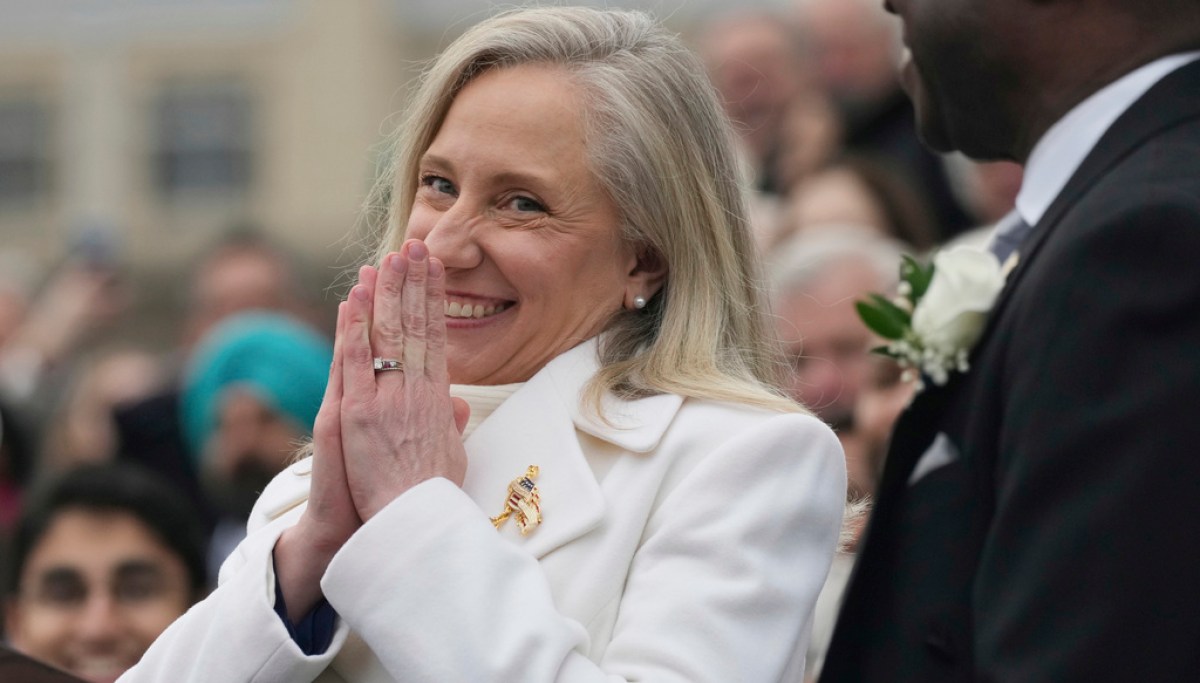
Photo via Washington Examiner

More spending won’t make healthcare affordable

Read the original at Washington Examiner ↗
Cite

Examiner, W. (2026, November 16). More spending won’t make healthcare affordable. Washington Examiner. https://www.washingtonexaminer.com/opinion/editorials/4802924/more-spending-wont-make-healthcare-affordable/

Dated from the outlet's own feed. Check the original for its byline.

Washington Examiner · collected 2026-11-16 · by Washington Examiner

Quick Summary

The article reports that before the Affordable Care Act was enacted, the average family health insurance premium was $1,115 a month, and federal healthcare spending was $765 billion annually. After its implementation, the average family premium rose to nearly $2,360 a month, while federal spending on healthcare programs increased to $2.5 trillion annually. The author argues that despite this significant increase in spending, healthcare has not become more affordable, suggesting that higher spending encourages providers to charge more, leaving patients no better off financially or healthwise.
Written by AI on 2026-11-16, from this article's own text only (the story summary below draws on all the coverage).

AI analysis

Story summary

The Washington Examiner argues that increased healthcare spending has not made healthcare more affordable in the United States. Prior to the Affordable Care Act (ACA), which was enacted without Republican support, the average family health insurance premium was $1,115 a month, and federal government spending on healthcare was $765 billion annually. Since the ACA's implementation, premiums have nearly doubled to $2,360 a month, and federal spending on healthcare has increased to $2.5 trillion annually. The article claims that higher spending encourages providers to charge more, resulting in no financial benefit for families despite the substantial increase in government expenditure.

Written for “Healthcare Affordability Debate” on 2026-11-18, grounded in this article and the 0 other(s) covering the same event.

Compared with similar articles

Nothing to compare against. No article is close enough to this one for the pipeline to have linked or judged the pair.

Story

Healthcare Affordability Debate
Health · 1 article(s) covering the same event.
How this article was measured signals, leaning charts, publisher record, byline, topics and claims

Signals How these are calculated →

Claims extracted
5
sentences that state something as happening or true
Uncertain
0%
0 of 5 hedged ("reportedly", "may", "according to")
Leaning
Leans strongly right
of the writing, not the subject · beta estimate
Publisher signals
67/100
Washington Examiner's corrections and hedging, across everything collected from it. Not a measure of accuracy.
Outlets on this story
1
Health
Same framing elsewhere
1
articles that frame the event the way this one does
Analyzed 2026-11-16 · how these are computed

How this is being covered How these are calculated →

Article leaning vs. publisher reliability
Source leaning vs. consistency

Publisher

Washington Examiner · 5103 article(s) · 11 correction(s) detected
Running correction rate · 11 correction(s)

Who wrote this

Washington Examiner
48 article(s) here · 1 carrying a prediction
Late last Friday, the Spanberger administration announced that it would not participate in the federal scholarship tax credit program, a new tax credit created by the One Big Beautiful Bill Act.
In May, a 19-year-old D.C. resident armed with a pistol fired more than 20 rounds in the Petworth neighborhood of the nation’s capital, injuring a boy who had been playing basketball at a recreation center.
2026-11-17 · mixed framing · Democrats aren’t serious about gun crime
If more spending made healthcare more affordable, healthcare would be the most affordable service in the United States by now.
2026-11-16 · assertive framing · More spending won’t make healthcare affordable
Republicans could pass another short-term continuing resolution to keep the government open into the new year, but doing so would leave Trump in a terrible bargaining position.
2026-11-13 · assertive framing · Trump, don’t make the Democrats’ obstruction easier
Clearly it weighed heavily with Jordan’s colleagues that leadership will be a very different job come January 2027 than it is today.
2026-11-12 · assertive framing · Jim Jordan fits the fight ahead
Democrats ran on a promise to make life more affordable for voters, but one of their top priorities after the election would drive energy prices higher.
New York City’s socialist mayor, Zohran Mamdani, promised not just to freeze rents for 1 million rent-stabilized apartments in the city, but also to build another 200,000 affordable units and preserve another 200,000.
2026-11-06 · mixed framing · The bill comes due for Mamdani’s rent freeze
A Democratic blue wave was a much-predicted result, but it is also an unwelcome one that the country will probably pay dearly.
Let us hope that by this time tomorrow, all the big midterm congressional races will be decided and we know which party will control the House and Senate starting next January.
2026-11-03 · assertive framing · There is nothing normal about Election Week
After Tuesday’s elections, they could wield even more.
2026-11-01 · assertive framing · Government unions set to grab more power in blue states
Also by Washington Examiner
Democrats aren’t serious about gun crime
2026-11-17 · Washington Examiner
Nvidia spy scandal underlines China threat
2026-11-15 · Washington Examiner
Amnesty isn’t the answer to Republican woes
2026-11-14 · Washington Examiner
Nothing else under this byline is closely related to this article, so these are simply their most recent.
All 48 articles by Washington Examiner →

Topics

Republican the Affordable Care Act the Democratic Party the United States

Subjects

Republican NORP · 1× the Democratic Party ORG · 1× the United States GPE · 1×

Narrative

Before the Democratic Party enacted the Affordable Care Act without a single Republican vote, the average family health insurance premium was $1,115 a month, and the federal government spent $765 billion a year on healthcare.
framing: assertive · carried by 1 article(s) · first seen 2026-11-16
If more spending made healthcare more affordable, healthcare would be the most affordable service in the United States by now.
2026-11-16 · Washington Examiner
More spending won’t make healthcare affordable · assertive framing

Claims (5 extracted, 0 hedged)

Before the Democratic Party enacted the Affordable Care Act without a single Republican vote, the average family health insurance premium was $1,115 a month, and the federal government spent $765 billion a year on healthcare. asserted
government → enact → healthcare
Sixteen years, 9,000 pages of regulation, and $1.5 trillion later, the average family now pays almost $2,360 a month, and the federal government spends $2.5 trillion a year on healthcare programs. asserted
government → pay → programs
If more spending made healthcare more affordable, healthcare would be the most affordable service in the United States by now. asserted
healthcare → make → States
But it doesn’t. asserted
it → do → ?
Spending more tax dollars on healthcare only encourages healthcare providers to charge more, leaving no one healthier or financially better off than before. asserted
Spending → spend → one
Give feedback · no sign-in needed

No sign-in needed for now. Your note is sent without a name, so it cannot be answered.

History Support