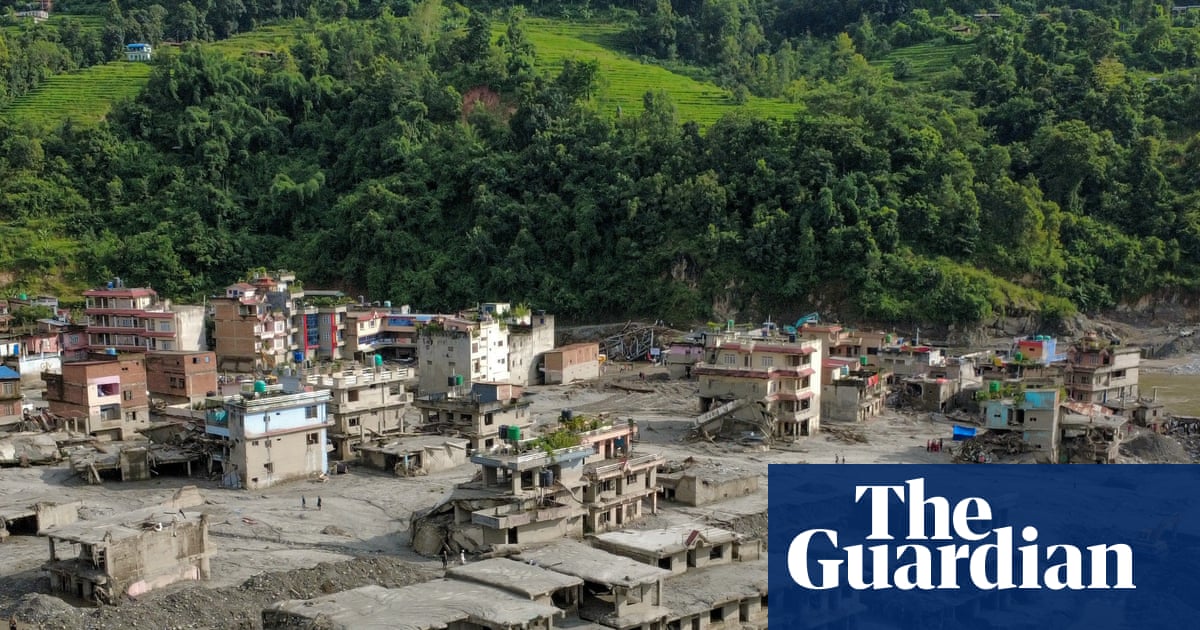
The Nepal floods question: When the Himalayas collapse, who gets warned?

Read the original at Al Jazeera ↗
Al Jazeera · collected 2026-09-19 · by Tauseef Ahmad, Sajid Raina

Quick Summary

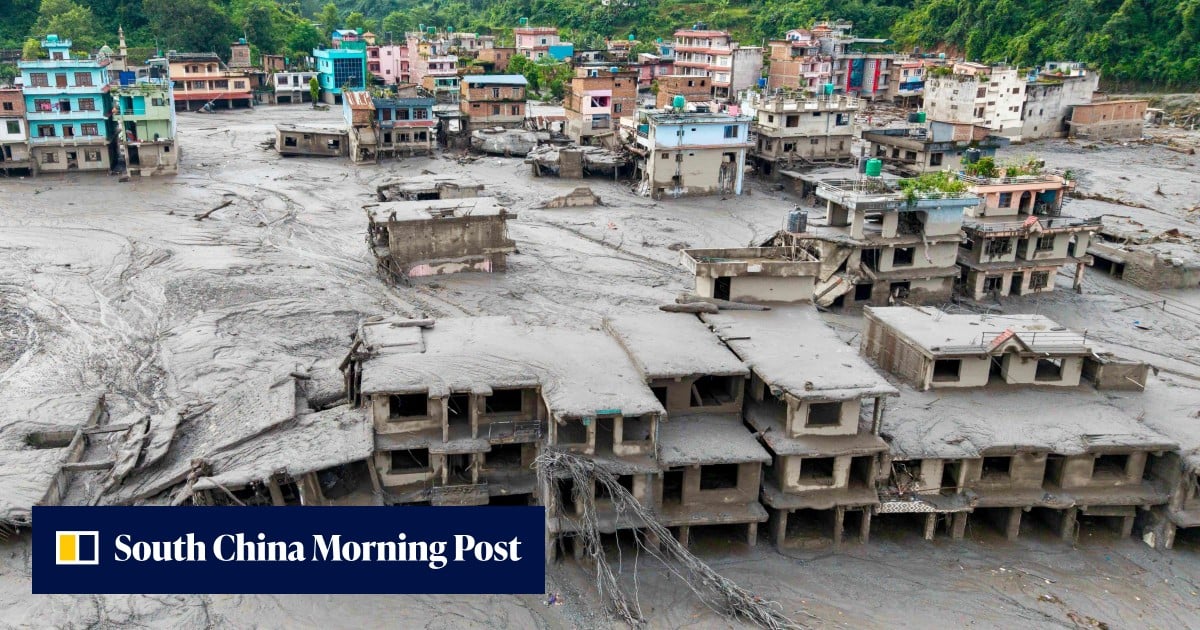
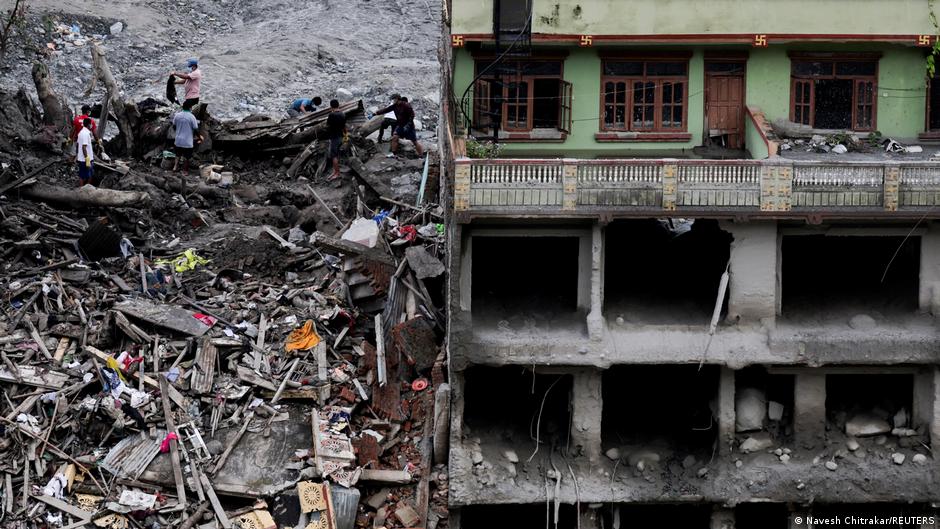
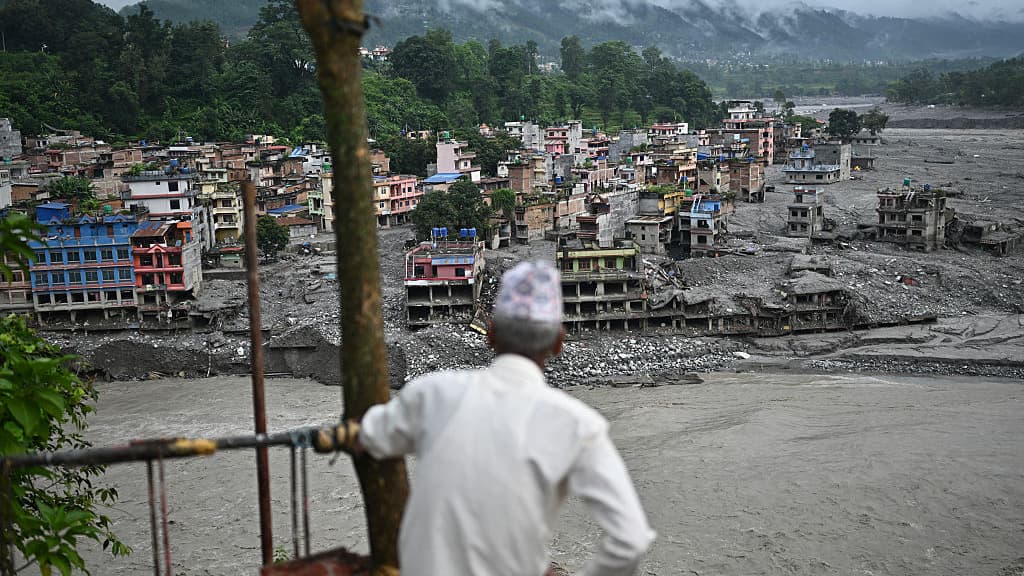
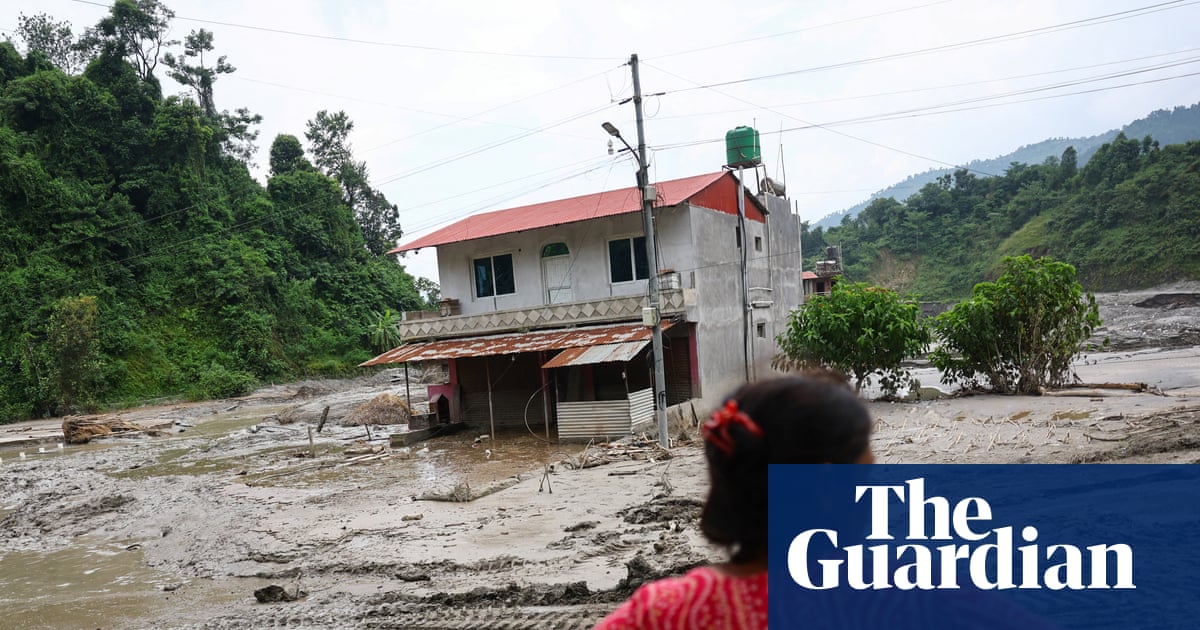
On August 26, a massive ice and rock collapse high in the Himalayas triggered devastating floods affecting Nepal and Tibet, resulting in over 1,400 confirmed deaths, at least 6,000 missing individuals, and significant infrastructure damage including twelve destroyed hydropower plants. Scientists describe this event as unprecedented due to its scale and rapid impact, emphasizing concerns about early warning systems for remote high-altitude hazards. The disaster highlights the need for more integrated monitoring of climate-induced changes in mountain regions that can trigger cascading disasters.
Written locally by qwen2.5:14b on 2026-09-19, using this article's own text rather than the other coverage of the same event (that is the story summary below).

AI analysis runs on qwen2.5:14b, locally

Story summary

In late August 2026, flash floods caused by a glacial collapse near the Nepal-Tibet border devastated central and northern Nepal, leading to over 1,450 deaths as of September 20. The floodwaters swept away homes, vehicles, roads, bridges, and hydropower projects in multiple districts including Chitwan, Rasuwa, and Nawalparasi. With more than 6,000 people still missing, recovery efforts are hampered by severe damage to infrastructure and the decomposed state of many recovered bodies, complicating identification processes.

Prime Minister Balendra Shah has declared an early warning system for natural disasters as a top priority in Nepal, acknowledging that such systems could have saved lives. Meanwhile, international experts suggest climate change likely contributed to the instability of glaciers and permafrost, triggering the devastating avalanche that caused the floods. The disaster highlights the urgent need for global action on climate issues, with scientists noting that without faster transitions towards zero fossil fuel emissions, similar catastrophic events will become more frequent in the future.

Written for “Nepal Flood Disaster” on 2026-10-05, grounded in this article and the 18 other(s) covering the same event.

Signals How these are calculated →

Claims extracted
107
claim-shaped sentences
Uncertain
15%
16 of 107 hedged
Leaning
not political
takes no side on a contested political question
Correction & hedging signals
60.2
corrections and hedging in what we collected; not a measure of accuracy
Outlets on this story
19
Environment
Narrative spread
1
articles carrying this framing
Analyzed 2026-09-19 · how these are computed

Story

📰 Nepal Flood Disaster
Environment · 19 article(s) covering the same event. See how they differ ↓

How this is being covered How these are calculated →

Article leaning vs. publisher reliability
Source leaning vs. consistency

Compared with similar articles

This article reads unscored and hedges 15% of its claims. Each row says how that neighbour differs.
South China Morning Post
⚖️ Leans left 🔴 0% hedged 0 of 4 📰 publisher trust 67
“Both articles describe the same catastrophic flood event in Nepal caused by a glacier collapse on August 26, resulting in over 1,400 deaths.”
The Hindu
⚖️ leaning not scored 🔴 7% hedged 1 of 15 📰 publisher trust 60
“Both articles describe the same specific flash floods that occurred in Nepal on August 26, 2026, with matching death tolls and impacts.”
Toronto Star
⚖️ Leans left 🔴 15% hedged 7 of 48 📰 publisher trust 63
“Both articles describe the same catastrophic flood in Nepal that occurred on August 26, resulting in over 1,400 deaths and more than 6,000 missing people.”
The Hindu
⚖️ leaning not scored 🔴 0% hedged 0 of 3 📰 publisher trust 60
“Article A describes Sanjay Sah's personal experience of being trapped for nine days during the floods, while Article B provides an overview and analysis of the broader disaster.”
Deutsche Welle
⚖️ leaning not scored 🔴 3% hedged 1 of 35 📰 publisher trust 95
“Both articles describe the same major flood event in Nepal triggered by a glacier collapse, affecting similar casualty figures and timelines.”
TIME
⚖️ Leans strongly left 🔴 8% hedged 5 of 65 📰 publisher trust 60
“Both articles describe a single devastating flood event that occurred in Nepal and Tibet starting from late August to mid-September, resulting in significant loss of life and infrastructure.”
The Guardian
⚖️ Leans strongly left 🔴 9% hedged 3 of 34 📰 publisher trust 68
“Both articles describe the same devastating flood disaster caused by a glacier collapse in August 2026, affecting Nepal and Tibet, with similar death tolls and missing persons reported.”
Toronto Star
⚖️ Leans left 🔴 14% hedged 5 of 37 📰 publisher trust 63
“Both articles describe the exact same catastrophic collapse of a Himalayan slope on August 26, resulting in flooding and loss of life in Nepal.”
Daily Mail
⚖️ Leans left 🔴 20% hedged 5 of 25 📰 publisher trust 65
“Both articles describe the same catastrophic flood event that occurred on August 26, 2026, triggered by a glacier and rock fall in Nepal's Lantang Lirung mountain.”
The Guardian
⚖️ leaning not scored 🔴 13% hedged 3 of 23 📰 publisher trust 68
“Both articles describe the same catastrophic flooding incident that occurred due to a glacier collapse in Nepal and Tibet, resulting in over 1,300 deaths.”

Publisher

Al Jazeera · 2117 article(s) · 2 correction(s) detected
Running correction rate · 2 correction(s)
2026-10-03
Tennessee prisons official resigns after Christa Pike’s failed US execution
2026-09-30
Indonesia suspends five officials over luxury apartments for inmates

Who wrote this

Tauseef Ahmad
1 article(s) here · 1 carrying a prediction
🔮 The scale of the destruction has left scientists and disaster managers confronting a difficult question: How do you warn communities about a disaster whose trigger may occur high above them, in terrain that is difficult to monitor and where there may be only minutes to react?
The only article under this byline in the corpus.
Sajid Raina
1 article(s) here · 1 carrying a prediction
🔮 The scale of the destruction has left scientists and disaster managers confronting a difficult question: How do you warn communities about a disaster whose trigger may occur high above them, in terrain that is difficult to monitor and where there may be only minutes to react?
The only article under this byline in the corpus.

Topics

Himalayan ICIMOD India Nepal New Delhi

Subjects

Nepal GPE · 6× ICIMOD ORG · 3× Kashmir GPE · 3× Basanta Raj Adhikari PERSON · 1× China GPE · 1× Himalayan NORP · 1× India GPE · 1× New Delhi GPE · 1× Rasuwa GPE · 1× Tibet GPE · 1×

Narrative

Today, 40 high-risk glacial lakes have been identified in Sikkim, including 16 placed in the highest-risk category, with authorities working on drainage, flood-retention and other protective measures. But the lesson from each disaster is broadly the same: Waiting for a disaster to prove the risk is the most expensive form of preparedness.
framing: assertive · carried by 1 article(s) · first seen 2026-09-19
🔮 The scale of the destruction has left scientists and disaster managers confronting a difficult question: How do you warn communities about a disaster whose trigger may occur high above them, in terrain that is difficult to monitor and where there may be only minutes to react?
2026-09-19 · Al Jazeera
The Nepal floods question: When the Himalayas collapse, who gets warned? · assertive framing

Claims (107 extracted, 16 hedged)

On the morning of August 26, the Himalayan landscape above Nepal’s Rasuwa district changed in minutes. asserted
landscape → change → minutes
A mass of ice and rock broke loose high in the mountains and sent a violent surge of water, mud and debris down the Lhende Khola River. asserted
mass → break → River
The torrent travelled through valleys, swept away settlements and infrastructure and eventually reached the Nepal-China border. asserted
torrent → travel → border
What followed was not simply a flood. asserted
followed → follow → ?
By mid-September, more than 1,400 people had been reported dead and at least 6,000 remained missing in Nepal and across the border in Tibet. asserted
6,000 → report → Tibet
Twelve hydropower plants were destroyed, while roads, bridges and homes were buried or washed away. asserted
roads → destroy → ?
The scale of the destruction has left scientists and disaster managers confronting a difficult question: How do you warn communities about a disaster whose trigger may occur high above them, in terrain that is difficult to monitor and where there may be only minutes to react? uncertain
that → leave → terrain
Basanta Raj Adhikari, director of the Centre for Disaster Studies at Tribhuvan University in Kathmandu, described the event to Al Jazeera as unprecedented in size, affected area and mechanism. asserted
Adhikari → describe → size
His estimate suggested that the energy involved was greater than that released by the Hiroshima atomic bomb, a comparison intended to illustrate the scale of the physical forces involved rather than suggest that the event was equivalent to a nuclear explosion. uncertain
event → suggest → explosion
For scientists who study the Himalayas, the disaster demonstrated how quickly an event originating in a remote, high-altitude environment can become a regional catastrophe. asserted
event → study → environment
The warning problem A warming climate is altering glaciers, snow cover, permafrost and high-altitude lakes. asserted
climate → warm → glaciers
At the same time, roads, hydropower projects, tourist facilities and settlements have pushed deeper into mountain valleys. asserted
roads → push → valleys
That combination is creating a new risk landscape in which one hazard can trigger another. asserted
hazard → create → another
An avalanche can block a river. asserted
avalanche → block → river
A blocked river can form a temporary lake. asserted
river → block → lake
A sudden release can become a debris flow. asserted
release → become → ?
That debris can destroy a road or bridge, block another river and create another flood downstream. asserted
debris → destroy → flood
The August disaster in Nepal showed how quickly such a sequence can unfold. asserted
sequence → show → Nepal
It also exposed a weakness in the way early-warning systems are often designed. asserted
systems → expose → way
Many systems are built around a particular hazard: rainfall, river level or glacial lake outburst flood. asserted
systems → build → hazard
But the Himalayas do not always respect those categories. asserted
Himalayas → respect → categories
In July, the International Centre for Integrated Mountain Development, or ICIMOD, warned that a below-normal monsoon should not be interpreted as a safer one. asserted
monsoon → warn → one
“The biggest misunderstanding is that less seasonal rainfall means lower flood risk,” said Saswata Sanyal, a disaster risk reduction specialist at ICIMOD. asserted
Sanyal → mean → ICIMOD
“A drier monsoon can still be a dangerous monsoon,” he added, warning that seasonal averages cannot capture the cloudbursts capable of producing catastrophic flooding in mountain valleys. asserted
averages → add → valleys
The Nepal disaster went a step further. asserted
disaster → go → ?
Scientists have been examining an ice-rock avalanche and other possible processes that temporarily obstructed the river system before releasing a destructive surge. asserted
that → examine → surge
ICIMOD has described the event as an ice avalanche rather than a conventional glacial lake outburst flood, while other scientists have examined the role of local seismic activity and other high-altitude processes. asserted
scientists → describe → activity
That distinction matters. asserted
distinction → matter → ?
A warning system waiting for rainfall or a rising river may not provide enough time when the real trigger happens several kilometres upstream and above the line of sight of the communities below. uncertain
trigger → wait → communities
Thousands of kilometres away, scientists studying Kashmir’s Himalayas are seeing another part of the same problem. asserted
scientists → study → problem
A study published in the Journal of Glaciology this year mapped 155 glacial lakes above 2,500 metres (8,200ft) across the Himalayas in Indian-administered Kashmir. asserted
study → publish → Kashmir
The researchers found that the area of ice-contact proglacial lakes – bodies of water that form directly against the margin of a melting glacier, trapped by moraine ridges, bedrock basins, or ice dams – had increased by 26 percent between 1992 and 2024. asserted
that → find → 1992
Five lakes were classified as having very high susceptibility to glacial lake outburst floods. asserted
lakes → classify → floods
An outburst from those lakes, the researchers found, could threaten several thousand buildings, 15 major bridges, roads and a hydropower project. uncertain
researchers → find → buildings
More significantly, the study warned that hazards could occur in chains, with an upstream lake outburst potentially triggering secondary events downstream. uncertain
outburst → warn → events
For Irfan Rashid, a glaciologist and associate professor at the University of Kashmir who co-authored the study, the implications extend beyond individual lakes. asserted
implications → co → lakes
Rashid recently told Al Jazeera that without action, the melting, thinning, and destabilisation of glaciers, seasonal snow cover, and permafrost along the Hindu Kush-Himalayas system would increase, and water shortages could become a major problem across the Upper Indus, Ganga and Brahmaputra basins by the end of the century. uncertain
shortages → tell → century
That is why the Nepal disaster resonates in Kashmir. asserted
disaster → resonate → Kashmir
The landscapes are different, the rivers are different and the individual hazards may differ. uncertain
hazards → differ → ?
But the underlying problem is increasingly similar: Communities living downstream of a rapidly changing high-altitude environment may have little time to respond when something breaks loose above them. uncertain
something → underlie → them
…and 67 more, not listed.

💬Give feedback
🕘History 🎫Support