That is 0 articles you have read today.
The Aporia is free and carries no advertising, so readers are the only
thing paying for it. If you are getting this much out of it, a small
donation is what keeps it independent.
Daily limit reached
You have read 0 articles today.
That is more than the 15 a day The Aporia gives away,
and well past what it can carry on nothing. Your allowance resets at
midnight.
There is no advertising here and nothing about you is sold, so readers
are the only thing paying for it. If the site is worth this much of
your day, it is worth a few dollars.
Everything else stays open: the
maps, the
directory and
search do
not count against this, and neither does re-opening something you have
already read today.
The article reports on the aftermath of devastating floods in Nepal caused by a glacial collapse along the Trishuli River, which killed at least 1,386 people and left thousands missing. In Betrawati, a small riverside town, survivors like Anusa Thapa Magar find no trace of their homes or loved ones, as entire settlements were swept away. The flood debris includes personal items such as shoes and backpacks, indicating the hurried evacuation of residents. Survivors express despair over losing not just property but also the land necessary for rebuilding, comparing this disaster to the 2015 earthquake's impact on Nepal’s economy and infrastructure.
Written locally by qwen2.5:14b on 2026-09-20,
using this article's own text rather than the other coverage of the
same event (that is the story summary below).
Story summary
In late August 2026, flash floods caused by a glacial collapse near the Nepal-Tibet border devastated central and northern Nepal, leading to over 1,450 deaths as of September 20. The floodwaters swept away homes, vehicles, roads, bridges, and hydropower projects in multiple districts including Chitwan, Rasuwa, and Nawalparasi. With more than 6,000 people still missing, recovery efforts are hampered by severe damage to infrastructure and the decomposed state of many recovered bodies, complicating identification processes.
Prime Minister Balendra Shah has declared an early warning system for natural disasters as a top priority in Nepal, acknowledging that such systems could have saved lives. Meanwhile, international experts suggest climate change likely contributed to the instability of glaciers and permafrost, triggering the devastating avalanche that caused the floods. The disaster highlights the urgent need for global action on climate issues, with scientists noting that without faster transitions towards zero fossil fuel emissions, similar catastrophic events will become more frequent in the future.
Written for “Nepal Flood Disaster” on 2026-10-05,
grounded in this article and the 18 other(s) covering the same event.
When Anusa Thapa Magar rushed home from her job in the Maldives after hearing of Nepal’s devastating floods, she clung to the hope that her grandmother had somehow survived.
asserted
grandmother → rush → hope
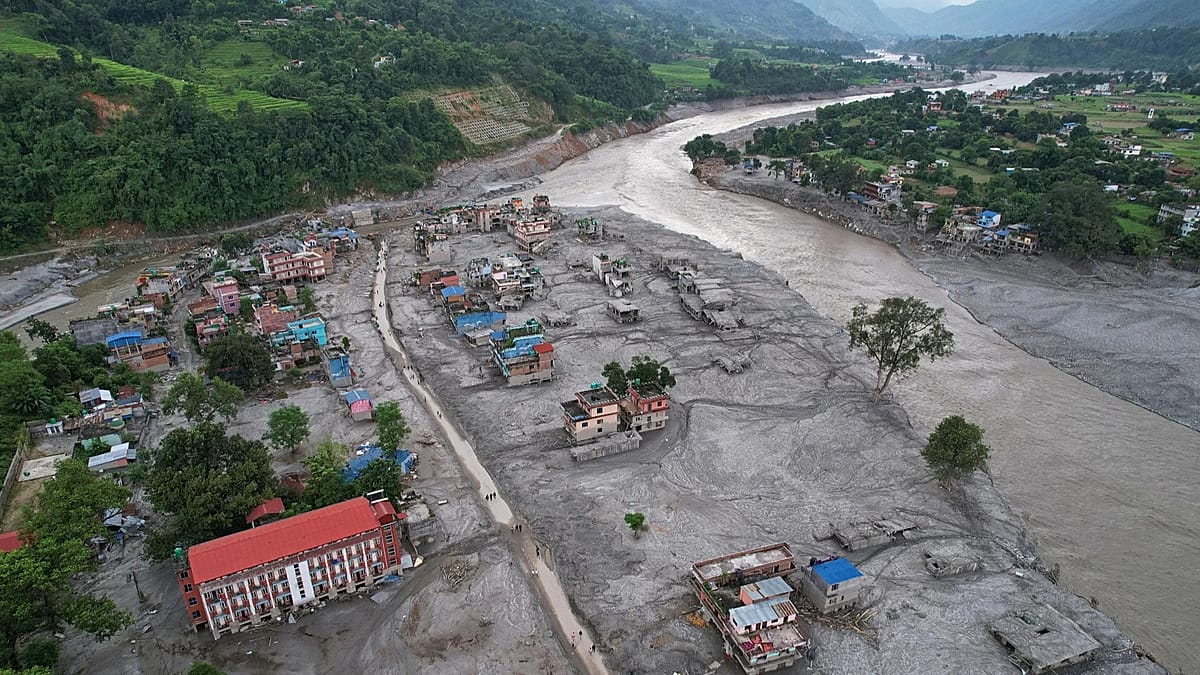
Instead, when she reached Betrawati, the small riverside town where her family lived, she found only a flat expanse of hardened grey silt.
asserted
she → reach → silt
“If my house is buried underneath, that means my Aama is still here underneath too, right?” the 23-year-old said quietly, standing where the family’s two-storey home once stood.
asserted
home → bury → ?
Her grandmother, who could barely walk, was last seen resting on her bed.
uncertain
who → walk → bed
Last month’s torrent of mud, rock and water, triggered by a glacial collapse in the mountains along the Nepal-China border, tore through settlements along the Trishuli River, killing at least 1,386 people on the Nepal side.
asserted
torrent → trigger → side
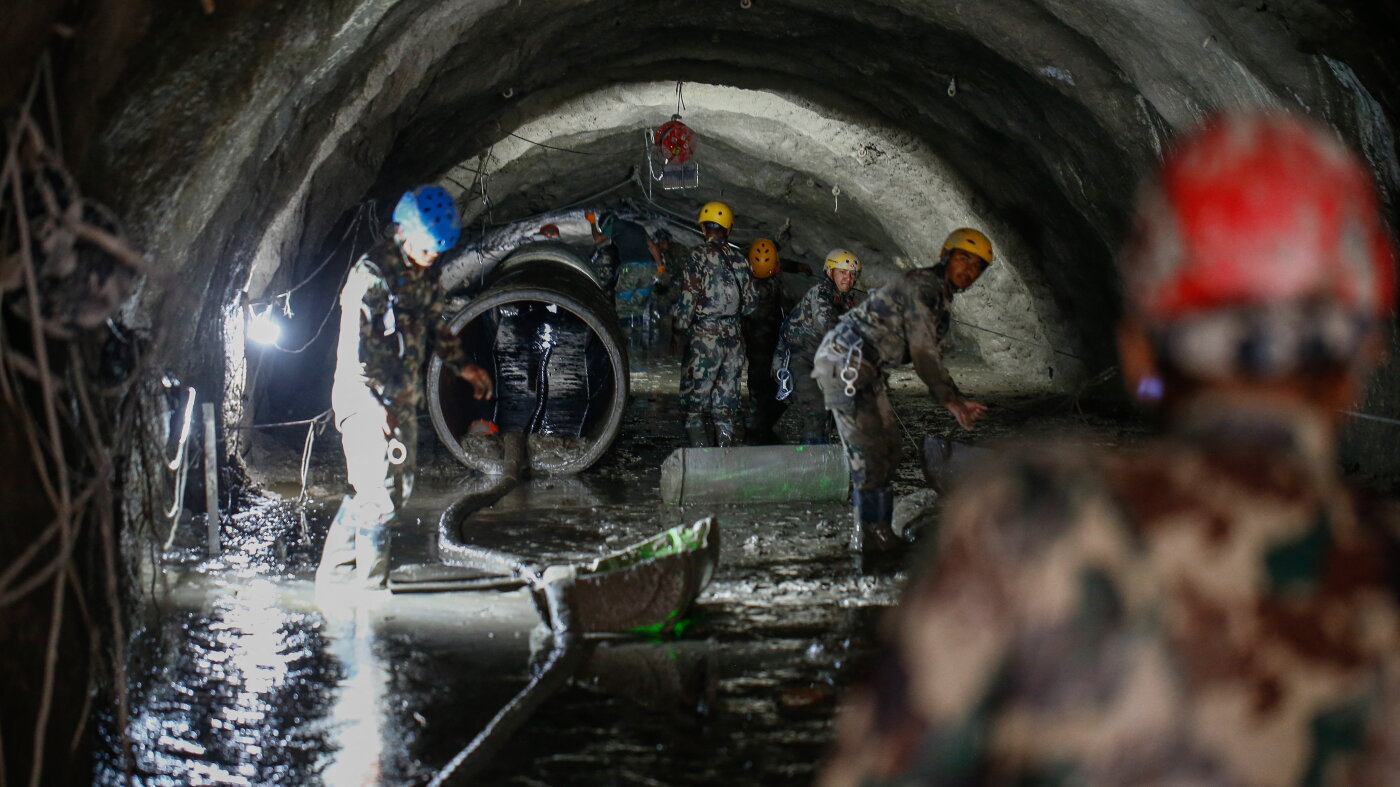
Authorities say 5,130 are still missing, and while searches continue, it has been days since anyone was found alive.
asserted
anyone → say → ?
To reach what used to be Betrawati, survivors now climb a steep hillside, cross a narrow ridge and descend into a wasteland.
asserted
survivors → reach → wasteland
Along the route lie scattered shoes, school ties and children’s backpacks – “silent evidence”, residents say, of the panic as people scrambled to flee the surging floodwaters.
asserted
people → lie → floodwaters
Garment business owner Kalpana Thapa Magar, 43, recalled the moment a friend phoned from upstream.
asserted
friend → recall → moment
“Run! Run!” she was told.
asserted
she → run → ?
“I just ran.
asserted
I → run → ?
When I looked back, everything was gone, even the people who had been running behind me,” she said.
asserted
she → look → me
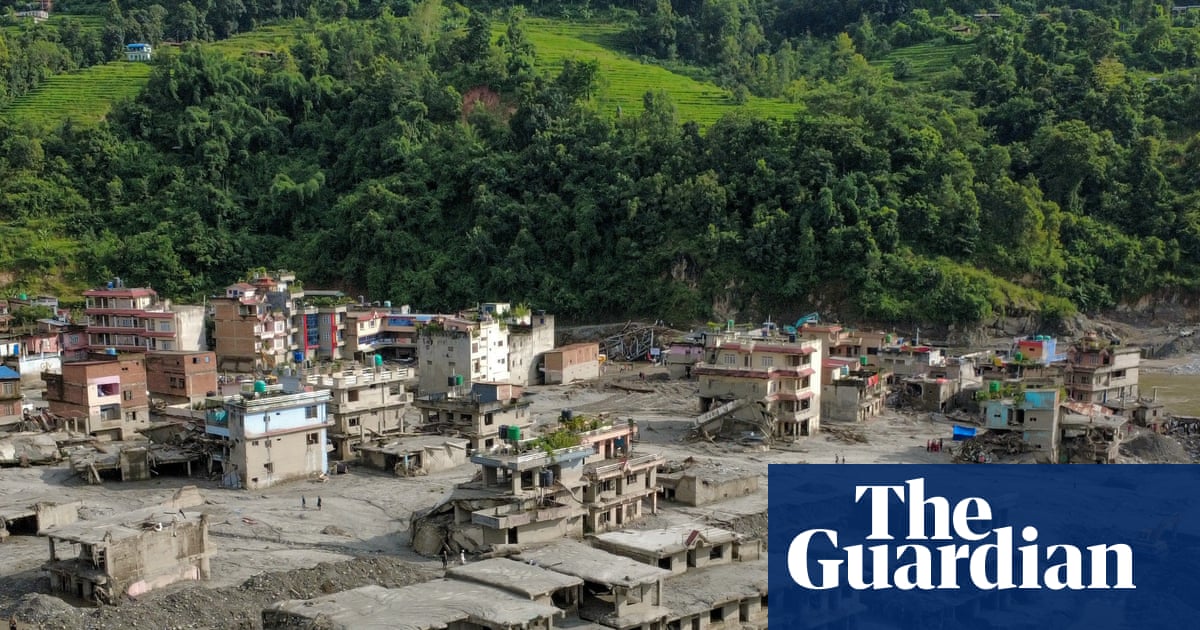
Downstream in Devighat, shattered shells of houses still stand.
asserted
shells → shatter → houses
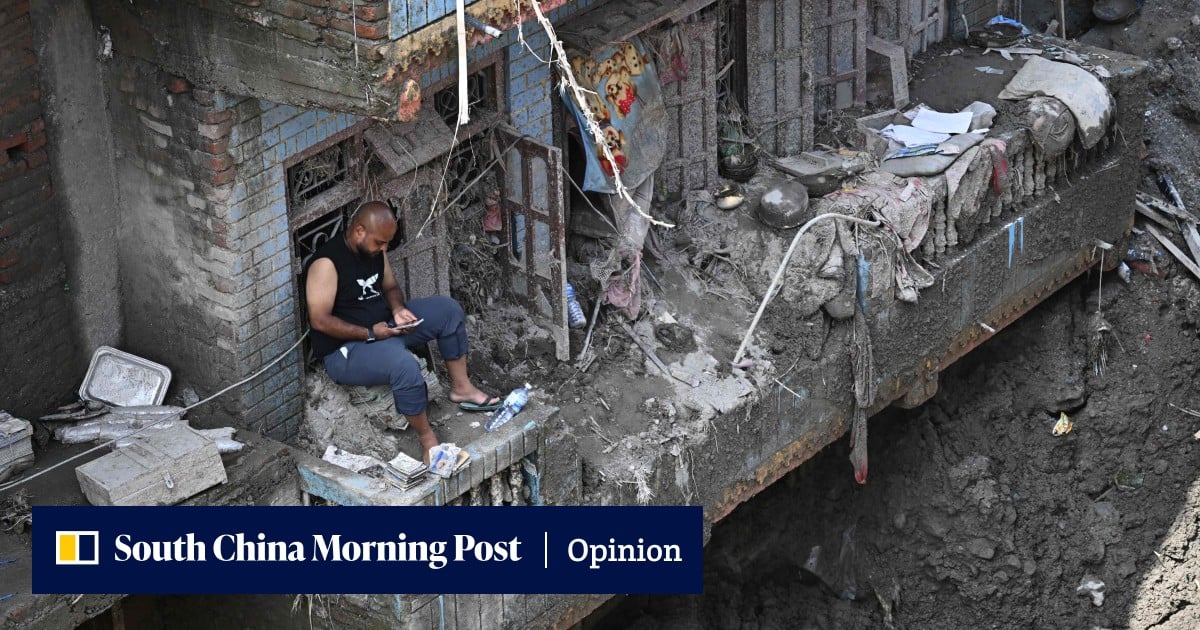
Some residents pick through the rubble for belongings, but many say there is no reason to return; the land itself has vanished beneath debris.
asserted
land → pick → debris
For many here, the disaster reopens wounds from Nepal’s 2015 earthquake, which killed nearly 9,000 people.
asserted
which → reopen → people
Teacher Sita Thapa Magar, 45, Kalpana’s older sister, said that after the quake, families were at least able to rebuild on their plots.
asserted
families → say → plots
“This time, we have lost everything,” she said.
asserted
she → lose → everything
On a single broken floor tile – the last visible trace of her home – 61-year-old Shanti Dangol clutched a photograph of the three-storey lodge she once ran for pilgrims and trekkers.
asserted
she → clutch → pilgrims
“Economically, people here had started doing well,” she said.
asserted
she → do → ?
“Now, nothing remains.”
asserted
nothing → remain → ?
 The Aporia