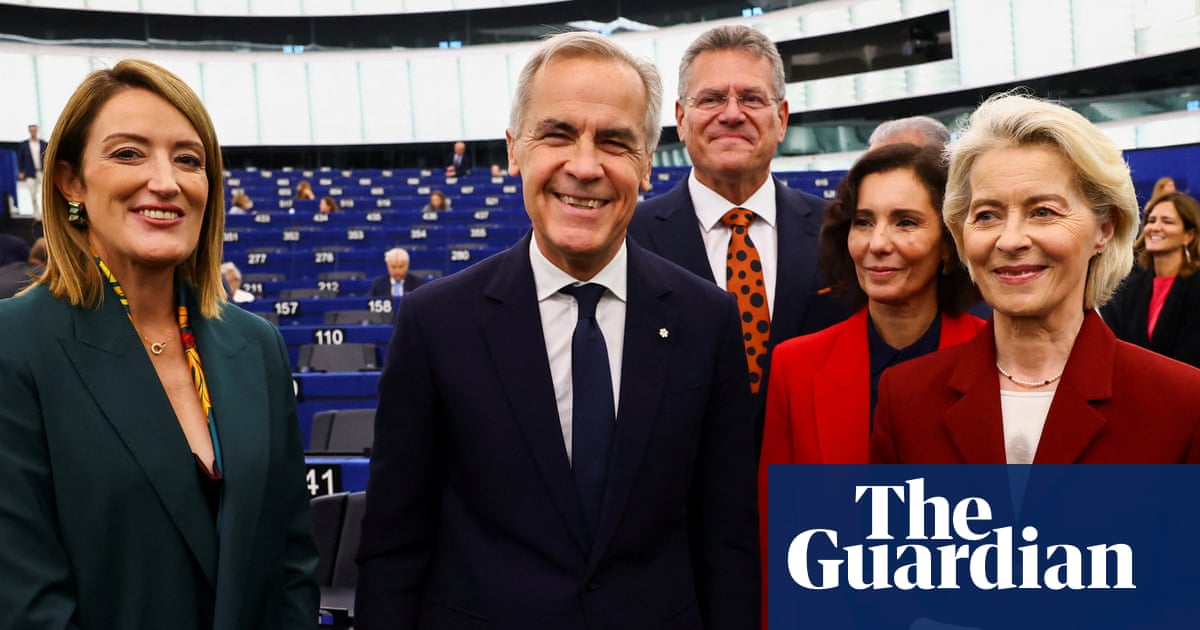
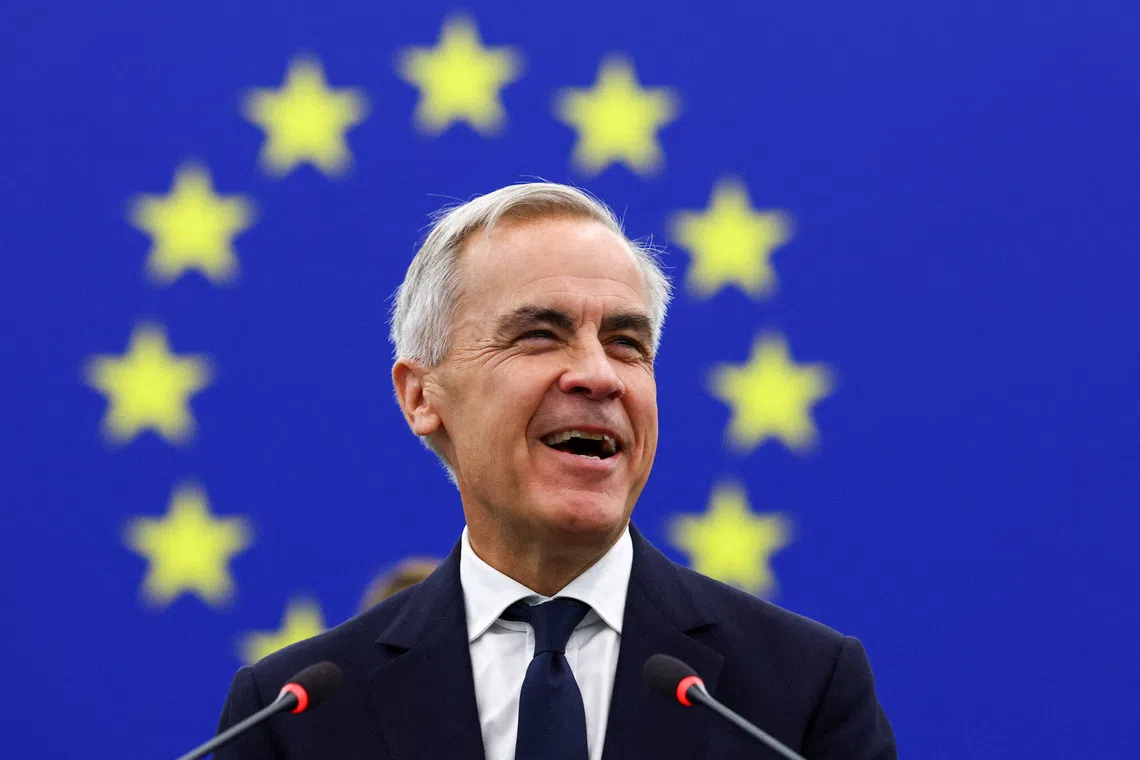
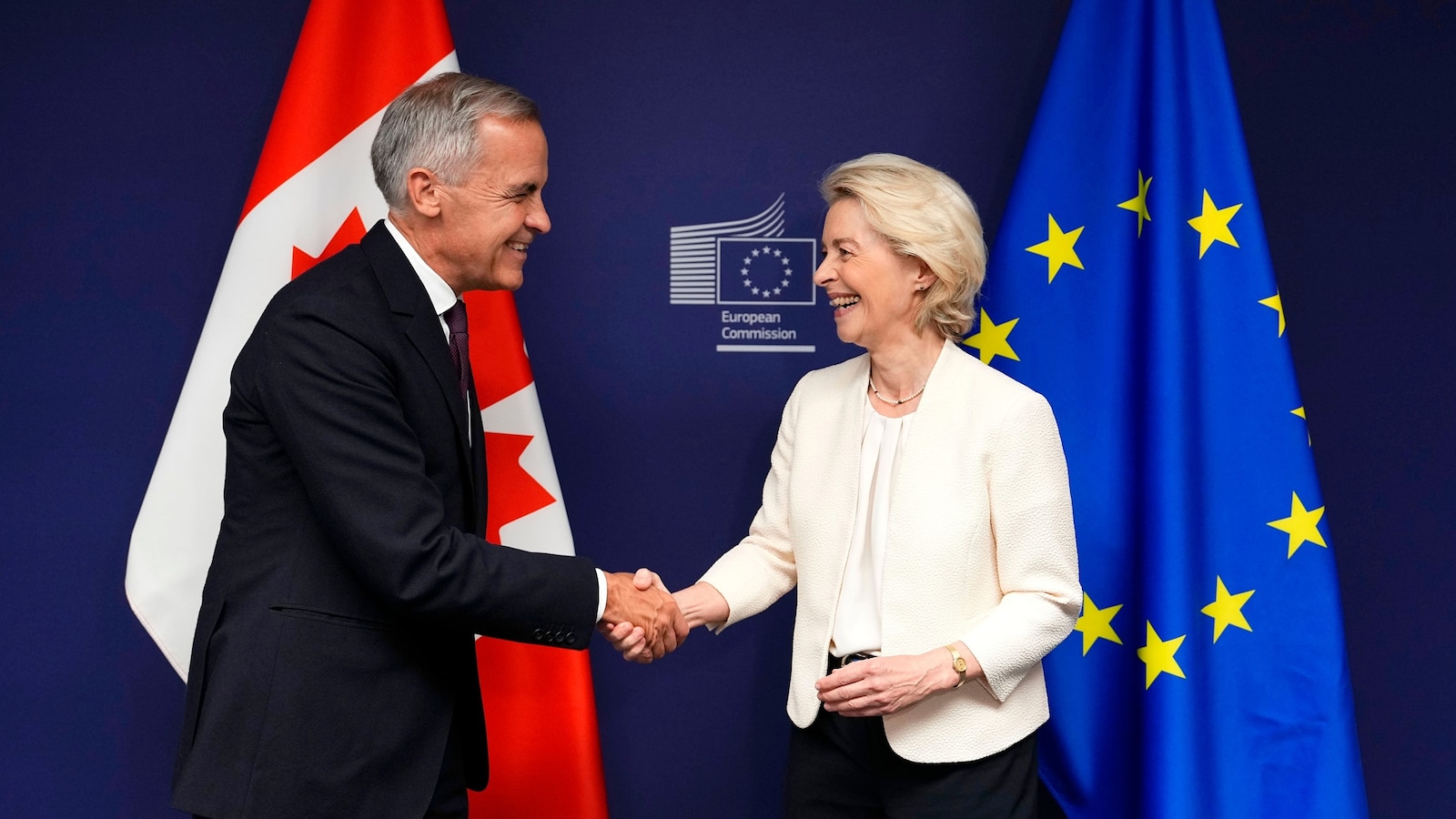
Canadian Prime Minister Mark Carney welcomed the European Union's proposal for Canada to become its first "associate member," emphasizing closer cooperation on defense, critical minerals, and energy security during a speech at the European Parliament in Strasbourg on Thursday. The EU's Commission President Ursula von der Leyen had proposed this status a day prior, though details of what it entails are unclear since it does not currently exist within the EU framework. US President Donald Trump reacted negatively to the proposal, threatening tariffs if he views it as a hostile act towards the United States. Carney stressed that Canada seeks sovereignty and is not aiming to form a new power bloc but rather to protect its democratic values.
Written locally by qwen2.5:14b on 2026-09-20,
using this article's own text rather than the other coverage of the
same event (that is the story summary below).
- Published
Canadian Prime Minister Mark Carney has welcomed the European Union's ambition for Canada to become its first "associate member", calling for closer cooperation on defence, critical minerals and energy security.
asserted
Canada → publish → defence
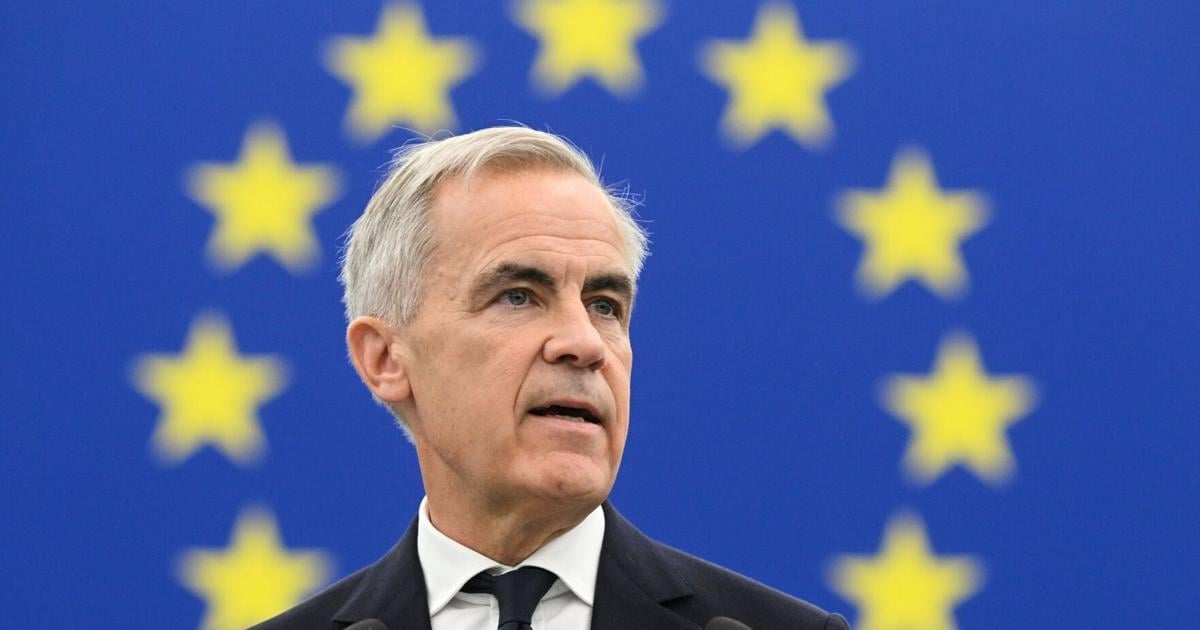
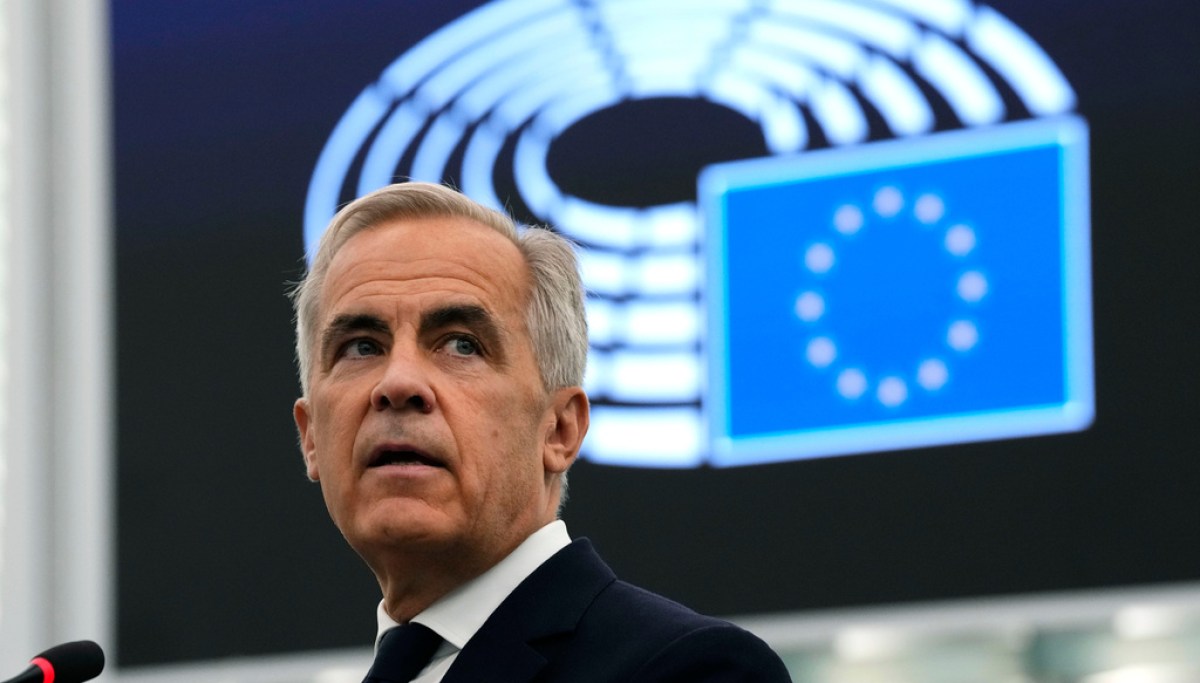
Carney told the European Parliament in Strasbourg on Thursday that Canada and Europe were "stronger together" in the face of "geopolitical rupture".
asserted
Canada → tell → rupture
His comments came a day after European Commission President Ursula von der Leyen proposed "opening the door" to Canada's associate membership, a status that does not currently exist.
asserted
that → come → membership
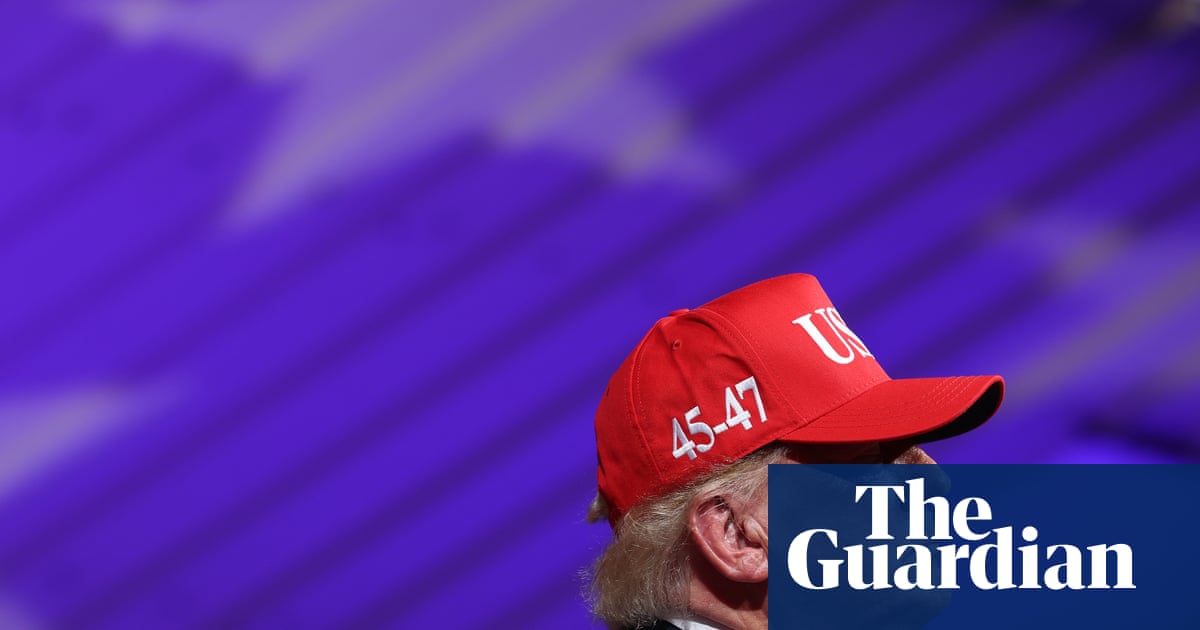
US President Donald Trump earlier called the idea "laughable" and threatened "very serious tariffs" on Europe if he considered it a "hostile act".
asserted
it → call → Europe
Canada and the US are locked in an escalating trade dispute, with each side imposing tit-for-tat tariffs after bilateral talks collapsed last month.
asserted
talks → lock → tariffs
"Today our societies are being battered by new storms," Carney said during his address, naming them as climate change, "the erosion of democratic norms" and the "weaponisation of trade".
asserted
Carney → batter → trade
"Economic integration is now being weaponised, tariffs being used to exert pressure," he said.
asserted
he → weaponise → pressure
"Financial mechanisms have been used for coercion.
asserted
mechanisms → use → coercion
Supply chains constitute weak points to be exploited."
asserted
chains → constitute → points
He said a Canada-EU alliance would create a "beacon for other democracies", while stressing the two sides were not seeking to form a new power bloc.
asserted
sides → say → bloc
"I am not proposing a third bloc in order to become a great-power rival - only with better manners," he told MEPs.
asserted
he → propose → MEPs
"This is about sovereignty, our ability to live as we wish.
asserted
we → live → sovereignty
We do not seek power to dominate others."
asserted
We → seek → others
Asked about the proposal on Wednesday, Trump told reporters: "If I think it's at all a hostile act, I will put very serious tariffs or stop trading with Europe, on many things.
"
asserted
I → ask → things
If it's a bad intention, we'll put very heavy tariffs on Europe, which is a possibility."
asserted
which → put → Europe
Responding to Trump's comments at a press conference following his address, Carney said: "This alliance is a positive process, that's my response to the American president."
asserted
that → respond → president
"Canadians are united that nobody is going to tell us what language we speak, no-one is going to dictate our culture, or with whom we can strike agreements internationally," he added.
asserted
he → unite → agreements
Carney said Canada was "not in a position, nor seeking, to become a full member of the European Union", describing the proposal as a "different framework".
asserted
Canada → say → framework
Speaking at the European Parliament on Wednesday, von der Leyen said she wanted Canada to become the EU's first associate member, with closer cooperation in areas such as manufacturing, technology, defence, energy critical minerals and economic security.
asserted
Canada → speak → manufacturing
It is unclear exactly what that relationship would look like because the "associate member" status does not currently exist within the EU and could take years to implement.
uncertain
status → look → years
Any new arrangement would require the agreement of all 27 EU member states, with some governments having previously expressed reservations about creating a new form of membership.
asserted
governments → require → membership
The EU and Canada already have a free-trade agreement, and cooperate in areas including trade, defence and research.
asserted
EU → have → trade
In his address, Carney said Canada and Europe could strengthen their "strategic autonomy" through "deep co-operation in the full range of strategic capabilities, including critical minerals".
uncertain
Canada → say → minerals
He said Canada could supply liquefied natural gas and hydrogen to support European energy security, while benefiting from Europe's expertise in clean-energy technologies.
He also proposed pooling technological resources and deepening "people to people ties", including allowing young people to "work, study and live where they want on either side of the Atlantic" through Canada joining the EU's Erasmus+ programme.
uncertain
Canada → say → programme
Carney described the proposed relationship as "a unique, positive approach that we will define together".
asserted
we → describe → that
He added that there would be a debate and a vote in the Canadian parliament on the proposals, but emphasised the two sides were still at the "start of a road".
asserted
sides → add → road
A Canada-EU summit is due to take place in Montreal at the end of October, where Carney said they would "drill down the details".
asserted
they → take → details
 The Aporia



.jpg?branch=production&width=5426&quality=75&auto=webp&crop=16:9)