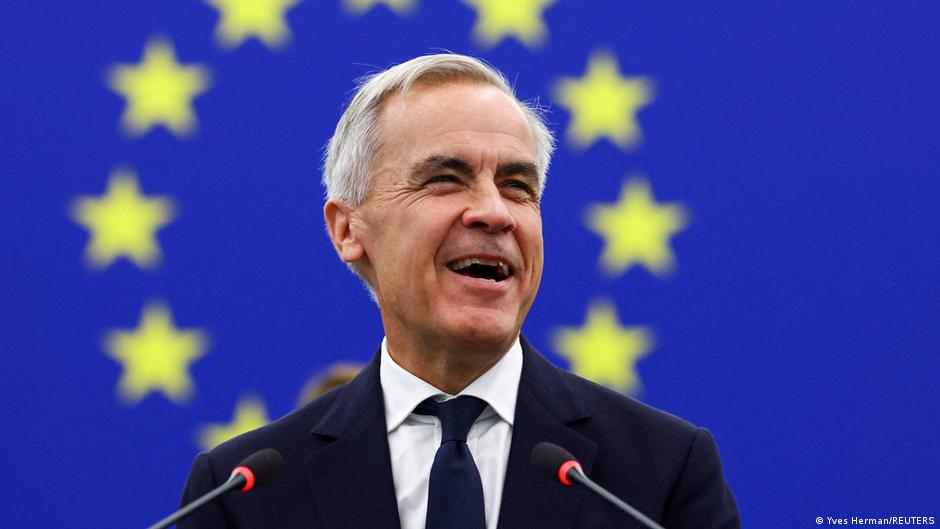
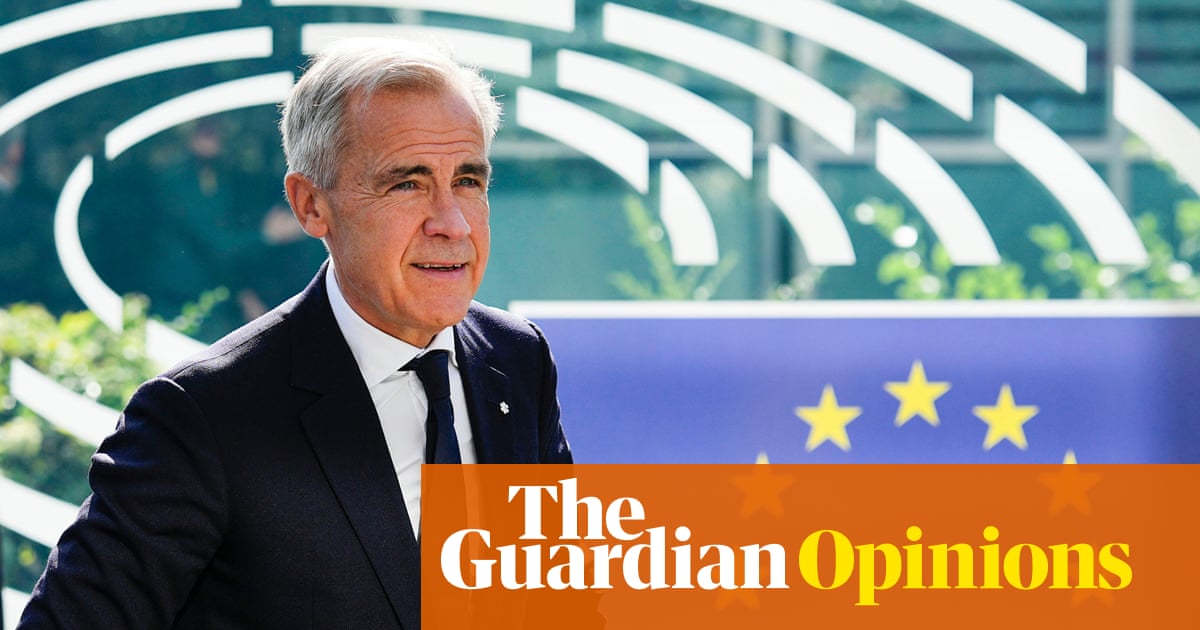
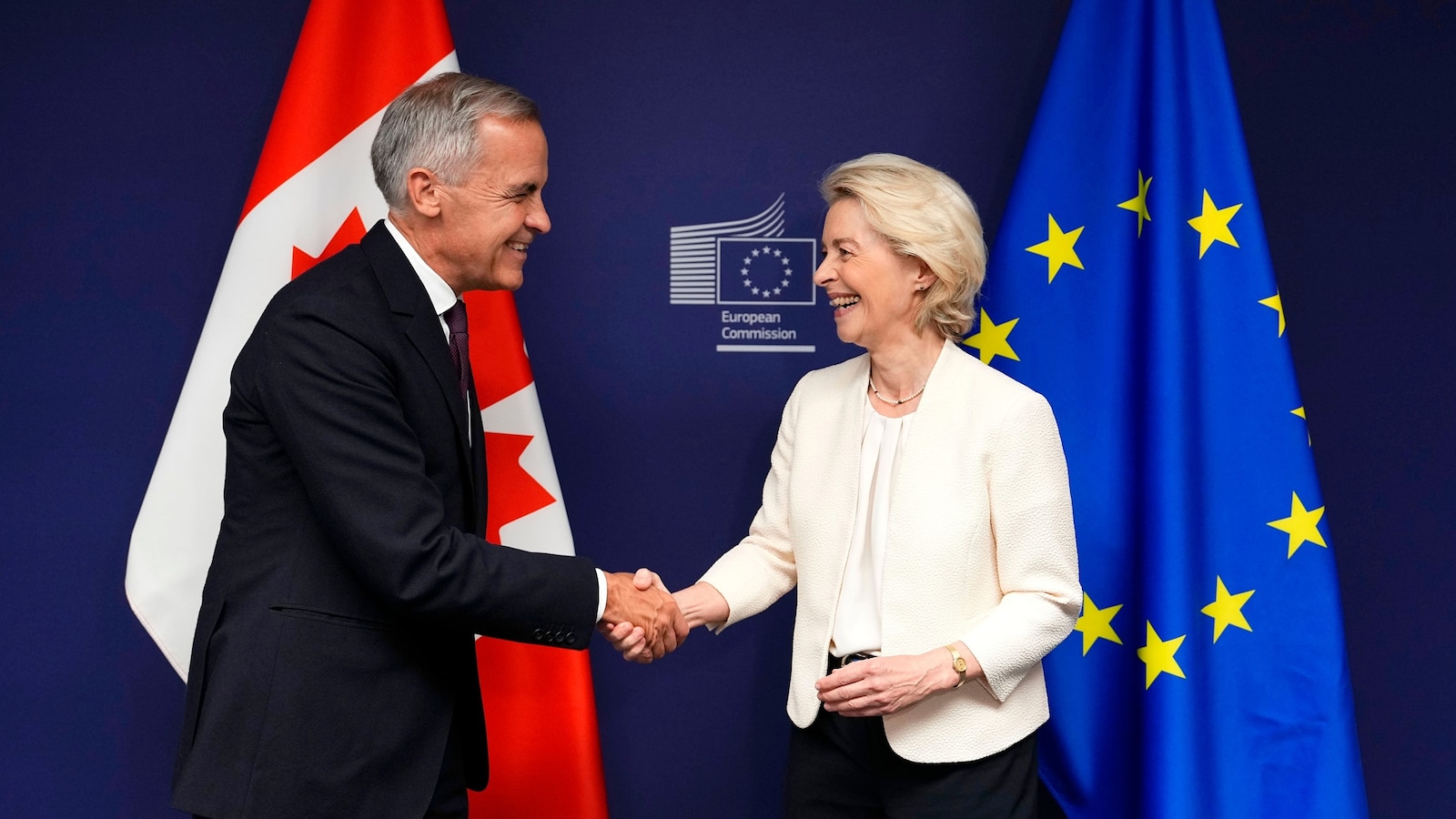
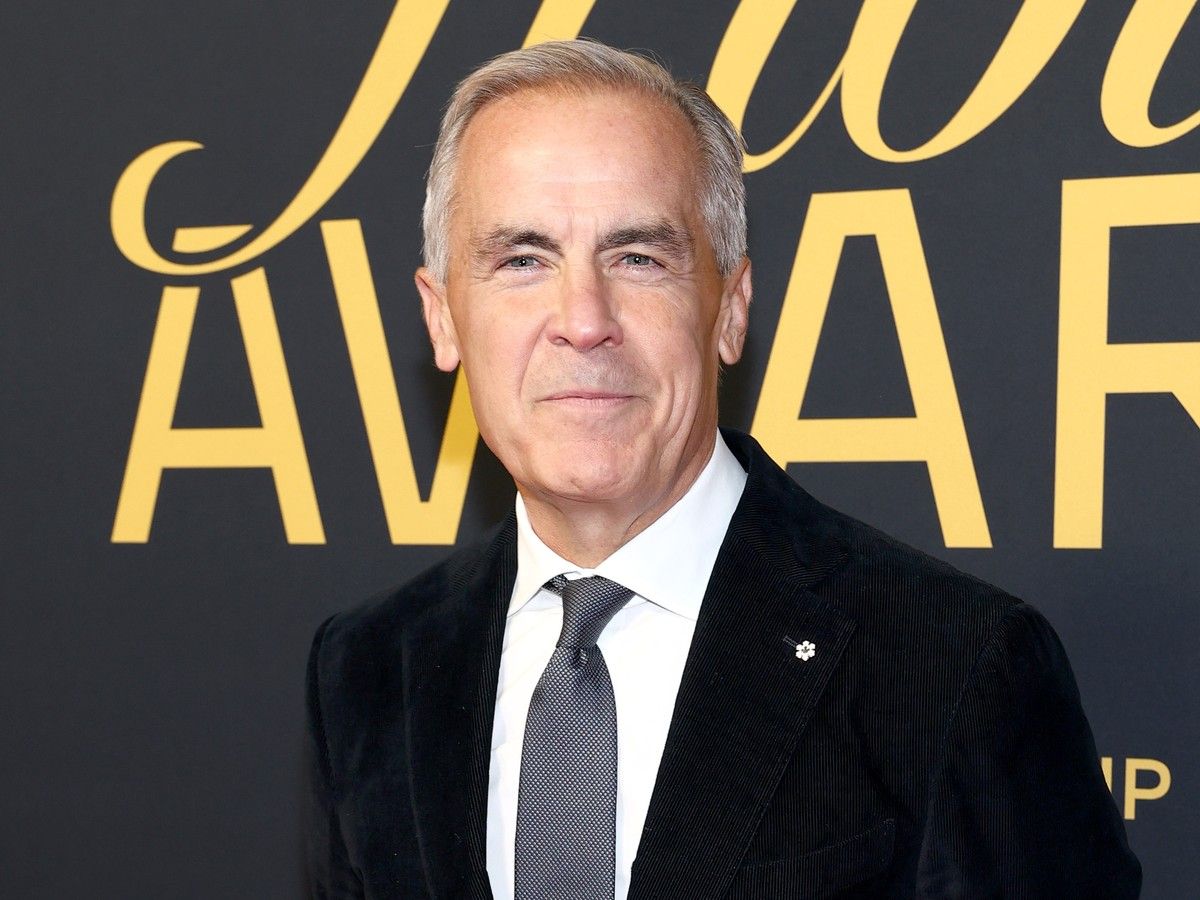
Canada and EU: A look at the bloc's special relationships

Read the original at Deutsche Welle ↗
Deutsche Welle · collected 2026-09-18 · by Matt Pearson

Quick Summary

European Commission president Ursula von der Leyen suggested that Canada could become the European Union's first associate member, aiming to strengthen ties amid tensions with the United States over tariffs. This proposed relationship is similar to existing models like Norway, Liechtenstein, and Iceland’s EFTA status or Switzerland’s bilateral agreements, which allow for participation in the EU single market without full membership benefits such as voting rights and customs union inclusion. The UK's recent post-Brexit trade agreement with the EU also provides a template for managing relationships outside of full membership.
Written locally by qwen2.5:14b on 2026-09-18, using this article's own text rather than the other coverage of the same event (that is the story summary below).

AI analysis runs on qwen2.5:14b, locally

Story summary

Prime Minister Mark Carney of Canada is exploring closer ties with the European Union (EU), aiming for a "unique alliance" rather than full membership. The push comes amid tensions with the United States, including tariffs on billions of dollars in cross-border trade. Reports suggest Canada and the EU are discussing ways to let Canadian goods, services, and workers move freely within strategic supply chains such as energy, AI, defense, and critical minerals. Carney is set to address the European Parliament in Strasbourg this week to pitch Canada's partnership proposal. While some officials initially hinted at an "associate member" status for Canada, Carney has clarified that discussions will focus on forming a unique alliance rather than seeking full EU membership or associate status.

Written for “Canada EU Alliance Talks” on 2026-10-05, grounded in this article and the 87 other(s) covering the same event.

Signals How these are calculated →

Claims extracted
33
claim-shaped sentences
Uncertain
6%
2 of 33 hedged
Leaning
not political
takes no side on a contested political question
Correction & hedging signals
95.2
corrections and hedging in what we collected; not a measure of accuracy
Outlets on this story
88
Politics
Narrative spread
1
articles carrying this framing
Analyzed 2026-09-18 · how these are computed

Story

📰 Canada EU Alliance Talks
Politics · 88 article(s) covering the same event. See how they differ ↓

How this is being covered How these are calculated →

Article leaning vs. publisher reliability
Source leaning vs. consistency

Compared with similar articles

This article reads unscored and hedges 6% of its claims. Each row says how that neighbour differs.
The Guardian · 0.86 cosine similarity
⚖️ Leans left 🔴 10% hedged 3 of 29 📰 publisher trust 60
“Both articles describe Ursula von der Leyen inviting Canada to be the EU's first 'associate member', reflecting a strategic alignment, at around the same time.”
CBC News
⚖️ leaning not scored 🔴 7% hedged 2 of 28 📰 publisher trust 77
“Both articles discuss the same announcement by Ursula von der Leyen about potentially making Canada an 'associate member' of the EU and include similar statements from Canadian Prime Minister Mark Carney.”
ABC News (US) · 0.90 cosine similarity
⚖️ Leans left 🔴 5% hedged 1 of 22 📰 publisher trust 59
“Both articles describe EU offering Canada 'associate membership' amid US-Canada trade tensions, referencing the same dialogue between Ursula von der Leyen and Mark Carney.”
National Post
⚖️ leaning not scored 🔴 19% hedged 3 of 16 📰 publisher trust 60
“The articles describe different phases of discussions between Canada and the EU, not the same specific incident.”
The Straits Times
⚖️ leaning not scored 🔴 0% hedged 0 of 7 📰 publisher trust 59
“The articles discuss different aspects of Canada's relationships with other countries and do not describe the same specific incident.”
Toronto Star
⚖️ Leans left 🔴 8% hedged 5 of 60 📰 publisher trust 63
“Both articles describe Ursula von der Leyen proposing Canada becoming an associate member of the EU, with a positive response from Canadian Prime Minister Mark Carney on the same day.”
CBC News · 0.89 cosine similarity
⚖️ Leans left 🔴 13% hedged 8 of 60 📰 publisher trust 60
“While both articles discuss similar themes of Canada-EU relations and Von der Leyen's idea for an associate membership, they describe different stages or aspects of this relationship with distinct dates and speeches.”
ABC News (AU)
⚖️ leaning not scored 🔴 13% hedged 4 of 30 📰 publisher trust 61
“While both articles discuss the possibility of Canada becoming an 'associate member' of the EU, they describe different stages or aspects of this process and are not reporting on a single identical incident.”
Toronto Star
⚖️ leaning not scored 🔴 0% hedged 0 of 1 📰 publisher trust 63
“The articles discuss general diplomatic relations and potential alliances between Canada and the EU, but they do not describe the same specific meeting or incident.”
Al Jazeera
⚖️ Leans left 🔴 13% hedged 7 of 55 📰 publisher trust 60
“Both articles discuss the European Union's proposal to make Canada its first associate member and the reactions it has sparked.”

Publisher

Deutsche Welle · 330 article(s) · 0 correction(s) detected
No corrections detected for this publisher. That may mean careful reporting, or simply that nothing has been checked.

Who wrote this

Matt Pearson
2 article(s) here · 1 carrying a prediction
🔮 He may not hog the limelight in the same way as Donald Trump, Elon Musk, or many of his other friends and associates, but Peter Thiel has a fair claim to be one of the world's most influential figures — as well as one of its richest.
2026-09-20 · assertive framing · Peter Thiel: Power, Palantir, and the antichrist
🔮 In that spirit, and with both parties grasping for an effective way to deal with Donald Trump and his tariffs, von der Leyen floated the idea that Canada could become the European Union's first associate member on Thursday.
Also by Matt Pearson
Nothing else under this byline is closely related to this article, so these are simply their most recent.

Topics

Canada EFTA Germany Iceland Switzerland

Subjects

Switzerland GPE · 7× EFTA ORG · 3× Canada GPE · 2× Germany GPE · 2× Iceland GPE · 2× Canadian NORP · 1× Donald Trump PERSON · 1× European Commission ORG · 1× Mark Carney PERSON · 1× Ursula von der Leyen PERSON · 1×

Narrative

EFTA and single market access — Norway, Liechtenstein, Iceland Under this model, the ‘European Free Trade Association (EFTA)' countries are part of the EU's internal market, so people, goods and services can move freely in the Schengen area.
framing: assertive · carried by 1 article(s) · first seen 2026-09-18
🔮 In that spirit, and with both parties grasping for an effective way to deal with Donald Trump and his tariffs, von der Leyen floated the idea that Canada could become the European Union's first associate member on Thursday.
2026-09-18 · Deutsche Welle
Canada and EU: A look at the bloc's special relationships · assertive framing

Claims (33 extracted, 2 hedged)

Canada and the EU "see the world with the same eyes," according to European Commission president, Ursula von der Leyen. uncertain
Canada → see → president
And the feeling appears mutual. asserted
feeling → appear → ?
"Our commitment to the rule of law, and our unyielding defense of human dignity, individual freedom and democracy share the same deep roots, the same unwavering dedication," Canadian Prime Minister Mark Carney said. asserted
Carney → share → roots
In that spirit, and with both parties grasping for an effective way to deal with Donald Trump and his tariffs, von der Leyen floated the idea that Canada could become the European Union's first associate member on Thursday. uncertain
Canada → grasp → Thursday
Given the concept of associate membership does not yet exist, it's difficult to determine exactly what that would mean. asserted
that → give → what
Germany proposed a similar arrangement for Ukraine earlier this year, only for Volodymyr Zelenskyy to reject the idea on the grounds that the country wants full membership. asserted
country → propose → membership
Though not officially recognized as associates, there are plenty of countries that have strong ties or agreements with the bloc. asserted
that → recognize → bloc
DW looks at some of them and how they work. asserted
they → look → them
EFTA and single market access — Norway, Liechtenstein, Iceland Under this model, the ‘European Free Trade Association (EFTA)' countries are part of the EU's internal market, so people, goods and services can move freely in the Schengen area. asserted
people → move → area
The three countries also follow many EU rules in areas like tourism, environment and education. asserted
countries → follow → tourism
The countries have no part in the decision-making process, bar some input into policy preparation, such as participation in expert groups. asserted
countries → have → groups
They are also not in the customs union, do not use the Euro and are not bound by the EU's common trade policy or justice laws. asserted
They → use → policy
Iceland held a referendum on whether to go for full membership last month, but the government's push to do so failed and they remain an EFTA country. asserted
they → hold → membership
While it borders four EU member states (Germany, Italy, France and Austria), Switzerland has never been a full member. asserted
Switzerland → border → states
Instead, more than 120 bilateral deals have been agreed upon by the EU and Switzerland over the last 50 years. asserted
deals → agree → years
These relate to areas such as trade, transport, security and education. asserted
These → relate → trade
A new package of deals was finalized last year, 20 years after they were last agreed. asserted
they → finalize → deals
More than 1.5 million EU citizens live and work in Switzerland, while 466,200 Swiss have gone the other way. asserted
Swiss → live → Switzerland
That is possible as Switzerland is also part of theSchengen area, allowing for free movement of people across borders. asserted
Switzerland → allow → borders
Switzerland makes financial contributions to a number of EU member states that joined after expansion in 2004, mostly in the east of Europe, but it has no EU voting rights and adopts only some EU laws. asserted
it → make → laws
Switzerland can also participate in certain EU programs and research projects, through individual negotiations. asserted
Switzerland → participate → negotiations
The post Brexit agreement — UK More than four years after the UK voted to leave the EU in a 2016 referendum, the two parties signed a trade and cooperation agreement. asserted
parties → vote → agreement
Negotiations were fraught and complex, and the UK now has limited access to the EU market and is aligned with the EU on some areas of policy and regulation, for now at least. asserted
UK → have → policy
There is no longer free movement of people from the UK to the EU or vice versa, and the UK are not in the single market or the customs union. asserted
UK → be → market
Since the center-left Labour party replaced the Conservatives in government in 2024, talk of a return to the customs union and alignment on other selected EU policy areas has been more frequent. asserted
talk → replace → areas
But any return to full member status seems unlikely for now. asserted
return → seem → status
Stabilization and association process – Western Balkan countries The EU has not admitted a new member state since Croatia in 2013. asserted
EU → admit → 2013
Several nearby countries in the region are hoping to join the bloc, but must first fulfill a number of criteria under the EU's "stabilization and association process" designed for the "Western Balkans." asserted
countries → hop → Balkans
Under the plan, the EU has promised to "prepare Western Balkan partners for accession through economic reforms and investment and to bring some of the benefits of EU membership to citizens in the region. asserted
EU → promise → region
States must first become official candidates for member state status by applying to the EU, with each of the member nations agreeing to them as a candidate country. asserted
each → become → country
Then follows a process of negotiation, such as that currently underway with Ukraine, Serbia and Montenegro. asserted
process → follow → Ukraine
Finally, an accession treaty is prepared, which the European Commission, the European Council and the European Parliament must agree with. asserted
Commission → prepare → which
Only once that treaty has been signed and ratified by all member states and the candidate country will said country become an EU member. asserted
country → sign → states

💬Give feedback
🕘History 🎫Support