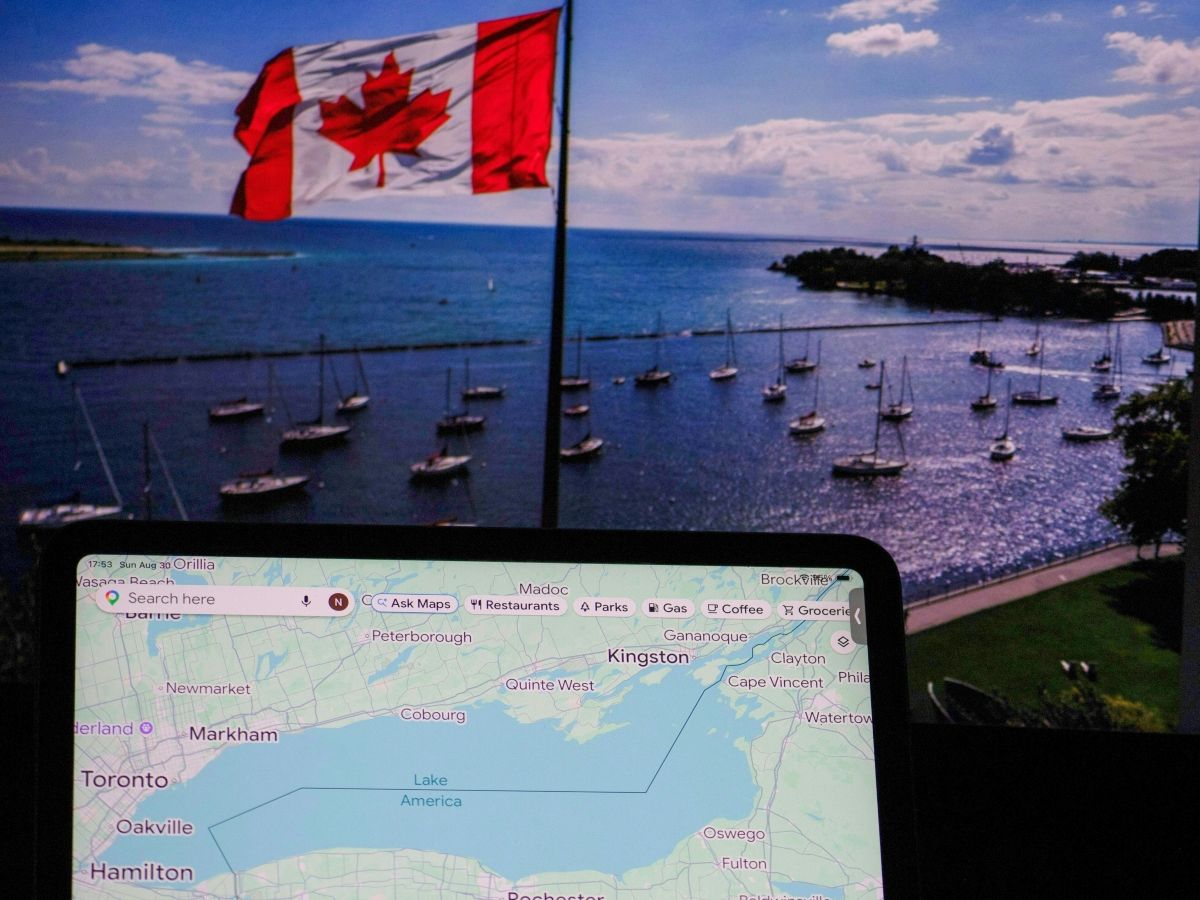
President Donald Trump's latest temper tantrum over Canada, including the renaming of Lake Ontario as Lake America after the collapse of trade negotiations, is premised on the claim that "Canada has been ripping off the United States for decades."
uncertain
Canada → include → decades
At least, that's what the White House insisted in an August 25 press release about the tariff dispute.
asserted
House → insist → dispute
But, if that's true, why are Canadians poorer than Americans and falling further behind?
asserted
Canadians → fall → Americans
You are reading The Rattler from J.D. Tuccille and Reason.
asserted
You → read → Tuccille
Americans Grow Wealthier More Quickly Than Canadians
A new study from Canada's Fraser Institute points out that while our northern neighbors started the century with high hopes for their economic prospects, the years since have shown them lagging Americans.
asserted
them → grow → Americans
If Canadians are taking advantage of us, they're doing a remarkably poor job of it.
asserted
they → take → it
"In 1999, inflation-adjusted gross domestic product (GDP) per person in the US was CA$10,766 higher than in Canada.
asserted
product → adjust → Canada
By 2024, that gap had more than doubled to CA$23,757," write study authors Grady Munro, Jake Fuss, and Joel Emes.
asserted
Munro → double → CA$23,757
"Similarly, in 2010, inflation-adjusted median employment income in the US was CA$6,126 higher than in Canada.
asserted
income → adjust → Canada
By 2024, that gap had increased to CA$8,663.
asserted
gap → increase → CA$8,663
The Fraser study notes that since 1999, government-sector employment has been growing faster than private-sector employment in Canada.
asserted
employment → note → Canada
And while Canadian workers have increased their productivity by 26.7 percent since 1999, they've still lost ground as Americans increased productivity by 67.9 percent.
asserted
Americans → increase → percent
Canada's relatively slow growth in prosperity as compared to the United States is, no doubt, frustrating for our northern neighbors.
asserted
growth → compare → neighbors
As international communications strategist James Stranko noted last week in a Wall Street Journal column, Canada has defined itself since its founding as the "un-America" and "almost all of Canada's major moments of national unity were born out of rejection of, or protection from, American power."
The Canadian Century That Wasn't
asserted
That → note → rejection
The Fraser authors underline this point, quoting Sir Wilfrid Laurier, Canada's seventh prime minister, who said in 1904, "the nineteenth century has been the century of the United States development….The twentieth century shall be the century of Canada and Canadian development."
asserted
century → underline → Canada
When the 20th century turned out fine, but not brilliantly so, for the northern country, hopes for a Canadian breakthrough were transferred to the 21st century.
asserted
hopes → turn → century
Again, Canada has done all right, but not especially well by comparison to the southern giant that Canadians measure their own achievements against.
asserted
Canadians → do → achievements
"Policymakers have thus far squandered the Canadian Century," adds the Fraser study.
asserted
study → squander → Century
"In particular, Canada began to truly squander this opportunity post-2014.
asserted
Canada → begin → opportunity
Prior to 2014, Canada largely kept pace with, or in some cases exceeded the US, across multiple measures."
asserted
Canada → keep → measures
World Bank figures demonstrate the problem.
asserted
figures → demonstrate → problem
The gap largely disappeared a decade later—only to widen again within a few years.
asserted
gap → disappear → years
The Fraser study draws its data from different sources, but they show a similar lag in Canada's relative economic performance.
"
asserted
they → draw → performance
From 1999 to 2024, GDP per person in Canada grew by 23.8%, while the United States experienced a 41.5% increase over the period.
asserted
States → grow → period
Put differently, GDP per person in the United States has grown 1.7 times faster than in Canada since 1999," write Munro, Fuss, and Emes.
asserted
Munro → Put → 1999
Or, to put it another way, Canadian per capita GDP was 81.7 percent of the figure for the U.S. in 1999 and 71.5 percent of American per capita GDP in 2024.
asserted
GDP → put → 2024
Looking at another measure, as of 2010, the Fraser study observes, "median income in Canada was $32,580 compared to $38,706 in the United States, leaving an income gap of $6,126 between the two countries" in a comparison using Canadian dollars.
asserted
income → look → dollars
While that gap narrowed over the next few years, "by 2024, median employment income had risen to $37,361 in Canada and $46,024 in the United States, leaving an income gap of $8,663."
asserted
income → narrow → 8,663
Canada has been growing more prosperous over the years, but it's losing ground when compared to the increasing wealth of the United States.
asserted
it → grow → States
Hobbled by a Growing Government
A significant part of the problem is that government employment has been growing faster north of the border than private sector employment.
asserted
employment → hobble → employment
In 1999, private sector jobs represented 85.8 percent of employment in the U.S. and 81.2 percent in Canada.
asserted
jobs → represent → Canada
As of 2024, private-sector employment had slightly risen to 86.5 percent of all jobs in the U.S. but fallen to 78.5 percent of Canadian jobs.
asserted
employment → rise → jobs
That means the private sector must shoulder a growing burden to fund the expanding government: "New government-sector jobs impose a corresponding cost through the tax system, which limits the extent to which government-sector employment growth contributes to overall economic growth."
asserted
growth → mean → growth
Also, labor productivity has declined for Canadian government workers while increasing in the private sector.
asserted
productivity → decline → sector
To an even greater extent than in America, Canada's private sector is hobbled by an unproductive and expensive government.
asserted
sector → hobble → government
"Despite some early hopes prior to 2014, Canada has made virtually no economic progress relative to its southern neighbour and has instead fallen further behind where it stood at the turn of the century," the Fraser authors conclude.
asserted
authors → make → century
It's difficult to see where Canada has been "ripping off the United States," no matter what the Trump administration claims.
uncertain
administration → see → what
Instead, Canada has hampered its own economic prospects with a growing government sector that drains wealth from the productive private sector.
asserted
that → hamper → sector
Yes, Canada has some foolish protectionist trade policies—including barriers between provinces—but so does the United States, especially under the Trump administration.
asserted
States → have → administration
Both are now doubling down on self-harming tariffs.
asserted
Both → double → tariffs
…and 3 more, not listed.
 The Aporia