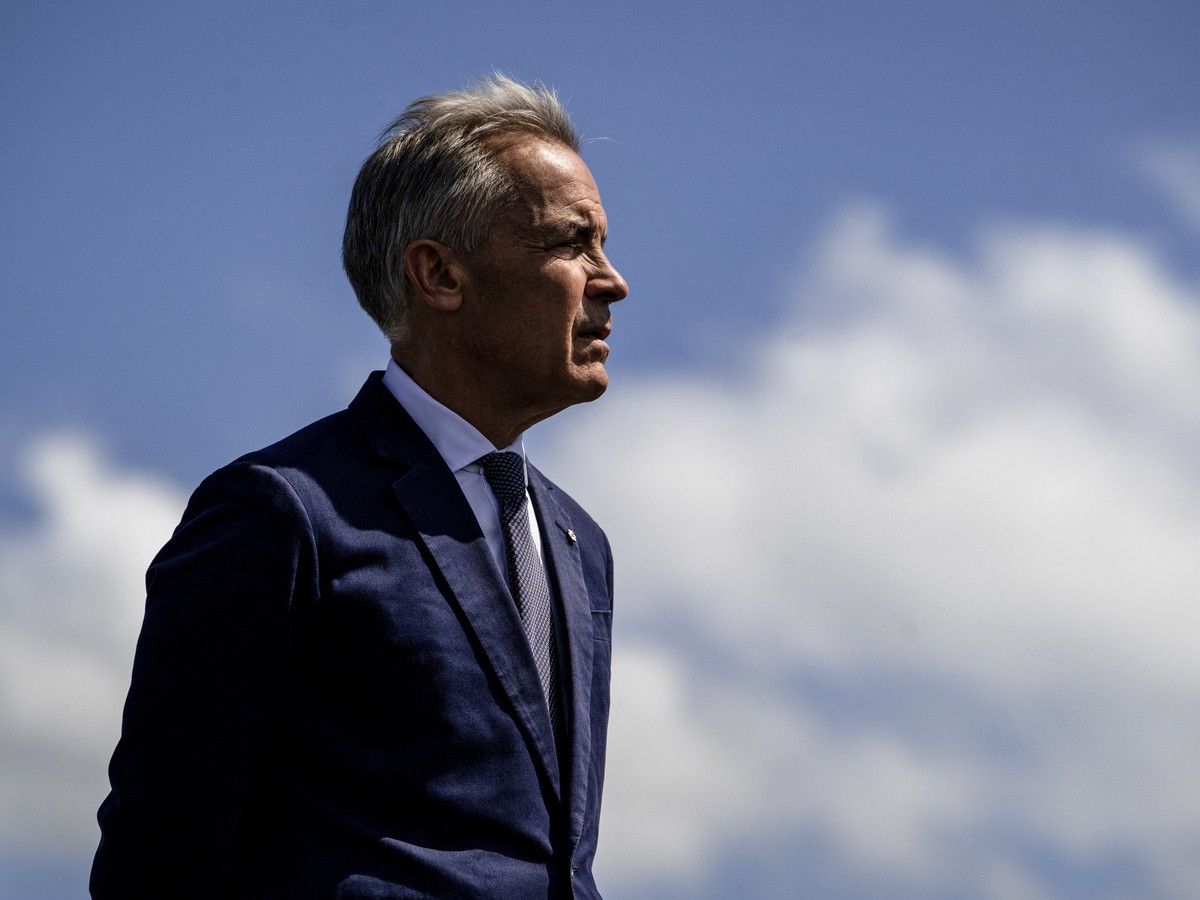
The US-Canada 'divorce' and the $1.2 trillion fallout

Just In · collected 2026-09-06 · by Norman Hermant
Read the original at Just In ↗

Summary

Canadian Prime Minister Mark Carney ended comprehensive trade negotiations with the US two weeks ago, and Canadians are now bracing for potential economic consequences. Canada is already facing tariffs on key exports such as steel, lumber, and automobiles. According to a recent poll, three-quarters of Canadians approved of Carney's decision to walk away from trade talks. Trade consultant Kelly Ann Shaw notes that while Americans may be less stressed about the current dynamic than Canadians are.
Written by the local model on 2026-09-06, using this article's own text rather than the other coverage of the same event (that is the story summary below).

Signals How these are calculated →

Claims extracted
36
claim-shaped sentences
Uncertain
8%
3 of 36 hedged
Leaning
Leans left
of the writing, not the subject
Publisher trust
96.3
red-flag proxy, not a credibility rating
Outlets on this story
316
Politics
Narrative spread
1
articles carrying this framing
Analyzed 2026-09-06 · how these are computed

AI analysis (generated at analysis time, not now)

Story summary

Here are the articles with a summary of each:

Article 1: Trump Announces "Crushing Economic Operation" on Iran

President Trump announced a "crushing economic operation" on Iran, which he said would amount to "economic warfare." The move comes as tensions between the US and Iran remain high.

Article 2: Trump Contradicts Vance, Says Nukes, Not Oil Prices, No. 1 Priority in Iran

President Trump contradicted Vice President JD Vance's statement that keeping oil prices down was a top priority for the administration. Trump said that preventing Iran from obtaining nuclear weapons is the "number one goal."

Article 3: US Businessowners Don't Want to Leave Their Canadian Suppliers, but 50% Tariffs Might Leave Them No Choice

US business owners are worried about the impact of 50% tariffs on their relationships with Canadian suppliers. They say they would have to choose between breaking away from long-standing relationships or risking significant financial losses.

Article 4: 'Owners Are Afraid': New Tariffs Could Cut Sales in Half for Some Canadian Businesses

Canadian businesses are bracing themselves for the impact of new US tariffs, which could cut sales in half. Business owners say they will have to reconsider their supply chains and potentially abandon long-standing relationships with Canadian suppliers.

Article 5: Trump Announces Economic Sanctions on Iran

President Trump announced economic sanctions on Iran, including a ban on buying Iranian oil and freezing the country's assets.

Article 6: Iran Shifts from Retaliation to Offense in War with US

Iran's military has begun signaling a shift from retaliation to offense in its war with the US. Analysts say this could reflect Tehran's belief that it holds leverage to advance its demands and break the stalemate.

Article 7: Trump Says Negotiations with Iran "Is Like Chess"

President Trump said negotiations with Iran are like chess, implying that the process is complex and requires careful strategy.

Article 8: US Imposes New Sanctions on Iran's Financial Sector

The US imposed new sanctions on Iran's financial sector, targeting key institutions and individuals involved in the country's banking system.

Note: Some of these articles may be related to each other, but I have tried to provide a summary of each one separately.

Written for “US-Iran Trade Conflict Escalation” on 2026-09-07, grounded in this article and the 315 other(s) covering the same event.
Why this leaning score
The article's own words the score was based on. Each is quoted verbatim and was checked against the article text before being stored, so you can find it in the original.
Score -0.35 Confidence high
Leaning score -0.35 for article 5389 (high confidence, 2 verified quotes) · logged 2026-09-06

Story

📰 US-Iran Trade Conflict Escalation
Politics · 316 article(s) covering the same event.

How this is being covered How these are calculated →

Article leaning vs. publisher reliability
Source leaning vs. consistency

Compared with similar articles

This article reads leans left and hedges 8% of its claims. Each row says how that neighbour differs.
National Post
⚖️ Leans strongly right further right than this 🔴 3% hedged 1 of 32 📰 publisher trust 96
“Both articles mention Donald Trump's actions as causing tensions between Canada and the US, specifically mentioning the trade war and Lake Ontario being renamed to 'Lake America'”
www.thestar.com - RSS Results of type article
⚖️ Leans left 🔴 7% hedged 4 of 58 📰 publisher trust 62
“The articles mention different topics: one discusses tourism and travel between US and Canada, while the other talks about trade disputes and business impact.”
World News Today: International News Headlines - The Hindu | The Hindu
⚖️ leaning not scored 🔴 no claims extracted 📰 publisher trust 96
“Both articles are dated September 6, 2026 and mention similar tensions between the US and Canada in their trade relationship”
www.thestar.com - RSS Results of type article
⚖️ Leans strongly left further left than this 🔴 2% hedged 1 of 49 📰 publisher trust 62
“Both articles report on a trade dispute and tensions between the US and Canada, mentioning a specific deadline (Aug. 21) and a recent executive order by Trump to rename Lake Ontario/Lake America”
National Post
⚖️ leaning not scored 🔴 0% hedged 0 of 16 📰 publisher trust 96
“Article B describes a comment from Trump on his social platform, while Article A discusses tensions between the US and Canada in general, without mentioning a specific incident or quote from Trump”
The Globe and Mail
⚖️ Centre further right than this 🔴 14% hedged 3 of 22 📰 publisher trust 42
“The articles discuss different aspects of US-Canada trade relations and do not clearly report on one single occurrence or incident.”
TIME
⚖️ Leans left 🔴 11% hedged 5 of 45 📰 publisher trust 95
“Both articles mention the breakdown in trade talks between the U.S. and Canada, with both countries blaming each other for the collapse, indicating they are reporting on the same incident.”
National Post
⚖️ leaning not scored 🔴 17% hedged 10 of 58 📰 publisher trust 96
“While both articles discuss the tense trade relationship between the US and Canada, they mention different quotes and perspectives, suggesting two related but distinct events”
National Post
⚖️ Leans left 🔴 9% hedged 3 of 34 📰 publisher trust 96
“Article A discusses the Carney government's response to US tariffs and the potential re-implementation of the federal gasoline tax, while Article B discusses the broader tensions in the US-Canada trade relationship”
The Globe and Mail
⚖️ Leans left 🔴 2% hedged 1 of 58 📰 publisher trust 42
“Article B discusses the overall trade relationship and tensions between US and Canada, while Article A reports on a specific incident where a tentative deal collapsed due to disagreements”

Publisher

Just In · 248 article(s) · 0 correction(s) detected
SignalValueWeight
Correction rate 0.000 0.4
Uncertainty density 0.073 0.25
Assertive mismatch rate 0.000 0.35
No corrections detected for this publisher. That may mean careful reporting, or simply that nothing has been checked.

Who wrote this

Norman Hermant
1 article(s) here · 1 carrying a prediction
🔮 US President Donald Trump is threatening even steeper tariffs starting next year, but for now, Canadians seem willing to risk severe economic consequences.
2026-09-06 · assertive framing · The US-Canada 'divorce' and the $1.2 trillion fallout
The only article under this byline in the corpus.

Topics

Canada Canadian Canadians North American The United States

Subjects

Canada GPE · 9× Canadians NORP · 9× Canadian NORP · 4× The United States GPE · 4× Trump PERSON · 3× Americans NORP · 2× Carney PERSON · 2× Kelly Ann Shaw PERSON · 2× Mark Carney PERSON · 1× North American NORP · 1×

Narrative

"I think Canada would very much like to have a deal with the United States, but a deal, not a rollover, not an attempt to take over the country," he told 7.30 "Not a deal that is completely one-sided, that ends in the elimination of the auto sector in Canada while eliminating tariffs on US vehicles at the same time. "
framing: assertive · carried by 1 article(s) · first seen 2026-09-06
🔮 US President Donald Trump is threatening even steeper tariffs starting next year, but for now, Canadians seem willing to risk severe economic consequences.
2026-09-06 · Just In
The US-Canada 'divorce' and the $1.2 trillion fallout · assertive framing

Claims (36 extracted, 3 hedged)

The United States and Canada do a lot of business together — more than $1.2 trillion each year. asserted
States → do → business
But on both sides of their North American border, negotiators cannot recall the atmosphere being this frosty. asserted
atmosphere → recall → border
"I do think this is a high watermark in terms of some of the tensions between the United States and Canada," said Kelly Ann Shaw. asserted
Shaw → think → States
"My observation is that the Canadian side feels it a lot more acutely. asserted
side → feel → it
I think Americans are a bit less stressed about the current dynamic than a lot of the Canadians are." asserted
lot → think → Canadians
It has been a fortnight since Canadian Prime Minister Mark Carney ended comprehensive trade negotiations with the US, and Canadians are now bracing for what comes next. asserted
what → end → US
Canada is already facing tariffs on key exports such as steel, lumber, and automobiles. asserted
Canada → face → steel
US President Donald Trump is threatening even steeper tariffs starting next year, but for now, Canadians seem willing to risk severe economic consequences. asserted
Canadians → threaten → consequences
"I think you're going to see pushback from Canada. asserted
you → think → Canada
And I think Canadians understand that that might involve some economic or other sacrifice," said Kory Teneycke, former communications director for former Conservative prime minister Stephen Harper. uncertain
Teneycke → think → Harper
Mr Teneycke said the proposed deal, which included tariffs on vehicles and giving the US a say over Canada's trade deals with other countries, was a non-starter. asserted
which → say → countries
"I think Canada would very much like to have a deal with the United States, but a deal, not a rollover, not an attempt to take over the country," he told 7.30 "Not a deal that is completely one-sided, that ends in the elimination of the auto sector in Canada while eliminating tariffs on US vehicles at the same time. " asserted
that → think → time
Since the talks ended, the rhetorical temperature has risen in both countries. asserted
temperature → end → countries
White House trade advisor Peter Navarro called previous Canadian negotiators "backstabbing, double-dealing people that you really couldn't trust." asserted
you → call → that
Ontario Premier Doug Ford called Mr Trump "the type of guy in school that would take your lunch money". asserted
that → call → money
Not long after that, Mr Trump signed an order changing the name in the US of Lake Ontario to Lake America. asserted
Trump → sign → America
The lake acts as a water border, with Rochester on the US side and Toronto on the Canadian side. asserted
lake → act → side
"The president's renaming Lake Ontario, Lake America … [is] worthy of an internet troll, not a president of the United States,"Mr Teynecke said. "As long as that attitude persists, I think that the willingness of Canadians to sit across the table and tolerate that is low. asserted
willingness → rename → that
Canada, a united nation A recent poll found three-quarters of Canadians approved of Mr Carney's decision to walk away from trade talks. asserted
quarters → find → talks
This past week, Mr Carney's Liberal Party swept three federal by-elections with comfortable margins. asserted
Party → sweep → margins
"[The] vast majority of Canadians, including half of those who support the opposition Conservative Party, think he made the right call by walking away from the negotiations," said David Coletto from leading pollster Abacus Data. asserted
Coletto → include → Data
Mr Coletto thinks even though the stakes are high, the prime minister can afford to wait before getting back to the negotiating table. asserted
minister → think → table
"So many industries rely on the trade that crosses the border," he said. asserted
he → rely → border
"But on the other hand, Canadians don't want to feel that their sovereignty is at risk, that the United States is dictating to us the choices we have to make. asserted
we → want → choices
"I think it's that emotional resolve that I think is going to give our government more time to hopefully get this resolved." asserted
this → think → time
As for the US perspective, Kelly Ann Shaw said it is not surprising there is a very different version of why talks collapsed. asserted
talks → say → perspective
"What's been really interesting about this is that the Canadians and the Americans seem to be living in two alternate realities in terms of what happened,"she said. asserted
what → seem → terms
"The US side tends to think Canada is doing this for political reasons, that they're getting more for sort of walking away from the deal and that it wasn't about substance. asserted
it → tend → substance
So you're seeing the US play back in terms of some of this political theatre." Are they ever getting back together? Despite the rhetoric from both sides, Ms Shaw believes there is too much to lose for both countries not to eventually come to an agreement. asserted
countries → see → agreement
"I do think long-term, you have two of the world's largest trading partners, two national security allies, traditionally friends and neighbours with the longest border; they're going to work it out. asserted
they → think → it
It's just a matter of timing," she said. asserted
she → say → timing
Canadian tourists have been avoiding the US and found warm-weather spots in the Caribbean and Mexico to flee the winter. asserted
tourists → avoid → winter
And it could still take time for Canadians to buy American liquor once it is back on the shelves in provinces where it is now banned due to the trade war. uncertain
it → take → war
Even if the nations do reach a deal, things may not return to what they were, especially for Canadians. uncertain
they → reach → Canadians
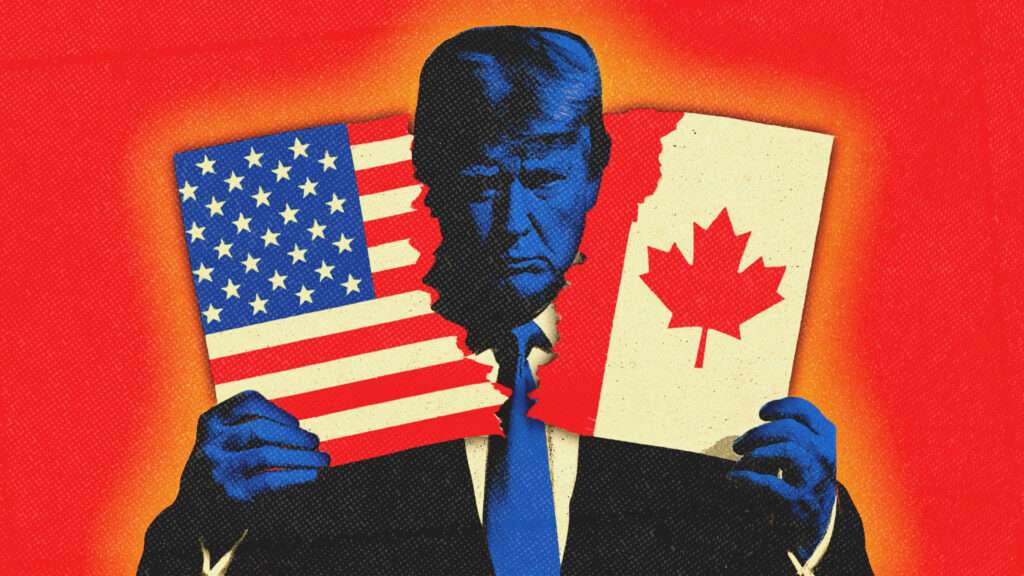
"This has become a divorce, and when you divorce someone you've been with for a long time, there's going to be disruptions and costs associated with it," Mr Coletto said. asserted
Coletto → become → it
"But I think increasingly Canadians feel long-term, it is better for us to be less reliant on the United States than more. asserted
us → think → more

💬 Give feedback
🕘 History 🎫 Support