Weaponizing oil against U.S. will go ‘badly’: Heather Exner-Pirot

Read the original at National Post ↗
Cite

Jerema, C. (2026, September 3). Weaponizing oil against U.S. will go ‘badly’: Heather Exner-Pirot. National Post. https://nationalpost.com/opinion/weaponizing-oil-against-u-s-will-go-badly-heather-exner-pirot

Dated when The Aporia collected the article, usually within hours of publication. Check the original for its exact date and byline.

National Post · collected 2026-09-03 · by Carson Jerema

Quick Summary

Heather Exner-Pirot from the Macdonald-Laurier Institute is interviewed about the risks of using Canada's energy exports as leverage against the United States in their trade dispute. According to Exner-Pirot, any attempt to inflict economic pain on the US could backfire and hurt Canadian oil producers, disrupt supply chains, and lead to further American retaliation. No specific numbers or estimates are mentioned in the article. The focus is on warning that using energy exports as a weapon against the US would be counterproductive and damage Canada's global reputation as a reliable energy supplier.
Written locally by qwen2.5:14b on 2026-09-03, using this article's own text rather than the other coverage of the same event (that is the story summary below).

AI analysis runs on qwen2.5:14b, locally

Story summary

American tourism organizations have been aggressively trying to attract Canadian visitors back to the United States through various promotional campaigns since President Donald Trump returned to office and imposed tariffs on Canadian products, causing an informal boycott of travel to the US. Josh Loewen, a Vancouver marketing executive, notes that after Trump’s re-election, Canadian travel to the U.S. dropped dramatically due to the president's rhetoric about making Canada the 51st state and the ensuing trade war. Despite slight improvements in border crossings from May to July, recent escalations—such as the imposition of up to 50% import taxes by both countries—have renewed doubts about any recovery. Loewen believes current efforts to win back Canadian visitors are futile until a new U.S. president takes office and eases tensions between the two nations.
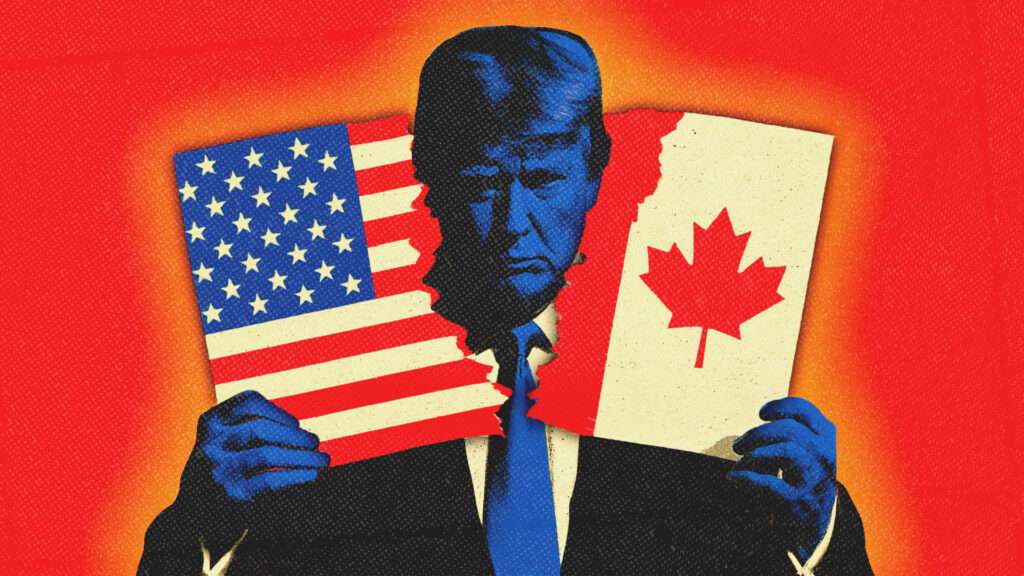
Written for “US Canada Trade War” on 2026-10-19, grounded in this article and the 55 other(s) covering the same event.

Story

📰 US Canada Trade War
Politics · 56 article(s) covering the same event. Compare every outlet's account →

Compared with similar articles

This article reads leans right and hedges 40% of its claims. Each row says how that neighbour differs.
National Post
⚖️ Leans left further left than this 🔴 27% hedged 7 of 26 📰 publisher trust 60
“Both articles refer to the same exact news item about Canadian leaders considering an oil export tax or restrictions as leverage in a trade dispute, and are dated just seconds apart.”
Reason
⚖️ Leans strongly right further right than this 🔴 7% hedged 3 of 43 📰 publisher trust 67
“The articles discuss different topics related to Canada-US trade disputes, but do not report on the same specific incident”
National Post
⚖️ leaning not scored 🔴 10% hedged 4 of 42 📰 publisher trust 60
“Article A discusses a general debate over using energy exports as leverage, while Article B reports on a specific tweet by Trump threatening to block Bombardier sales in the US”
OPEC’s new threat comes from within different event · 80%
Semafor
⚖️ Leans right 🔴 9% hedged 4 of 44 📰 publisher trust 60
“The articles cover different topics: OPEC's internal divisions vs. Canadian leaders' debate on using energy exports as leverage”
TIME
⚖️ Leans left further left than this 🔴 11% hedged 5 of 45 📰 publisher trust 59
“Article A discusses a hypothetical scenario of weaponizing Canada's energy exports, while Article B reports on the breakdown in trade talks between Canada and the US.”
The Bulwark
⚖️ Leans left further left than this 🔴 0% hedged 0 of 8
“Article A discusses a potential Canadian trade dispute with the US, while Article B refers to an actual deal between Trump and Venezuela”
Semafor
⚖️ Leans right 🔴 0% hedged 0 of 3 📰 publisher trust 60
“Article A discusses Canada's energy exports as leverage in trade disputes, while Article B refers to Iran's oil export sanctions and their impact on oil prices”
National Post
⚖️ leaning not scored 🔴 17% hedged 10 of 58 📰 publisher trust 60
“Article A discusses a debate over using energy exports as leverage in Canada's trade dispute with the US, while Article B reports on a poll showing Canadians viewing the US as an enemy due to Trump's actions”
CBC News
⚖️ leaning not scored 🔴 0% hedged 0 of 27 📰 publisher trust 73
“Article A discusses a general idea of 'weaponizing oil' in trade disputes, while Article B refers to Alberta's diplomatic approach and specific events mentioned are not directly related to Article A”
CBC News
⚖️ Leans left further left than this 🔴 19% hedged 6 of 32 📰 publisher trust 73
“Article A discusses using energy exports as leverage in the trade dispute with the US, while Article B talks about counter-tariffs on semi-trailers built in the US”
How this article was measured signals, leaning charts, publisher record, byline, topics and claims

Signals How these are calculated →

Claims extracted
5
sentences that state something as happening or true
Uncertain
40%
2 of 5 hedged ("reportedly", "may", "according to")
Leaning
Leans right
of the writing, not the subject · beta estimate
Publisher signals
60/100
National Post's corrections and hedging, across everything collected from it. Not a measure of accuracy.
Outlets on this story
56
Politics
Same framing elsewhere
1
articles that frame the event the way this one does
Analyzed 2026-09-03 · how these are computed

How this is being covered How these are calculated →

Article leaning vs. publisher reliability
Source leaning vs. consistency

Publisher

National Post · 983 article(s) · 2 correction(s) detected
Running correction rate · 2 correction(s)

Who wrote this

Carson Jerema
49 article(s) here · 1 carrying a prediction
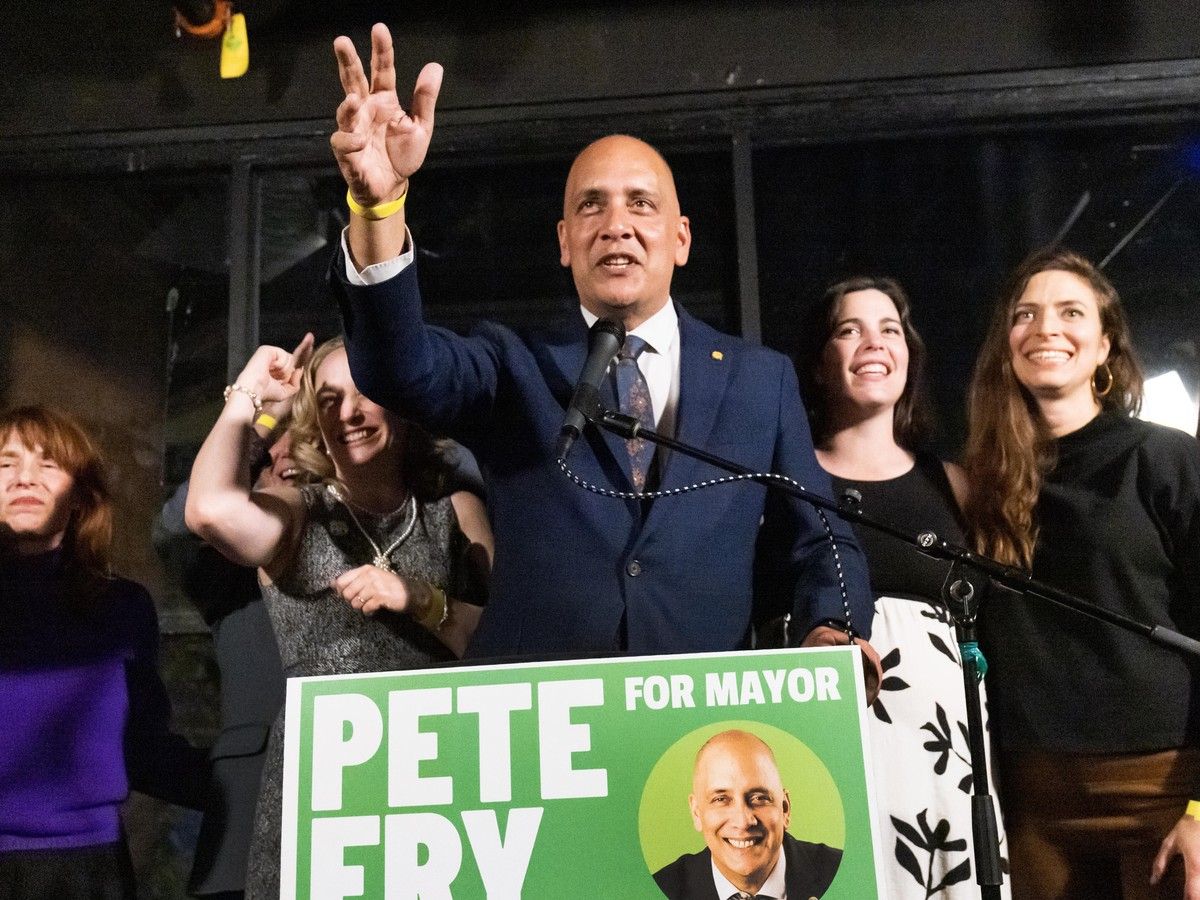
🔮 Saturday night, the city elected Green Party of Vancouver’s Pete Fry as mayor.
🔮 It’s a curious position for innovators who have made grand claims about their products’ potential and who could, presumably, simply drop their efforts if they believe the risks outweigh the benefits.
🔮 Monday night, Quebec may have created its own three-party problem.
🔮 Not that anyone would necessarily question Harper’s commitment to the country, but his entry into the debate was one federalists have been eagerly awaiting.
🔮 David Eby has looked at his election campaign struggling to find its feet and decided that while socialism is good, even more socialism would be better.
🔮 Looking at the polls, it is almost certain that Quebeckers will wake up on Tuesday to a Parti Québécois government.
🔮 This followed months of internal strife with several high-profile staff and MLAs either quitting or saying they wouldn’t run again.
🔮 The Coalition Avenir Québec was founded because a huge number of Quebecers wanted something neither the Parti Québécois nor the Quebec Liberals could give them.
🔮 Projected to rise to 5.4 per cent of GDP in 2026, the €43 billion ($68.7 billion) in proposed cuts for 2027 are designed to reduce the deficit to five per cent of GDP next year.
🔮 It would be difficult to disagree with that assessment.
Also by Carson Jerema
Nothing else under this byline is closely related to this article, so these are simply their most recent.
All 49 articles by Carson Jerema →

Topics

Alberta Canada Canadian Saskatchewan the United States

Subjects

Canada GPE · 4× Canadian NORP · 2× Alberta GPE · 1× Exner-Pirot PERSON · 1× Heather Exner-Pirot PERSON · 1× Macdonald-Laurier Institute ORG · 1× Rob Breakenridge PERSON · 1× Saskatchewan GPE · 1× U.S. GPE · 1× the United States GPE · 1×

Narrative

The premiers of both Alberta and Saskatchewan have warned against the idea of an oil export tax or restrictions on Canadian oil exports, and have faced accusations of being out of step with a so-called “Team Canada” approach.
framing: mixed · carried by 1 article(s) · first seen 2026-09-03
🔮 Exner-Pirot argues that any attempt to inflict economic pain on the U.S. could backfire on Canada, hurting domestic oil producers, disrupting supply chains, and inviting further American retaliation.
2026-09-03 · National Post
Weaponizing oil against U.S. will go ‘badly’: Heather Exner-Pirot · mixed framing

Claims (5 extracted, 2 hedged)

Amid the debate over how or whether Canada should escalate its trade dispute with the United States, there’s been a push from some Canadian leaders to consider using energy exports as leverage. asserted
Canada → escalate → leverage
The premiers of both Alberta and Saskatchewan have warned against the idea of an oil export tax or restrictions on Canadian oil exports, and have faced accusations of being out of step with a so-called “Team Canada” approach. asserted
premiers → warn → approach
In this interview, Rob Breakenridge is joined by Heather Exner-Pirot of the Macdonald-Laurier Institute, who lays out the risks and downside of weaponizing Canada’s energy exports. asserted
who → join → exports
Exner-Pirot argues that any attempt to inflict economic pain on the U.S. could backfire on Canada, hurting domestic oil producers, disrupting supply chains, and inviting further American retaliation. uncertain
attempt → argue → retaliation
Such a move could also undermine Canada’s aspirations to be seen globally as a stable and reliable supplier of energy. uncertain
move → undermine → energy
💬Give feedback
🕘History 🎫Support