Grassroots Revolt Targets Unpopular Property Taxes

Read the original at Reason ↗
Cite

Tuccille, J. (2026, October 21). Grassroots Revolt Targets Unpopular Property Taxes. Reason. https://reason.com/2026/10/21/grassroots-revolt-targets-unpopular-property-taxes/

Dated from the outlet's own feed. Check the original for its byline.

Reason · collected 2026-10-21 · by J.D. Tuccille

Quick Summary

A nationwide movement against property taxes is gaining momentum, with its next significant challenge being a proposed constitutional amendment in Florida that aims to significantly reduce home property taxes for owner-occupied homes. Advocates like economist Vance Ginn argue that high property taxes undermine the concept of genuine ownership and represent an annual wealth tax on after-tax income. Opponents such as the Tax Foundation's Jared Walczak counter by highlighting that property taxes account for 70% to 90% of local tax collections, depending on the state, and suggest that eliminating them would necessitate finding alternative revenue sources at higher government levels, potentially diminishing local autonomy.
Written locally by qwen2.5:14b on 2026-10-21, using this article's own text rather than the other coverage of the same event (that is the story summary below).

AI analysis runs on qwen2.5:14b, locally

Story summary

A proposed constitutional amendment in Florida aims to significantly reduce property taxes on owner-occupied homes, reflecting a growing national movement against these taxes. Advocates argue that high property taxes challenge the notion of true homeownership, while opponents worry about reduced government revenues and potential loss of local autonomy. The movement has gained traction due to soaring property valuations in recent years, leading to higher tax bills for residents who have not actively increased their property values. The amendment seeks to address this issue by trimming property taxes on owner-occupied homes, potentially altering the balance of power between state and local governments.

Written for “Grassroots Revolt Against Property Taxes” on 2026-10-21, grounded in this article and the 0 other(s) covering the same event.
Why this leaning score
The article's own words the score was based on. Each is quoted verbatim and was checked against the article text before being stored, so you can find it in the original.
Reading Leans right (beta estimate) Confidence high
Leaning: leans right for article 96000 (high confidence, 1 verified quote) · logged 2026-10-21

Story

📰 Grassroots Revolt Against Property Taxes
Politics · 1 article(s) covering the same event.

Compared with similar articles

This article reads leans right and hedges 13% of its claims. Each row says how that neighbour differs.
Washington Examiner
⚖️ Leans right 🔴 0% hedged 0 of 3 📰 publisher trust 66
“While both articles discuss property tax revolts, they do not specifically describe the exact same ballot measure or initiative in Florida.”
New York Post
⚖️ leaning not scored 🔴 30% hedged 3 of 10 📰 publisher trust 66
“Article A discusses a specific tax scheme in New York, while Article B talks about a broader movement against property taxes and a proposed constitutional amendment in Florida.”
How this article was measured signals, leaning charts, publisher record, byline, topics and claims

Signals How these are calculated →

Claims extracted
46
sentences that state something as happening or true
Uncertain
13%
6 of 46 hedged ("reportedly", "may", "according to")
Leaning
Leans right
of the writing, not the subject · beta estimate
Publisher signals
67/100
Reason's corrections and hedging, across everything collected from it. Not a measure of accuracy.
Outlets on this story
1
Politics
Same framing elsewhere
1
articles that frame the event the way this one does
Analyzed 2026-10-21 · how these are computed

How this is being covered How these are calculated →

Article leaning vs. publisher reliability
Source leaning vs. consistency

Publisher

Reason · 842 article(s) · 4 correction(s) detected
Running correction rate · 4 correction(s)

Who wrote this

J.D. Tuccille
14 article(s) here · 1 carrying a prediction
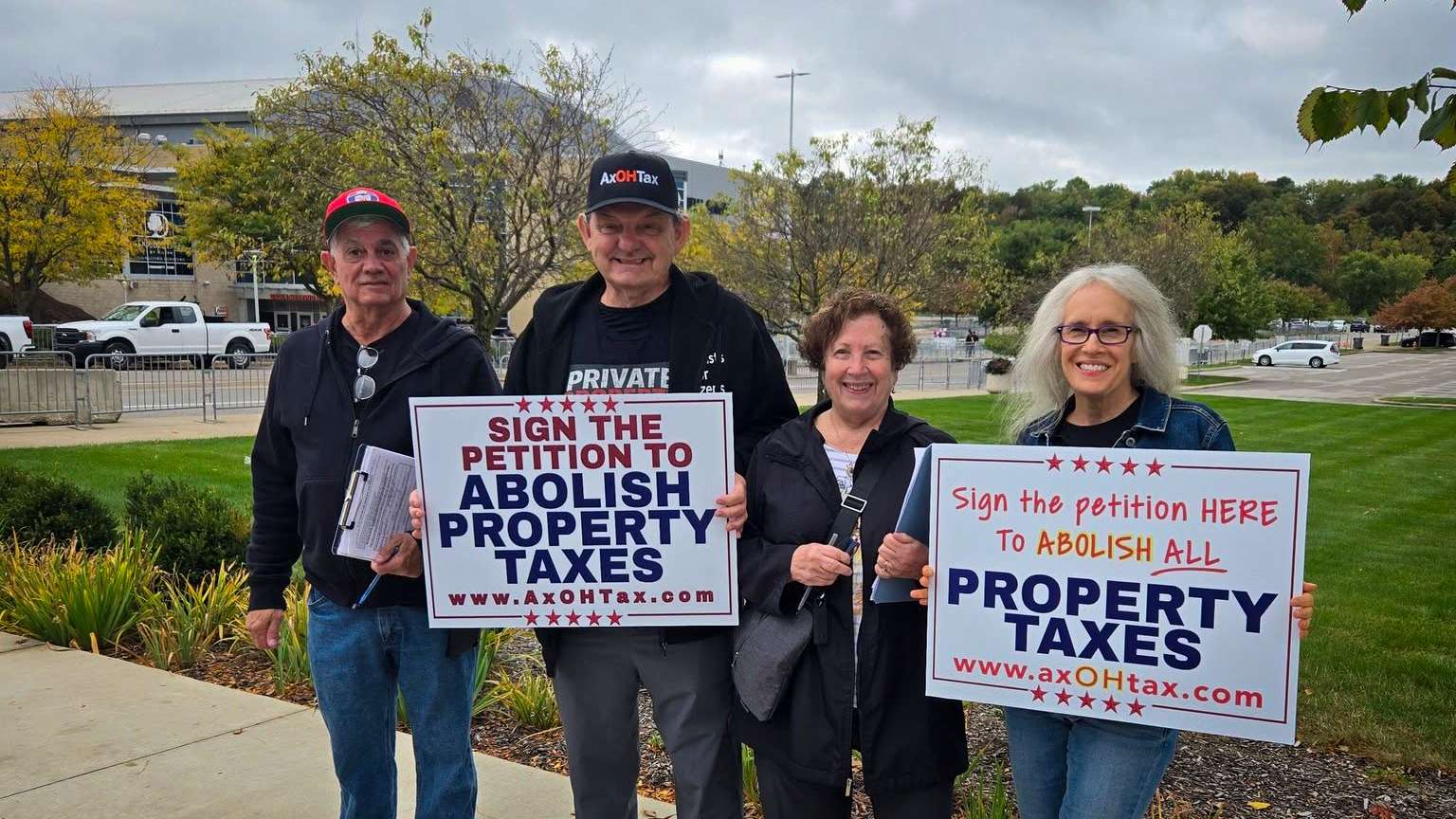
🔮 That's the question behind a growing movement against property taxes, which is winning support across the country and may see its next big test in the form of a proposed constitutional amendment on the Florida ballot that would significantly trim taxes on owner-occupied homes.
2026-10-21 · assertive framing · Grassroots Revolt Targets Unpopular Property Taxes
🔮 Of specific interest in this case, the state adopted a law in 2021 that, among other things, says "the governing board of a community college or a district school board" may adopt policies banning guns on school grounds, even for those "licensed to carry a concealed handgun."
🔮 While it may be a while before the opportunity arises to roll back state intervention in the economy, given the drift of both major parties away from faith in the marketplace, the Cato Institute has launched a project to get the process started.
🔮 Academics themselves—the honest ones, anyway—acknowledge that they've squandered a lot of goodwill over the years.
🔮 "Democrats and Republicans both say that the other party's members are hypocritical, selfish, and closed-minded, and they are unwilling to socialize across party lines.
🔮 As I write, I have my virtual private network (VPN) set to show me as surfing the internet from Berlin, Germany, despite my location in Arizona, for no good reason other than that I can.
2026-10-07 · assertive framing · Federal Court Slaps Down Utah's VPN Restrictions
🔮 The problem for those of us who didn't already know is that, as detailed by Abhi Gupta of the Yale Budget Lab, legislators have almost totally abdicated their fiscal responsibilities: "Since 2004, Congress has generally enacted less deficit reduction than its pre-2004 predecessors would have in response to the budget outlooks it faced, even as federal debt has climbed past 100% of GDP."
🔮 Despite that equalizing power, gun ownership long remained a largely masculine pursuit for cultural reasons that might be worthy of research.
2026-10-02 · assertive framing · Women Are Better Armed Than Ever
🔮 Drawing on data from the White House Office of Information and Regulatory Affairs (OIRA), Muresianu and Cardwell note that "Americans will spend almost 6.9 billion hours complying with IRS tax filing and reporting requirements in 2026.
2026-09-30 · assertive framing · Filing Taxes Will Cost Americans $544 Billion This Year
🔮 Federal Health Spending Is Twice the Size of the Defense Budget "The largest and fastest-growing category of federal spending is major healthcare programs, including Medicare, Medicaid, Affordable Care Act (ACA) subsidies, and the Children's Health Insurance Program (CHIP)," William McBride and Guy Cardwell wrote last week for the Tax Foundation.
Also by J.D. Tuccille
Nothing else under this byline is closely related to this article, so these are simply their most recent.
All 14 articles by J.D. Tuccille →

Topics

Florida J.D. Politico Reason the Tax Foundation's

Subjects

Ginn PERSON · 2× Walczak PERSON · 2× Florida GPE · 1× J.D. ORG · 1× J.D. Tuccille PERSON · 1× Jared Walczak PERSON · 1× Politico ORG · 1× Reason ORG · 1× Vance Ginn PERSON · 1× the Tax Foundation's ORG · 1×

Narrative

The bite of sales taxes can be reduced by buying less, and income taxes are dependent on earning paychecks, but property taxes (with some local exceptions) come due no matter what. Soaring property valuations in recent years drove property tax bills higher for Americans who did nothing but remain at their established addresses, though localities can and sometimes do adjust tax rates to offset rising values.
framing: assertive · carried by 1 article(s) · first seen 2026-10-21
🔮 That's the question behind a growing movement against property taxes, which is winning support across the country and may see its next big test in the form of a proposed constitutional amendment on the Florida ballot that would significantly trim taxes on owner-occupied homes.
2026-10-21 · Reason
Grassroots Revolt Targets Unpopular Property Taxes · assertive framing

Claims (46 extracted, 6 hedged)

If you have to pay a regular fee to maintain control and use of a home or other parcel of property, do you really own it? asserted
you → have → it
Or are you just renting it from whoever collects the money? asserted
whoever → rent → money
That's the question behind a growing movement against property taxes, which is winning support across the country and may see its next big test in the form of a proposed constitutional amendment on the Florida ballot that would significantly trim taxes on owner-occupied homes. uncertain
that → grow → homes
You are reading The Rattler from J.D. Tuccille and Reason. asserted
You → read → Tuccille
Advocates of reform understandably champion the inviolability of private property, which is threatened by continuously rising levies. asserted
which → champion → levies
Opponents predictably include people who fear reduced government revenues, but also those who worry that cutting property taxes will shift power to state governments at the cost of local autonomy. asserted
cutting → include → autonomy
"Property is the foundation of liberty," argues economist Vance Ginn. asserted
Ginn → argue → liberty
"It represents the right to the product of voluntary exchange, investment, and saving—not a privilege granted by government. asserted
It → represent → government
To tax property again every year after it has been bought with after-tax income is to deny genuine ownership. asserted
it → tax → ownership
Property taxes operate like an annual wealth tax or unrealized capital-gains tax, applied regardless of income or ability to pay. asserted
taxes → operate → income
" Opposing Ginn's argument in the debate is the Tax Foundation's Jared Walczak, who is not so much a fan of property taxes as a believer that they suck less than the alternatives. asserted
they → oppose → alternatives
"Spending restraint can reduce property tax burdens," argues Walczak. asserted
Walczak → reduce → burdens
"But with property taxes accounting for 70 percent of local tax collections nationwide and upwards of 90 percent in some states, any discussion of property tax elimination must grapple with revenue alternatives." asserted
discussion → account → alternatives
"It is axiomatic that whatever you tax, you get less of," he adds. asserted
he → tax → less
"Taxing income means less income-producing labor and investment, for instance. asserted
Taxing → tax → instance
But because land is an immobile asset, taxing property does less to distort market decisions than taxing income or even sales. asserted
taxing → tax → income
Walczak also points out that while property taxes are usually imposed by local governments, most alternatives to property taxes come at the state level. asserted
alternatives → point → level
That would move power further up the political food chain, away from the property owners worrying about their tax bills. asserted
That → move → bills
To this, Ginn responds that governments at all levels cost more than they should and that "the moral and fiscal failure of property taxes lies not only in how the money is raised, but also in how much government spends." asserted
government → respond → much
That means the debate over property taxes isn't just a struggle between those who want to trim the state's take and those who prefer larger government, but also between anti-tax activists and their frequent allies among advocates of local power. asserted
who → mean → power
In a piece this week on the groundswell against property taxes, Politico's Liam Dillon notes that "the uprising's most pitched battles are being fought in Red States where the issue has emerged as yet another dividing line on the right. asserted
issue → note → right
" Localities Are Dependent on Taxing Property The debate over property taxes is fierce partially because governments have come to rely so heavily on them. asserted
governments → tax → them
"In fiscal year 2023, property taxes comprised 28.9 percent of total state and local tax collections in the United States, more than any other source of tax revenue, despite being levied almost exclusively at the local (not state) level," Janelle Fritts wrote for the Tax Foundation. asserted
Fritts → comprise → Foundation
Property taxes in the U.S. range from roughly half a percent to just under 2 percent of assessed home value. asserted
taxes → range → value
States that rely most heavily on them, like New Hampshire (1.5 percent in 2024) and Texas (1.4 percent in 2024), also tend to leave a lot of government responsibility in local hands that might be exercised at the state level elsewhere. uncertain
that → rely → level
It's worth noting that Cato's Freedom in the 50 States ranks New Hampshire as having the second least burdensome tax regime among states, with Texas in fourth place. asserted
Freedom → note → place
The lowest taxed states in property terms are Alabama (0.37 percent in 2024), Arizona (0.48 percent), Hawaii (0.29 percent), and Utah (0.48 percent). asserted
states → tax → 2024
Some states, such as Illinois (1.88 percent in 2024) and New Jersey (also 1.88 percent), tax the hell out of many things to support large and intrusive governments. asserted
states → tax → governments
Hawaii, despite low property taxes, is ranked as the most tax-burdened state by Cato. asserted
Hawaii → rank → Cato
As mentioned above, economists tend to like property taxes because they are efficient, minimally distort economic decisions, and empower localities relative to state and federal authorities. asserted
they → mention → authorities
But as Politico's Dillon emphasizes, "everyone who is not an economist seems to hate property taxes." Homeowners Don't Like the Insecurity That Comes With Property Tax Bills Property taxes rise with assessed property valuations that homeowners have no control over, as the market shifts with supply and demand. asserted
market → emphasize → supply
They require what feels an awful lot like an annual rent payment to keep a roof over people's heads many already paid for. asserted
many → require → heads
That reduces the sense of security that owners feel in their homes, since their habitation remains conditional on meeting local authorities' demands. asserted
habitation → reduce → demands
The bite of sales taxes can be reduced by buying less, and income taxes are dependent on earning paychecks, but property taxes (with some local exceptions) come due no matter what. Soaring property valuations in recent years drove property tax bills higher for Americans who did nothing but remain at their established addresses, though localities can and sometimes do adjust tax rates to offset rising values. asserted
localities → reduce → values
USA Today reported that "between 2019 and 2023, the median value of annual property taxes increased nearly 25%." asserted
value → report → taxes
That has energized the movement to cut or abolish the taxes. asserted
That → energize → taxes
Efforts to reform property taxes have been effective in more than a dozen states, according to Governing. uncertain
Efforts → reform → Governing
Most of these efforts involved reducing taxes, though eyes are currently on Florida where Amendment 3, a proposed change to the state constitution, would incrementally raise the homestead exemption to $250,000. asserted
Amendment → involve → 250,000
It also would require "the Legislature to prescribe a uniform procedure for counties and municipalities, for their respective levies, to increase the homestead exemption up to full assessed value," effectively abolishing property taxes on owner-occupied dwellings. asserted
counties → require → dwellings
As a constitutional amendment, the measure requires 60 percent of votes to pass. asserted
measure → require → votes
…and 6 more, not listed.

💬Give feedback
🕘History 🎫Support