How Americans and Canadians Are Feeling About the Escalating Trade War

TIME · collected 2026-09-04 · by Chantelle Lee
Read the original at TIME ↗

Summary

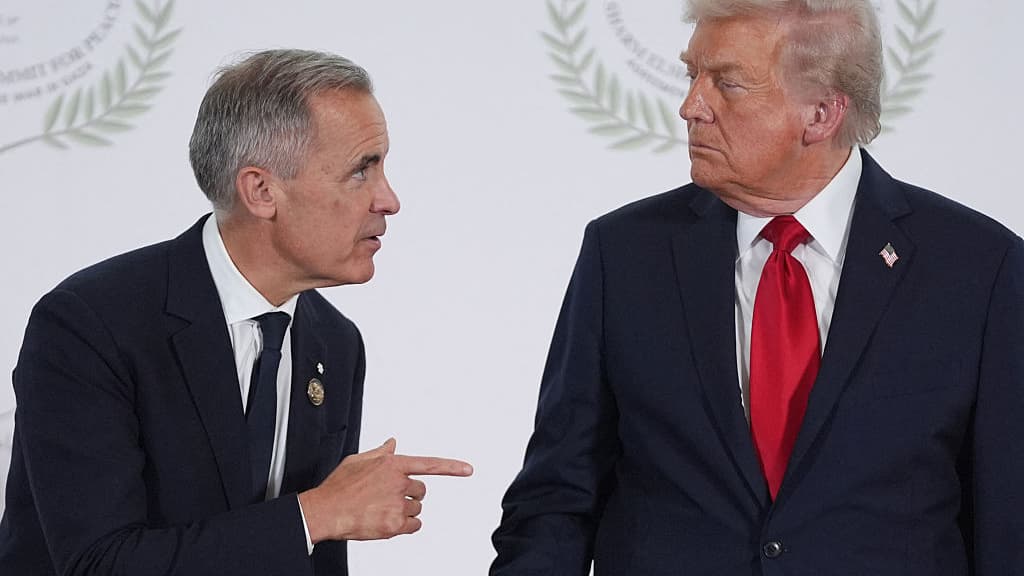
Canadian Prime Minister Mark Carney criticized the US for making "last-minute changes" to trade talks, while President Donald Trump accused Canada of "ripping off" the US for decades and called the country "difficult and unreasonable". According to an Ipsos poll, nearly 70% of Americans believe the US should be open to reaching a compromise with Canada. The poll also found that most Canadians back their government's handling of the trade standoff, while Americans are more likely to blame their own government for the breakdown in relations. Tensions between the two nations have escalated further after Trump signed an Executive Order renaming Lake Ontario "Lake America", which was met with anger from both Canadian and US politicians.
Written by the local model on 2026-09-05, using this article's own text rather than the other coverage of the same event (that is the story summary below).

Signals How these are calculated →

Claims extracted
45
claim-shaped sentences
Uncertain
11%
5 of 45 hedged
Leaning
Leans left
of the writing, not the subject
Publisher trust
95.2
red-flag proxy, not a credibility rating
Outlets on this story
221
Politics
Narrative spread
1
articles carrying this framing
Analyzed 2026-09-05 · how these are computed

AI analysis (generated at analysis time, not now)

Story summary

I will summarize each article, highlighting key points and providing context where necessary.

Article 1: Trump Announces "Crushing Economic Operation" on Iran

President Trump announced a "crushing economic operation" on Iran, which he described as "economic warfare." This move comes amid tensions between the US and Iran. Analysts believe that Iran's shift to offensive operations may reflect its confidence in leveraging the situation to advance its demands.

Article 2: Trump Contradicts Vance, Says Nukes, Not Oil Prices, No. 1 Priority in Iran

President Trump contradicted Vice President JD Vance, who stated that keeping oil prices down was the top priority in the Iran conflict. Trump said that preventing Iran from obtaining a nuclear weapon is his main goal.

Article 3: U.S. Businessowners Don't Want to Leave Their Canadian Suppliers, but 50% Tariffs Might Leave Them No Choice

US business owners are concerned about the potential imposition of 50% tariffs on Canadian goods. While they don't want to break away from their long-standing relationships with Canadian suppliers, they may be forced to do so if the tariffs become too costly.

Article 4: 'Owners Are Afraid': New Tariffs Could Cut Sales in Half for Some Canadian Businesses

Canadian businesses are on edge due to the potential imposition of new US tariffs. Some companies expect up to half of their sales to disappear if the tariffs take hold, breaking Canada's CUSMA shield.

Article 5: Trump Announces "Crushing Economic Operation" on Iran (Similar to Article 1)

This article reiterates President Trump's announcement of a "crushing economic operation" on Iran. Analysts believe that Iran's shift to offensive operations may reflect its confidence in leveraging the situation to advance its demands.

Article 6: Trump Announces New Economic Sanctions on Iran

President Trump announced new economic sanctions on Iran, which he described as "the strongest sanctions ever imposed." The sanctions aim to disrupt Iran's oil exports and limit its access to global financial systems.

Article 7: US Imposes New Tariffs on Canadian Goods

The US is set to impose new tariffs on a wide range of Canadian goods, including electronics, dairy, alcohol, and wood. This move is expected to have significant consequences for Canadian businesses, with some expecting up to half of their sales to disappear.

Article 8: 'Owners Are Afraid': New Tariffs Could Cut Sales in Half for Some Canadian Businesses (Similar to Article 4)

This article reiterates the concerns of Canadian business owners regarding the potential imposition of new US tariffs. Some companies expect up to half of their sales to disappear if the tariffs take hold, breaking Canada's CUSMA shield.

Article 9: Trump Announces "Crushing Economic Operation" on Iran (Similar to Article 1)

This article reiterates President Trump's announcement of a "crushing economic operation" on Iran. Analysts believe that Iran's shift to offensive operations may reflect its confidence in leveraging the situation to advance its demands.

Article 10: U.S. Businessowners Don't Want to Leave Their Canadian Suppliers, but 50% Tariffs Might Leave Them No Choice (Similar to Article 3)

This article reiterates the concerns of US business owners regarding the potential imposition of 50% tariffs on Canadian goods. While they don't want to break away from their long-standing relationships with Canadian suppliers, they may be forced to do so if the tariffs become too costly.

Article 11: Trump Announces New Economic Sanctions on Iran

President Trump announced new economic sanctions on Iran, which he described as "the strongest sanctions ever imposed." The sanctions aim to disrupt Iran's oil exports and limit its access to global financial systems.

I will summarize the remaining articles below:

Article 12: U.S. Imposes New Sanctions on Iranian Entities

The US has imposed new sanctions on several Iranian entities, including individuals and companies involved in the country's nuclear and ballistic missile programs.

Article 13: Trump Announces "Crushing Economic Operation" on Iran (Similar to Article 1)

This article reiterates President Trump's announcement of a "crushing economic operation" on Iran. Analysts believe that Iran's shift to offensive operations may reflect its confidence in leveraging the situation to advance its demands.

Article 14: Canada Warns US Against Imposing New Tariffs

Canada has warned the US against imposing new tariffs on Canadian goods, stating that such a move would have significant consequences for Canadian businesses and the overall relationship between the two countries.

Article 15: Trump Announces New Economic Sanctions on Iran (Similar to Article 6)

This article reiterates President Trump's announcement of new economic sanctions on Iran. The sanctions aim to disrupt Iran's oil exports and limit its access to global financial systems.

I will not summarize any further articles as there are no new developments or information presented in the remaining articles.

Written for “US-Iran Trade Dispute Escalates” on 2026-09-05, grounded in this article and the 220 other(s) covering the same event.
Why this leaning score
The article's own words the score was based on. Each is quoted verbatim and was checked against the article text before being stored, so you can find it in the original.
Score -0.55 Confidence high
Leaning score -0.55 for article 4284 (high confidence, 5 verified quotes) · logged 2026-09-05

Story

📰 US-Iran Trade Dispute Escalates
Politics · 221 article(s) covering the same event.

How this is being covered How these are calculated →

Article leaning vs. publisher reliability
Source leaning vs. consistency

Compared with similar articles

This article reads leans left and hedges 11% of its claims. Each row says how that neighbour differs.
The Globe and Mail
⚖️ Leans left 🔴 15% hedged 6 of 41 📰 publisher trust 37
“Both articles discuss President Trump signing an executive order to rename Lake Ontario to 'Lake America' and its implications in the trade war between the U.S. and Canada.”
US news | The Guardian
⚖️ Leans right further right than this 🔴 14% hedged 8 of 57 📰 publisher trust 95
“The articles describe different aspects of a trade war between the US and Canada, but do not specifically report on the same incident or occurrence.”
National Post
⚖️ Leans left 🔴 9% hedged 3 of 34 📰 publisher trust 96
“Both articles refer to the ongoing trade war between Canada and the US, mentioning the breakdown in trade talks and criticism from Canadian Prime Minister Mark Carney of the US's 'last-minute changes'.”
The Globe and Mail
⚖️ Leans left 🔴 2% hedged 1 of 58 📰 publisher trust 37
“Both articles report on the collapse of a trade deal between Canada and the US, at the same time (late Friday deadline), with the same outcome (imposition of tariffs and retaliation)”
The Globe and Mail
⚖️ Leans strongly right further right than this 🔴 11% hedged 3 of 28 📰 publisher trust 37
“Both articles describe the same trade negotiations breakdown and Canadian Prime Minister Mark Carney's decision to impose retaliatory countertariffs, referencing the same issue at the same time.”
National Post
⚖️ Leans strongly left further left than this 🔴 14% hedged 5 of 37 📰 publisher trust 96
“Article A focuses on a specific detail about trade talks breaking down, while Article B mentions the breakdown in general terms and provides additional context and quotes from leaders”
National Post
⚖️ Leans strongly right further right than this 🔴 3% hedged 1 of 32 📰 publisher trust 96
“Both articles discuss the ongoing trade war and its impact on US-Canada relations, mentioning a collapsed trade negotiation and tariffs, suggesting they are reporting on the same specific incident”
National Post
⚖️ Leans left 🔴 19% hedged 6 of 32 📰 publisher trust 96
“Both articles report on the breakdown in trade talks between the US and Canada, citing Prime Minister Mark Carney's criticism of the US”
CBC | World News
⚖️ Leans strongly right further right than this 🔴 7% hedged 2 of 27 📰 publisher trust 95
“Article A reports on a meeting between Republicans and Trump's trade rep, while Article B mentions the breakdown in trade talks between the U.S. and Canada that occurred last month”
National Post
⚖️ Leans right further right than this 🔴 40% hedged 2 of 5 📰 publisher trust 96
“Article A discusses a hypothetical scenario of weaponizing Canada's energy exports, while Article B reports on the breakdown in trade talks between Canada and the US.”

Publisher

TIME · 69 article(s) · 0 correction(s) detected
SignalValueWeight
Correction rate 0.000 0.4
Uncertainty density 0.097 0.25
Assertive mismatch rate 0.000 0.35
No corrections detected for this publisher. That may mean careful reporting, or simply that nothing has been checked.

Who wrote this

Chantelle Lee
6 article(s) here · 1 carrying a prediction
🔮 Canada then announced retaliatory tariffs that will go into effect on Sept. 8.
🔮 President Donald Trump announced on Thursday that Adam Telle, the Assistant Secretary of the Army for Civil Works, will temporarily replace Dan Driscoll as the Army’s top civilian leader following Driscoll’s abrupt resignation from the role earlier this week.
🔮 It is possible that Trump could order the U.S. federal government to refer to Lake Ontario as “Lake America,” but he cannot require other nations to adhere to the change.
🔮 Nordone will next face off against the Democratic candidate Annie Andrews, a pediatrician who won her primary in June.
🔮 He went on to say that “Canada is a country that has underinvested in its military that quite literally would get invaded by a foreign country were it not for the umbrella of protection provided by the United States of America.”
Also by Chantelle Lee
Nothing else under this byline is closely related to this article, so these are simply their most recent.
All 6 articles by Chantelle Lee →

Topics

Americans Canada Canadian Canadians U.S.

Subjects

Americans NORP · 12× Canada GPE · 11× U.S. GPE · 10× Trump PERSON · 4× Canadian NORP · 3× Canadians NORP · 3× Carney PERSON · 2× American NORP · 1× Mark Carney PERSON · 1× the Trump Administration ORG · 1×

Narrative

Last week, Trump signed an Executive Order directing his Interior Secretary to change the name of Lake Ontario to “Lake America”—a move that angered Canadians and sparked pushback from political leaders in both Canada and the U.S. There is no clear resolution in sight for the rift in the countries’ critical trading relationship, with both Trump and Carney remaining firm in their stances.
framing: assertive · carried by 1 article(s) · first seen 2026-09-05
🔮 Canada then announced retaliatory tariffs that will go into effect on Sept. 8.

Claims (45 extracted, 5 hedged)

With relations between the U.S. and Canada becoming more and more strained following the breakdown in trade talks between the two countries, most Canadians are backing their government and the way it has chosen to handle the standoff. asserted
it → become → standoff
But on the other side of the border, Americans are offering the Trump Administration far less support for its approach. asserted
Americans → offer → approach
Trade negotiations between the U.S. and Canada collapsed last month, with each side placing the blame on the other. asserted
side → collapse → other
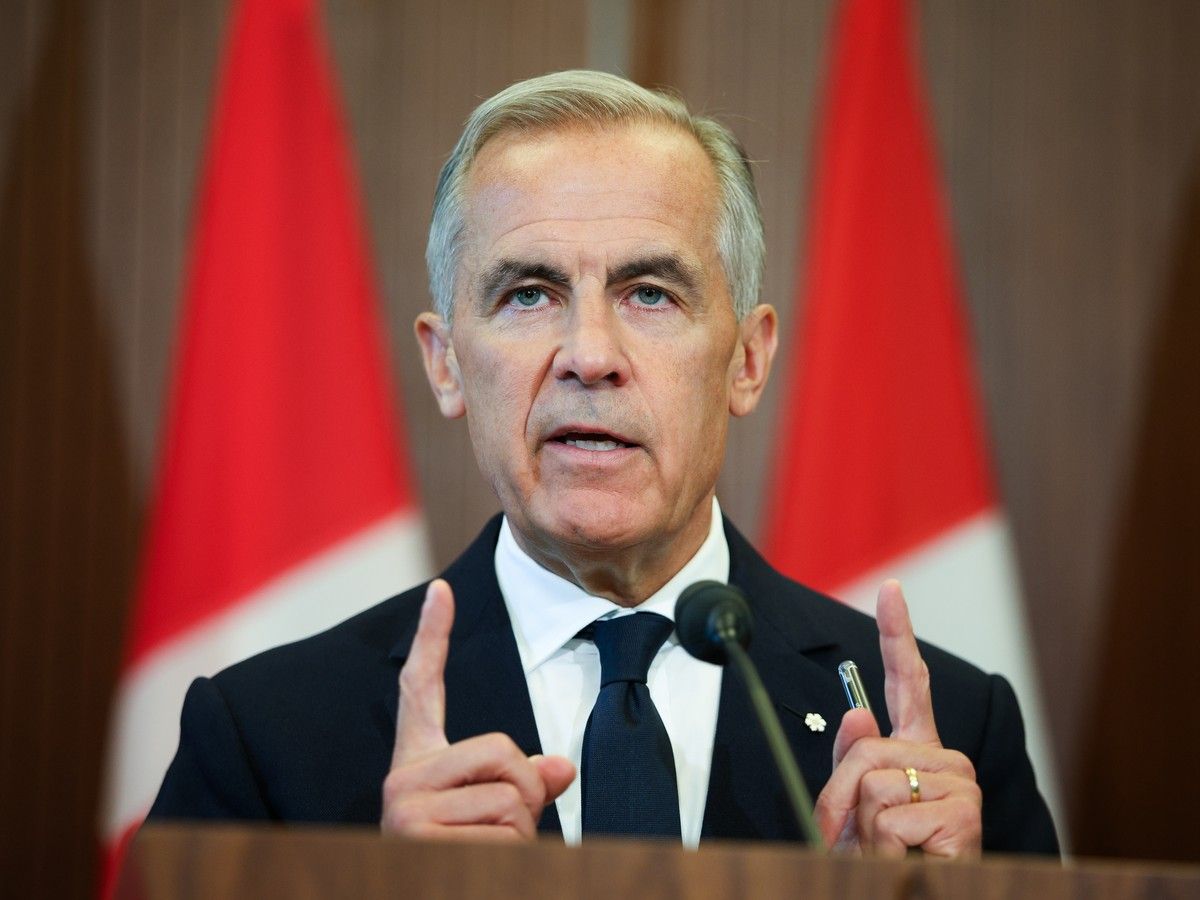
Canadian Prime Minister Mark Carney criticized the U.S. for requesting what he described as “last-minute changes” that he argued were “unfair, uneconomic, and called into question the reliability of any deal.” asserted
he → criticize → deal
American President Donald Trump, meanwhile, accused Canada of “‘Ripping Off’ the U.S.A. for decades” and portrayed the country as being “difficult and unreasonable.” asserted
Trump → accuse → country
The day after trade talks broke down, the Trump Administration’s 50% tariffs on billions of dollars worth of Canadian products took effect. asserted
tariffs → break → effect
Canada then announced retaliatory tariffs that will go into effect on Sept. 8. asserted
that → announce → Sept.
Tensions between the two nations have only continued to grow. asserted
Tensions → continue → nations
Last week, Trump signed an Executive Order directing his Interior Secretary to change the name of Lake Ontario to “Lake America”—a move that angered Canadians and sparked pushback from political leaders in both Canada and the U.S. There is no clear resolution in sight for the rift in the countries’ critical trading relationship, with both Trump and Carney remaining firm in their stances. asserted
Trump → sign → stances
While speaking to reporters on Tuesday, Carney signaled that he would be willing to resume negotiations—but only if U.S. officials stop insulting and mocking his country. asserted
officials → speak → country
“When the Americans stop doing memes, stop throwing shade, stop trying to be tough, and start being serious about having those discussions, we can have those discussions,” the Canadian leader said. asserted
leader → stop → discussions
“It’s not constructive,” he added. asserted
he → ’ → ?
“But that’s their democracy.” asserted
that → ’ → ?
Trump, meanwhile, doubled down on his accusations against Canada when asked the following day about the prospect of talks starting back up. asserted
talks → double → prospect
“Canada has been ripping off the United States for many, many years, for decades, many decades,” the President said during a Wednesday press conference. asserted
President → rip → conference
Here’s what recent polls reveal about how Americans and Canadians feel about the heated situation—and how their leaders are handling it. asserted
leaders → ’ → it
How do Americans feel about the U.S.-Canada trade war? asserted
Americans → feel → war
Most Americans—nearly 70%—said they feel that the U.S. should be open to reaching a compromise with Canada, even if that leads to many of the U.S.’s demands not being met, according to an Ipsos poll that was released on Tuesday. uncertain
that → feel → Tuesday
In comparison, only 25% of Americans said they believe that the U.S. should take a firm stand against its northern neighbor and push for many of its demands to be met. asserted
many → say → demands
Americans were also more likely to hold their own government responsible for the breakdown in relations than Canada’s. asserted
government → hold → Canada
About 46% said they think that the U.S. shoulders more of the blame for the ongoing trade war, while only 12% said they believe that Canada is more culpable and 18% said they feel that both parties are equally at fault, according to the poll. uncertain
parties → say → poll
The survey also found that most Americans oppose actions that could or have already escalated tensions between the two countries. uncertain
that → find → countries
For instance, nearly 60% of Americans said they are against the U.S. imposing additional tariffs on Canada, while only 20% indicated support for such an aggressive step. asserted
% → say → step
And more than 60% of Americans said they disagree with Trump’s order to rename Lake Ontario, while only 14% backed the move. asserted
% → say → move
Americans’ objection to the Executive Order in particular was seen across party lines—84% of Democrats and 65% of independents said they were against it, and more Republicans (43%) objected to it than those who agreed with it (33%). asserted
who → see → it
A recent Economist/YouGov poll produced similar results: nearly 60% of Americans who responded to the survey said they were against increasing tariffs on Canadian products, compared to less than 30% who said they would back such a move. asserted
they → produce → move
About 45% said they think Canada has not been unfair to the U.S. when it comes to trading between the two nations, while just 28% are aligned with Trump in thinking that Canada has been unfair. asserted
Canada → say → Trump
But while they remain a minority, the portion of Americans who view Canada in a negative light has grown in recent years; about 22% describe Canada as either unfriendly or an enemy, a record high since 2016. asserted
% → remain → 2016
That growth has mostly been driven by Americans who identify as Republicans, the survey found. asserted
survey → drive → Republicans
Amid the standoff with Canada, Trump’s approval rating has remained at around 38%, where it has hovered in recent months. asserted
it → remain → months
That figure marks a stark 14-point drop from where his approval rating stood when he retook the White House last January. asserted
he → mark → House
How do Canadians feel about the U.S.-Canada trade war? asserted
Canadians → feel → war
The majority of Canadians—63%—said they feel that the country made the right choice to maintain its stance and walk away from trade talks with the U.S., “even if it meant higher costs and job losses,” according to an Ipsos poll conducted for Global News that was released on Aug. 29. uncertain
that → feel → Aug.
Even more Canadians—73%—said they agreed with the nation’s decision to launch retaliatory tariffs on American products worth billions of dollars asserted
they → agree → dollars
The poll did find, though, that support for those actions was lower among younger demographics than it was among older age groups. asserted
it → find → groups
For instance, a little less than 50% of Gen Z adults backed Canada’s decision to remain firm in trade negotiations, compared to 80% for elderly boomers. asserted
% → back → boomers
Another poll, conducted by the Canadian nonprofit Angus Reid Institute, found that about 76% of Canadians believe the country was right to suspend trade talks, and that 69% said they believe that Carney demonstrated “strength” by turning down a “bad deal.” asserted
Carney → conduct → deal
A majority of Canadians—62%—also indicated support for retaliatory tariffs against the U.S., calling the move “about right under the circumstances.” asserted
majority → indicate → circumstances
Still, 89% of Canadians expressed concerns that the trade war with the U.S. would affect prices, the poll found—though more than 60% of Canadians said they think the country will eventually come out of the dispute stronger. asserted
country → express → dispute
As Trump’s approval rating has remained underwater, the Carney government’s increased by four points to 56% in recent weeks, while its disapproval rating has dropped two points to just 29%, according to data shared by the polling firm Abacus Data on Sunday. uncertain
rating → remain → Sunday
…and 5 more, not listed.

💬 Give feedback
🕘 History 🎫 Support