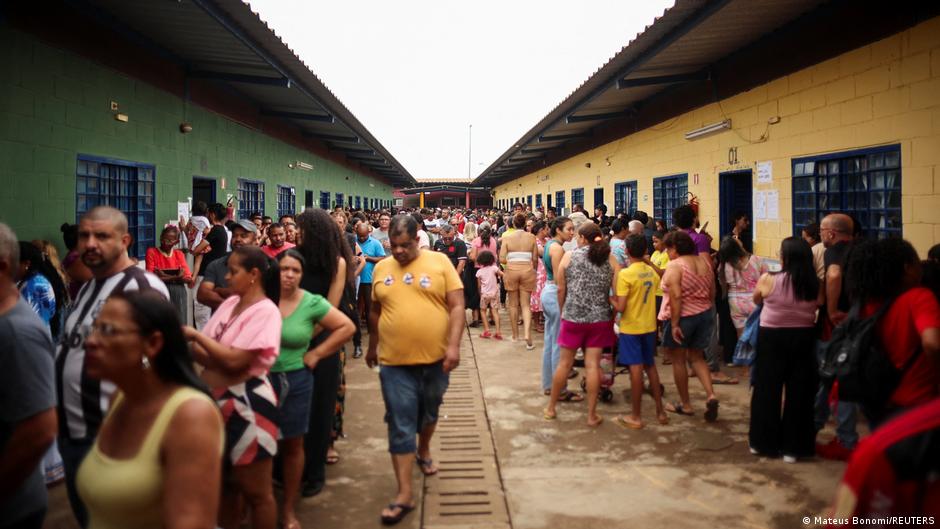
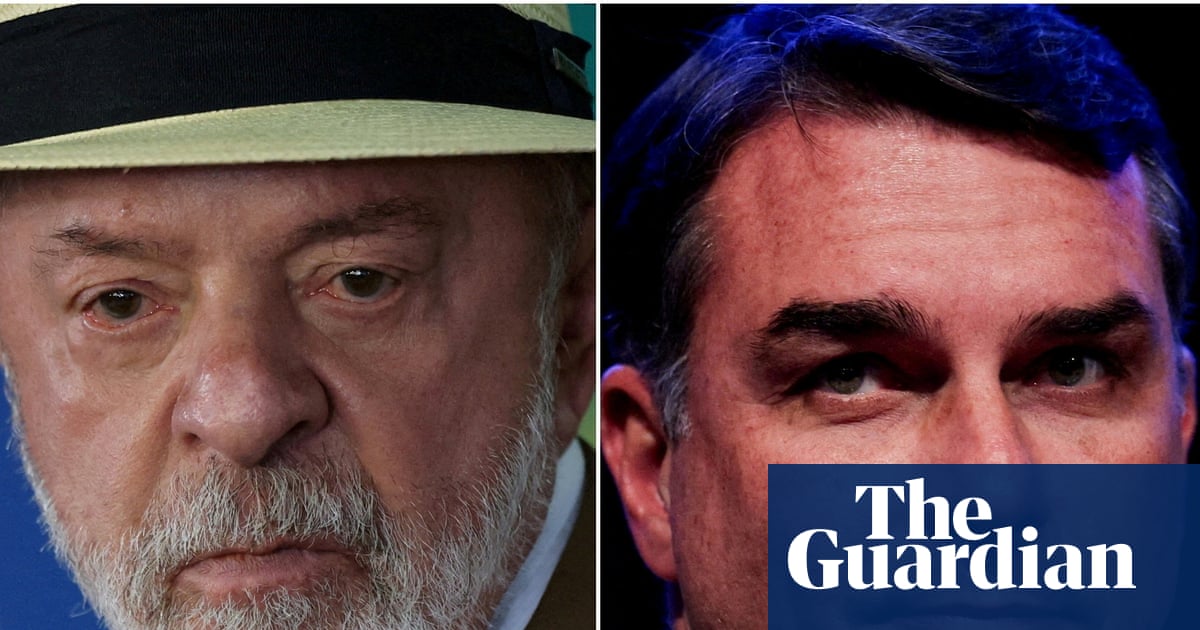
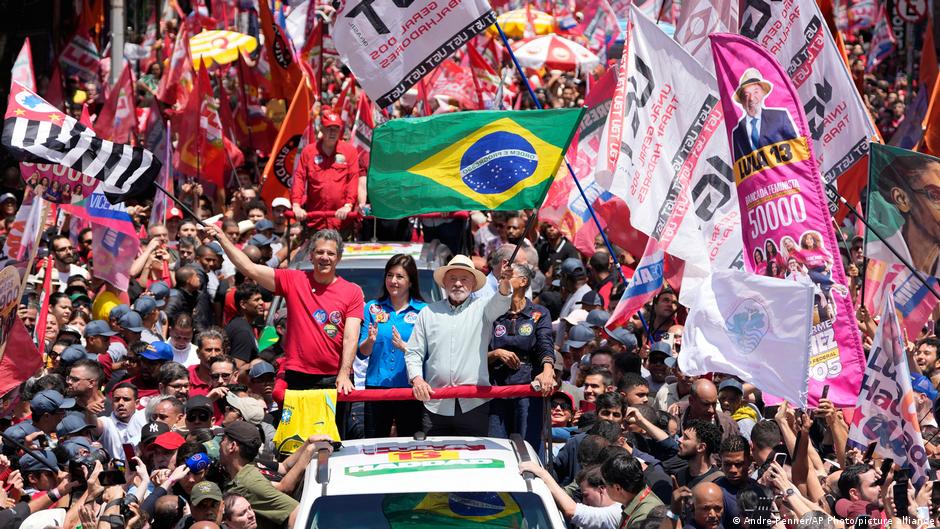
Brazilian polls have closed for the general election between incumbent President Luiz Inácio Lula da Silva and right-wing challenger Flávio Bolsonaro, with over 158.7 million eligible voters casting ballots. The race is tight, with BBC Brazil’s poll aggregator indicating a two-point gap between the candidates, leading to a potential run-off on October 25 if no candidate secures more than 50% of the vote. International preliminary results show Lula leading in countries like China and South Korea, while Bolsonaro leads in Japan and Israel.
Written locally by qwen2.5:14b on 2026-10-04,
using this article's own text rather than the other coverage of the
same event (that is the story summary below).
Story summary
Brazil's 2026 Presidential Election: A Tight Race Between Lula and Flávio Bolsonaro
On October 4, 2026, Brazilians head to the polls for a critical presidential election that pits incumbent President Luiz Inácio Lula da Silva against Senator Flavio Bolsonaro. The race is extremely tight, with recent polls showing Lula slightly ahead in the first round but neck and neck in potential runoff scenarios.
### Key Candidates
- Luiz Inácio Lula da Silva (Workers' Party): Seeking a fourth non-consecutive term at 80 years old, Lula campaigns on continuing his left-wing policies of welfare programs, state-funded development, and income redistribution.
- Flávio Bolsonaro (Liberal Party): The son of former President Jair Bolsonaro, who is serving a 27-year sentence for plotting a coup, Flavio aims to continue the right-wing populist movement. He positions himself as more moderate but still aligns closely with his father's ideology.
### Political Context
- Jair Bolsonaro's Legacy: The tumultuous aftermath of Jair Bolsonaro’s presidency and his conviction for plotting a coup after losing the 2022 election to Lula has deeply polarized Brazilian politics.
- U.S. Influence: Flávio Bolsonaro enjoys support from U.S. President Donald Trump, while Lula criticizes Washington's interventionist policies.
### Polling Data
Multiple polls predict a narrow lead for Lula in the first round but show an extremely close race if a runoff is necessary:
- CNT/MDA:
- First Round: Lula 47.8%, Bolsonaro 42.1%
- Runoff: Lula 47.3%, Bolsonaro 43.1%
- Datafolha:
- First Round: Lula 45%, Bolsonaro 42%
- Runoff: Lula 47%, Bolsonaro 46%
- Quaest:
- First Round: Lula 46%, Bolsonaro 45%
- Runoff: Bolsonaro 44%, Lula 42%
### Campaign Dynamics
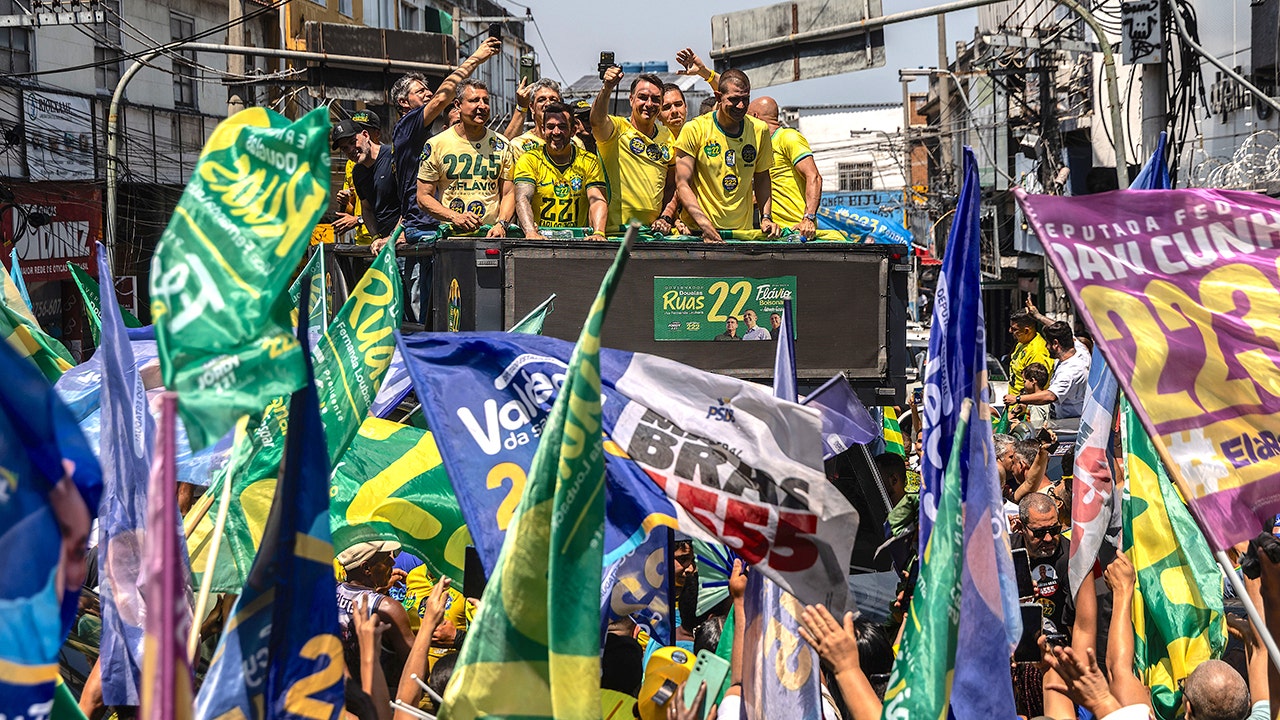
Both candidates have campaigned intensely in key states like São Paulo and Rio de Janeiro. Lula emphasizes the choice between "democracy and sovereignty" versus "barbarism and corruption," while Flávio Bolsonaro focuses on law and order issues.
### Electoral Process
- First Round: If no candidate receives more than 50% of valid votes, a runoff is scheduled for October 25.
- Voter Turnout: Over 159 million Brazilians are eligible to vote in this high-stakes election.
The outcome will have significant implications for Brazil's economic and political direction, as well as its relationships with the U.S. and China. The tight race highlights the deep divisions within Brazilian society and sets the stage for a closely watched runoff if necessary.
Written for “Brazil Presidential Election 2022” on 2026-10-05,
grounded in this article and the 38 other(s) covering the same event.
Why this leaning score
The article's own words the score was based on. Each is quoted
verbatim and was checked against the article text before being
stored, so you can find it in the original.
Leaning: leans left for article 56207 (medium confidence, 1 verified quote) · logged 2026-10-04
- Published
Polls have closed in Brazil's general election, after voters queued in long lines for a tight first round of the presidential race.
asserted
voters → publish → race
After casting his ballot, 80-year-old left-wing President Luiz Inácio Lula da Silva warned that the choice was between democracy and "barbarism".
asserted
choice → cast → democracy
His challenger, right-winger Flávio Bolsonaro, 45, said he wanted to "free the Brazilian people".
asserted
he → say → people
The result is forecast to be close.
asserted
result → forecast → ?
BBC Brazil's poll aggregator shows that the gap between Lula and Bolsonaro is only two points.
asserted
gap → show → Lula
If no candidate gets more than 50% of the vote, the election will go to a run-off on 25 October.
asserted
election → get → October
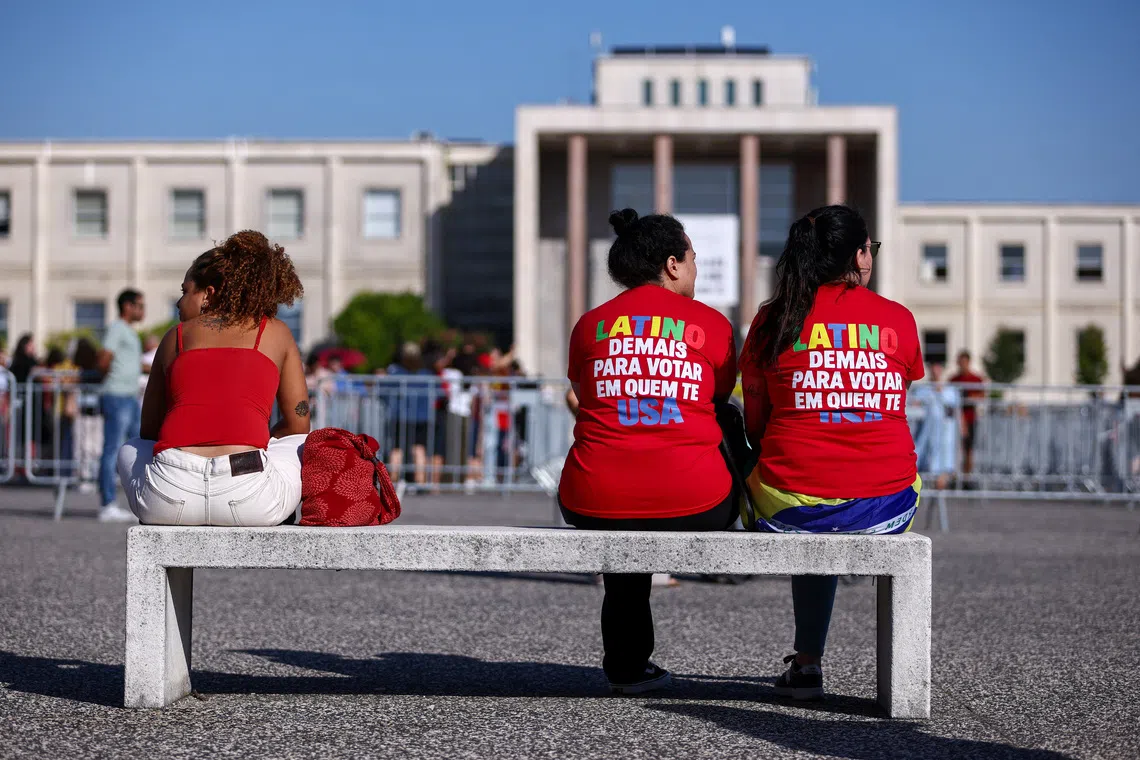
According to Brazil's Superior Electoral Court (TSE), more than 158.7 million Brazilians, including one million people abroad, are eligible to vote in the election.
uncertain
Brazilians → accord → election
Lula is challenged by 11 candidates, although BBC Brazil's poll aggregator shows that candidates other than Lula and Bolsonaro will get only about 10% of the vote.
asserted
candidates → challenge → vote
The TSE has not set a fixed time for the release of the official results, but they are expected within hours because voting is electronic and experience from previous elections shows that results tend to come quickly.
asserted
results → set → elections
A victory for Bolsonaro would extend a wave of wins across Latin America by right-wing candidates aligned with US President Donald Trump, while Lula's re-election would create problems for Washington, which has clashed with his government over trade and security.
Some countries, from which Brazilians living overseas are able to vote, have already released preliminary vote count data.
asserted
Brazilians → extend → data
In China, Lula won 56.63% of the votes, while Bolsonaro came in second with 31.33%.
asserted
Bolsonaro → win → %
Lula also won in countries including South Korea, New Zealand and Saudi Arabia.
asserted
Lula → win → Korea
In Israel, however, Bolsonaro won 74.40% of the valid votes.
asserted
Bolsonaro → win → votes
He also won 71.59% of the valid votes in Japan.
asserted
He → win → Japan
Today's result will also determine the composition of the Senate from February 2027 onwards, as 54 of the Senate's 81 seats are being contested, representing two-thirds of the chamber.
asserted
54 → determine → chamber
Currently, the largest bloc in the Senate is Bolsonaro's Liberal Party (PL), followed by the Social Democratic Party (PSD), which has served in a coalition government under Lula.
asserted
which → follow → Lula
In the last election four years ago, Lula narrowly defeated Flávio Bolsonaro's father, Jair.
asserted
Lula → defeat → father
But the tumultuous aftermath of the election, which saw Jair Bolsonaro convicted of plotting a coup after thousands of his supporters stormed the Brazilian Congress, has had a lasting impact on the nation's political life and this election.
asserted
thousands → see → life
Jair Bolsonaro is serving a 27-year sentence for plotting a coup and is barred from standing for office.
asserted
Bolsonaro → serve → office
Because of recurrent health problems, he is currently under house arrest rather than in a cell, but he has been prohibited from posting on social media or making public statements.
asserted
he → prohibit → statements
Despite these restrictions, there is little doubt that Flávio Bolsonaro has his father's backing.
asserted
Bolsonaro → be → backing
 The Aporia