Story summary
Brazil's 2026 Presidential Election: A Tight Race Between Lula and Flávio Bolsonaro
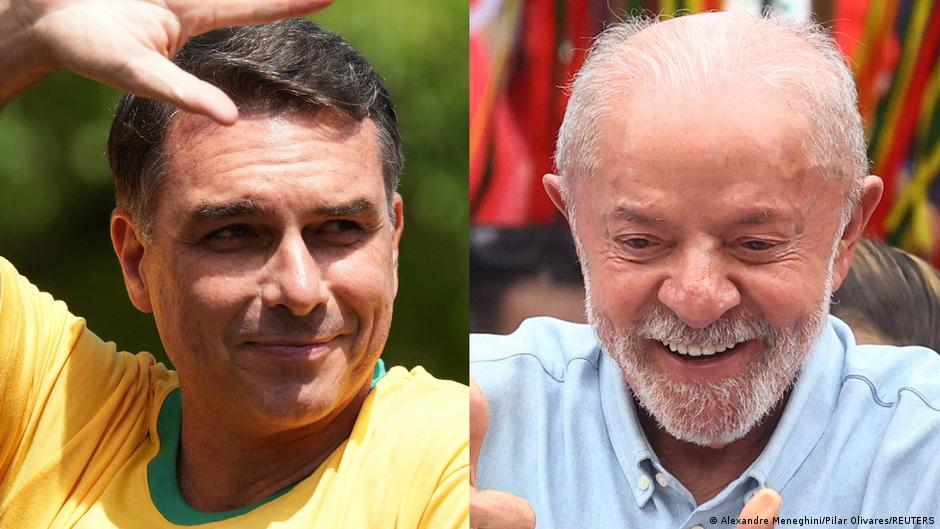
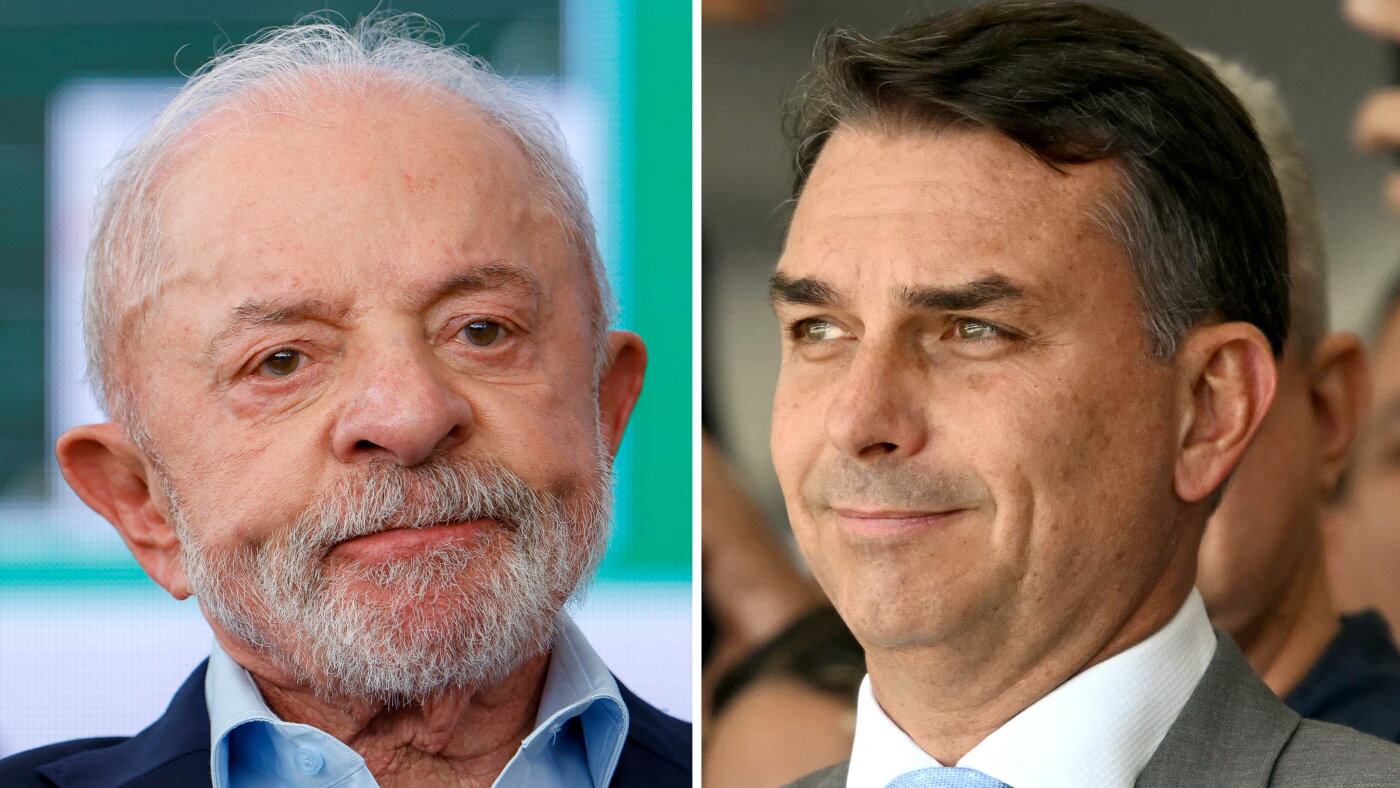
On October 4, 2026, Brazilians head to the polls for a critical presidential election that pits incumbent President Luiz Inácio Lula da Silva against Senator Flavio Bolsonaro. The race is extremely tight, with recent polls showing Lula slightly ahead in the first round but neck and neck in potential runoff scenarios.
### Key Candidates
- Luiz Inácio Lula da Silva (Workers' Party): Seeking a fourth non-consecutive term at 80 years old, Lula campaigns on continuing his left-wing policies of welfare programs, state-funded development, and income redistribution.
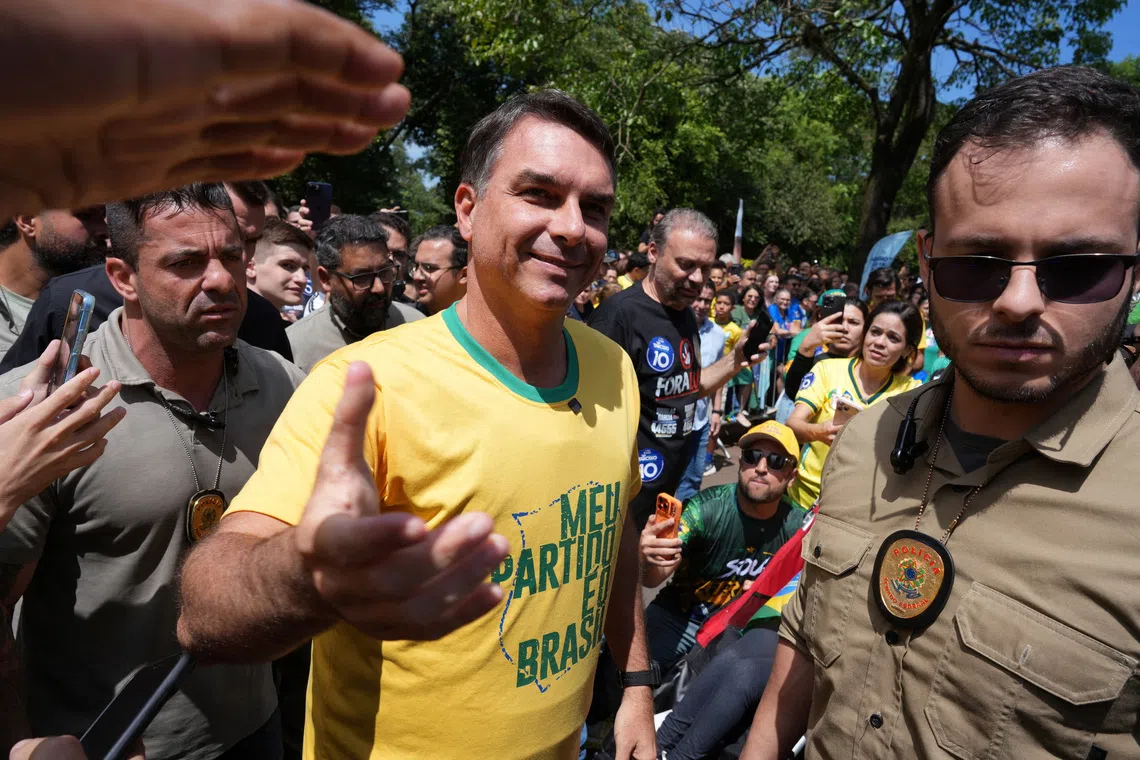
- Flávio Bolsonaro (Liberal Party): The son of former President Jair Bolsonaro, who is serving a 27-year sentence for plotting a coup, Flavio aims to continue the right-wing populist movement. He positions himself as more moderate but still aligns closely with his father's ideology.
### Political Context
- Jair Bolsonaro's Legacy: The tumultuous aftermath of Jair Bolsonaro’s presidency and his conviction for plotting a coup after losing the 2022 election to Lula has deeply polarized Brazilian politics.
- U.S. Influence: Flávio Bolsonaro enjoys support from U.S. President Donald Trump, while Lula criticizes Washington's interventionist policies.
### Polling Data
Multiple polls predict a narrow lead for Lula in the first round but show an extremely close race if a runoff is necessary:
- CNT/MDA:
- First Round: Lula 47.8%, Bolsonaro 42.1%
- Runoff: Lula 47.3%, Bolsonaro 43.1%
- Datafolha:
- First Round: Lula 45%, Bolsonaro 42%
- Runoff: Lula 47%, Bolsonaro 46%
- Quaest:
- First Round: Lula 46%, Bolsonaro 45%
- Runoff: Bolsonaro 44%, Lula 42%
### Campaign Dynamics
Both candidates have campaigned intensely in key states like São Paulo and Rio de Janeiro. Lula emphasizes the choice between "democracy and sovereignty" versus "barbarism and corruption," while Flávio Bolsonaro focuses on law and order issues.
### Electoral Process
- First Round: If no candidate receives more than 50% of valid votes, a runoff is scheduled for October 25.
- Voter Turnout: Over 159 million Brazilians are eligible to vote in this high-stakes election.
The outcome will have significant implications for Brazil's economic and political direction, as well as its relationships with the U.S. and China. The tight race highlights the deep divisions within Brazilian society and sets the stage for a closely watched runoff if necessary.
Written for “Brazil Presidential Election 2022” on 2026-10-05,
grounded in this article and the 38 other(s) covering the same event.
Sen. Flávio Bolsonaro, an ally of U.S. President Donald Trump, and Brazil’s incumbent President Luiz Inácio Lula da Silva will face off in a runoff Oct. 25 for the top job of Latin America’s powerhouse economy after neither won a majority in Sunday’s vote.
asserted
neither → face → vote
The country’s electoral court in Brasilia said neither the 80-year-old incumbent, seeking his fourth non-consecutive term, nor the 45-year-old son of former President Jair Bolsonaro would garner the majority vote needed for an outright win.
asserted
incumbent → say → win
The court had Bolsonaro with just over 55.8 million votes to Lula’s nearly 53.2 million.
asserted
court → have → Lula
Both candidates were poised to address supporters.
asserted
candidates → poise → supporters
The next presidential term is set to begin Jan. 5, 2027.
asserted
term → set → ?
A win for Bolsonaro would increase U.S. influence in Latin America.
asserted
win → increase → America
If Lula wins, Brazil will keep its distance from Washington and continue to deepen its relationship with China.
asserted
Brazil → win → China
Lula faces a tough battle
asserted
Lula → face → battle
Both Lula and Bolsonaro will have three weeks to reach moderate voters who did not support them in the first round.
asserted
who → have → round
Ronaldo Caiado and Renan Santos, two candidates who garnered about 5.3 million votes combined Sunday, have previously said they will not endorse either in the runoff.
asserted
they → garner → runoff
In the campaign ahead, Lula is expected to try to capitalize on the popularity of his social policies and his rival’s many legal woes.
asserted
Lula → expect → policies
While the once widely popular Lula saw his approval ratings plummet during his third term, standing up to the U.S. gave him a boost.
asserted
standing → see → boost
And he still enjoys a strong base of supporters who credit his social policies for improving millions of Brazilians’ lives.
asserted
who → enjoy → lives
But the incumbent faces a tough battle because of an affordability crisis and a corruption scandal that ensnared the same justice who led the investigation into Bolsonaro.
asserted
who → face → Bolsonaro
Bolsonaro will likely lean into his messaging on affordability and link the president to corruption scandals.
asserted
Bolsonaro → lean → scandals
He has promised to crack down on Brazilian criminal groups and insisted that Brazil needs to strike better deals with the Trump administration, including in the rare minerals economy, second only to China.
asserted
Brazil → promise → China
Bolsonaro also has campaigned on releasing his father and bringing him back to politics.
asserted
Bolsonaro → campaign → politics
“Brazil needs change.
asserted
Brazil → need → change
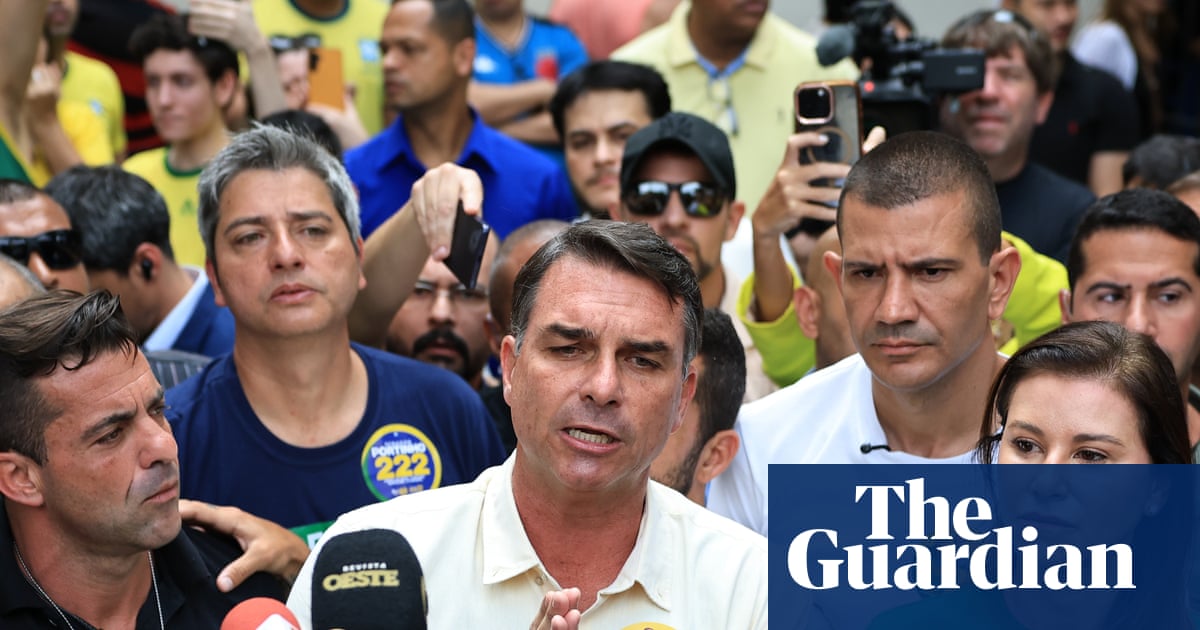
Brazil can’t stand so much suffering,” he told reporters at the Rio de Janeiro voting center where he cast his vote Sunday.
asserted
he → stand → vote
Both candidates face image problems: Roughly half of Brazil’s population disapproves of the Bolsonaro family, and roughly half disapprove of Lula’s Workers Party, according to multiple polls.
uncertain
half → face → polls
Four years ago, Lula beat then incumbent Jair Bolsonaro by about 2.1 million votes.
asserted
Lula → beat → votes
Voters choose between incumbent or return to right
“I’m feeling calm but very sad with the result,” said Alvaro Senra, 65, a history professor and Lula supporter in Rio de Janeiro who watched the count with friends at a bar.
asserted
who → choose → bar
“I think this is the result of conservatives working under the radar, including by neo-Pentecostal churches.
asserted
this → think → churches
But I think Lula can still win.”
asserted
Lula → think → ?
Earlier in the day, Maria Ribeiro, a 50-year-old cellphone vendor from Brasilia, said she voted for Bolsonaro’s eldest son because she wants freedom to express her evangelical religion.
asserted
she → say → religion
She hopes he follows in his father’s footsteps.
asserted
he → hop → footsteps
“I voted for his father, and I don’t regret it,” she said.
asserted
she → vote → it
The proximity to his father was what worried Lorena Zschaber, a 40-year-old photographer, who watched the results roll in at an LGBTQ+-friendly bar in downtown Rio de Janeiro.
asserted
results → worry → Janeiro
During his father’s presidency, “people felt more at ease to discriminate,” she said.
asserted
she → feel → ease
“I’m an LGBTQ+ woman, I can’t think of anything worse happening than Flávio Bolsonaro being elected,” she added.
asserted
she → ’m → ?
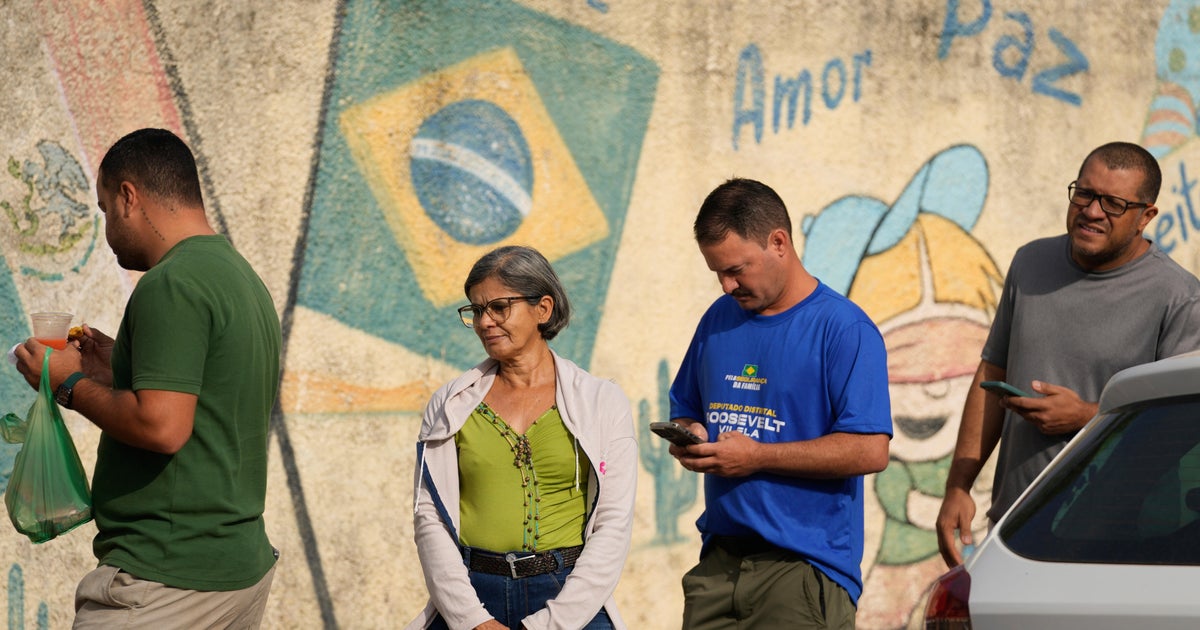
Rosângela Resende da Rocha, a 69-year-old who was previously a stay-at-home mom, said she supported Lula’s social policies that help the “less fortunate” and how he stands up to Trump.
asserted
he → stay → Trump
“That crazy guy wants to come in here to buy our country, so that our country will be like it is over there,” she said at a voting center in Brasilia.
asserted
she → want → Brasilia
“He won’t succeed if Lula wins.”
asserted
Lula → succeed → ?
Confidence in Brazil’s electronic voting system
No significant fraud has ever been detected since Brazil adopted its electronic voting system in the 1990s.
asserted
Brazil → detect → 1990s
The Organization of American States’ electoral observation mission reported Sunday that “the voting has been going smoothly and under adequate safety conditions.”
asserted
voting → report → conditions
Electoral authorities have assured that electronic votes are secure and verifiable.
asserted
votes → assure → ?
Voters appeared largely confident that the country’s voting system can’t be tampered with.
asserted
system → appear → ?
Josemar Lauriano Pereira, a 46-year-old lawyer in Rio de Janeiro, said that the rapid availability of results helped combat fraud and uncertainty.
“When results take a lot of time, it creates an opening for people to cast doubt on the results, to say there’s been a problem,” he said.
asserted
he → say → results
 The Aporia