Story summary
Brazil's 2026 Presidential Election: A Tight Race Between Lula and Flávio Bolsonaro
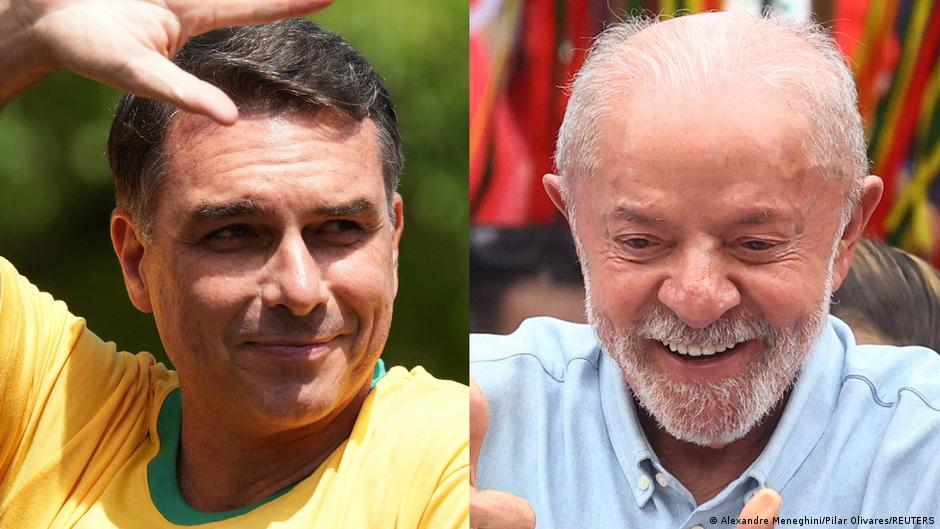
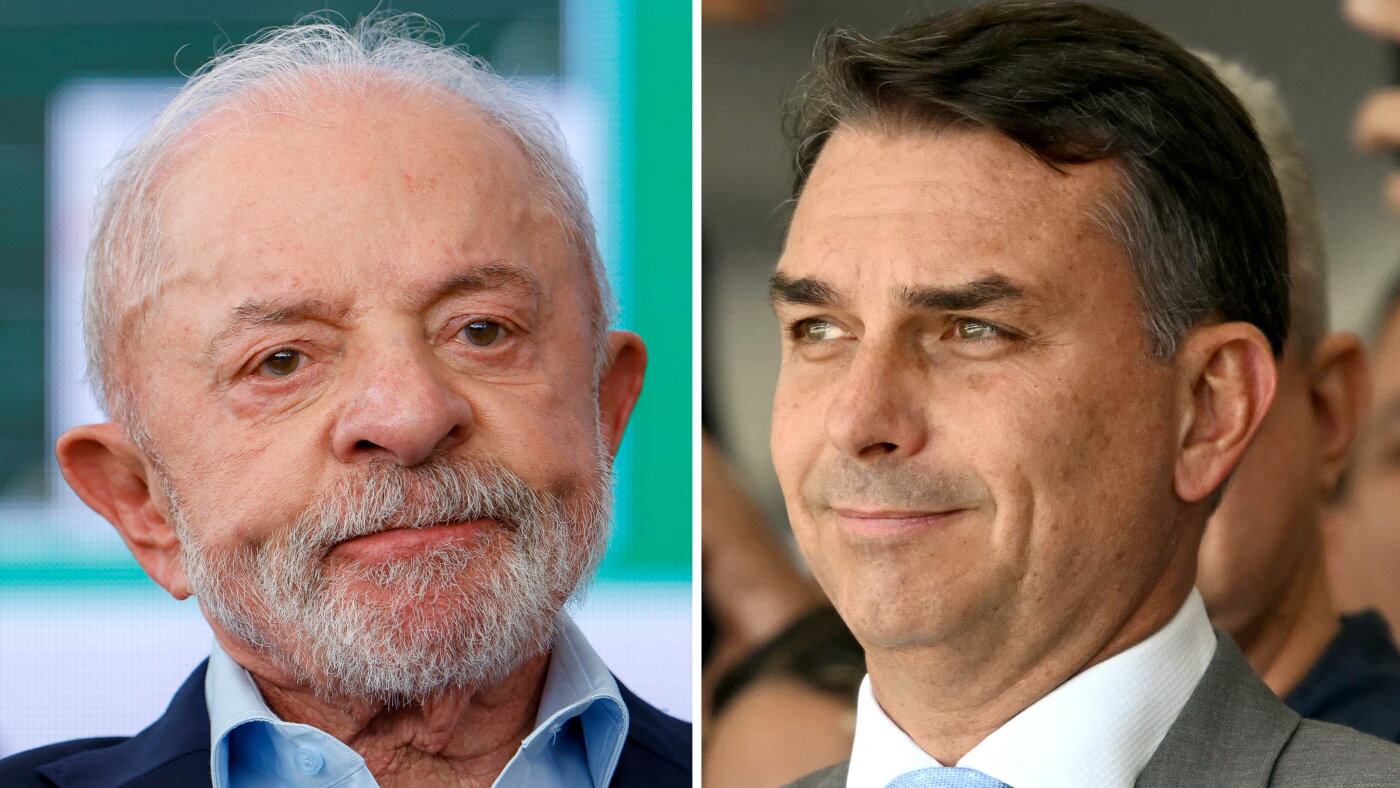
On October 4, 2026, Brazilians head to the polls for a critical presidential election that pits incumbent President Luiz Inácio Lula da Silva against Senator Flavio Bolsonaro. The race is extremely tight, with recent polls showing Lula slightly ahead in the first round but neck and neck in potential runoff scenarios.
### Key Candidates
- Luiz Inácio Lula da Silva (Workers' Party): Seeking a fourth non-consecutive term at 80 years old, Lula campaigns on continuing his left-wing policies of welfare programs, state-funded development, and income redistribution.
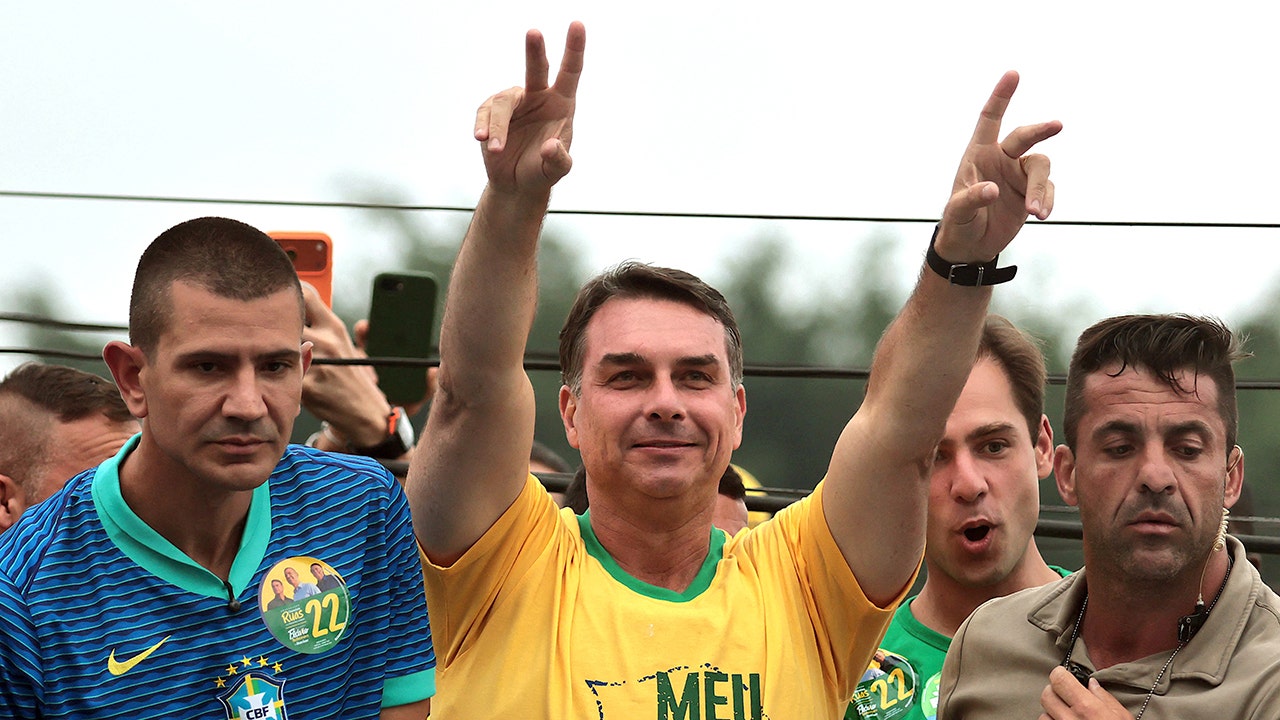
- Flávio Bolsonaro (Liberal Party): The son of former President Jair Bolsonaro, who is serving a 27-year sentence for plotting a coup, Flavio aims to continue the right-wing populist movement. He positions himself as more moderate but still aligns closely with his father's ideology.
### Political Context
- Jair Bolsonaro's Legacy: The tumultuous aftermath of Jair Bolsonaro’s presidency and his conviction for plotting a coup after losing the 2022 election to Lula has deeply polarized Brazilian politics.
- U.S. Influence: Flávio Bolsonaro enjoys support from U.S. President Donald Trump, while Lula criticizes Washington's interventionist policies.
### Polling Data
Multiple polls predict a narrow lead for Lula in the first round but show an extremely close race if a runoff is necessary:
- CNT/MDA:
- First Round: Lula 47.8%, Bolsonaro 42.1%
- Runoff: Lula 47.3%, Bolsonaro 43.1%
- Datafolha:
- First Round: Lula 45%, Bolsonaro 42%
- Runoff: Lula 47%, Bolsonaro 46%
- Quaest:
- First Round: Lula 46%, Bolsonaro 45%
- Runoff: Bolsonaro 44%, Lula 42%
### Campaign Dynamics
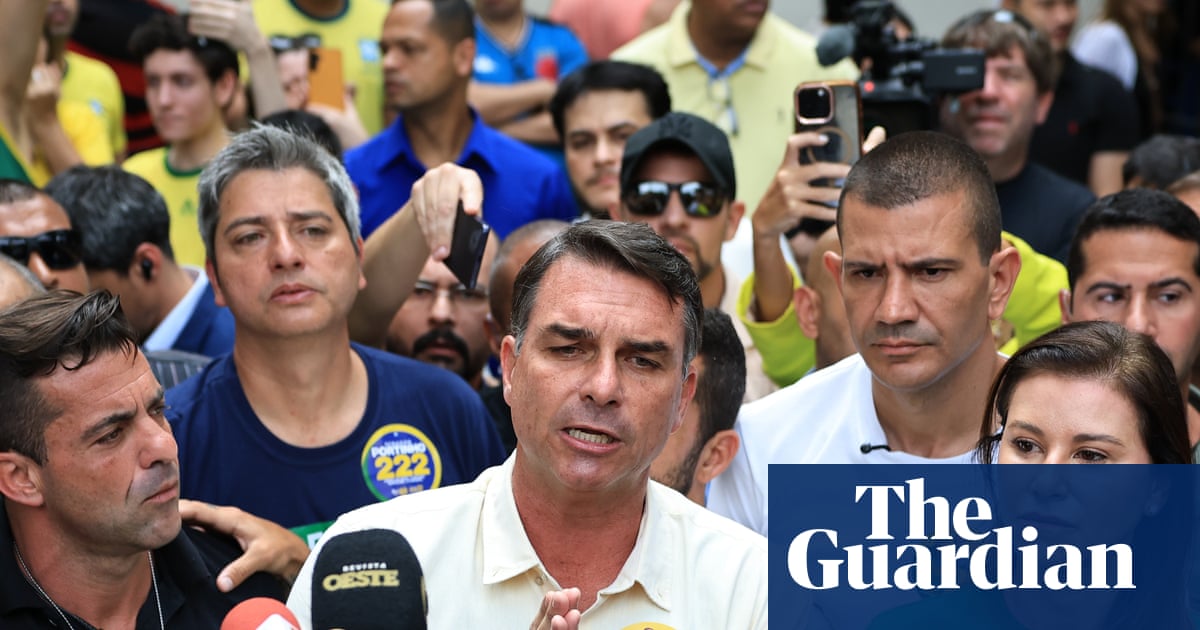
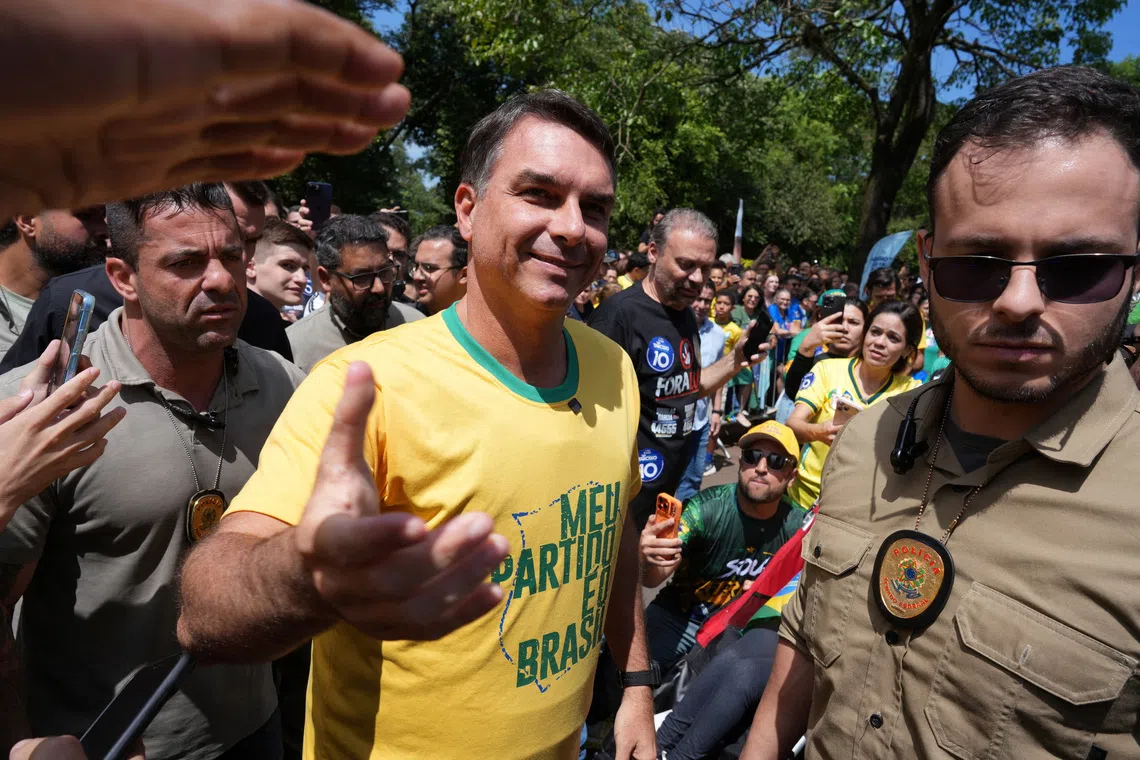
Both candidates have campaigned intensely in key states like São Paulo and Rio de Janeiro. Lula emphasizes the choice between "democracy and sovereignty" versus "barbarism and corruption," while Flávio Bolsonaro focuses on law and order issues.
### Electoral Process
- First Round: If no candidate receives more than 50% of valid votes, a runoff is scheduled for October 25.
- Voter Turnout: Over 159 million Brazilians are eligible to vote in this high-stakes election.
The outcome will have significant implications for Brazil's economic and political direction, as well as its relationships with the U.S. and China. The tight race highlights the deep divisions within Brazilian society and sets the stage for a closely watched runoff if necessary.
Written for “Brazil Presidential Election 2022” on 2026-10-05,
grounded in this article and the 38 other(s) covering the same event.
Senator Flavio Bolsonaro, son of former President Jair Bolsonaro, won the first round of the Brazilian presidential election tonight, turning in a surprisingly strong showing, and continuing a long run of wins for Latin American Trump-backed right-wing candidates.
asserted
Bolsonaro → win → candidates
Although the race had tightened considerably in the weeks leading up to the election, the vast majority of the polls showed incumbent President Ignacio Lula da Silva with a single digit lead.
asserted
majority → tighten → lead
Bolsonaro will now face off against President Lula da Silva in an October 25 second round election.
asserted
Bolsonaro → face → election
With 99% of the votes in, Bolsonaro led Lula 47.2% to 44.9%, in a race Lula had widely been expected to win.
asserted
Lula → lead → race
Tonight, the question on everyone's mind: how could the pollsters get the results so wrong?
uncertain
results → get → mind
The epic polling failure will serve to give further ammunition to the Brazilian right and the Bolsonaro camp, which have long alleged that the nation's leading pollsters turn in work biased in favor of Lula and his Workers Party.
asserted
pollsters → serve → Lula
Bolsonaro put in an incredibly strong showing in his electoral strongholds in the south of Brazil, winning the country's three largest states by large margins:
asserted
Bolsonaro → put → margins
In Sao Paulo state, the nation's largest, Bolsonaro led Lula 52% to 38%.
asserted
Bolsonaro → lead → %
In Minas Gerais, which is Brazil's historic "bellwether state", Bolsonaro led Lula 50% to 43%, while in his stronghold of Rio de Janeiro, he bested the incumbent president 53% to 39%.
asserted
he → lead → president
Lula racked up large margins in his traditional strongholds in the Northeast, where he won vote-rich Bahia, Pernambuco, and Ceara by large margins, but it was not enough to surmount Bolsonaro's unprecedented electoral strength in Brazil's south.
asserted
it → rack → south
Bolsonaro enjoyed a close relationship with Donald Trump through the course of the campaign, who made no secret of his intent to unceremoniously eject longtime geopolitical adversary Lula from office.
asserted
who → enjoy → office
Tonight's surprising result is merely the latest in a long string of right-wing victories across Latin America, which has recently ushered in a red wave of conservative candidates in Chile, Argentina, Peru, Ecuador, and Bolivia.
asserted
which → usher → Chile
The election will undoubtedly prompt a period of soul-searching for the Brazilian left, which may be asking, "Should Lula have run at all?"
At 80 years old, with three presidential terms under his belt, and aspiring to a fourth, Lula was widely viewed as the only contender who could unite the contentious and often-fractured Brazilian left.
uncertain
who → prompt → left
Lula's political story marks one of the greatest comebacks in history.
asserted
story → mark → history
Once imprisoned on corruption charges, Lula was freed by the nation's Supreme Court, and then defeated incumbent Jair Bolsonaro in a heated 2022 election by a razor-thin margin.
asserted
Lula → imprison → margin
Famously, he pledged to serve only one term as president in 2022, and then reneged on that promise.
asserted
he → pledge → promise
Now, the move seems likely to backfire on him, in what will almost certainly be his last electoral campaign.
asserted
what → seem → him
Flavio Bolsonaro will now face off against incumbent Lula in a second round election on October 25.
asserted
Bolsonaro → face → October
Bolsonaro begins the race with several structural advantages.
asserted
Bolsonaro → begin → advantages
In addition to vastly outperforming across the country, and proving the pollsters wrong, he is likely to win the vast majority of the votes of the major third-party candidates: Augusto Cury, Renan Santos, Ronaldo Caiado, and Romeu Zema.
asserted
he → outperform → candidates
Together, these four candidates received nearly 8% of the vote.
asserted
candidates → receive → vote
What remains to be seen is whether any of these candidates will make an endorsement.
asserted
any → remain → endorsement
It is suspected that Caiado and Zema will back Bolsonaro, while Cury and Santos will likely not make an endorsement.
asserted
Cury → suspect → endorsement
If elected, Flavio Bolsonaro is all but certain to free his father, and senior Brazilian military officers, who are currently jailed on charges of planning a coup to remain in power following the 2022 election.
asserted
who → elect → election
The election also saw other members of the Bolsonaro family ushered into higher office: Jair Bolsonaro's wife, Michelly, was elected senator, as was his son Carlos, while another son, Renan, was elected federal deputy.
asserted
son → see → office
Bolsonaro's Liberal Party also turned in strong results in races for both chambers of Brazil's Congress, particularly in the Senate, where they are expected to hold 29 seats, compared to just 9 for Lula's Workers Party.
asserted
they → turn → Party
 The Aporia