That is 0 articles you have read today.
The Aporia is free and carries no advertising, so readers are the only
thing paying for it. If you are getting this much out of it, a small
donation is what keeps it independent.
Daily limit reached
You have read 0 articles today.
That is more than the 15 a day The Aporia gives away,
and well past what it can carry on nothing. Your allowance resets at
midnight.
There is no advertising here and nothing about you is sold, so readers
are the only thing paying for it. If the site is worth this much of
your day, it is worth a few dollars.
Everything else stays open: the
maps, the
directory and
search do
not count against this, and neither does re-opening something you have
already read today.
Brazil's presidential election is headed to a runoff after neither candidate secured a majority, with Flavio Bolsonaro receiving 56 million votes and Luiz Inácio Lula da Silva getting 53.7 million votes as of Sunday. The runoff will take place on October 25, determining the next president who will lead Latin America’s largest economy and population of 214 million starting January 5, 2025. Flavio Bolsonaro, supported by former U.S. President Trump, seeks to continue his father's legacy, while Lula aims to strengthen ties with China and resist US pressure.
Written locally by qwen2.5:14b on 2026-10-05,
using this article's own text rather than the other coverage of the
same event (that is the story summary below).
Story summary
Brazil's 2026 Presidential Election Pits Lula Against Flávio Bolsonaro
Brazilians head to the polls on October 4, 2026, for a high-stakes presidential election that pits incumbent President Luiz Inácio Lula da Silva against Senator Flavio Bolsonaro. The race is closely contested, with multiple polls predicting a narrow lead for Lula in the first round but a razor-thin margin between the two candidates if a runoff is required on October 25.
Polling Predictions
- CNT/MDA Poll: First-round results show Lula leading with 47.8% compared to Bolsonaro's 42.1%. In a potential runoff, the margin narrows to Lula at 47.3% and Bolsonaro at 43.1%.
- Datafolha Poll: Similar trends are observed with Lula ahead by 45%, while Bolsonaro follows closely behind at 42%. The runoff projection shows a very tight race, with both candidates polling almost equally.
Candidates' Backgrounds
- Lula (Workers' Party): Seeking his fourth non-consecutive term at the age of 80, Lula has championed social welfare programs and state-funded development. His platform emphasizes democratic values and sovereignty against foreign intervention, particularly from the U.S. He criticizes actions taken by the Trump administration that included high tariffs on Brazilian exports and sanctions on a Supreme Court justice who chaired the investigation leading to Jair Bolsonaro's conviction.
- Flávio Bolsonaro (Liberal Party): Son of former President Jair Bolsonaro, Flavio is aligned with right-wing ideologies. Although he positions himself as more moderate than his father, he remains a staunch supporter of law and order policies and economic liberalization. His campaign has received significant backing from Trump allies in the U.S., despite not having an official endorsement.
Political Context
- Divisive Campaign: The political climate is marked by intense polarization, with both sides engaging in aggressive online campaigns that exploit every gaffe or rumor. Lula portrays this election as a choice between democracy and authoritarianism, while Bolsonaro stresses his father’s legacy of tough law enforcement and anti-corruption measures.
- Historical Backdrop: The 2022 election's aftermath is still fresh in voters' minds, including Jair Bolsonaro's conviction for plotting a coup after losing to Lula. This event has left deep scars on the political landscape, with lingering questions about democratic stability and the rule of law.
Election Day
With almost 159 million eligible voters, the election will determine Brazil’s direction for the coming years. The outcome could significantly impact domestic policies and international relations, particularly regarding ties with China versus traditional allies in the West like the U.S.
As Brazilians cast their ballots, all eyes are on whether Lula can secure another term or if Flávio Bolsonaro will carry forward his father's legacy in this decisive election. The results promise to reshape Brazil’s political landscape and influence regional dynamics across Latin America.
Written for “Brazil Presidential Election 2022” on 2026-10-05,
grounded in this article and the 46 other(s) covering the same event.
Why this leaning score
The article's own words the score was based on. Each is quoted
verbatim and was checked against the article text before being
stored, so you can find it in the original.
Leaning: leans right for article 56584 (medium confidence, 2 verified quotes) · logged 2026-10-05
- See more Daily Mail on Google - save us as a Preferred Source
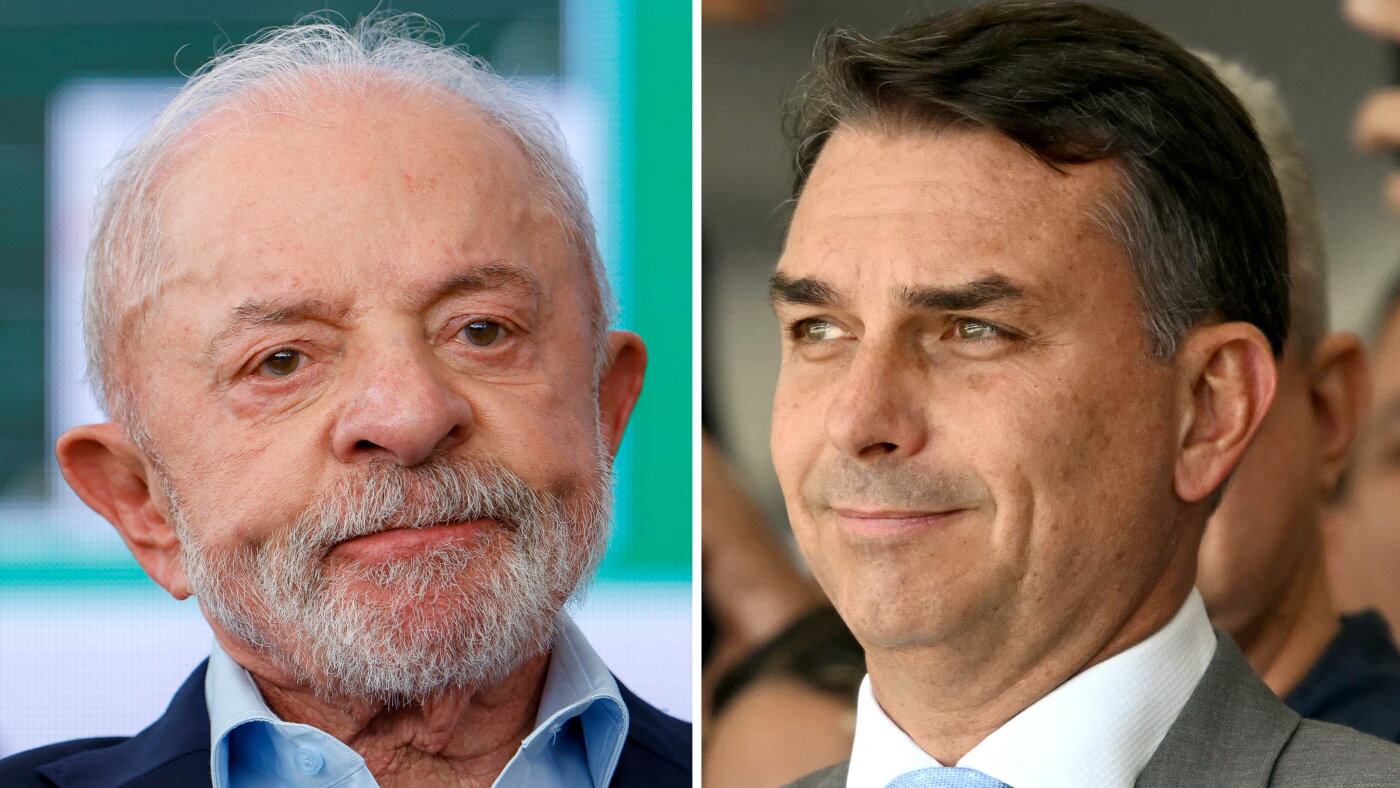
Brazil's presidential election is headed for a runoff after neither left-wing President Luiz Inácio Lula da Silva nor Trump ally Flávio Bolsonaro secured a majority.
asserted
Silva → see → majority
The electoral court in Brasilia reported on Sunday that Bolsonaro received 56 million votes to Lula’s 53.7 million, with 99.8 percent of the vote reported, according to the Associated Press (AP).
uncertain
percent → report → Press
The undecided vote leaves the candidates to face off in an October 25 runoff.
asserted
vote → leave → runoff
Bolsonaro, the son of imprisoned former President Jair Bolsonaro, has been backed by Trump since his return to office in January 2025.
asserted
Bolsonaro → imprison → January
Trump's administration initially tried to keep Jair out of prison after his attempted coup.
asserted
administration → try → coup
The president threatened to place a 50 percent tariff on imports from Brazil.
asserted
president → threaten → Brazil
Lula, 80, has reinforced that he would not bow to US pressure, likely strengthening ties with Brazilian allies like China.
asserted
he → reinforce → China
A Bolsonaro win, meanwhile, would grow the US's influence in South America.
asserted
win → grow → America
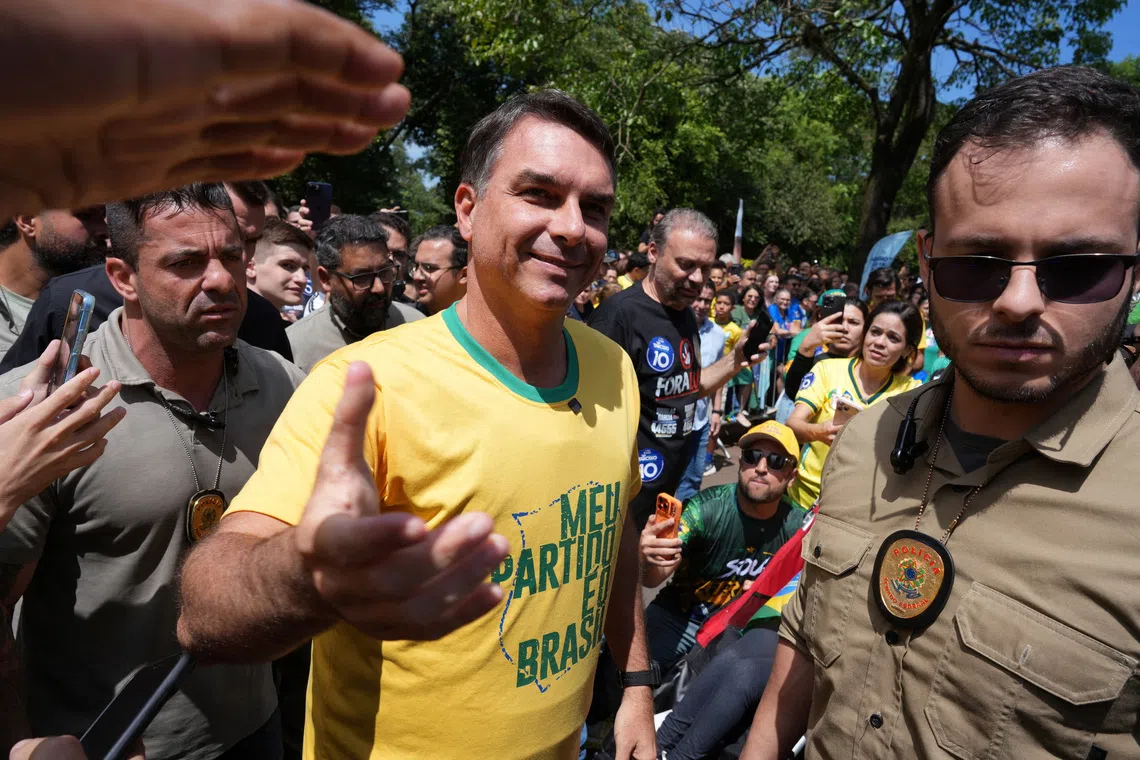
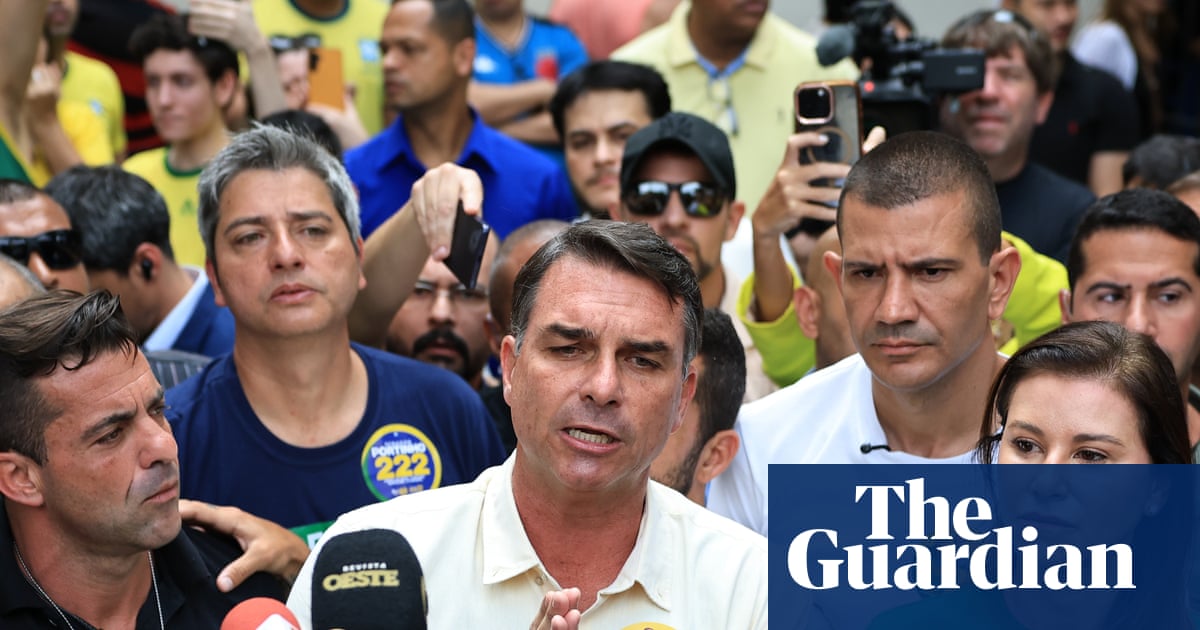
Presidential candidate Senator Flavio Bolsonaro speaks after advancing to a runoff election following the first round of the presidential election in Brasilia, Brazil, on Sunday
President Luiz Inacio Lula da Silva, who is running for reelection, speaks after voting during general elections in Sao Bernardo do Campo, Brazil, on Sunday
Bolsonaro, the son of imprisoned former President Jair Bolsonaro, has been backed by Trump since his return to office in January 2025
The next president of Brazil, who will take office on January 5, will be in charge of Latin America’s biggest economy and a population of 214 million.
asserted
who → speak → million
Following news of the runoff, Bolsonaro spoke to his supporters and the press outside his home: 'Brazil wants change, that’s the reading of what happened today.
asserted
what → follow → change
It’s the end of the Workers’ Party era.'
asserted
It → ’ → era
Lula also addressed his followers ahead of the October runoff, which he described as 'unexpected.
asserted
he → address → which
'Tomorrow we start a new campaign,' Lula said.
asserted
Lula → start → campaign
We will see who has the best plan.'
asserted
who → see → plan
The candidates have three weeks to reach voters who didn't support them in the first vote.
asserted
who → have → vote
Augusto Cury, who finished in third place with 3.4 million votes, said he would not endorse either candidate in the runoff.
asserted
he → finish → runoff
Ronaldo Caiado and Renan Santos, who garnered 5.3 million votes combined, have also said neither Bolsonaro nor Lula will receive their endorsement.
asserted
Bolsonaro → garner → endorsement
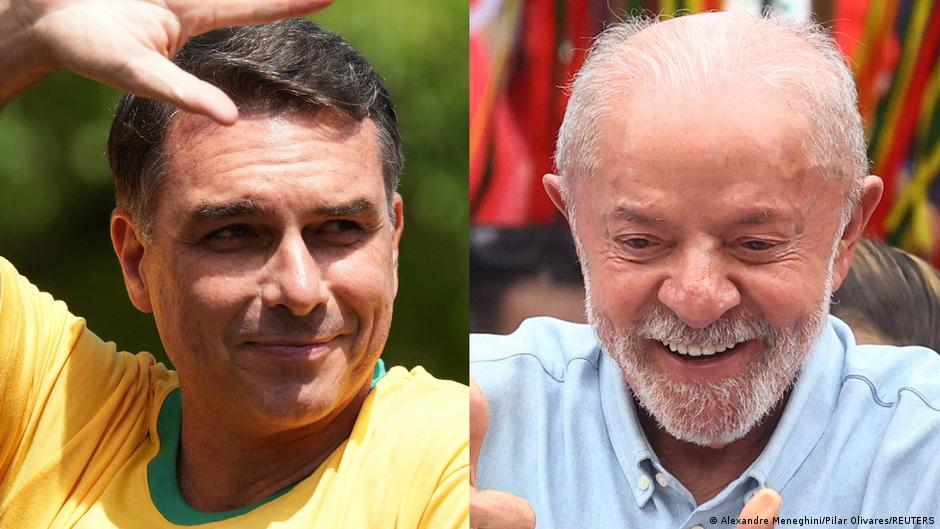
A Bolsonaro (Left) win would likely strengthen Brazil relationship with Brazil while a Lula victory could improve the countries relationship with China
Supporters of President Luiz Inacio Lula da Silva, who is running for reelection, react during a gathering to wait for election results in Sao Paulo, Brazil on Sunday
The two candidates have offered voters starkly different visions for Brazil's future.
According to AP there has been no significant fraud detected since Brazil adopted its electronic voting system in the 1990s.
uncertain
Brazil → strengthen → 1990s
 The Aporia