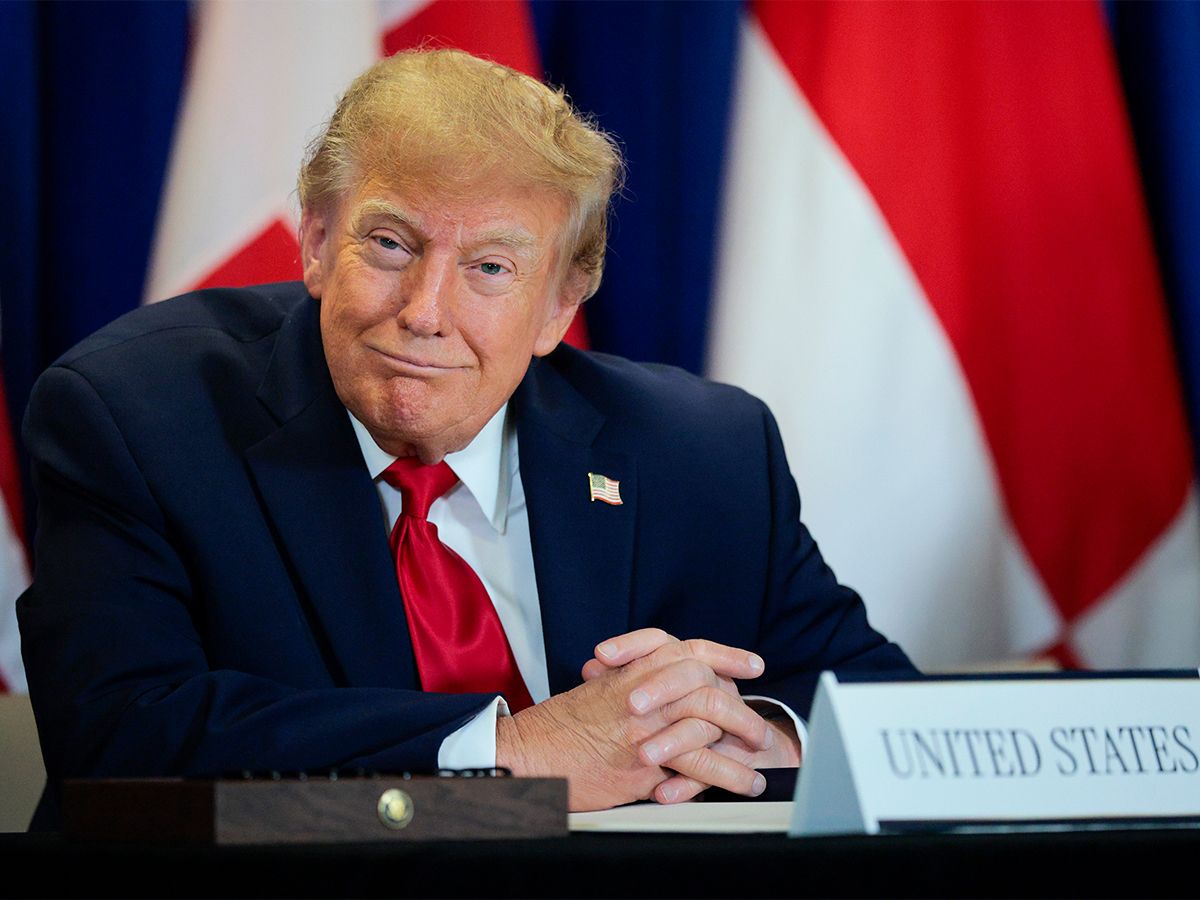
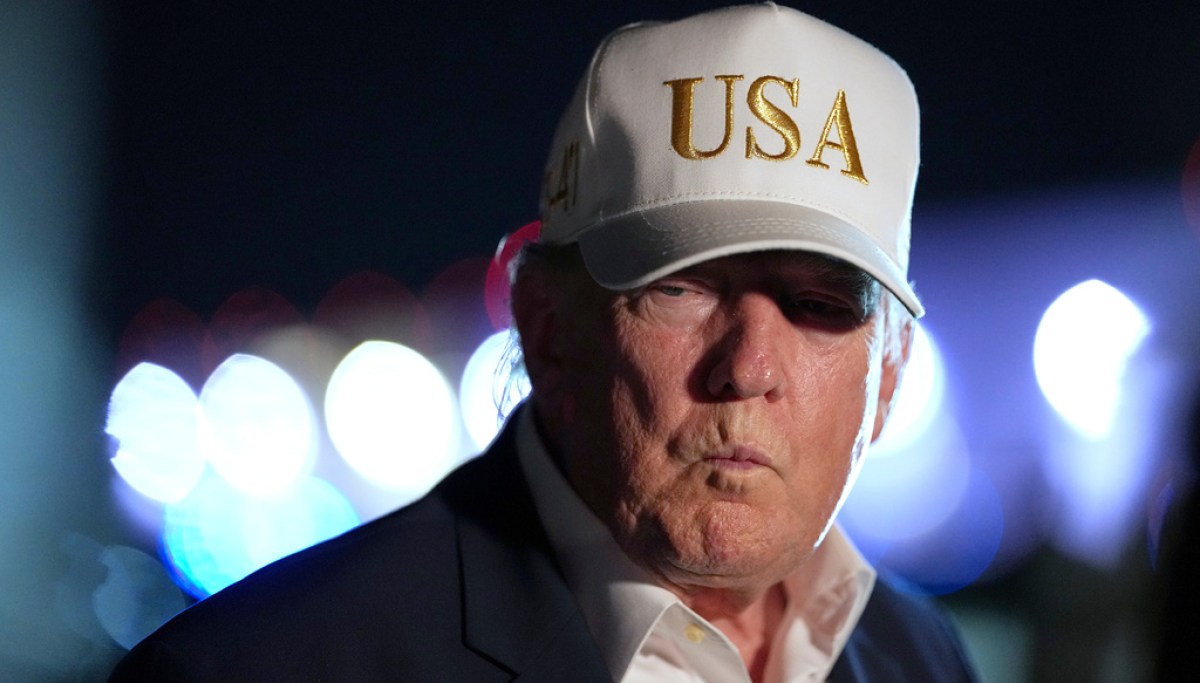
Photo via Washington Examiner

While Trump and Bibi bomb Iran, Putin will subjugate Europe

Read the original at Washington Examiner ↗
Cite

Alvarez, J. L. (2026, September 21). While Trump and Bibi bomb Iran, Putin will subjugate Europe. Washington Examiner. https://www.washingtonexaminer.com/op-eds/4735359/red-sea-crisis-us-iran-strikes-baltics/

Dated when The Aporia collected the article, usually within hours of publication. Check the original for its exact date and byline.

Washington Examiner · collected 2026-09-21 · by Jose Lev Alvarez

Quick Summary

The article discusses how Yemen's Houthis gaining control over Perim Island could severely impact Saudi Arabia’s oil exports through the Bab el-Mandeb Strait, threatening global energy security. It argues that this situation mirrors historical conflicts like "Operation Praying Mantis" in 1988 and suggests President Trump may use a military response to boost his political standing ahead of midterm elections by framing it as a solution to rising domestic fuel prices. The piece also explores potential geopolitical consequences, including European dependence on Israel for defense if Russia makes a move in the Baltics due to significant ethnic Russian populations there.
Written by AI on 2026-09-21, from this article's own text only (the story summary below draws on all the coverage).
See how they differ ↓

AI analysis

Story summary

On September 7, 2026, an Iranian container ship was attacked near Hengam Island in the Strait of Hormuz by what state media called an “unidentified projectile,” leaving one person dead and four crew members wounded. This incident occurred as Iran prepared to meet with Gulf states in Oman to discuss shipping traffic safety in the Strait of Hormuz.

On September 12, a critical oil pipeline in Saudi Arabia, which had been moving 4-5% of global oil supplies since late February due to blockades at the Strait of Hormuz, was shut down after being struck by drones launched from Iraq. The attack caused injuries and forced Saudi Arabia to temporarily close the East-West pipeline.

In response to the drone attacks on September 12, Iraq's government confirmed the attacks originated from its territory but an umbrella group of Iran-backed militias in Iraq denied involvement. Iraqi Prime Minister Ali al-Zaiyadi dismissed a military commander as part of an investigation into the incident.

On September 18, oil company Saudi Aramco informed at least two European refining customers that they would receive no crude oil for October due to damage sustained during the drone attack on its pipeline.

These events have significantly impacted global oil markets and international relations, with Iran continuing to impede commercial traffic through the Strait of Hormuz and the Houthis advancing towards strategic locations in Yemen. The United States is grappling with how to address these challenges amidst ongoing conflicts and economic pressures. China's role in fueling tensions further complicates efforts to stabilize the region, leading to discussions between U.S. President Trump and Chinese leader Xi Jinping about potential resolutions. Trump aims to prioritize addressing Iran's influence over other trade issues during his meeting with Xi.

Written for “Houthis Attack Saudi Oil Facilities” on 2026-11-18, grounded in this article and the 39 other(s) covering the same event.

How they differ

19 outlets covered “Houthis Attack Saudi Oil Facilities”.

What each outlet says

One AI summary per outlet of its latest article on this story, written from that article alone and checked against it. Open the article for the outlet's own words.

Washington ExaminerThis outlet21 Sep

The article discusses how Yemen's Houthis gaining control over Perim Island could severely impact Saudi Arabia’s oil exports through the Bab el-Mandeb Strait, threatening global energy security. It argues that this situation mirrors historical conflicts like "Operation Praying Mantis" in 1988 and suggests President Trump may use a military response to boost his political standing ahead of midterm elections by…

While Trump and Bibi bomb Iran, Putin will subjugate Europe (this article)
Semafor15 Sep

Oil prices are approaching $100 a barrel due to attacks by Yemen's Houthis on Saudi Arabia’s energy infrastructure. The attacks, which include the use of missiles and drones, have resulted in injuries and operational halts at key installations in southern Saudi Arabia. This resurgence in conflict has heightened concerns about ongoing disruptions in Middle Eastern oil supplies and shipping through the Strait of…

Oil nears $100 a barrel after attacks by Yemen's Houthis →5 articles from Semafor on this story
Al Jazeera18 Sep

US officials met with Houthi representatives in Muscat after the group seized significant territories including islands near the Bab al-Mandeb Strait, a critical shipping route for global trade. The Houthis assured the United States they would not attack American vessels but restricted activities to Saudi-linked ships, raising concerns about potential disruptions to oil prices and international commerce. Despite…

As Houthis grab Bab al-Mandeb, US appears willing to watch from sidelines →4 articles from Al Jazeera on this story
The Straits Times18 Sep

Saudi Aramco will not supply European oil refiners with crude oil in October following an attack on its East-West pipeline. This decision impacts all European buyers under long-term contracts and comes as the company redirects supplies to Asia via the Persian Gulf due to the shutdown. The move could cause European refineries to seek alternative suppliers, potentially driving up regional oil prices.

Saudi Aramco will not supply European oil refiners with crude in October: Sources →4 articles from The Straits Times on this story
The Hindu18 Sep

Saudi Aramco has halted October crude oil deliveries to at least two European refining customers following a drone attack that damaged the East-West pipeline and three pumping stations in Saudi Arabia. The attack forced the shutdown of the Red Sea port of Yanbu, leading refiners like Poland’s Orlen to seek alternative crude supplies from North Sea grades. Aramco aims to partially restart the affected pipeline within…

Saudi Aramco halts October crude deliveries to some European refiners after pipeline attack, says report →3 articles from The Hindu on this story
ABC News (AU)18 Sep

Yemen's Houthi rebels have expanded their control over key areas along the Red Sea coast in recent weeks, including the strategic port city of Mokha and several nearby islands. This offensive has brought them closer to Djibouti, a country hosting US military bases, raising concerns about potential threats to global trade through the Bab el-Mandeb strait, which sees 12% of world maritime traffic. The attacks have…

A week of Houthi attacks threatens Saudi oil and rattles markets →3 articles from ABC News (AU) on this story
Show 13 more outlets
CBC16 Sep

Saudi Arabia is intensifying its airstrikes in Yemen as Houthi rebels advance along the Red Sea coast and seize islands near the Bab el-Mandeb Strait. The Houthis claim to have launched drone and missile strikes against Saudi cities including Yanbu and Khamis Mushait, while also downing a Saudi F-15 fighter jet, though this has not been independently verified. U.S. officials have tightened travel restrictions for…

Saudis pound Yemen as Houthis solidify gains in new Middle East war front →2 articles from CBC on this story
Euronews14 Sep

Drone attacks in Saudi Arabia have forced the kingdom to shut down its East-West pipeline, which is crucial for oil exports to Europe and Asia via the Red Sea port of Yanbu. Without a clear restart date, Saudi Arabia relies on stored supplies that could last five to seven days, potentially impacting around 4 million barrels per day of global oil supply, or about 4% of total demand. The shutdown highlights…

Saudi pipeline shutdown threatens oil exports to Europe and Asia as kingdom relies on stored supplies →2 articles from Euronews on this story
New York Post19 Sep

The article argues that China is economically supporting Iran's ability to disrupt maritime trade in the Strait of Hormuz and beyond, which undermines U.S. influence in the region. According to the text, Chinese companies buy about 90% of Iranian oil exports, helping Tehran survive sanctions. The author suggests President Trump should pressure Chinese leader Xi Jinping during their September summit to reduce China’s…

China is fueling the Iran War — can Trump stop them? →2 articles from New York Post on this story
South China Morning Post18 Sep

Experts warn that Asia's economic resilience is being tested due to the shutdown of Saudi Arabia’s East-West oil pipeline, following an attack last week. The closure could exacerbate existing energy shortages and push crude oil prices above $100 a barrel. Analysts predict this will initially impact Asian refiners before affecting inflation, currencies, and overall economic growth across the region. Saudi officials…

Saudi oil pipeline closure puts Asia’s economic resilience to the test →2 articles from South China Morning Post on this story
NBC News12 Sep

Saudi Arabia has closed its East-West oil pipeline after it was struck by drones launched from Iraq, impacting up to 4-5% of global oil supplies. The incident occurred as Yemen's Iran-backed Houthi rebels captured the island of Perim in the Bab el Mandeb Strait and advanced on other strategic locations along the Red Sea coast, threatening another critical shipping route for oil transportation. Saudi Arabia has not…

Saudi shutdown of key pipeline limits oil flow as Yemen hits back against Houthis →
Dawn12 Sep

Saudi Arabia temporarily shut down its East-West oil pipeline after drones launched from Iraq caused damage and injuries, according to statements by Saudi officials on Friday. Satellite images showed smoke near Medina along the pipeline route. The Iraqi government confirmed the attack but dismissed the commander responsible for it in southern Maysan province, while condemning attacks against neighboring countries…

Saudi Arabia says Iraqi drones forced temporary closure of crucial oil pipeline →
BBC12 Sep

Saudi Arabia has closed its East-West oil pipeline after it was attacked by drones launched from Iraq. The attack, which caused damage and injuries, originated near the border with Iran, according to Iraqi officials who admitted responsibility and are investigating. The pipeline carries about 4% to 5% of global oil supply, bypassing the Strait of Hormuz. Saudi Arabia has not retaliated but stated it reserves the…

Saudi Arabia shuts key oil pipeline after drone attack launched from Iraq →
The Bulwark12 Sep

Ben Parker and Lt. Gen. Mark Hertling discuss recent attacks on Saudi Arabia’s East-West Pipeline, which is an important alternative route for oil transportation around the Strait of Hormuz. The attack has disrupted shipping along the Red Sea, affecting critical trade routes used for food, grain, and cargo between the Gulf region and other continents. The analysis focuses on how Iran and the Houthis are taking a…

Command Post: Saudi Arabia’s Oil Pipeline Hit With Multiple Attacks →
The Independent14 Sep

Yemen's Houthi rebels have recently intensified their offensive along the Red Sea coast, threatening vital shipping routes and increasing pressure on Saudi Arabia. This move follows a decade-long war and recent clashes that began in July when both sides imposed new maritime blockades. The Houthis' control over critical waterways like the Bab el-Mandeb strait complicates regional stability and raises concerns about…

What the escalating war between Saudi Arabia and the Houthis means for Trump in Iran →
The Free Press15 Sep

Saudi Arabia recently faced dual threats: Yemen's Houthi rebels captured Mocha and advanced towards a critical waterway, while drones from Iraq attacked Saudi oil infrastructure. These attacks follow increasing pressure on Iran to disarm nonstate groups it supports, as well as U.S. military and economic actions against Tehran since February 28. Despite international efforts, the Houthis have persisted in targeting…

Houthi Defeat Is Closer Than We Think →
The Guardian15 Sep

Houthi rebels in Yemen threatened additional attacks on Saudi cities, leading to concerns over humanitarian issues as 100,000 people have been displaced. Oil prices surpassed $100 per barrel amid fears that Houthi control of the Bab al-Mandab strait could disrupt crucial shipping routes and exacerbate global energy supply tensions. The UN Security Council convened an emergency meeting to address the crisis, with…

Houthis threaten more Saudi strikes as UN warns of humanitarian crisis in Yemen →
Fox News17 Sep

An expert at the Foundation for Defense of Democracies claims Saudi Arabia faces its greatest threat ever to oil production due to attacks by Iran-backed Houthis in Yemen. Hussain Abdul-Hussain told Fox News Digital that recent drone strikes and attempts to block Bab el-Mandeb Strait pose an existential risk, as Iran likely incited Houthi actions to disrupt Saudi oil exports through the Red Sea. The expert suggests…

Saudi Arabia facing 'biggest threat' ever to oil production as Iran-proxy Houthis launch attacks, expert says →
National Post18 Sep

Saudi Aramco informed at least two oil refining customers in Europe that they will receive no crude oil next month due to an attack on the kingdom’s East-West pipeline, which connects oil fields in eastern Saudi Arabia with export terminals on the Red Sea. This decision affects all European buyers who rely on long-term supply agreements for a steady monthly flow of oil from Saudi Arabia. The disruption highlights…

Saudis give European oil buyers no supplies for next month →

Compared with similar articles

This article reads leans right and hedges 3% of its claims. Each row says how that neighbour differs.
The Straits Times
Leans left further left than this Hedges 5 of 41 claims Outlet record 64/100
The Straits Times
Leans left further left than this Hedges 1 of 32 claims Outlet record 64/100
The Straits Times
Leans strongly left further left than this Hedges 5 of 42 claims Outlet record 64/100
Al Jazeera
Leans left further left than this Hedges 4 of 72 claims Outlet record 60/100
“The articles describe different aspects of the impact and progression of the war involving Iran and its allies in different geographical regions.”
Al Jazeera
Hedges 15 of 57 claims Outlet record 60/100
New York Post
Leans strongly right further right than this Hedges 6 of 47 claims Outlet record 66/100
ABC News (AU)
Hedges 9 of 53 claims Outlet record 67/100
National Post
Leans strongly left further left than this Hedges 0 of 33 claims Outlet record 60/100
“The articles discuss different events and perspectives related to geopolitical tensions involving Iran, but do not describe the same specific incident.”
The Hindu
Hedges 3 of 17 claims Outlet record 60/100
“The articles discuss different aspects of the situation involving Yemen's Houthis, with Article A focusing on economic and geopolitical implications of their control over Bab el-Mandeb Strait, while Article B reports a threat from a Houthi military adviser regarding U.S. intervention.”

Story

Houthis Attack Saudi Oil Facilities
Politics · 40 article(s) covering the same event. See how they differ ↑
How this article was measured signals, leaning charts, publisher record, byline, topics and claims

Signals How these are calculated →

Claims extracted
32
sentences that state something as happening or true
Uncertain
3%
1 of 32 hedged ("reportedly", "may", "according to")
Leaning
Leans right
of the writing, not the subject · beta estimate
Publisher signals
67/100
Washington Examiner's corrections and hedging, across everything collected from it. Not a measure of accuracy.
Outlets on this story
40
Politics
Same framing elsewhere
1
articles that frame the event the way this one does
Analyzed 2026-09-21 · how these are computed

How this is being covered How these are calculated →

Article leaning vs. publisher reliability
Source leaning vs. consistency

Publisher

Washington Examiner · 5103 article(s) · 11 correction(s) detected
Running correction rate · 11 correction(s)

Who wrote this

Jose Lev Alvarez
26 article(s) here · 1 carrying a prediction
In the summer of 1787, delegates gathered in Philadelphia because the Articles of Confederation could not bind 13 fractious states to shared sacrifice, coherent defense, or durable governance.
Intelligence assessments indicate that the complex could support more than 100 launches daily, expanding a network of at least 11 fixed Russian drone locations.
Israel’s founding father, David Ben-Gurion, understood from the start that the newborn Jewish state could never survive by begging hostile neighbors for validation.
This outpost will track Russian proxy flights into the Sahel and choke Turkish weapon resupply into Al Watiya.
By leveraging this, Tehran has shown America’s adversaries that a regional rogue power can sustain a prolonged chokepoint before Washington musters the political will to deploy decisive force.
First, a formal pact will pool computing power, model weights, and elite talent before European regulators turn the West into a technological museum while China weaponizes algorithms.
Over a century ago, Admiral William Caperton mapped this exact transnational vulnerability.
Hydrocarbons chemically fingerprinted as Alberta production should enter the United States tariff-free the moment Edmonton files for secession, while barrels moving under Ottawa export licenses will retain existing tariffs.
From Khasab, American shore batteries, maritime patrol aircraft, and specialized boarding teams will directly dominate the strait’s traffic lanes.
Paris willfully ignores this reality abroad while erasing Islamist threats at home.
Also by Jose Lev Alvarez
Israel’s border crisis: The Rome warning
2026-11-13 · Washington Examiner
Nothing else under this byline is closely related to this article, so these are simply their most recent.
All 26 articles by Jose Lev Alvarez →

Topics

Houthis Iran Iranian Tehran Washington

Subjects

European NORP · 4× Israel GPE · 4× Iran GPE · 3× Washington GPE · 3× Baltic NORP · 2× Houthis NORP · 2× Iranian NORP · 2× Russian NORP · 2× Saudi NORP · 2× Tehran GPE · 2×

Narrative

In tandem, allied intelligence must audit the Islamist cells poised to sabotage European ports during a Russian lunge, exchanging this critical data for a total European cutoff of UNRWA funding, unconditional diplomatic protection for Israel against lawfare at the U.N., a joint Western mandate designating the IRGC a global terrorist entity, and an immediate European freeze on all Iranian state-owned commercial assets.
framing: assertive · carried by 1 article(s) · first seen 2026-09-21
This explosive geography triggers immediate economic shockwaves: following the fall of Mocha, Saudi Red Sea crude exports could plunge by 95% under Abdul-Malik al Houthi’s embargoes.
2026-09-21 · Washington Examiner
While Trump and Bibi bomb Iran, Putin will subjugate Europe · assertive framing

Claims (32 extracted, 1 hedged)

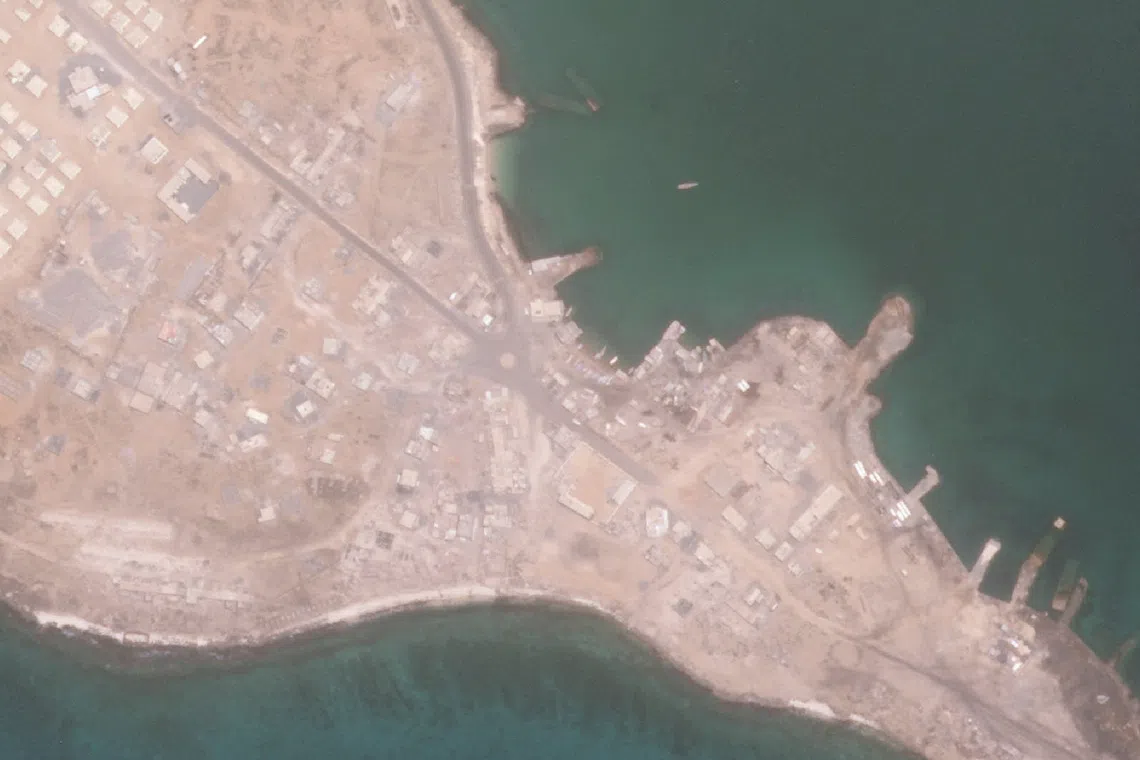
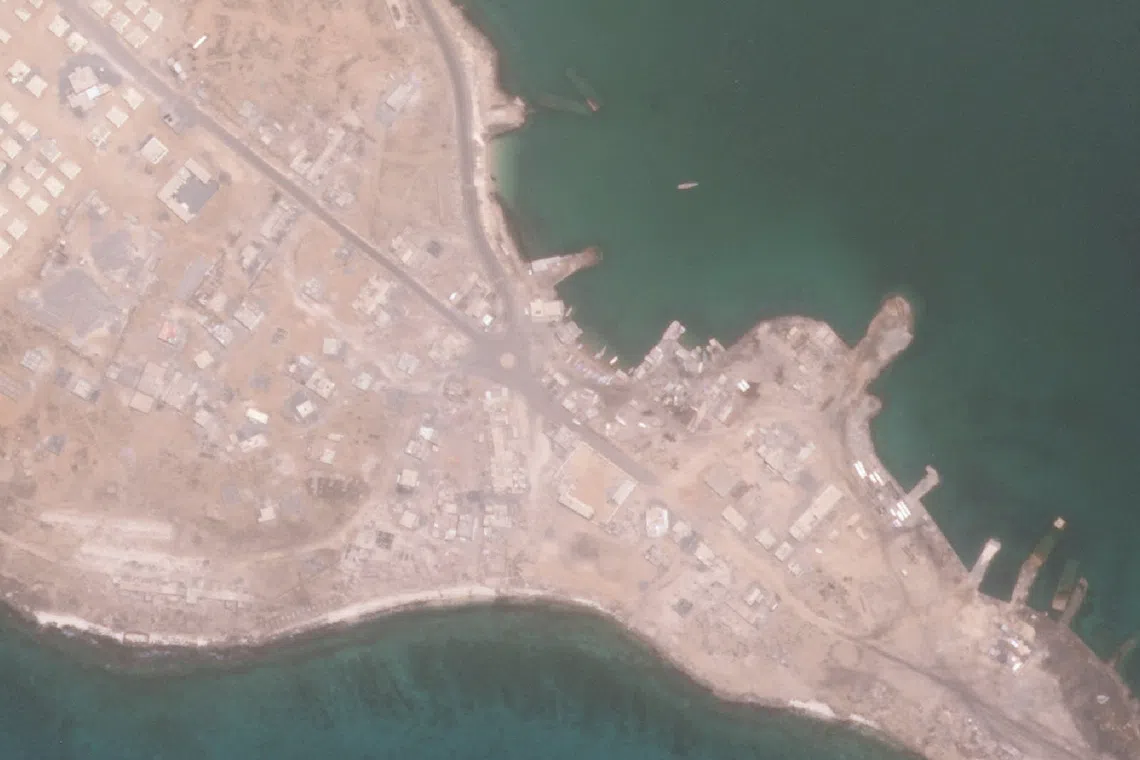
Yemen’s Houthis now command Perim Island and both shores of the Bab el-Mandeb Strait. asserted
Houthis → command → Strait
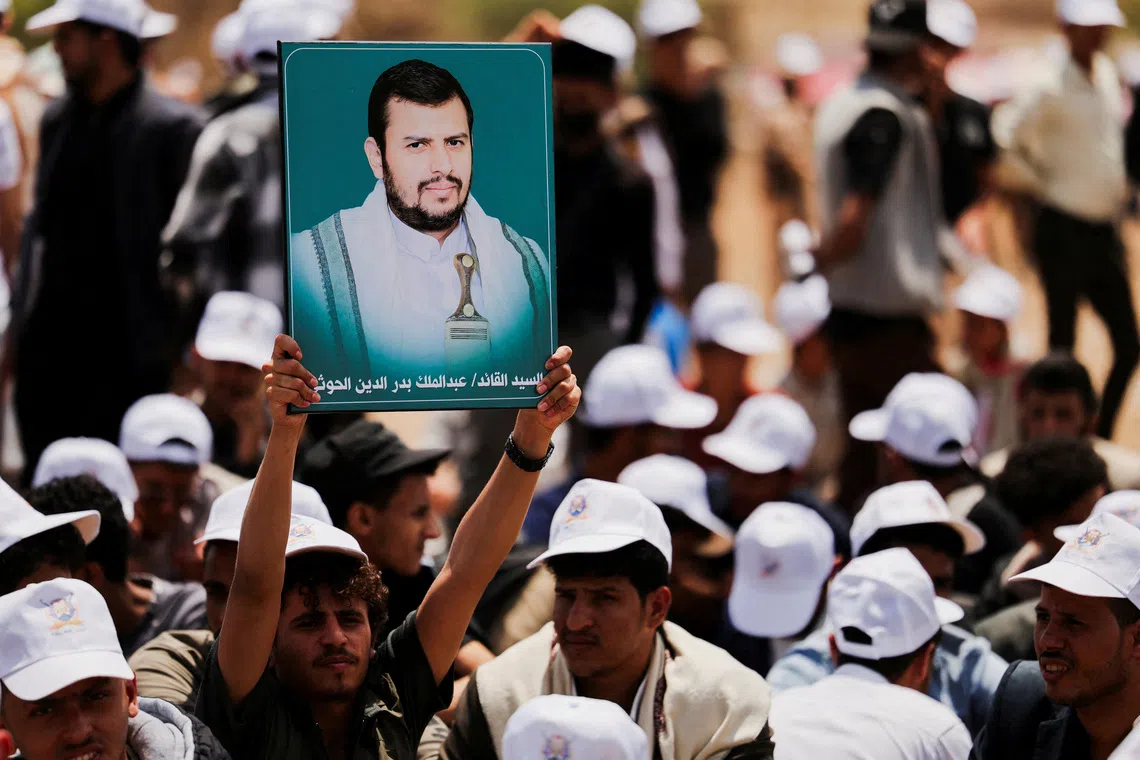
This explosive geography triggers immediate economic shockwaves: following the fall of Mocha, Saudi Red Sea crude exports could plunge by 95% under Abdul-Malik al Houthi’s embargoes. uncertain
exports → trigger → embargoes
No other node in Iran’s “Axis of Resistance” has successfully seized a global chokepoint. asserted
node → seize → chokepoint
By controlling both Hormuz and Bab el-Mandeb, Tehran holds a vice on Asia-Europe energy. asserted
Tehran → control → energy
This reality will inevitably force Washington to strike the Houthis, triggering an Iranian reprisal that draws Israel into a decisive, multitheater fray. asserted
that → force → fray
When an Iranian mine struck the USS Samuel B. Roberts, Washington retaliated immediately with “Operation Praying Mantis,” crushing half of Iran’s navy. asserted
Washington → strike → navy
Modern strategists obsess over “Operation Desert Storm” while forgetting the last time America actually fought Tehran over sea lanes. asserted
America → obsess → lanes
Hence, ceding regional maritime supremacy to Iran and its proxies repeats that precise historical blunder. asserted
ceding → cede → blunder
Domestically, the Trump administration will likely weaponize the inevitable Red Sea strikes for midterm political oxygen. asserted
administration → weaponize → oxygen
Consider the setup: The administration has locked down massive concessions for North American Blue Energy Partners across Venezuelan fields — holding 65 billion barrels with a 35% Pentagon stake — while locking in the “Infinite Life” Greenland security pact to expand American Arctic basing. asserted
administration → consider → basing
Pairing these massive geopolitical trophies with a maritime campaign marketed as the antidote to high domestic gasoline prices creates a compelling narrative for voters punishing his administration over groceries, rent, and inflation. asserted
Pairing → pair → groceries
Yet, domestic political realities loom. asserted
realities → loom → ?
If voter anxieties over the economy and the expanded conflict drag down approval numbers ahead of the midterm elections, the administration faces the distinct possibility of surrendering Congress to the opposition. asserted
administration → expand → opposition
Should that clock run out, incoming opposition-led committees will aggressively leverage subpoena power to challenge war funding, launch relentless prosecutions, and attempt to dismantle the executive’s foreign policy legacy. asserted
committees → run → legacy
Concurrently, a Russian lunge into the Baltics under a “compatriot pretext” would fundamentally shatter European complacency. asserted
lunge → shatter → complacency
In places like Latvia, ethnic Russians make up nearly a quarter of the population, and a significant portion of that demographic still fundamentally trusts Moscow. asserted
portion → make → Moscow
Thus, an Article 5 conflict on Baltic soil will force three brutal realities. asserted
conflict → force → realities
First, Europe will have to choose between abandoning the post-1945 pacifism that disarmed the continent or watching its eastern flank collapse. asserted
flank → have → continent
Second, European capitals that previously vilified Israel will probably have to embrace Jerusalem as an indispensable ally, because of the Israelis’ cutting-edge signals intelligence and winter-ready missile defense architecture. asserted
that → vilify → intelligence
Finally, domestic Islamist networks drawing host-state welfare will face a sudden loyalty test. asserted
networks → draw → test
Any street betrayal will expose the operational enemy within, spark focused civil clashes, and bankrupt the hollow ‘Palestinism’ that long ago replaced strategy with pageantry. asserted
that → expose → pageantry
Ergo, Washington and Jerusalem must immediately prepare to exploit these shifting geopolitical fault lines. asserted
Washington → prepare → lines
To shatter the “Axis of Resistance,” the United States and Israel must force Europe’s hand by establishing a joint “Chokepoint Intelligence Network” and delivering a fifth-column stress map to Western capitals. asserted
States → shatter → capitals
By pre-positioning naval UAVs and routing a combined data feed from Eilat, Haifa, and U.S. regional assets into Saudi, Emirati, and Eritrean nodes, they can pipe a real-time maritime picture directly to Baltic commands. asserted
they → pre → commands
In tandem, allied intelligence must audit the Islamist cells poised to sabotage European ports during a Russian lunge, exchanging this critical data for a total European cutoff of UNRWA funding, unconditional diplomatic protection for Israel against lawfare at the U.N., a joint Western mandate designating the IRGC a global terrorist entity, and an immediate European freeze on all Iranian state-owned commercial assets. asserted
intelligence → audit → assets
The strategic nexus is absolute: Europe’s internal vulnerability is inextricably bound to its maritime paralysis in the Red Sea. asserted
vulnerability → bind → Sea
Should Russia strike the Baltics, Washington and Jerusalem must force a passive Europe to absorb the full cost of its appeasement if it wants external support. asserted
it → strike → support
If European capitals value survival, they must back it with credible measures. asserted
they → value → measures
Securing the Baltics requires no Brussels diplomacy. asserted
Securing → secure → diplomacy
It demands the permanent, kinetic neutralization of Iran’s regional architecture. asserted
It → demand → architecture
Jose Lev Alvarez is an American–Israeli scholar specializing in international security policy. asserted
Alvarez → specialize → policy
A multilingual veteran of the IDF special forces and the U.S. Army, he holds three master’s degrees and is completing a Ph.D. in Intelligence and Global Security in the Washington, D.C., area. asserted
he → hold → area
Give feedback · no sign-in needed

No sign-in needed for now. Your note is sent without a name, so it cannot be answered.

History Support