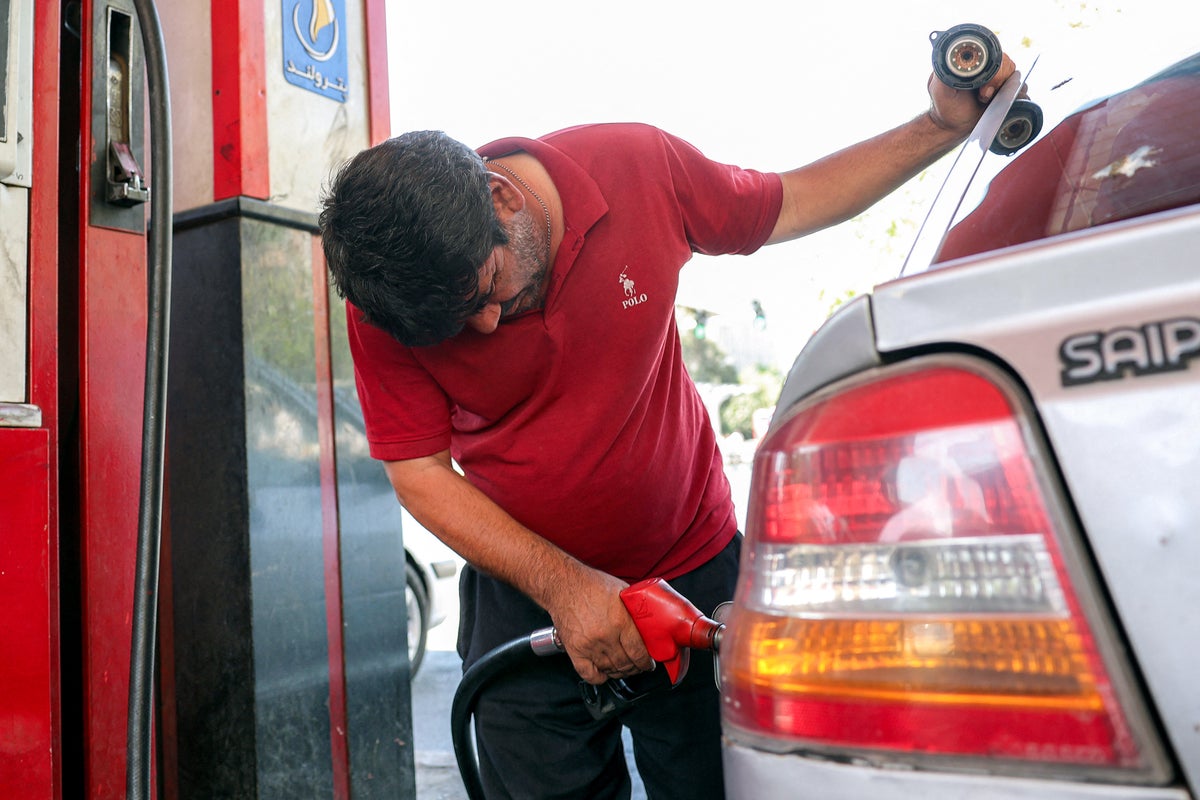
The article reports on how the conflict with Iran affects South Asian countries like India, Pakistan, Bangladesh, and Nepal, which together account for nearly two billion people or about 23% of the world's population. These nations rely heavily on imported energy from Gulf countries, making them vulnerable to supply disruptions due to the war. The piece highlights specific cases, such as Sajida Jibran, a housekeeper in Pakistan who struggles with rising costs and hardships directly linked to the conflict's impact on energy prices and supplies.
Written locally by qwen2.5:14b on 2026-09-18,
using this article's own text rather than the other coverage of the
same event (that is the story summary below).
Even before the war on Iran, the region depended heavily on imported energy, much of it from Gulf countries.
asserted
region → depend → countries
But the extent and nature of exposure of different South Asian countries to Gulf supplies and the Strait of Hormuz varied significantly.
asserted
extent → vary → Hormuz
Now, they are all feeling the effects of the prolonged and expanding war, as more and more supply routes become choked.
asserted
routes → feel → war
South Asia’s dependence on Gulf energy
India imports about 85 percent of the crude oil it consumes – it is the world’s third-largest crude importer.
asserted
it → import → oil
Before the war, Gulf producers, including Iraq, Saudi Arabia, the UAE and Kuwait, were among its major suppliers, while Qatar was a leading source of liquefied natural gas (LNG).
asserted
Qatar → include → gas
India has a more diversified supply network than its South Asian neighbours, with crude also arriving from Russia, Africa and the Americas.
asserted
crude → have → Russia
Pakistan is also highly dependent on imported energy, particularly crude oil, petroleum products and LNG.
asserted
Pakistan → import → energy
Bangladesh produces natural gas domestically, but increasingly relies on imported LNG as local production struggles to meet demand.
asserted
production → produce → demand
Qatar is one of its main LNG suppliers, while the country also imports refined petroleum products.
asserted
country → import → products
Nepal has no direct crude oil or LNG imports from the Gulf.
asserted
Nepal → have → Gulf
Instead, the landlocked country relies on India for virtually all of its petroleum products, including petrol, diesel, kerosene and LPG.
asserted
country → rely → petrol
Its exposure to Gulf disruptions is indirect: higher costs or supply shortages in India can feed through to Nepal’s fuel supplies and prices.
asserted
costs → feed → supplies
India faces the largest exposure in absolute volumes, while Pakistan and Bangladesh have fewer alternatives for some critical energy supplies.
asserted
Pakistan → face → supplies
Nepal’s dependence is one step removed, but disruptions to India’s energy supply chain can quickly reach the Nepali market.
asserted
disruptions → remove → market
As is often the case, it is the poor and economically vulnerable who are bearing the brunt of the crisis.
asserted
who → bear → crisis
‘Financially, I feel completely helpless’
asserted
I → feel → ?
She works long hours in an affluent neighbourhood, has a husband who can no longer work due to health issues and she has three children in middle and high school.
Jibran says her rent has gone up from 15,000 Pakistani rupees ($54) at the end of last year to 25,000 rupees ( 90) this past month.
“Before the war, everyone could eat and drink.
uncertain
everyone → work → war
I could buy meat, chicken, but since the war started, even vegetables have become so expensive that it is difficult to buy them,” she said.
uncertain
she → buy → them
“The price of electricity has increased a lot, our bill used to come to around 1,500 [rupees] ($5.4), but now it starts at 5,000 ($18).
asserted
it → increase → 5,000
The gas bill is also very high and comes to a minimum of 2,000 rupees ($7),” said Jibran.
asserted
Jibran → come → rupees
Natural gas bills in Pakistan have historically been minimal because it was locally produced, but having depleted its reserves, Pakistan largely imports natural gas.
asserted
Pakistan → produce → gas
The hardest decision Jibran has had to make was to stop paying her children’s school fees: she could either educate them or feed them.
uncertain
she → have → them
“I had always hoped that my children would study, get a good education and have the opportunity to attend good schools.
asserted
children → hop → schools
I can barely manage to put food on the table.
asserted
I → manage → table
Beyond that, there is very little I can do for them.”
asserted
I → be → them
she said.
asserted
she → say → ?
“When I see my children sitting at home, unable to continue their studies, I can’t sleep, day or night.
asserted
I → see → studies
Financially, I feel completely helpless.
asserted
I → feel → ?
‘The rising prices are making everything unaffordable’
Balendra Singh is a security guard in India’s national capital, New Delhi.
asserted
Singh → rise → capital
The sixty-seven-year-old lives in a small room in Noida, a city adjacent to New Delhi, with six of his family members.
asserted
old → live → members
After the US-Israeli war on Iran broke out, he had to send some family back to his village in Lucknow to curtail expensive city life.
asserted
he → break → life
“I cannot afford to feed so many mouths in a big city today.
asserted
I → afford → city
The inflation has gotten the better of us,” Singh said.
asserted
Singh → get → us
“The rising prices are making everything unaffordable – and our salaries stay the same.”
asserted
salaries → rise → ?
Singh explains how it’s not about what they are putting on the table to eat, but it’s how many people are eating in an expensive city like Noida.
asserted
people → explain → Noida
Singh doesn’t own a vehicle, but feels the pinch of rising fuel prices in the extra cost of the rickshaw rides he needs to commute to work.
asserted
he → own → work
“The base prices of rickshaws have risen.
asserted
prices → rise → rickshaws
Even if that rise is five rupees, it is really big for us – because in a month, that’s like 300 rupees ($3) increase for to-and-fro travel to work,” he says, before describing how he and the remaining members of his family in Noida are adapting to the higher cost of living.
asserted
he → ’ → living
“We may eat fish once a week rather than thrice a week and put fewer onions in the gravy.”
uncertain
We → eat → gravy
Singh says when the LNG supply was disrupted earlier in the war, he and his neighbours started using old wood-based fuels.
asserted
he → say → fuels
…and 32 more, not listed.
 The Aporia