The Independent
· collected 2026-09-14 · by James C. Reynolds
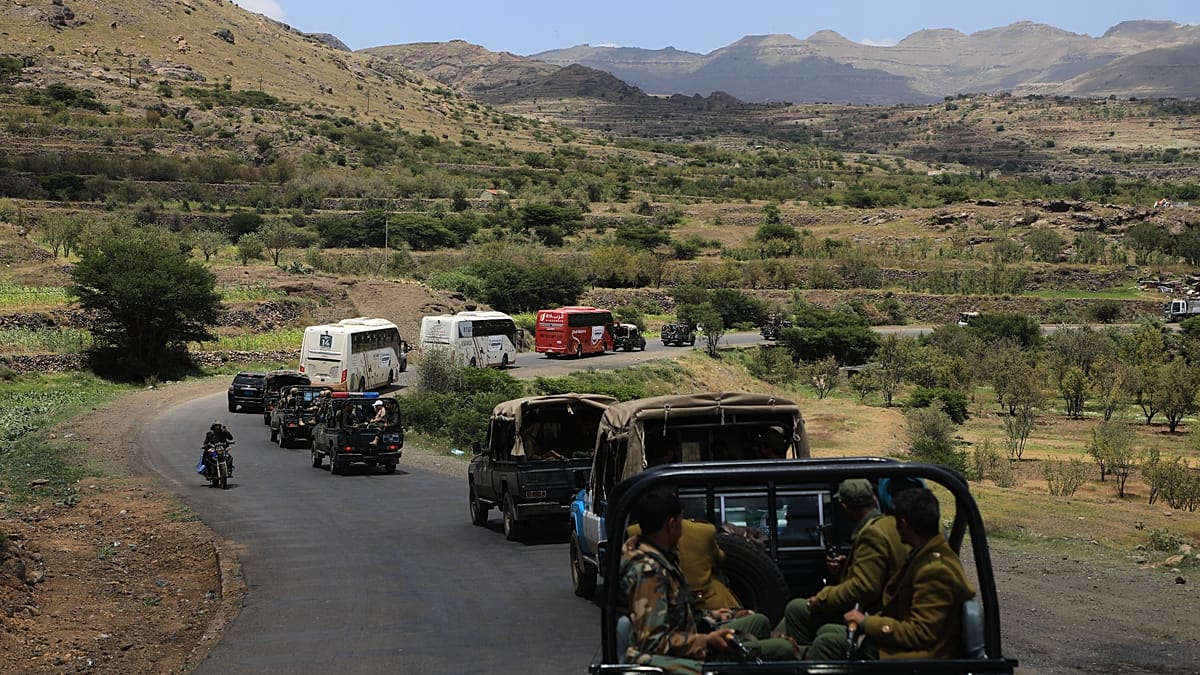
Yemen’s Houthi rebels have launched a lightning offensive to the Red Sea coast, assuming control over another vital waterway in the region and threatening to expand the frozen US-Israeli conflict with Iran to the east.
asserted
rebels → launch → east
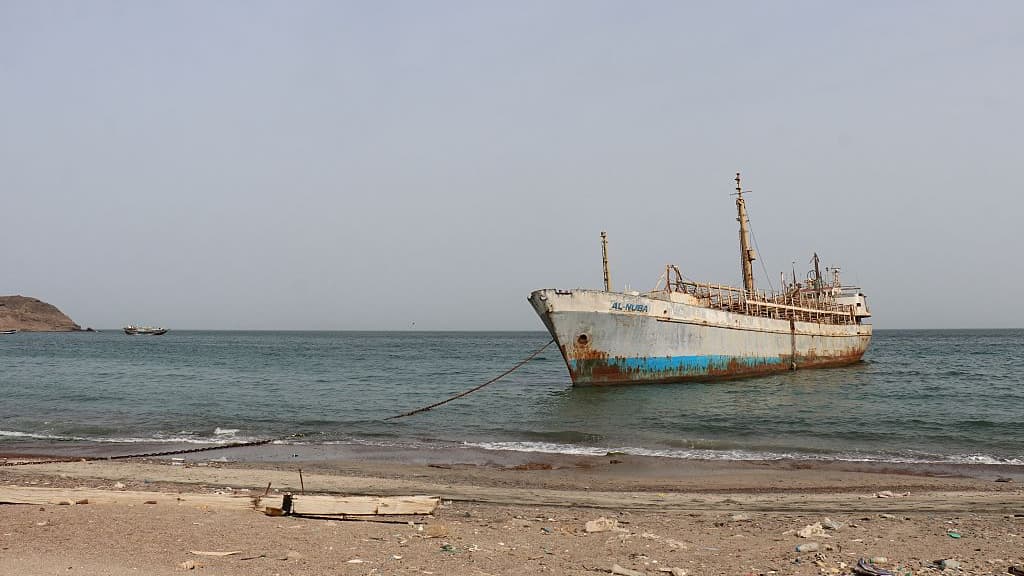
By securing a position overlooking the narrow Bab el-Mandeb strait, the Iran-aligned group has opened a second pressure point, further squeezing Saudi Arabia’s oil exports already diverted from the Strait of Hormuz.
asserted
group → secure → Hormuz
The sudden land grab over the last week has been accompanied by an aerial campaign against military instalments in southern Saudi Arabia, shifting the balance of power after more than a decade at war.
Analysts say the main aim of the offensive is to secure control over the Red Sea as Iran maintains its grip over Hormuz, allowing them to raise oil prices and making it harder for Washington to resolve the crisis.
Gulf states – already deliberating over Iran’s ambitions to control shipping through Hormuz – will have to choose between tolerating the status quo and engaging with Tehran to protect trade across the region, they say.
asserted
they → accompany → region
Already fighting a deeply unpopular war to the east, Donald Trump has avoided any commitment to bailing ally Saudi Arabia out with strikes against the Houthis, though experts say US intervention may be needed to break the Houthi grip on the Red Sea.
uncertain
intervention → fight → Sea
The Independent looks at what the Houthi advance means for regional stability.
asserted
advance → look → stability
Why are the Houthis fighting with Saudi Arabia?
asserted
Houthis → fight → Arabia
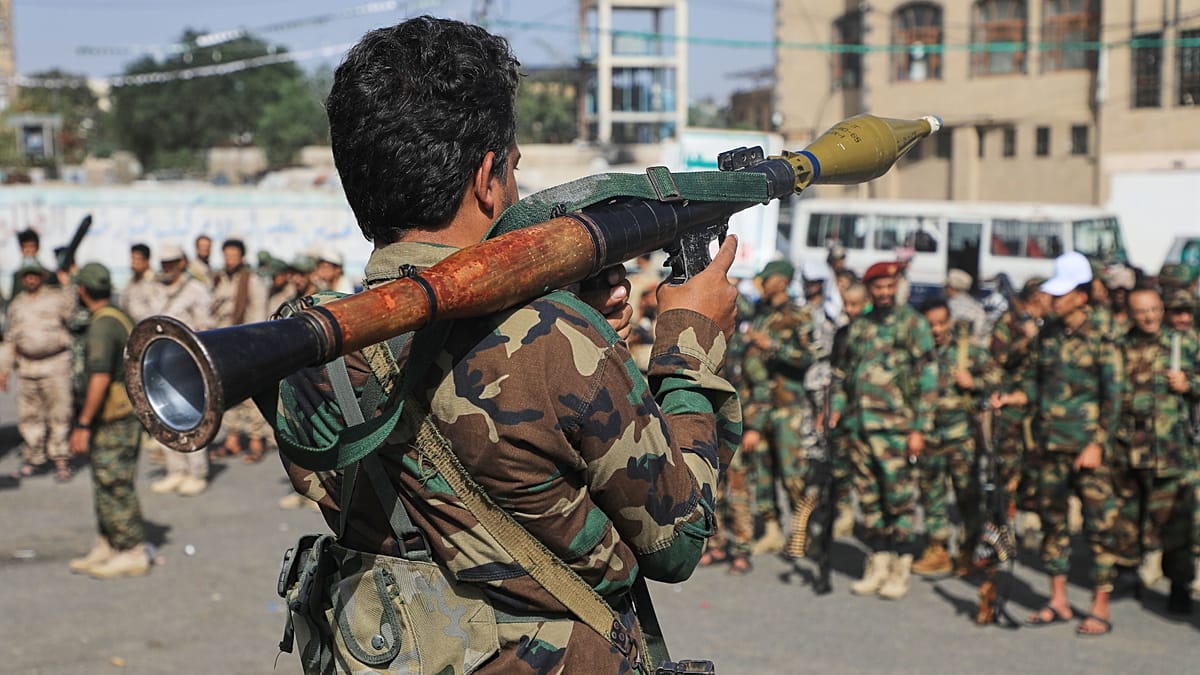
The Houthi rebels are a military, political and religious movement that rules over most of northwest Yemen and has disrupted global trade and energy markets with strikes on cargo ships and tankers in the Red Sea.
asserted
that → rule → Sea
The group exploited the chaos of the 2011 Arab Spring to oust the internationally recognised government from Sanaa in 2014, beginning the devastating Yemeni civil war.
asserted
group → exploit → war
Fearing the Iran-aligned group could seize control of the Bab el-Mandeb strait, and therefore threaten Riyadh’s ability to export oil, Saudi Arabia intervened a year later, supported by the US, UK, France and others.
uncertain
Arabia → fear → US
A UN-brokered ceasefire followed in 2022 and since then, both sides have refrained from major escalatory actions.
asserted
sides → broker → actions
Iran has not directly intervened in Yemen, but the fighting is considered part of a wider Iran-Saudi proxy conflict.
asserted
fighting → intervene → conflict
It was during the Israeli war in Gaza, from 2023 to 2025, that the Houthis started attacking ships in the Red Sea in support of Iran-aligned Hamas.
asserted
Houthis → start → Hamas
The UK and US hit Houthi targets in 2025 as part of a campaign to restore freedom of navigation.
asserted
UK → hit → navigation
Crucially, Trump last year struck a deal to end the US strikes on the Houthis in exchange for a halt to strikes on Red Sea shipping.
asserted
Trump → strike → shipping
Taking on the group now would likely expose US forces in the region to missile attacks from Yemen.
asserted
Taking → take → Yemen
Clashes with Saudi Arabia restarted in July as both sides enforced new blockades on maritime traffic.
asserted
sides → restart → traffic
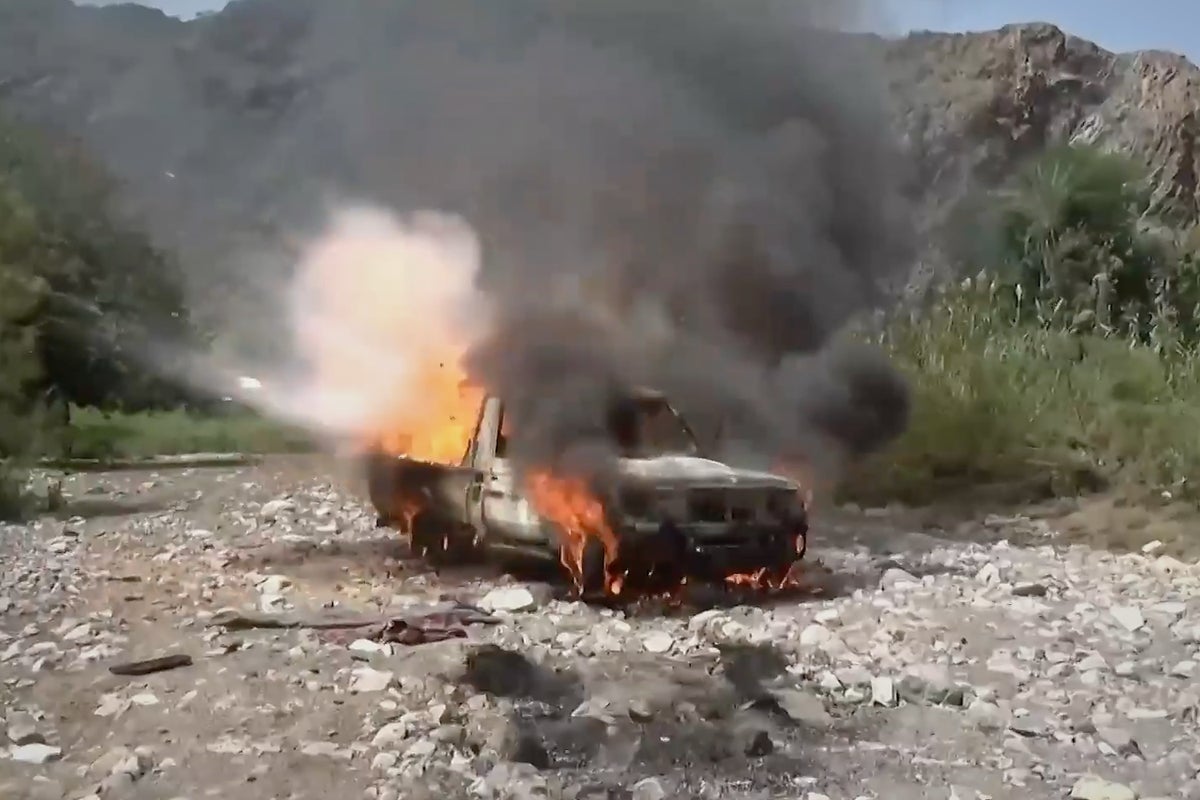
The Houthis struck Saudi oil tankers accused of violating their blockade.
asserted
Houthis → strike → blockade
What are they doing now?
asserted
they → do → What
Despite years of conflict – and with some 14 per cent of Yemen’s population displaced – the Houthis last week oversaw an astonishing push east to the coast, granting them much greater control over traffic through the Red Sea.
Edmund Fitton-Brown, a former UK ambassador to Yemen, told The Independent that after months of attacks at sea, the Houthis “think the moment has come to call the Saudi bluff”.
asserted
moment → displace → bluff
“They think the Saudis have lost the stomach for the fight.
asserted
Saudis → think → fight
They think that they showed themselves to be weak and frightened in the face of the Iranians,” said Mr Fitton-Brown, a senior fellow at Foundation for Defense of Democracies.
asserted
Brown → think → Democracies
“And the Houthis think that this is the moment where they can effectively raise their demands and get the Saudis to concede even more advantageous terms than they were previously willing to do.
asserted
they → think → terms
With Iran controlling the strait on one side of the Arabian peninsula, and the allied Houthis controlling the other, the wider war has handed more regional influence in the region to Tehran, with Gulf countries now forced to accept they may have to engage with Iran and give up their faith in Washington as a guarantor of security.
uncertain
they → control → security
The war presents the US with a dilemma, too: intervene and spend huge resources on a second front in the deeply unpopular war with Iran, or watch on and undermine the relationship with another ally in the region.
asserted
war → present → region
Sources told CNN that the US has offered intelligence and targeting support to the Saudis in lieu of military support.
asserted
US → tell → support
What has changed on the ground?
asserted
What → change → ground
The Houthis said on Tuesday that they were launching a broad operation deep into Saudi Arabia, ramping up attacks on energy infrastructure and southern cities as they began their push west in Yemen.
asserted
they → say → Yemen
Mr Fitton-Brown said that the advance towards al-Mokha, which fell on Thursday, would grant better access to the Bab el-Mandab strait and make it easier for them to more reliably target ships in the strait.
asserted
them → say → strait
By Friday, government sources were reporting that the Houthis had taken the strategic Perim Island, dividing the strait.
asserted
Houthis → report → strait
Middle East analyst Fawaz Gerges said the capture of strategic islands in the waterway was a “game changer”.
asserted
capture → say → waterway
“It changes the balance of power and gives them far greater geopolitical and geoeconomic leverage over Saudi Arabia, the Gulf, the United States and global trade,” he said.
asserted
he → change → Arabia
A separate attack on Friday, which Riyadh has blamed on Iran-backed fighters in Iraq, knocked out Saudi Arabia’s East-West pipeline, the main route for Middle East oil bypassing the blockaded Strait of Hormuz.
asserted
oil → blame → Hormuz
Riyadh had rerouted much of its crude through Red Sea ports after the US-Iran war effectively closed the Strait on the opposite side of the Arabian Peninsula.
asserted
war → reroute → Peninsula
Regional sources told Reuters the mounting economic cost and Trump’s refusal to strike the Houthis was reinforcing a view in some Gulf countries that negotiations with Tehran are no longer a choice but a necessity for self-preservation.
asserted
negotiations → tell → preservation
What happens next?
asserted
What → happen → ?
Mr Fitton-Brown said the region was calling for American leadership to recognise the connectedness between the fronts and intervene, where the Saudis have been unable to uphold maritime law.
asserted
Saudis → say → law
“For the Americans to ignore the Red Sea, to ignore this threat to Saudi Arabia from the Houthis, is just completely self-defeating,” he said.
asserted
he → ignore → Houthis
He said he would expect the US to remain “flaky” on the issue for now – but not back out entirely.
asserted
US → say → issue
“They’re not going to fall on their sword because every so often these provocations will cross a threshold where they have no choice but to respond,” he said.
asserted
he → go → choice
The challenge would be to bring together a “hybrid” coalition, including some military participants, but also countries willing to enforce sanctions and join a diplomatic coalition to force Iran to “back down”.
asserted
challenge → bring → Iran
…and 7 more, not listed.