That is 0 articles you have read today.
The Aporia is free and carries no advertising, so readers are the only
thing paying for it. If you are getting this much out of it, a small
donation is what keeps it independent.
Daily limit reached
You have read 0 articles today.
That is more than the 15 a day The Aporia gives away,
and well past what it can carry on nothing. Your allowance resets at
midnight.
There is no advertising here and nothing about you is sold, so readers
are the only thing paying for it. If the site is worth this much of
your day, it is worth a few dollars.
Everything else stays open: the
maps, the
directory and
search do
not count against this, and neither does re-opening something you have
already read today.
Saudi Arabia recently faced dual threats: Yemen's Houthi rebels captured Mocha and advanced towards a critical waterway, while drones from Iraq attacked Saudi oil infrastructure. These attacks follow increasing pressure on Iran to disarm nonstate groups it supports, as well as U.S. military and economic actions against Tehran since February 28. Despite international efforts, the Houthis have persisted in targeting Red Sea vessels despite significant conventional military advantages held by others. The article questions why these challenges persist and explores their implications for regional stability.
Written by the local model on 2026-09-16,
using this article's own text rather than the other coverage of the
same event (that is the story summary below).
Claims extracted
12
claim-shaped sentences
Uncertain
0%
0 of 12 hedged
Leaning
Leans strongly right
of the writing, not the subject
Correction & hedging signals
96.2
corrections and hedging in what we collected;
not a measure of accuracy
Outlets on this story
26
World
Narrative spread
1
articles carrying this framing
Story summary
On Monday, talks scheduled in Muscat, Oman, between Iran and other regional countries on controlling the strategic Strait of Hormuz were postponed indefinitely "in the interests of consensus," according to Oman's government. This delay comes amid rising tensions as fighting intensified between Iran-backed Houthi rebels and Saudi forces in Yemen, with Houthis capturing new ground that threatens Saudi oil exports via the Red Sea. The postponement coincided with a meeting cancellation involving Persian Gulf states and Iran due to recent Houthi attacks on Saudi Arabia. Oil prices jumped, with Brent crude reaching about $108 per barrel, its highest point in nearly four months, amid fears of further disruptions to global oil supplies through the Strait of Hormuz and Bab el-Mandeb waterway.
Written for “Middle East Tensions And Oil Prices” on 2026-09-15,
grounded in this article and the 25 other(s) covering the same event.
Why this leaning score
The article's own words the score was based on. Each is quoted
verbatim and was checked against the article text before being
stored, so you can find it in the original.
-
Meanwhile, drones from Iraq struck Saudi Arabia’s East-West Pipeline, the roughly 750-mile artery carrying oil from the eastern fields toward Red Sea export terminals.
right frames attacks on Saudi infrastructure as a threat
-
The attacks coincide with the Iraqi government’s September 30 deadline for nonstate groups in the country to disarm, and with mounting U.S. and Israeli pressure on the Islamic Republic that arms and sustains them.
right links Iranian support to militant actions
-
Since the U.S. war with Iran began on February 28, Operations Epic Fury and Economic Fury have placed the Islamic Republic under severe military and financial strain, while the U.S. Treasury Department has targeted Iranian oil exports, shadow-fleet tankers, financial intermediaries, and foreign procurement networks.
right describes U.S. actions against Iran as a war
-
Clearly, that pressure hasn’t dissuaded the Houthis.
right criticizes Iranian-backed groups for resisting pressure
Leaning score +0.65 for article 9758 (high confidence, 4 verified quotes) · logged 2026-09-16
Over the past week, Saudi Arabia has come under attack—on two fronts.
asserted
Arabia → come → fronts
First, in Yemen, the Houthis seized the port city of Mocha on September 10 and advanced along the Red Sea coast toward the Bab el-Mandeb Strait, a vital waterway for Saudi exports.
asserted
Houthis → seize → exports
Meanwhile, drones from Iraq struck Saudi Arabia’s East-West Pipeline, the roughly 750-mile artery carrying oil from the eastern fields toward Red Sea export terminals.
asserted
drones → strike → terminals
The attacks coincide with the Iraqi government’s September 30 deadline for nonstate groups in the country to disarm, and with mounting U.S. and Israeli pressure on the Islamic Republic that arms and sustains them.
asserted
that → coincide → them
They also come amid a much broader campaign against the regional proxy system that Tehran has spent decades building.
asserted
Tehran → come → decades
Since the U.S. war with Iran began on February 28, Operations Epic Fury and Economic Fury have placed the Islamic Republic under severe military and financial strain, while the U.S. Treasury Department has targeted Iranian oil exports, shadow-fleet tankers, financial intermediaries, and foreign procurement networks.
asserted
Department → begin → exports
Clearly, that pressure hasn’t dissuaded the Houthis.
asserted
pressure → dissuade → Houthis
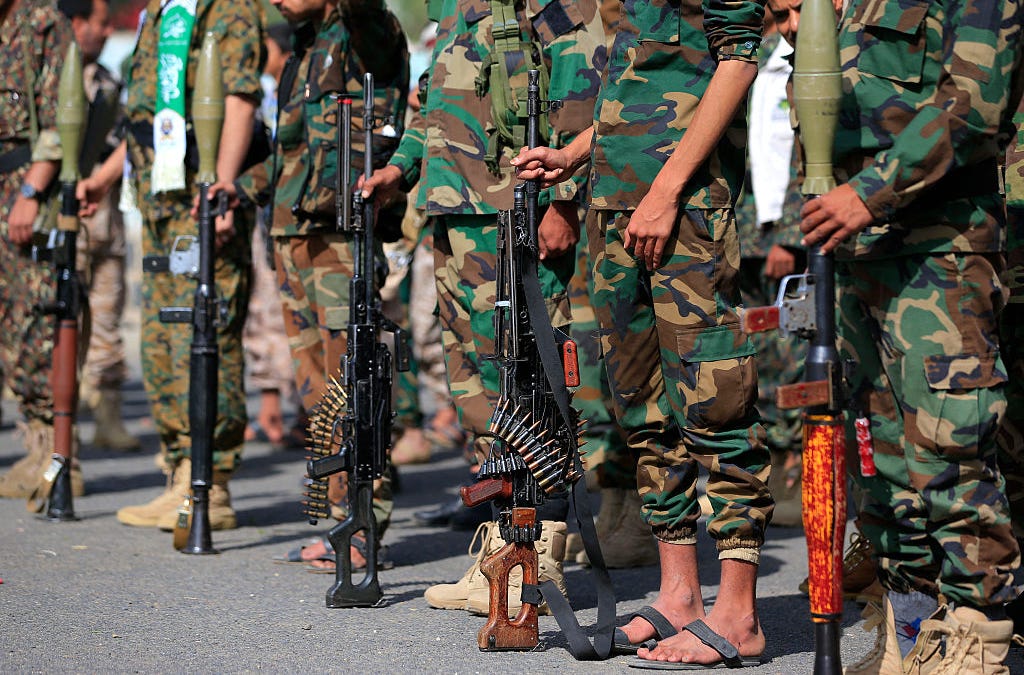
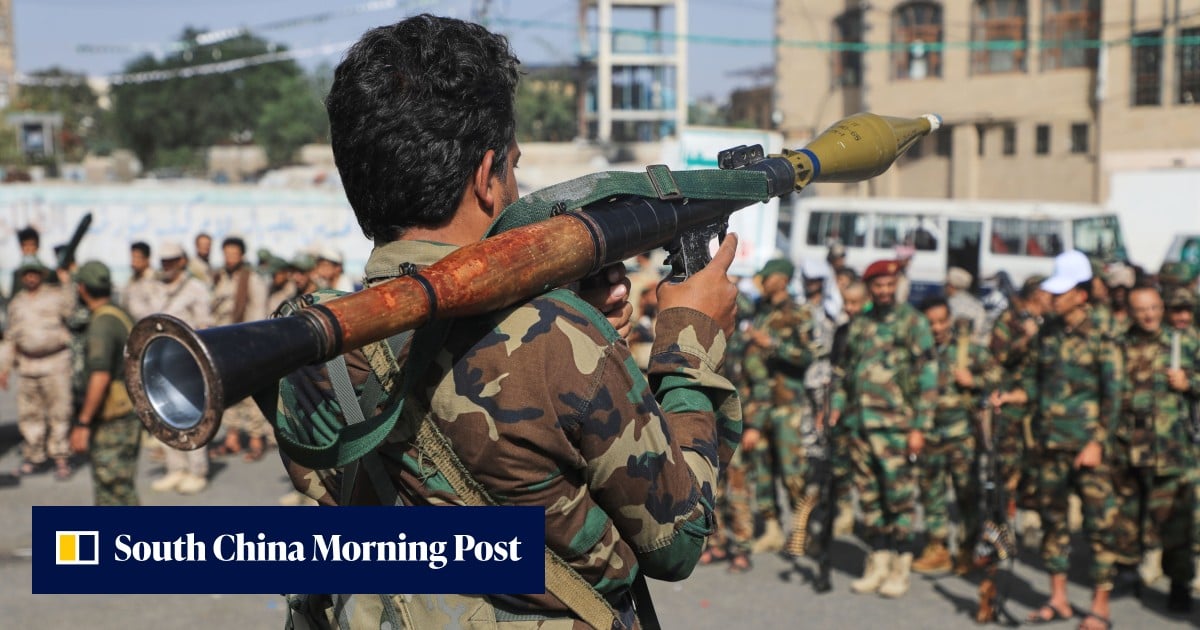
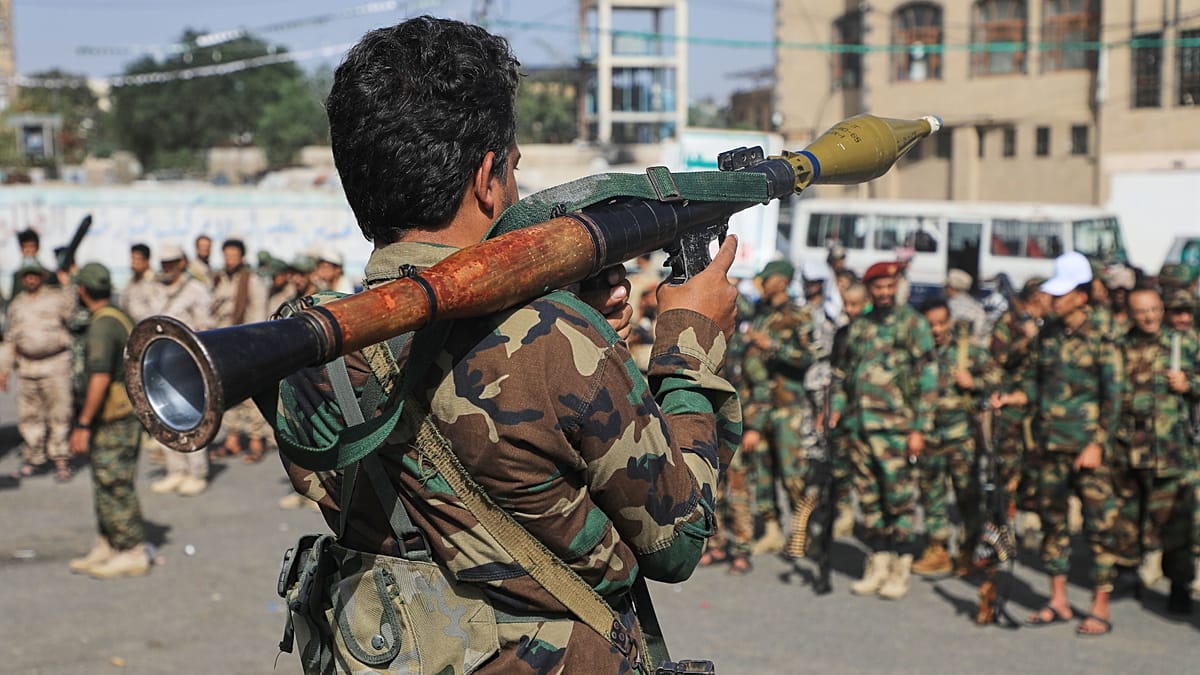
For months now, the Islamist militia based in northern Yemen has terrorized commercial and military vessels in the Red Sea and the Bab el-Mandeb Strait.
asserted
militia → base → Sea
Efforts from international forces—including the United States—have failed to stop them, despite an extraordinary disparity in conventional military power.
asserted
Efforts → include → power
The question—as Saudi Arabia finds itself under attack, rebuffed in its requests for U.S. aid, and caught in the middle of a U.S.-Iran war now dragging into its seventh month—is why?
asserted
Arabia → find → month
Why is this seemingly ragtag militia group so hard to beat?
asserted
group → beat → ?
And, in the wake of Saudi crown prince Mohammed bin Salman’s Monday meeting with the head of U.S. Central Command, what does the Houthis’ continued activity mean for the broader regional order?
asserted
activity → continue → order
 The Aporia