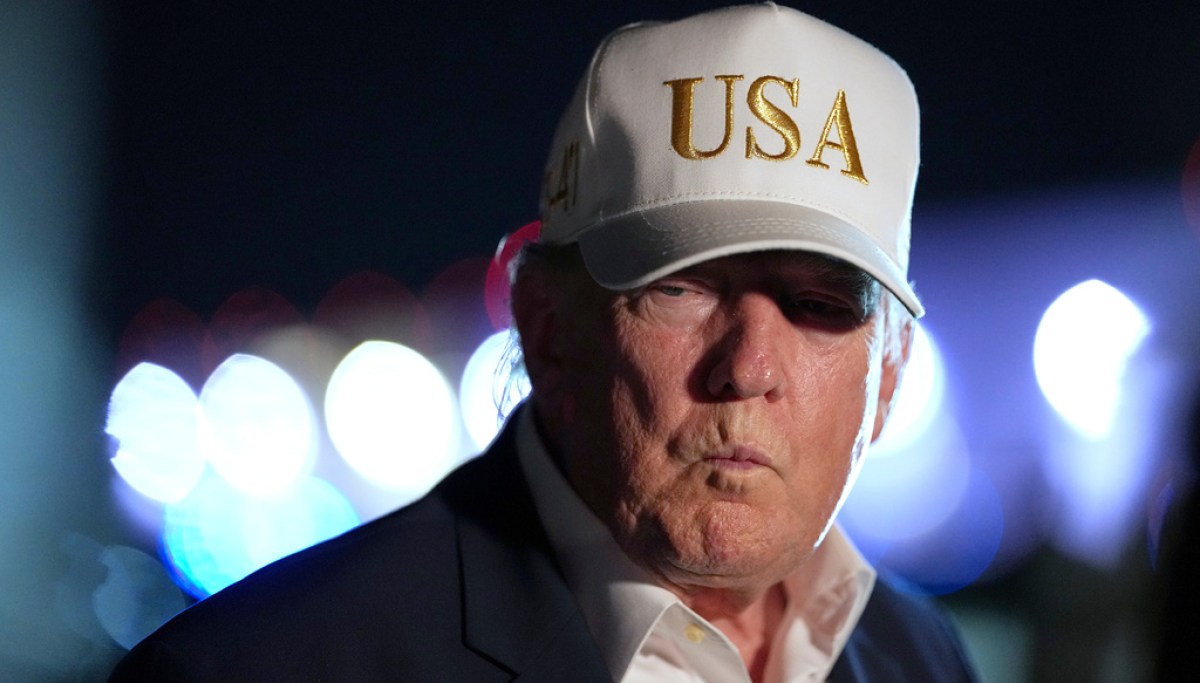
Photo via Washington Examiner

Constitutional maturity for a strategic partner: America’s role in Israel’s next founding

Read the original at Washington Examiner ↗
Cite

Alvarez, J. L. (2026, November 17). Constitutional maturity for a strategic partner: America’s role in Israel’s next founding. Washington Examiner. https://www.washingtonexaminer.com/op-eds/4803229/israel-needs-constitution-universal-national-service/

Dated from the outlet's own feed. Check the original for its byline.

Washington Examiner · collected 2026-11-17 · by Jose Lev Alvarez

Quick Summary

The article draws a parallel between the drafting of the U.S. Constitution in 1787 and the current situation in Israel, where the existing legal framework is seen as inadequate for addressing contemporary challenges. It argues that Israel needs to move beyond its current system of Basic Laws and adopt a formal constitution to ensure civic equality and national unity, particularly in matters of military service and judicial oversight.
Written by AI on 2026-11-17, from this article's own text only (the story summary below draws on all the coverage).

AI analysis

Story summary

In the summer of 1787, American delegates gathered in Philadelphia to address the weaknesses of the Articles of Confederation, which could not bind the 13 states to shared sacrifice or coherent governance. Similarly, the state of Israel faces a critical moment in its history, mirroring the situation in 1787 America. In 1949, Israel's founding Prime Minister David Ben-Gurion adopted a series of incremental Basic Laws, providing tactical flexibility during existential threats. However, this system has become outdated, hindering universal military conscription, inviting judicial overreach, and compromising national security due to fragile coalitions. To address these issues, Israel must ratify a formal constitution that enforces the principle that full civic benefits require shared national sacrifice.

Written for “America's Role In Israel's Development” on 2026-11-18, grounded in this article and the 0 other(s) covering the same event.

Compared with similar articles

Nothing to compare against. No article is close enough to this one for the pipeline to have linked or judged the pair.

Story

America's Role In Israel's Development
Politics · 1 article(s) covering the same event.
How this article was measured signals, leaning charts, publisher record, byline, topics and claims

Signals How these are calculated →

Claims extracted
8
sentences that state something as happening or true
Uncertain
25%
2 of 8 hedged ("reportedly", "may", "according to")
Leaning
withheld
no quote in the article backed the model's score
Publisher signals
67/100
Washington Examiner's corrections and hedging, across everything collected from it. Not a measure of accuracy.
Outlets on this story
1
Politics
Same framing elsewhere
1
articles that frame the event the way this one does
Analyzed 2026-11-17 · how these are computed

How this is being covered How these are calculated →

Article leaning vs. publisher reliability
Source leaning vs. consistency

Publisher

Washington Examiner · 5103 article(s) · 11 correction(s) detected
Running correction rate · 11 correction(s)

Who wrote this

Jose Lev Alvarez
26 article(s) here · 1 carrying a prediction
In the summer of 1787, delegates gathered in Philadelphia because the Articles of Confederation could not bind 13 fractious states to shared sacrifice, coherent defense, or durable governance.
Intelligence assessments indicate that the complex could support more than 100 launches daily, expanding a network of at least 11 fixed Russian drone locations.
Israel’s founding father, David Ben-Gurion, understood from the start that the newborn Jewish state could never survive by begging hostile neighbors for validation.
This outpost will track Russian proxy flights into the Sahel and choke Turkish weapon resupply into Al Watiya.
By leveraging this, Tehran has shown America’s adversaries that a regional rogue power can sustain a prolonged chokepoint before Washington musters the political will to deploy decisive force.
First, a formal pact will pool computing power, model weights, and elite talent before European regulators turn the West into a technological museum while China weaponizes algorithms.
Over a century ago, Admiral William Caperton mapped this exact transnational vulnerability.
Hydrocarbons chemically fingerprinted as Alberta production should enter the United States tariff-free the moment Edmonton files for secession, while barrels moving under Ottawa export licenses will retain existing tariffs.
From Khasab, American shore batteries, maritime patrol aircraft, and specialized boarding teams will directly dominate the strait’s traffic lanes.
Paris willfully ignores this reality abroad while erasing Islamist threats at home.
Also by Jose Lev Alvarez
Israel’s border crisis: The Rome warning
2026-11-13 · Washington Examiner
Once again, Vance declares war on Israel
2026-11-10 · Washington Examiner
Nothing else under this byline is closely related to this article, so these are simply their most recent.
All 26 articles by Jose Lev Alvarez →

Topics

American Basic Laws Israel Philadelphia the Articles of Confederation

Subjects

Israel GPE · 2× American NORP · 1× British NORP · 1× David Ben-Gurion’s PERSON · 1× Philadelphia GPE · 1×

Narrative

The same institutional patchwork that once preserved maneuverability now blocks universal military conscription, invites judicial overreach, and leaves national security hostage to fragile coalitions.
framing: mixed · carried by 1 article(s) · first seen 2026-11-17
In the summer of 1787, delegates gathered in Philadelphia because the Articles of Confederation could not bind 13 fractious states to shared sacrifice, coherent defense, or durable governance.

Claims (8 extracted, 2 hedged)

In the summer of 1787, delegates gathered in Philadelphia because the Articles of Confederation could not bind 13 fractious states to shared sacrifice, coherent defense, or durable governance. uncertain
Articles → gather → sacrifice
The document that emerged did not invent American identity. asserted
that → emerge → identity
Rather, it codified the conditions under which that identity could survive external pressure and internal division. uncertain
identity → codify → pressure
The state of Israel faces an analogous moment today. asserted
state → face → moment
In 1949, David Ben-Gurion’s decision to rely on incremental Basic Laws, much like the British, gave the young state vital tactical flexibility under existential threat. asserted
decision → rely → threat
Yet that bargain has expired. asserted
bargain → expire → ?
The same institutional patchwork that once preserved maneuverability now blocks universal military conscription, invites judicial overreach, and leaves national security hostage to fragile coalitions. asserted
that → preserve → coalitions
To break this paralysis, Israel must ratify a formal constitution built on one iron rule: full civic benefits require shared national sacrifice. asserted
benefits → break → sacrifice
Give feedback · no sign-in needed

No sign-in needed for now. Your note is sent without a name, so it cannot be answered.

History Support