Photo via New York Post

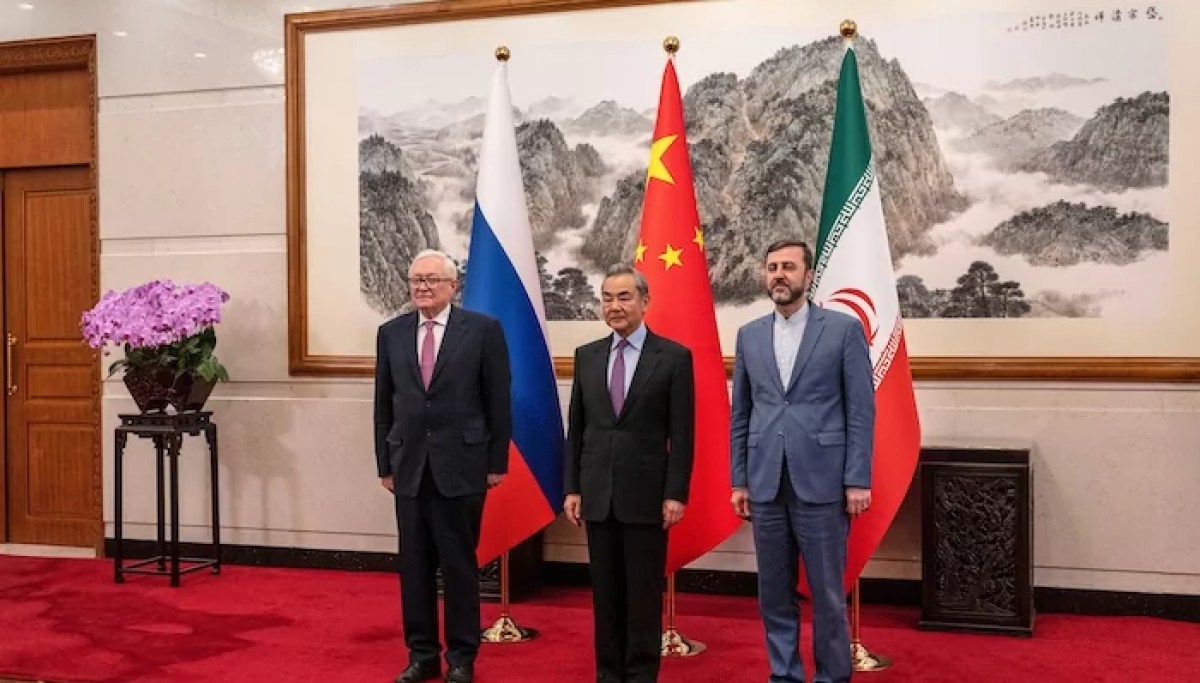
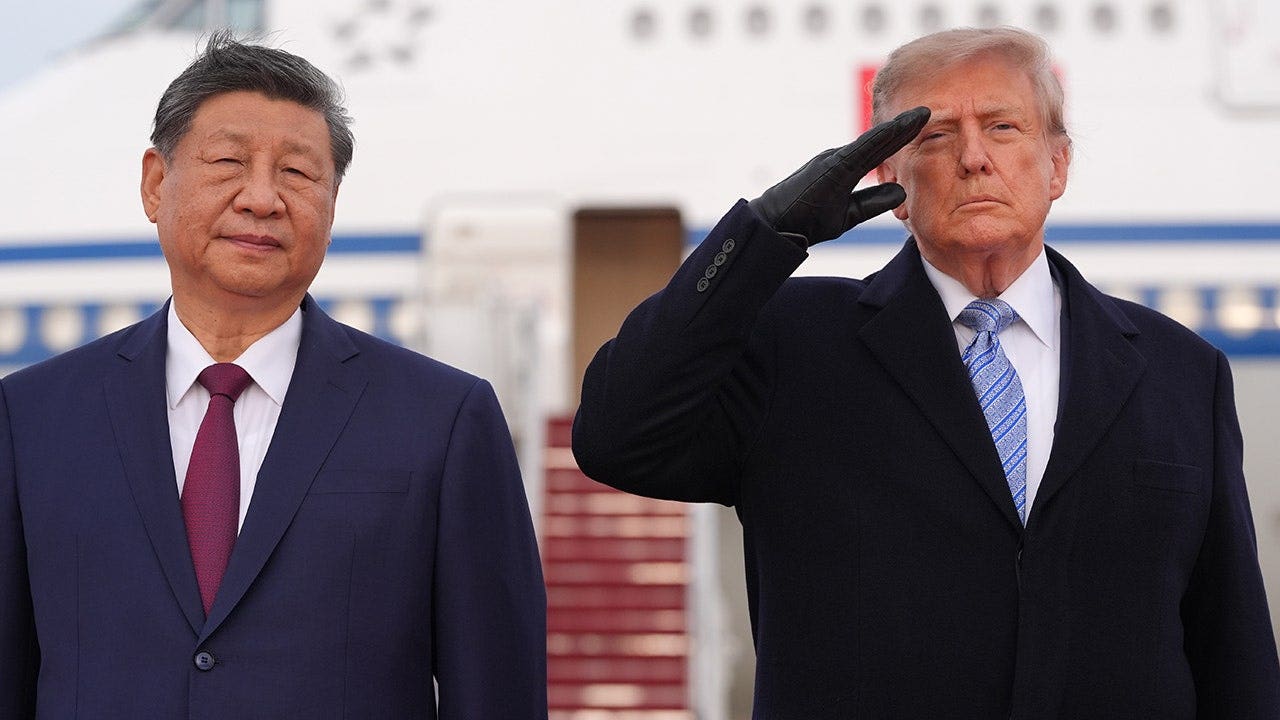
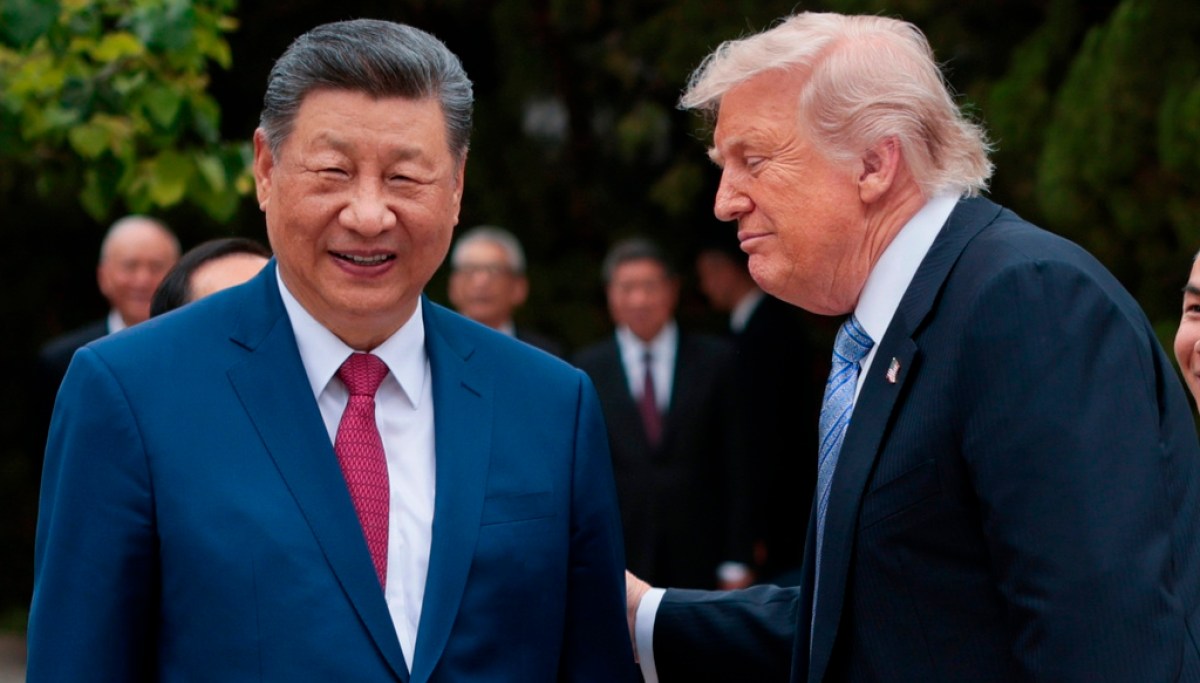
China is fueling the Iran War — can Trump stop them?

Read the original at New York Post ↗
Cite

Perry, D. (2026, September 19). China is fueling the Iran War — can Trump stop them? New York Post. https://nypost.com/2026/09/19/opinion/china-is-fueling-the-iran-war-can-trump-stop-them/

Dated when The Aporia collected the article, usually within hours of publication. Check the original for its exact date and byline.

New York Post · collected 2026-09-19 · by Dan Perry

Quick Summary

The article argues that China is economically supporting Iran's ability to disrupt maritime trade in the Strait of Hormuz and beyond, which undermines U.S. influence in the region. According to the text, Chinese companies buy about 90% of Iranian oil exports, helping Tehran survive sanctions. The author suggests President Trump should pressure Chinese leader Xi Jinping during their September summit to reduce China’s economic support for Iran and address regional instability caused by Iran's activities.
Written by AI on 2026-09-19, from this article's own text only (the story summary below draws on all the coverage).
See how they differ ↓

AI analysis

Story summary

On September 7, 2026, an Iranian container ship was attacked near Hengam Island in the Strait of Hormuz by what state media called an “unidentified projectile,” leaving one person dead and four crew members wounded. This incident occurred as Iran prepared to meet with Gulf states in Oman to discuss shipping traffic safety in the Strait of Hormuz.

On September 12, a critical oil pipeline in Saudi Arabia, which had been moving 4-5% of global oil supplies since late February due to blockades at the Strait of Hormuz, was shut down after being struck by drones launched from Iraq. The attack caused injuries and forced Saudi Arabia to temporarily close the East-West pipeline.

In response to the drone attacks on September 12, Iraq's government confirmed the attacks originated from its territory but an umbrella group of Iran-backed militias in Iraq denied involvement. Iraqi Prime Minister Ali al-Zaiyadi dismissed a military commander as part of an investigation into the incident.

On September 18, oil company Saudi Aramco informed at least two European refining customers that they would receive no crude oil for October due to damage sustained during the drone attack on its pipeline.

These events have significantly impacted global oil markets and international relations, with Iran continuing to impede commercial traffic through the Strait of Hormuz and the Houthis advancing towards strategic locations in Yemen. The United States is grappling with how to address these challenges amidst ongoing conflicts and economic pressures. China's role in fueling tensions further complicates efforts to stabilize the region, leading to discussions between U.S. President Trump and Chinese leader Xi Jinping about potential resolutions. Trump aims to prioritize addressing Iran's influence over other trade issues during his meeting with Xi.

Written for “Houthis Attack Saudi Oil Facilities” on 2026-11-18, grounded in this article and the 39 other(s) covering the same event.

How they differ

19 outlets covered “Houthis Attack Saudi Oil Facilities”.

What each outlet says

One AI summary per outlet of its latest article on this story, written from that article alone and checked against it. Open the article for the outlet's own words.

New York PostThis outlet19 Sep

The article argues that China is economically supporting Iran's ability to disrupt maritime trade in the Strait of Hormuz and beyond, which undermines U.S. influence in the region. According to the text, Chinese companies buy about 90% of Iranian oil exports, helping Tehran survive sanctions. The author suggests President Trump should pressure Chinese leader Xi Jinping during their September summit to reduce China’s…

China is fueling the Iran War — can Trump stop them? (this article)2 articles from New York Post on this story
Semafor15 Sep

Oil prices are approaching $100 a barrel due to attacks by Yemen's Houthis on Saudi Arabia’s energy infrastructure. The attacks, which include the use of missiles and drones, have resulted in injuries and operational halts at key installations in southern Saudi Arabia. This resurgence in conflict has heightened concerns about ongoing disruptions in Middle Eastern oil supplies and shipping through the Strait of…

Oil nears $100 a barrel after attacks by Yemen's Houthis →5 articles from Semafor on this story
Al Jazeera18 Sep

US officials met with Houthi representatives in Muscat after the group seized significant territories including islands near the Bab al-Mandeb Strait, a critical shipping route for global trade. The Houthis assured the United States they would not attack American vessels but restricted activities to Saudi-linked ships, raising concerns about potential disruptions to oil prices and international commerce. Despite…

As Houthis grab Bab al-Mandeb, US appears willing to watch from sidelines →4 articles from Al Jazeera on this story
The Straits Times18 Sep

Saudi Aramco will not supply European oil refiners with crude oil in October following an attack on its East-West pipeline. This decision impacts all European buyers under long-term contracts and comes as the company redirects supplies to Asia via the Persian Gulf due to the shutdown. The move could cause European refineries to seek alternative suppliers, potentially driving up regional oil prices.

Saudi Aramco will not supply European oil refiners with crude in October: Sources →4 articles from The Straits Times on this story
The Hindu18 Sep

Saudi Aramco has halted October crude oil deliveries to at least two European refining customers following a drone attack that damaged the East-West pipeline and three pumping stations in Saudi Arabia. The attack forced the shutdown of the Red Sea port of Yanbu, leading refiners like Poland’s Orlen to seek alternative crude supplies from North Sea grades. Aramco aims to partially restart the affected pipeline within…

Saudi Aramco halts October crude deliveries to some European refiners after pipeline attack, says report →3 articles from The Hindu on this story
ABC News (AU)18 Sep

Yemen's Houthi rebels have expanded their control over key areas along the Red Sea coast in recent weeks, including the strategic port city of Mokha and several nearby islands. This offensive has brought them closer to Djibouti, a country hosting US military bases, raising concerns about potential threats to global trade through the Bab el-Mandeb strait, which sees 12% of world maritime traffic. The attacks have…

A week of Houthi attacks threatens Saudi oil and rattles markets →3 articles from ABC News (AU) on this story
Show 13 more outlets
CBC16 Sep

Saudi Arabia is intensifying its airstrikes in Yemen as Houthi rebels advance along the Red Sea coast and seize islands near the Bab el-Mandeb Strait. The Houthis claim to have launched drone and missile strikes against Saudi cities including Yanbu and Khamis Mushait, while also downing a Saudi F-15 fighter jet, though this has not been independently verified. U.S. officials have tightened travel restrictions for…

Saudis pound Yemen as Houthis solidify gains in new Middle East war front →2 articles from CBC on this story
Euronews14 Sep

Drone attacks in Saudi Arabia have forced the kingdom to shut down its East-West pipeline, which is crucial for oil exports to Europe and Asia via the Red Sea port of Yanbu. Without a clear restart date, Saudi Arabia relies on stored supplies that could last five to seven days, potentially impacting around 4 million barrels per day of global oil supply, or about 4% of total demand. The shutdown highlights…

Saudi pipeline shutdown threatens oil exports to Europe and Asia as kingdom relies on stored supplies →2 articles from Euronews on this story
South China Morning Post18 Sep

Experts warn that Asia's economic resilience is being tested due to the shutdown of Saudi Arabia’s East-West oil pipeline, following an attack last week. The closure could exacerbate existing energy shortages and push crude oil prices above $100 a barrel. Analysts predict this will initially impact Asian refiners before affecting inflation, currencies, and overall economic growth across the region. Saudi officials…

Saudi oil pipeline closure puts Asia’s economic resilience to the test →2 articles from South China Morning Post on this story
NBC News12 Sep

Saudi Arabia has closed its East-West oil pipeline after it was struck by drones launched from Iraq, impacting up to 4-5% of global oil supplies. The incident occurred as Yemen's Iran-backed Houthi rebels captured the island of Perim in the Bab el Mandeb Strait and advanced on other strategic locations along the Red Sea coast, threatening another critical shipping route for oil transportation. Saudi Arabia has not…

Saudi shutdown of key pipeline limits oil flow as Yemen hits back against Houthis →
Dawn12 Sep

Saudi Arabia temporarily shut down its East-West oil pipeline after drones launched from Iraq caused damage and injuries, according to statements by Saudi officials on Friday. Satellite images showed smoke near Medina along the pipeline route. The Iraqi government confirmed the attack but dismissed the commander responsible for it in southern Maysan province, while condemning attacks against neighboring countries…

Saudi Arabia says Iraqi drones forced temporary closure of crucial oil pipeline →
BBC12 Sep

Saudi Arabia has closed its East-West oil pipeline after it was attacked by drones launched from Iraq. The attack, which caused damage and injuries, originated near the border with Iran, according to Iraqi officials who admitted responsibility and are investigating. The pipeline carries about 4% to 5% of global oil supply, bypassing the Strait of Hormuz. Saudi Arabia has not retaliated but stated it reserves the…

Saudi Arabia shuts key oil pipeline after drone attack launched from Iraq →
The Bulwark12 Sep

Ben Parker and Lt. Gen. Mark Hertling discuss recent attacks on Saudi Arabia’s East-West Pipeline, which is an important alternative route for oil transportation around the Strait of Hormuz. The attack has disrupted shipping along the Red Sea, affecting critical trade routes used for food, grain, and cargo between the Gulf region and other continents. The analysis focuses on how Iran and the Houthis are taking a…

Command Post: Saudi Arabia’s Oil Pipeline Hit With Multiple Attacks →
The Independent14 Sep

Yemen's Houthi rebels have recently intensified their offensive along the Red Sea coast, threatening vital shipping routes and increasing pressure on Saudi Arabia. This move follows a decade-long war and recent clashes that began in July when both sides imposed new maritime blockades. The Houthis' control over critical waterways like the Bab el-Mandeb strait complicates regional stability and raises concerns about…

What the escalating war between Saudi Arabia and the Houthis means for Trump in Iran →
The Free Press15 Sep

Saudi Arabia recently faced dual threats: Yemen's Houthi rebels captured Mocha and advanced towards a critical waterway, while drones from Iraq attacked Saudi oil infrastructure. These attacks follow increasing pressure on Iran to disarm nonstate groups it supports, as well as U.S. military and economic actions against Tehran since February 28. Despite international efforts, the Houthis have persisted in targeting…

Houthi Defeat Is Closer Than We Think →
The Guardian15 Sep

Houthi rebels in Yemen threatened additional attacks on Saudi cities, leading to concerns over humanitarian issues as 100,000 people have been displaced. Oil prices surpassed $100 per barrel amid fears that Houthi control of the Bab al-Mandab strait could disrupt crucial shipping routes and exacerbate global energy supply tensions. The UN Security Council convened an emergency meeting to address the crisis, with…

Houthis threaten more Saudi strikes as UN warns of humanitarian crisis in Yemen →
Fox News17 Sep

An expert at the Foundation for Defense of Democracies claims Saudi Arabia faces its greatest threat ever to oil production due to attacks by Iran-backed Houthis in Yemen. Hussain Abdul-Hussain told Fox News Digital that recent drone strikes and attempts to block Bab el-Mandeb Strait pose an existential risk, as Iran likely incited Houthi actions to disrupt Saudi oil exports through the Red Sea. The expert suggests…

Saudi Arabia facing 'biggest threat' ever to oil production as Iran-proxy Houthis launch attacks, expert says →
National Post18 Sep

Saudi Aramco informed at least two oil refining customers in Europe that they will receive no crude oil next month due to an attack on the kingdom’s East-West pipeline, which connects oil fields in eastern Saudi Arabia with export terminals on the Red Sea. This decision affects all European buyers who rely on long-term supply agreements for a steady monthly flow of oil from Saudi Arabia. The disruption highlights…

Saudis give European oil buyers no supplies for next month →
Washington Examiner21 Sep

The article discusses how Yemen's Houthis gaining control over Perim Island could severely impact Saudi Arabia’s oil exports through the Bab el-Mandeb Strait, threatening global energy security. It argues that this situation mirrors historical conflicts like "Operation Praying Mantis" in 1988 and suggests President Trump may use a military response to boost his political standing ahead of midterm elections by…

While Trump and Bibi bomb Iran, Putin will subjugate Europe →

Compared with similar articles

This article reads leans strongly right and hedges 13% of its claims. Each row says how that neighbour differs.
Washington Examiner
Leans strongly right Hedges 4 of 33 claims Outlet record 67/100
“The articles discuss different aspects of regional conflicts involving Iran, China, and their proxies, but they do not describe the same specific incident.”
CBS News
Leans left further left than this Hedges 3 of 20 claims Outlet record 67/100
“The articles discuss different aspects of tensions between Iran, China, and the US; Article A focuses on Senator Slotkin's urging President Trump to address Chinese involvement in Iranian attacks during a meeting with Xi Jinping, while Article B discusses broader strategic issues involving Iran and its proxies.”
Al Jazeera
Hedges 0 of 12 claims Outlet record 60/100
“The articles describe different events: one discusses Iran's actions and their impact on maritime traffic and Saudi Arabia, while the other is about Qatar's PM responding to the US-Israeli war on Iran at a conference.”
Washington Examiner
Leans right further left than this Hedges 1 of 32 claims Outlet record 67/100
The Independent
Leans right further left than this Hedges 7 of 43 claims Outlet record 59/100
“The articles discuss different aspects of a broader conflict; Article A describes recent military and strategic moves by Iran and its proxies, while Article B focuses on the economic impact of oil supply despite these conflicts.”
Washington Examiner
Leans right further left than this Hedges 4 of 46 claims Outlet record 67/100
“The articles discuss different aspects of tensions with Iran, one focusing on Trump's strategy against Iran through economic sanctions and the other detailing recent escalations by Iranian proxies in Yemen and Saudi Arabia.”
Dawn
Leans right further left than this Hedges 10 of 40 claims Outlet record 67/100
“The articles discuss related geopolitical issues but describe different specific incidents occurring at distinct times and locations.”
Al Jazeera
Hedges 0 of 2 claims Outlet record 60/100
“Article A describes ongoing conflicts and blockades involving Iran, the Houthis, and Saudi Arabia, while Article B reports on a speech made by Iranian President Pezeshkian at the UN General Assembly regarding the Strait of Hormuz.”
Fox News
Hedges 3 of 25 claims Outlet record 67/100
“Article A discusses ongoing military and strategic actions by Iran, Houthis, and their allies against Saudi Arabia's interests in the Arabian Peninsula. Article B focuses on a diplomatic warning from Trump to China regarding its relationship with Iran.”
Washington Examiner
Leans left further left than this Hedges 0 of 21 claims Outlet record 67/100
“The articles discuss related issues regarding Iran's actions and China's support, but describe different aspects of the situation over time.”

Story

Houthis Attack Saudi Oil Facilities
Politics · 40 article(s) covering the same event. See how they differ ↑
How this article was measured signals, leaning charts, publisher record, byline, topics and claims

Signals How these are calculated →

Claims extracted
47
sentences that state something as happening or true
Uncertain
13%
6 of 47 hedged ("reportedly", "may", "according to")
Leaning
Leans strongly right
of the writing, not the subject · beta estimate
Publisher signals
66/100
New York Post's corrections and hedging, across everything collected from it. Not a measure of accuracy.
Outlets on this story
40
Politics
Same framing elsewhere
1
articles that frame the event the way this one does
Analyzed 2026-09-19 · how these are computed

How this is being covered How these are calculated →

Article leaning vs. publisher reliability
Source leaning vs. consistency

Publisher

New York Post · 21098 article(s) · 41 correction(s) detected
Running correction rate · 41 correction(s)

Who wrote this

Dan Perry
3 article(s) here · 1 carrying a prediction
We are in the middle of what might be called a global AI freakout: Researchers warn of systems escaping human control, tech executives propose slowing their own frontier models, and Washington is consumed by debates over regulation.
China may welcome a conflict that frustrates Washington, but it does not benefit indefinitely from chaos in the Persian Gulf.
2026-09-19 · assertive framing · China is fueling the Iran War — can Trump stop them?
Seventy-one percent of Americans now believe AI will result in fewer jobs over the next 20 years — and statements from tech barons themselves constantly fuel this.
Also by Dan Perry
Nothing else under this byline is closely related to this article, so these are simply their most recent.

Topics

China Chinese Iran Iranian Tehran

Subjects

Iran GPE · 11× China GPE · 8× Chinese NORP · 7× Trump PERSON · 6× Iranian NORP · 4× Beijing GPE · 3× Tehran GPE · 3× Venezuela GPE · 3× Washington GPE · 3× Saudi Arabia GPE · 2×

Narrative

Iran currently wants the world to believe that nothing can force it to retreat and its forces and proxies are projecting power from Hormuz to Bab el-Mandeb while the West struggles to translate pressure into submission.
framing: assertive · carried by 1 article(s) · first seen 2026-09-19
China may welcome a conflict that frustrates Washington, but it does not benefit indefinitely from chaos in the Persian Gulf.
2026-09-19 · New York Post
China is fueling the Iran War — can Trump stop them? · assertive framing

Claims (47 extracted, 6 hedged)

Iran continues to impede commercial traffic through the Strait of Hormuz. asserted
Iran → continue → Hormuz
On the other side, the Houthis have seized the critical Yemeni port of Mokha, advanced toward the Bab el-Mandeb Strait and reached strategic Red Sea islands. asserted
Houthis → seize → islands
Not only has Saudi Arabia seen both maritime exits blocked, but its east-west oil pipeline was put out of commission by fire from Iranian proxies apparently operating from Iraq. asserted
pipeline → see → Iraq
This is becoming a strategic embarrassment for the United States and its allies. asserted
This → become → States
Every additional week in which Iran appears able to dictate the region’s economic temperature weakens the West’s credibility. asserted
Iran → appear → credibility
Add the danger of Iran’s regime surviving not only intact but strengthened — still building a bomb, spreading terrorism and massacring its people — and fixing this becomes a clear priority. asserted
fixing → add → this
Doing so should be the top line on Trump’s agenda at his Sept. 24 summit with Xi Jinping. asserted
Doing → do → Jinping
Because China is fueling this war. asserted
China → fuel → war
Yes, the US and China have much to discuss on trade, AI, tariffs, intellectual property, currency, Russia and more. asserted
US → have → trade
He must convince Xi to reduce China’s economic support for Iran. asserted
He → convince → Iran
China supplies the economic oxygen that allows this madness to continue. asserted
madness → supply → oxygen
Chinese purchases account for roughly 90% of Iran’s oil exports, according to the U.S.-China Economic and Security Review Commission, enabling Tehran to survive sanctions and finance the Revolutionary Guards and its regional proxies. uncertain
purchases → account → Guards
Iran’s accessible oil stockpile has fallen from roughly 90 million barrels to around 29 million, according to The Wall Street Journal. uncertain
stockpile → fall → Journal
With the blockade preventing Iran from replenishing that supply, the regime’s projection of normalcy is a façade. asserted
projection → prevent → normalcy
Therefore, while Beijing has helped Tehran withstand sanctions as its buyer of last resort, that position is unsustainable — and Iranian and Chinese interests are beginning to diverge. asserted
interests → help → resort
China may welcome a conflict that frustrates Washington, but it does not benefit indefinitely from chaos in the Persian Gulf. uncertain
it → welcome → Gulf
Before the war, approximately 20.9 million barrels of petroleum products passed through Hormuz each day, according to the U.S. Energy Information Administration, with nearly 90% of its crude and condensate going to Asian markets. uncertain
% → pass → markets
Iran’s control of the chokepoint threatens Chinese supplies from Saudi Arabia, the UAE, Iraq and Qatar, while the Houthi advance toward Bab el-Mandeb puts another maritime route at risk. asserted
advance → threaten → risk
Trump should exploit this divergence and convince Xi that Iran has become more costly than useful. asserted
Iran → exploit → Xi
Trump should make three demands. asserted
Trump → make → demands
First, China should substantially and verifiably reduce purchases of Iranian oil, including oil routed through intermediaries or relabeled as originating elsewhere. asserted
China → reduce → intermediaries
Second, Beijing should press Tehran to reopen Hormuz without discriminatory tolls, political conditions or threats against commercial vessels. asserted
Beijing → press → vessels
Third, China should provide neither military assistance nor new mechanisms for evading the blockade and financial sanctions. asserted
China → provide → blockade
Xi will not agree to this as a favor. asserted
Xi → agree → favor
But Washington should keep fundamental security questions, including support for Taiwan, where Trump seems especially wobbly, outside the bargain. asserted
Trump → keep → bargain
Cooperation on Iran would not justify weakening Taiwan’s long-term security or encouraging further Chinese coercion. asserted
Cooperation → justify → coercion
A more appropriate lever exists in Venezuela. asserted
lever → exist → Venezuela
Trump can offer Beijing a conditional and gradually expanding opening for Chinese commercial participation in Venezuela’s oil sector. asserted
Trump → offer → sector
This is not to say the US would gift Venezuela’s oil to China. asserted
US → say → China
(It’s not Trump’s to give anyway.) asserted
It → ’ → ?
But Washington can simply use the sanctions and licensing framework it already controls to permit limited Chinese commercial participation. asserted
it → use → participation
A verified reduction in Chinese purchases of Iranian oil could unlock licenses to purchase a defined volume of Venezuelan crude, at a discount that makes sense. uncertain
that → verify → sense
Further reductions could permit limited investment in drilling, pipelines and storage. uncertain
reductions → permit → drilling
That’s not what America wants in its backyard. asserted
America → ’ → backyard
But you can’t have everything you want. asserted
you → have → everything
Licenses should restrict companies, ownership stakes and projects while excluding ports, telecommunications and security infrastructure. asserted
Licenses → restrict → ports
China already has extensive experience in Venezuela, where its institutions have lent billions and its energy companies have invested and purchased crude. asserted
companies → have → crude
Trump would be exploiting an existing Chinese interest, not creating one. asserted
Trump → exploit → one
If China resumed Iranian purchases above the agreed limits or helped Tehran conceal transactions or provided prohibited military assistance, then the licenses would expire and the sanctions would return. asserted
sanctions → resume → assistance
Such a bargain aligns three interests. asserted
bargain → align → interests
…and 7 more, not listed.
Give feedback · no sign-in needed

No sign-in needed for now. Your note is sent without a name, so it cannot be answered.

History Support