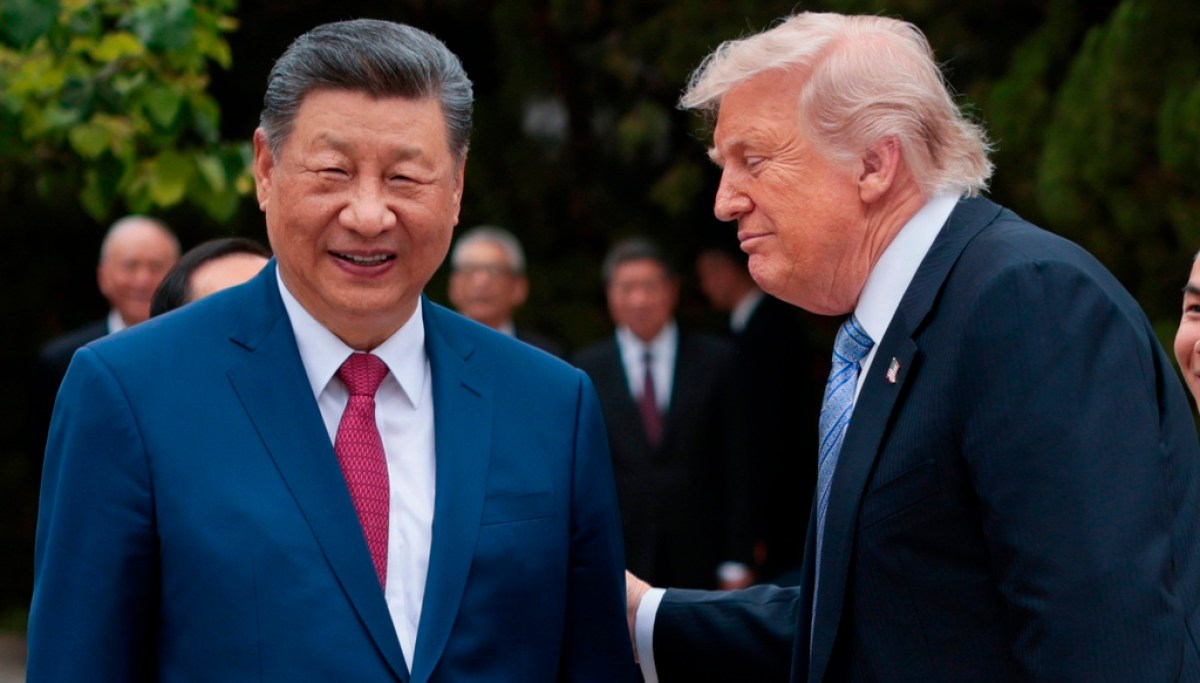
President Donald Trump's economic sanctions against Iran are reducing Iranian revenue but not forcing it to capitulate. The article argues that for these sanctions to be effective, China must also comply with tough United Nations embargoes on Iran. Currently, China and Iran are opposing U.S. sanctions at a recent summit, allowing Iran to continue its military activities despite reduced funds. The piece suggests Trump should leverage international law to enforce the existing UN Security Council measures against Iran, compelling China to choose between supporting Tehran's arsenal or complying with binding global sanctions. This approach would significantly impact Iran’s ability to engage in arms trade and fund its missile programs.
Written by the local model on 2026-09-15,
using this article's own text rather than the other coverage of the
same event (that is the story summary below).
President Donald Trump’s economic D-Day is already hurting the Iranian regime’s revenues, but unilateral U.S. sanctions can only do so much.
asserted
sanctions → hurt → much
If the president wants Iran to fold, he’ll have to play a much better card — cutting it off from China by enforcing tough U.N. embargoes.
asserted
he → want → embargoes
Despite its name, Trump’s Operation Economic Outcast does not block Beijing’s vital support for the regime in Tehran.
asserted
Outcast → block → Tehran
In fact, at a recent summit, China and Iran jointly condemned and vowed to defy the new U.S. strategy.
asserted
China → condemn → strategy
Emboldened, Tehran is retaliating by attacking commercial shipping that attempts to skirt its control of Hormuz, and by firing missiles at U.S. bases and warships.
asserted
that → retaliate → bases
These are not the actions of an enemy that thinks it is losing.
asserted
it → think → enemy
Even as U.S. sanctions reduce its revenues, Iran’s new leadership is focused on rebuilding its arsenal, with Chinese and Russian help.
asserted
leadership → reduce → help
It is passing the economic pain onto Iran’s people, who fear that new protests would invite a swift repeat of the regime’s brutal January crackdown.
asserted
protests → pass → crackdown
Trump can use diplomatic pressure to hit the regime where it really hurts, in the form of an international coalition to enforce global U.N. Security Council military embargoes on Iran.
asserted
it → use → Iran
The embargoes, already on the books, were part of the “snapback” of U.N. sanctions invoked by France, Germany, and Britain in September 2025 over Iran’s violations of the Joint Comprehensive Plan of Action nuclear deal.
asserted
embargoes → invoke → deal
What Trump has not yet done is turn them into a broad enforcement campaign to interdict the military and financial lifelines keeping Iran in the fight.
asserted
done → do → fight
The impact would be significant, outlawing Iran’s arms trade and its missile and nuclear programs, as well as sanctioning the Islamic Revolutionary Guard Corps leaders who increasingly run the government and economy.
Senior Iranian officials worried last summer that their country “does not have the financial or military capacity to endure” these sanctions — “they are more damaging than war.”
As Trump’s D-Day strategy shows, unilateral U.S. sanctions lose their punch when Washington avoids the costs of enforcing them against its own major trade partners, such as China.
asserted
Washington → outlaw → China
By contrast, U.S. snapback enforcement can force Beijing to choose between openly violating binding Security Council measures and helping Tehran rebuild its arsenal.
asserted
Tehran → force → arsenal
They must seize all relevant Iranian assets on their soil and prevent their companies, ships, aircraft, and financial resources from being used to aid Iran’s armed forces.
asserted
They → seize → forces
This would put the onus back on Beijing, which insists sanctions must have the force of international law and the U.N. Security Council’s blessing.
asserted
sanctions → put → law
Trump would have new leverage heading into his White House meeting with Chinese President Xi Jinping on Sept. 24, where U.S.-led pressure on Iran will be among the biggest negotiating topics.
asserted
pressure → have → topics
Properly executed, a campaign to enforce U.N. embargoes would spur our European and Asian allies, most of whom supported “snapping back” these measures last autumn, to expand and strengthen America’s blockade aimed at preventing the regime’s postwar recovery and ending its military aggression.
But the United States can only exploit this advantage if it asserts international leadership and builds a much broader coalition to enforce these U.N. embargoes.
asserted
it → execute → embargoes
Unlike the current D-Day approach, this should not fall primarily on Treasury’s shoulders.
asserted
this → fall → shoulders
With support from Congress, the State Department and Pentagon must coordinate closely with countries worldwide to identify and interdict banned cargoes bound for and from Iran, as they did only briefly late last year.
asserted
Department → coordinate → Iran
Most importantly, Trump must make clear that the entire U.S government is working with allies and partners to isolate Iran’s regime from the outside world and undercut its most dangerous capabilities.
asserted
working → make → capabilities
For the first time in either of his administrations, he must confront Iran and its supporters with diplomatic, economic, and military pressure all at once.
asserted
he → confront → pressure
 The Aporia