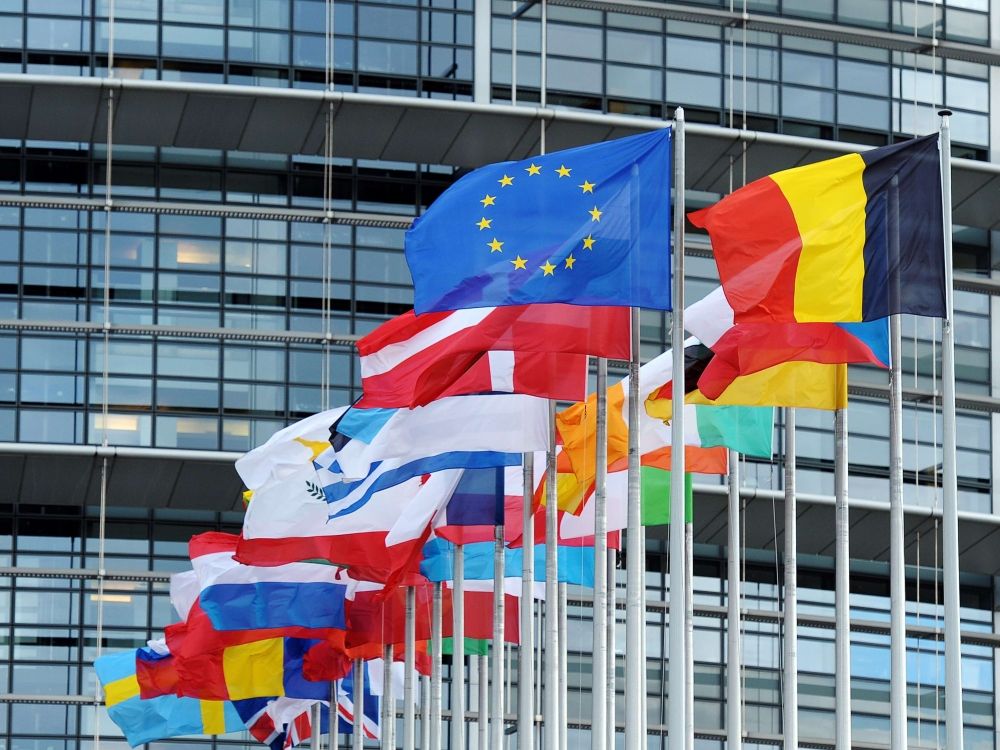
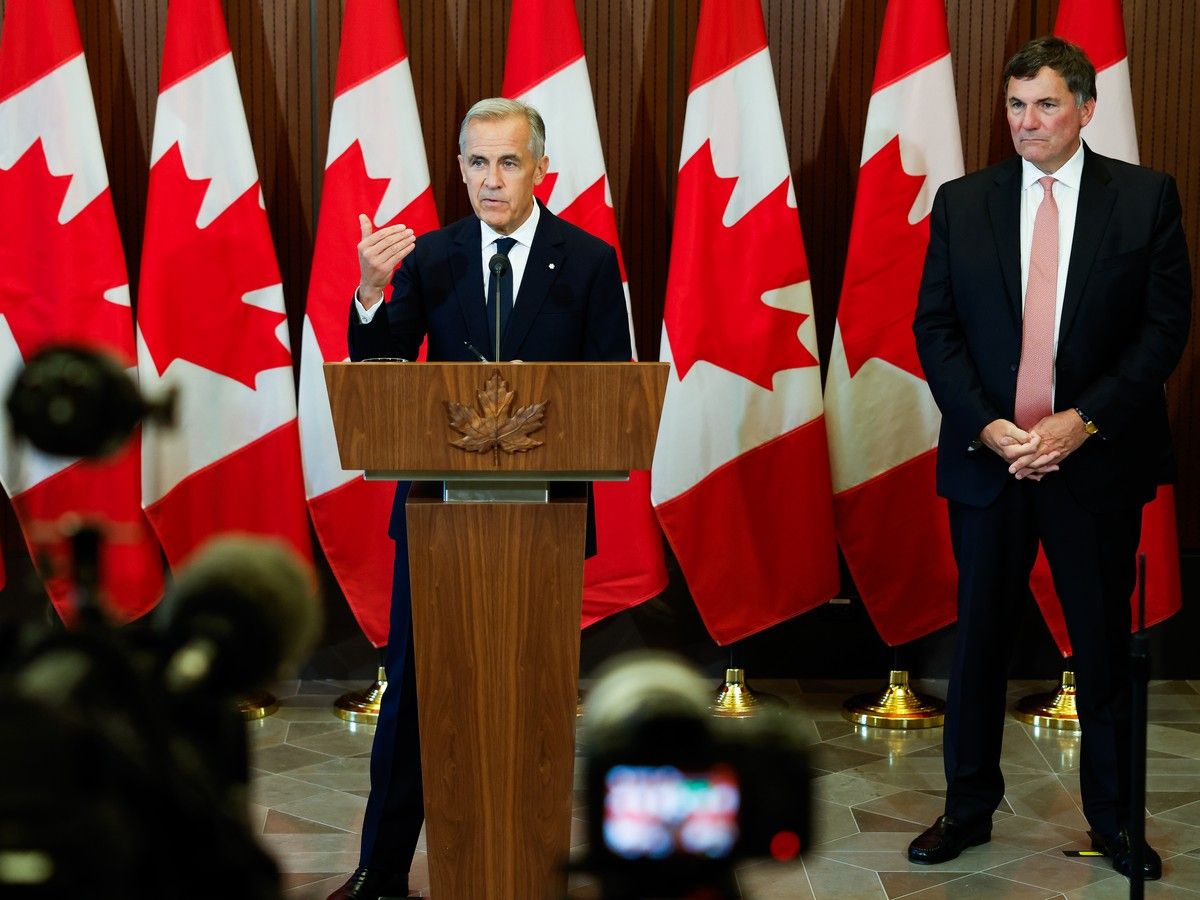
Prime Minister Carney has initiated talks with the European Union about forming a "unique alliance" rather than seeking associate membership as previously reported by The Wall Street Journal. While the article claims Carney aims to leverage Canada’s complementary strengths in areas like defense, energy, artificial intelligence, and critical minerals within the EU's $21 trillion single market, Poilievre and other Conservative leaders expressed concerns about potential impacts on immigration, taxation, and bureaucratic red tape.
Written by the local model on 2026-09-14,
using this article's own text rather than the other coverage of the
same event (that is the story summary below).
Story summary
Prime Minister Mark Carney is set to address the European Parliament in Strasbourg, France on Thursday, where he will pitch Canada's potential partnership with the EU. Media reports suggest that Carney has been pushing for a deeper relationship between Canada and the EU, including discussions about an undefined "associate member" status. However, Carney clarified during a speech at the Toronto International Film Festival that Canada is seeking to begin discussions for a "unique alliance" rather than full membership in the European Union.
Carney emphasized that while Canada shares values and priorities with the EU, it does not intend to become an official member of the bloc. The proposed unique alliance could involve enhanced economic ties, such as freer movement of goods, services, and workers across strategic sectors like defence, energy, AI, and critical minerals. This move comes amid deteriorating trade relations between Canada and the U.S., with Carney suggesting that closer EU ties could benefit Canada economically and strategically without compromising its sovereignty.
Written for “Canada EU Alliance Talks” on 2026-09-14,
grounded in this article and the 9 other(s) covering the same event.
Why this leaning score
The model judged this article politically coded and scored it -0.65, but all 3 of its quote(s) are attributed speech - words the article quotes from someone, not the article's own narration, so the score is not published.
Written under an earlier scoring contract, which gave a paragraph
rather than checkable quotes. Re-analysing this article replaces it.
Leaning score withheld for article 8938: attributed speech only · logged 2026-09-14
After a Wall Street Journal exclusive created a small firestorm of controversy on Sunday when it revealed Mark Carney has reportedly been racing towards making Canada an “associate member” of the European Union, the prime minister poured cold water on the idea later that day.
uncertain
minister → create → idea
Rather, he said, Canada is starting talks with the EU about forming a “unique alliance.”
asserted
Canada → say → alliance
“We share the same values, we have the same priorities and we have very complementary strengths,” he continued.
asserted
he → share → strengths
“We’re stronger together and this is at a time when the world’s more dangerous and divided and friends need to stick together at these times.”
asserted
friends → ’re → times
The Journal article, citing unnamed officials on both sides of the Atlantic Ocean, claimed Carney has been eyeing the EU and its “$21 trillion single market” since securing government in 2025.
asserted
Carney → cite → 2025
The EU doesn’t technically have any “associate members,” but the concept reportedly being pitched, per the Journal, would allow Canada’s goods, services and workers in defence, energy, AI and critical minerals to move freely throughout the 27 EU states.
uncertain
goods → have → states
They’ve also reportedly had discussions about trans-Atlantic sub-sea communications and energy corridors, new satellite networks that don’t involve U.S. tech giants, and potentially shipping Canadian fertilizer through a ice-breaker-cleared Northwest Passage.
uncertain
that → have → Passage
The Journal also reported that Carney and French President Emmanuel Macron have discussed the possibility of Canadians living and working in EU member nations without requiring a visa, and that Carney wants access to an EU study-abroad program.
asserted
Carney → report → program
Sources indicate the concept is still in its bureaucratic infancy, but Carney has been clear with his officials that the result “will be the reorienting of an economy and a society that for half a century has been dominated by the U.S.”
asserted
that → indicate → U.S.
Leader Pierre Poilievre added his voice to the chorus of Conservative voices who decried Carney’s reported moves and said Canadians deserve to know if their government is actually pursuing “associate membership.”
asserted
government → add → membership
“If so, will European border policies apply in Canada, further overwhelming our immigration system while our youth can’t find homes?
asserted
youth → apply → homes
Will Canadian waitresses struggling with rent have to pay tax dollars to the bloated EU bureaucracy?
asserted
waitresses → struggle → bureaucracy
Will Canadian small businesses be buried under the red tape of Eurocrats that have never met a Canadian entrepreneur,” he asked, noting he would ask these questions were it not for a shuttered Parliament.
asserted
it → bury → Parliament
“And one more: who decides for Canada?”
asserted
who → decide → Canada
Poilievre said the existing Canada-EU Comprehensive Economic and Trade Agreement already allows for free trade and more would happen were it not for the Liberals.
asserted
it → say → Liberals
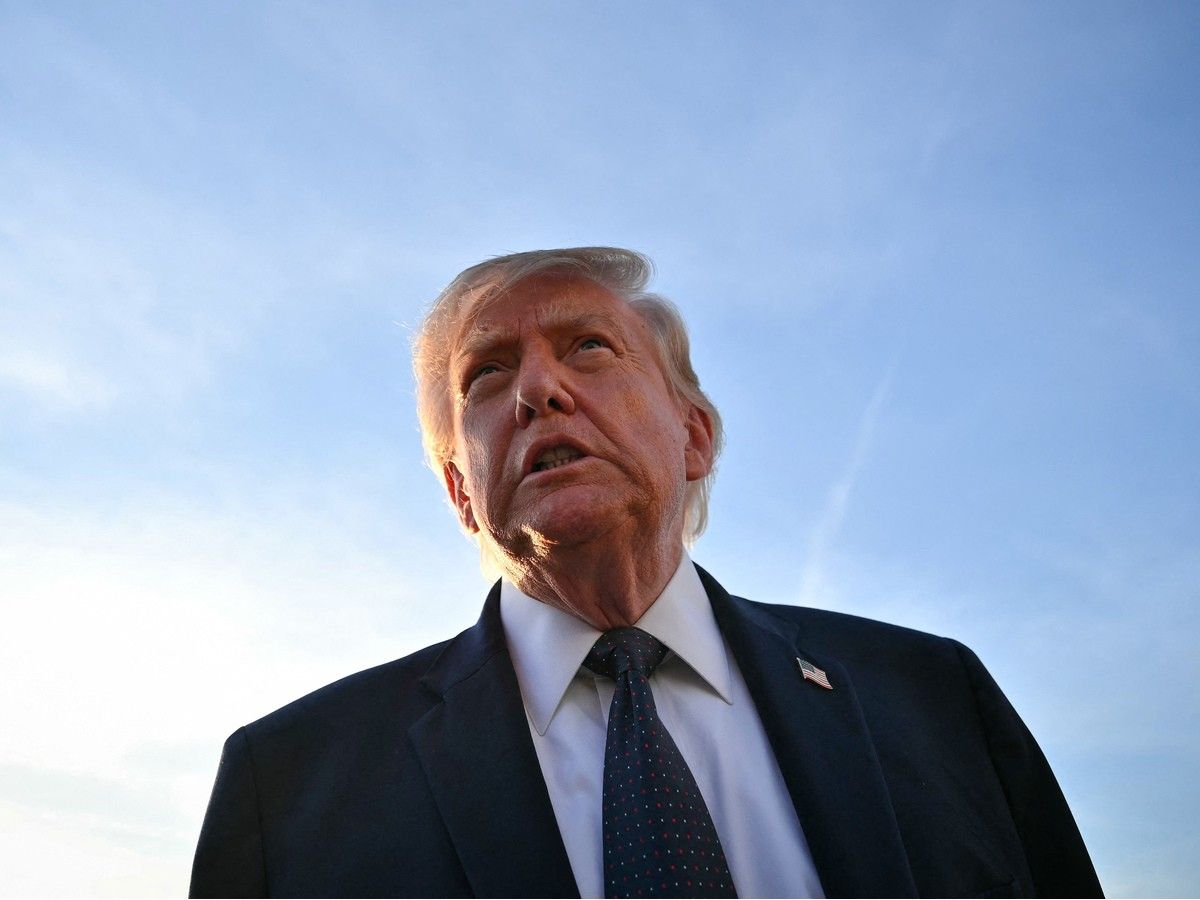
Like some of his MPs, Poilievre said just as Canada won’t acquiesce to U.S. President Donald Trump’s desire to make it the 51st state, nor will it become the “28th EU state.”
asserted
it → say → desire