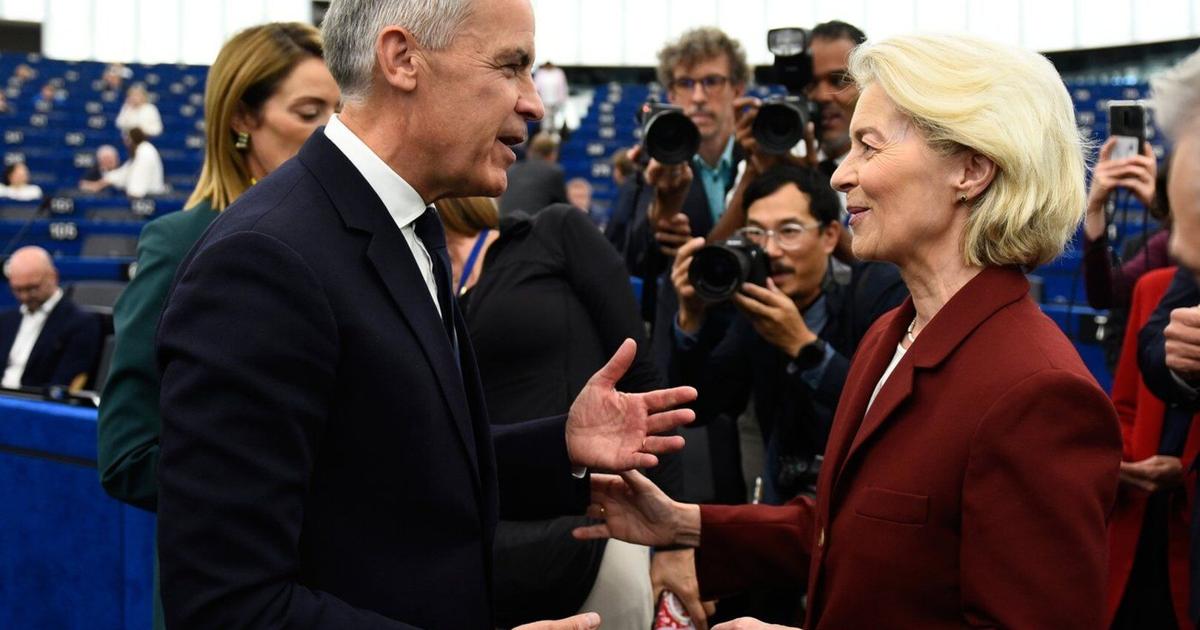
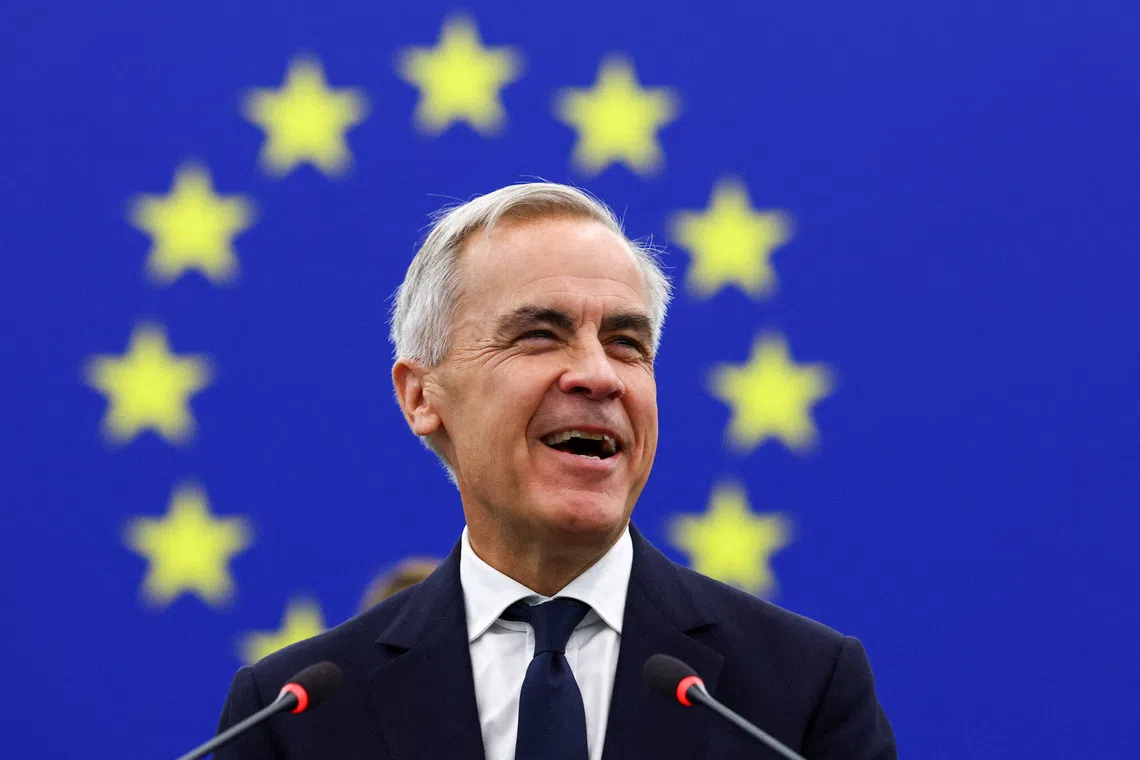
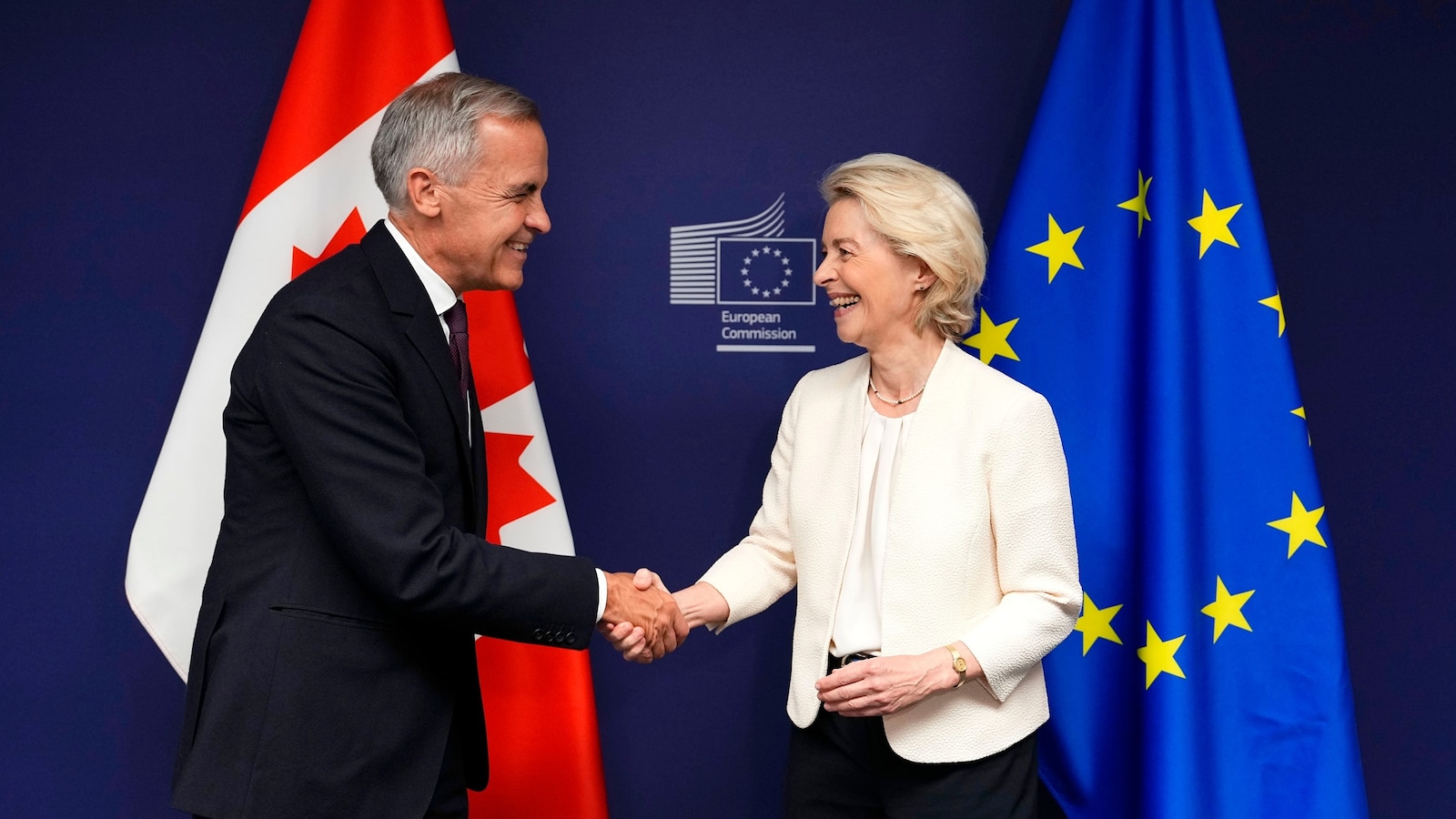
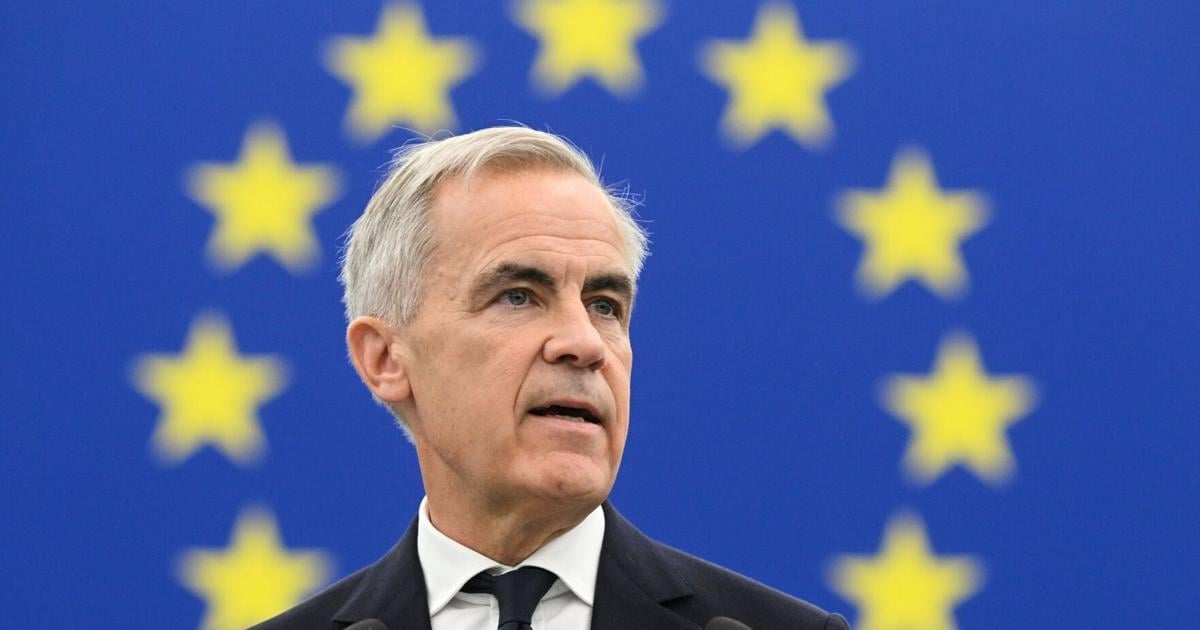
Canadian Prime Minister Mark Carney has expressed interest in establishing a unique relationship with the European Union as an associate member, although this concept is currently undefined and would require unanimous approval from all 27 EU states to be implemented through treaty changes. At a State of the Union address, EU chief Ursula von der Leyen highlighted several areas for potential cooperation between Canada and the EU, such as artificial intelligence, critical minerals, defense capacity, energy security, and space exploration. Carney emphasized that this is not an attempt at full membership or forming a third bloc but rather aligning with Europe to address geopolitical challenges and enhance mutual benefits in areas like clean energy technologies and trade.
Written locally by qwen2.5:14b on 2026-09-20,
using this article's own text rather than the other coverage of the
same event (that is the story summary below).
Story summary
Prime Minister Mark Carney of Canada is exploring closer ties with the European Union (EU), aiming for a "unique alliance" rather than full membership. The push comes amid tensions with the United States, including tariffs on billions of dollars in cross-border trade. Reports suggest Canada and the EU are discussing ways to let Canadian goods, services, and workers move freely within strategic supply chains such as energy, AI, defense, and critical minerals. Carney is set to address the European Parliament in Strasbourg this week to pitch Canada's partnership proposal. While some officials initially hinted at an "associate member" status for Canada, Carney has clarified that discussions will focus on forming a unique alliance rather than seeking full EU membership or associate status.
Written for “Canada EU Alliance Talks” on 2026-10-05,
grounded in this article and the 87 other(s) covering the same event.
- Published
Canadian Prime Minister Mark Carney has welcomed the European Union's ambition to make his country the first associate member of the bloc – but what would that mean in practice?
asserted
that → publish → practice
Carney says he is seeking a "unique" relationship with the EU, in an apparent reference to the fact that EU treaties do not currently provide for associate membership.
asserted
treaties → say → membership
Germany had proposed Ukrainian associate membership earlier this year but Kyiv rejected the idea, saying it only wanted full EU integration.
asserted
it → propose → integration
The EU itself also seemed reluctant.
asserted
EU → seem → ?
But EU chief Ursula von der Leyen has now shifted the focus across the Atlantic to Canada
At the her State of the Union address on Wednesday, von der Leyen listed several key areas for cooperation, although she did not give specific details about how Canadian associate membership would work.
asserted
membership → shift → details
What Carney says about EU associate membership
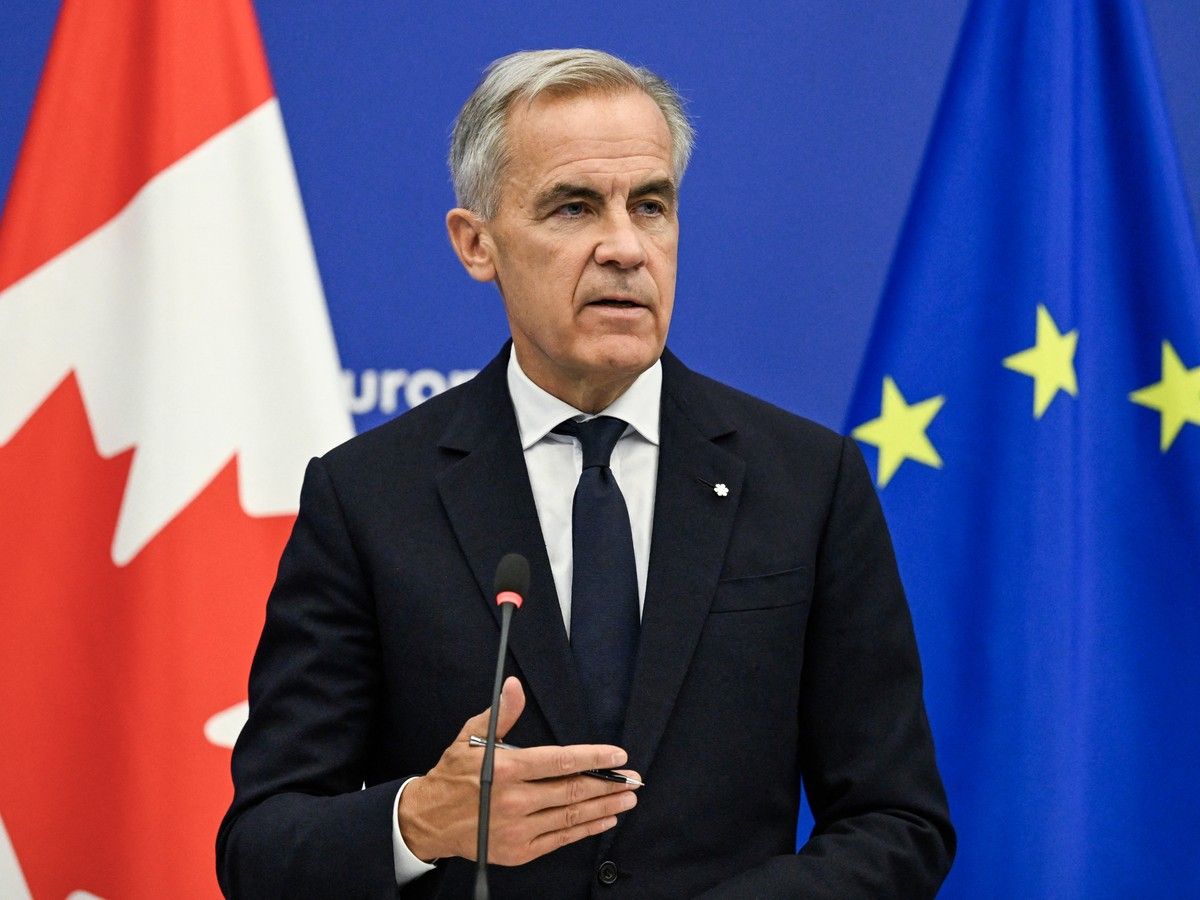
Carney told reporters on Thursday that Canada was "not in a position, nor seeking, to become a full member of the European Union".
asserted
Canada → say → Union
He also said it was not an attempt to create a "third bloc", adding: "We do not seek power to dominate others."
asserted
We → say → others
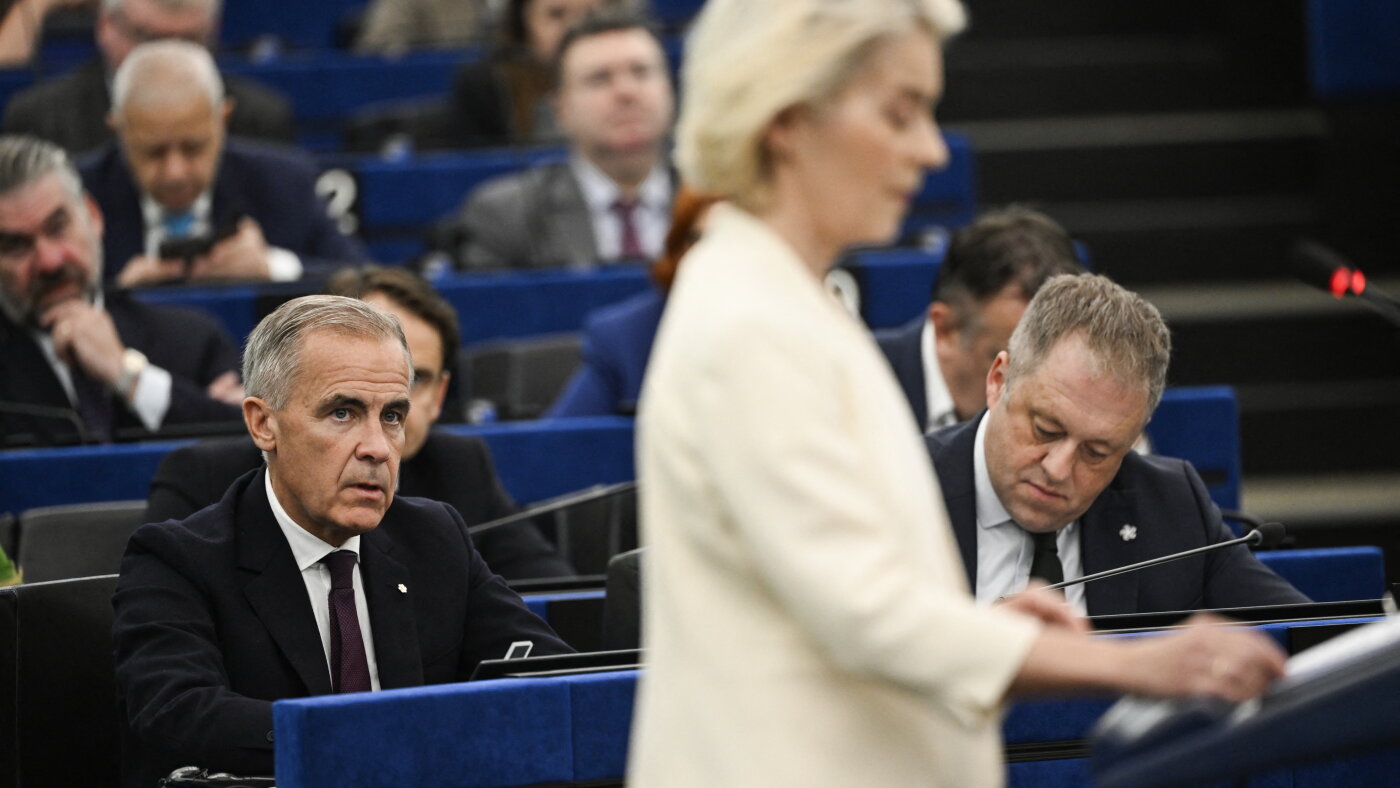
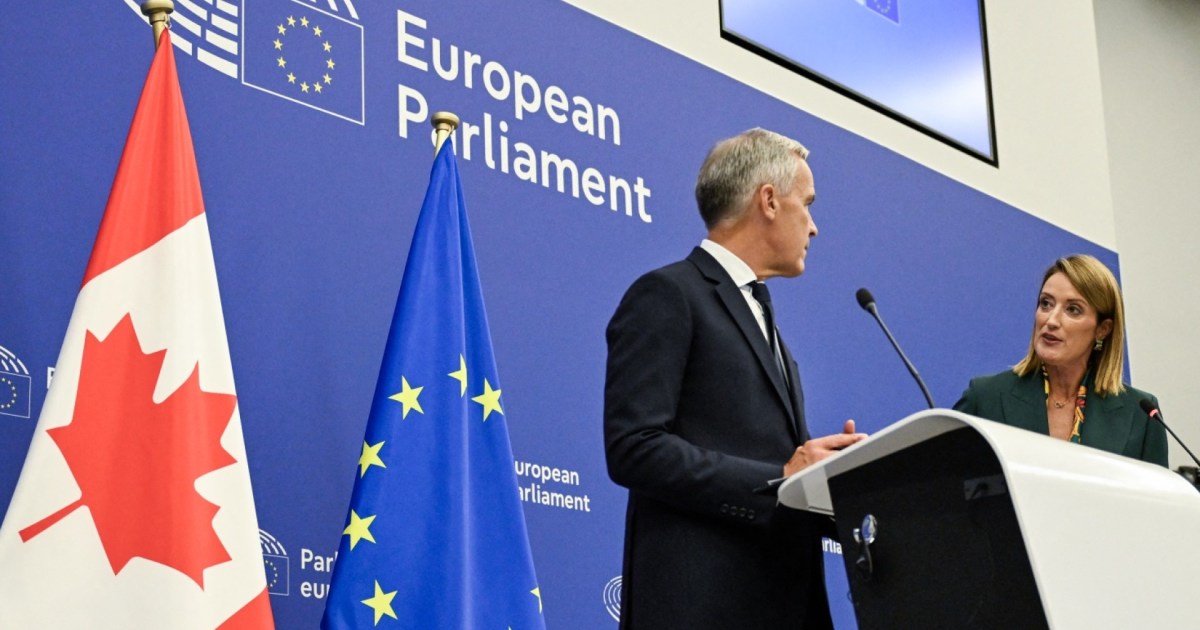
He told the European Parliament on Thursday that closer alignment between Ottawa and the EU was needed to confront the "current geopolitical rupture" – nodding to strained relations with the US following President Donald Trump's tariff policy and the collapse of trade talks between the two countries.
asserted
alignment → tell → countries
At the European Parliament on Thursday, Carney set out what he views as key areas where his country and the EU can cooperate, including:
AI
critical minerals
defence industrial capacity
energy security
the space sector
Carney also said he wanted to move towards membership of the EU's Erasmus Plus scheme – the funding programme which allows students to work and study abroad.
asserted
students → set → scheme
All 27 EU states are members and there are seven non-EU members.
asserted
states → be → ?
The UK will rejoin the scheme in 2027.
asserted
UK → rejoin → 2027
He said Canada could contribute liquefied natural gas (LNG) and hydrogen "at large scale to support Europe's energy security" and that Canada in turn could benefit from what he described as Europe's leadership on clean energy technologies.
uncertain
he → say → technologies
What could associate membership look like?
uncertain
membership → look → What
So we know what it is not – full membership of the EU.
asserted
it → know → EU
It is not clear is what exactly the relationship would look like.
asserted
look → look → what
EU associate membership does not currently exist and the process to create it could take years.
uncertain
process → exist → years
If associate status were enshrined in EU treaties, it would require unanimity and ratification among all 27 member states.
Despite von der Leyen's overtures towards Canada, some EU countries would prefer to build on existing defence and trade agreements rather than create a new form of membership.
asserted
countries → enshrine → membership
The EU is Canada's second-largest trading partner and the far-reaching Comprehensive Economic and Trade Agreement was agreed more than a decade ago, though several of the bloc's 27 members are yet to ratify that agreement.
asserted
several → reach → agreement
The current trade deal does not remove border checks.
asserted
deal → remove → checks
Would associate membership change that?
asserted
membership → change → that
It also remains to be seen what associate membership would mean for Canada's relationship with the European single market.
asserted
membership → remain → market
Were Canada to one day join the single market, it would have to match EU regulations and standards while having no say on policy – in a similar way to European Economic Area countries Norway, Iceland and Liechtenstein, or Switzerland, which has a separate deal.
asserted
which → join → deal
Canada's rules have historically been geared towards its biggest trade partner, the US.
asserted
rules → gear → partner
And then there's the matter of other countries seeking to join the bloc.
asserted
countries → be → bloc
Albania, Bosnia and Herzegovina, Montenegro, North Macedonia and Serbia are already on the long road towards full EU membership, while in Eastern Europe, Georgia and Moldova are also pursuing membership.
asserted
Georgia → pursue → membership
There is no suggestion that a new relationship with Canada would hinder these countries' progress towards full accession, but any impression that Ottawa was being given special treatment could create tension.
uncertain
Ottawa → be → tension
He has described the prospect of Canada's associate membership as "laughable" and has threatened further tariffs on the EU if the plan goes ahead.
asserted
plan → describe → EU
 The Aporia