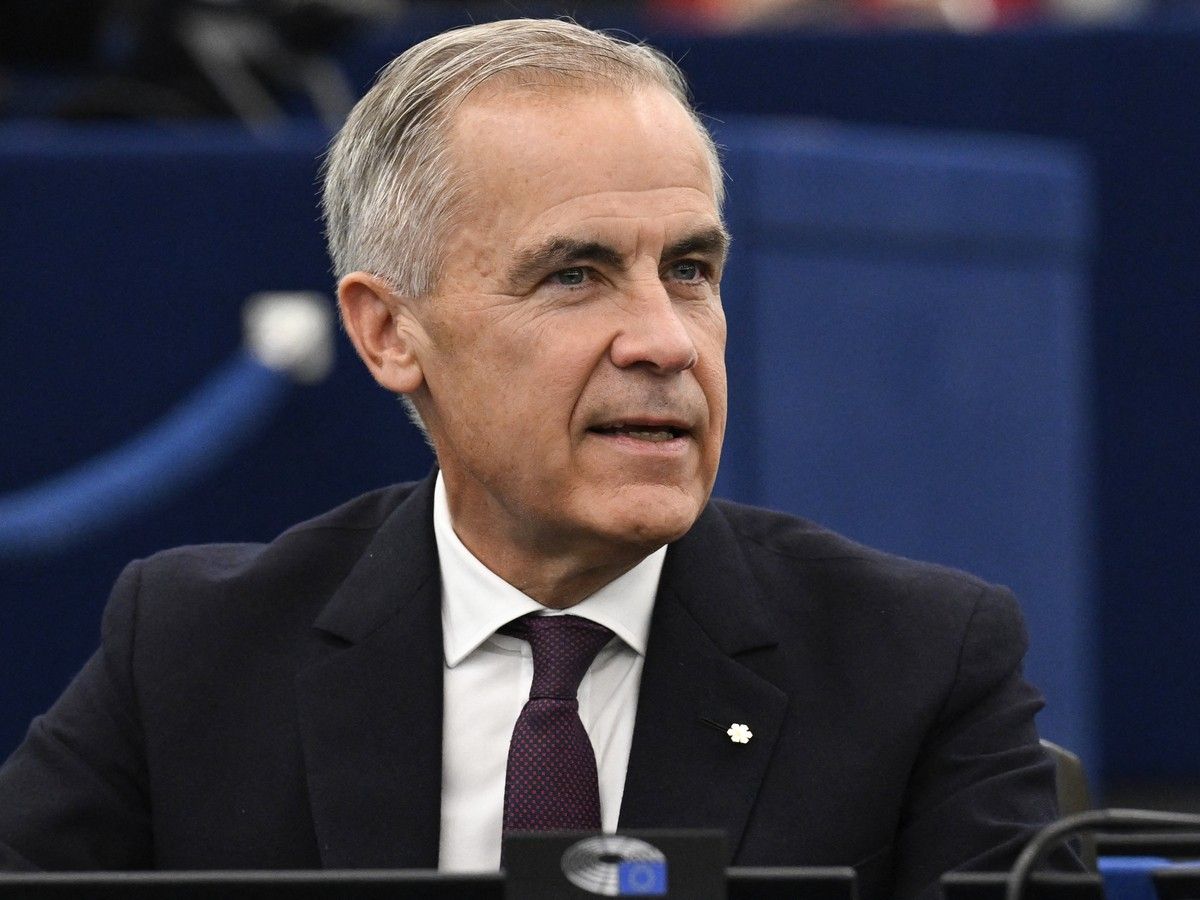
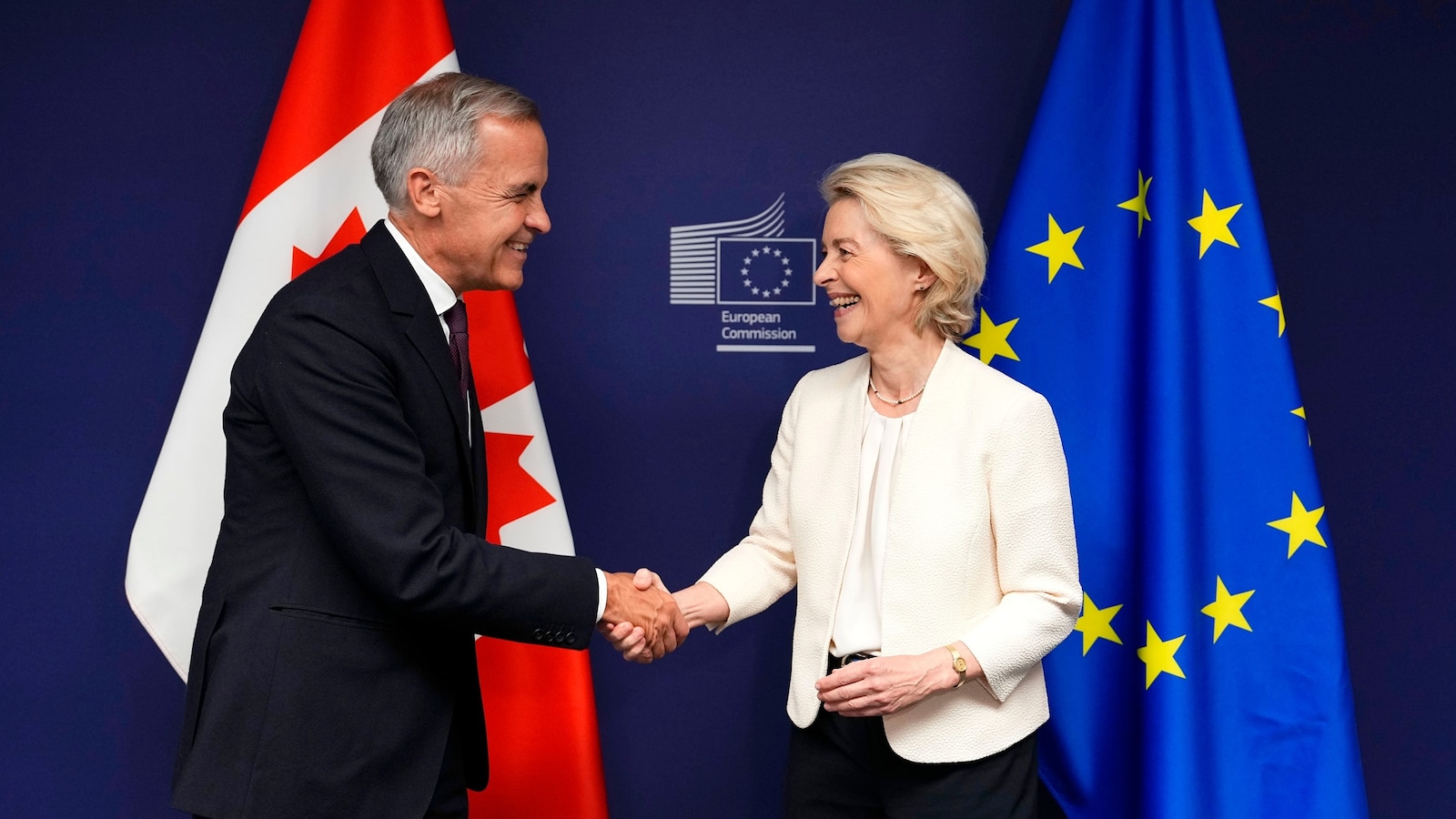
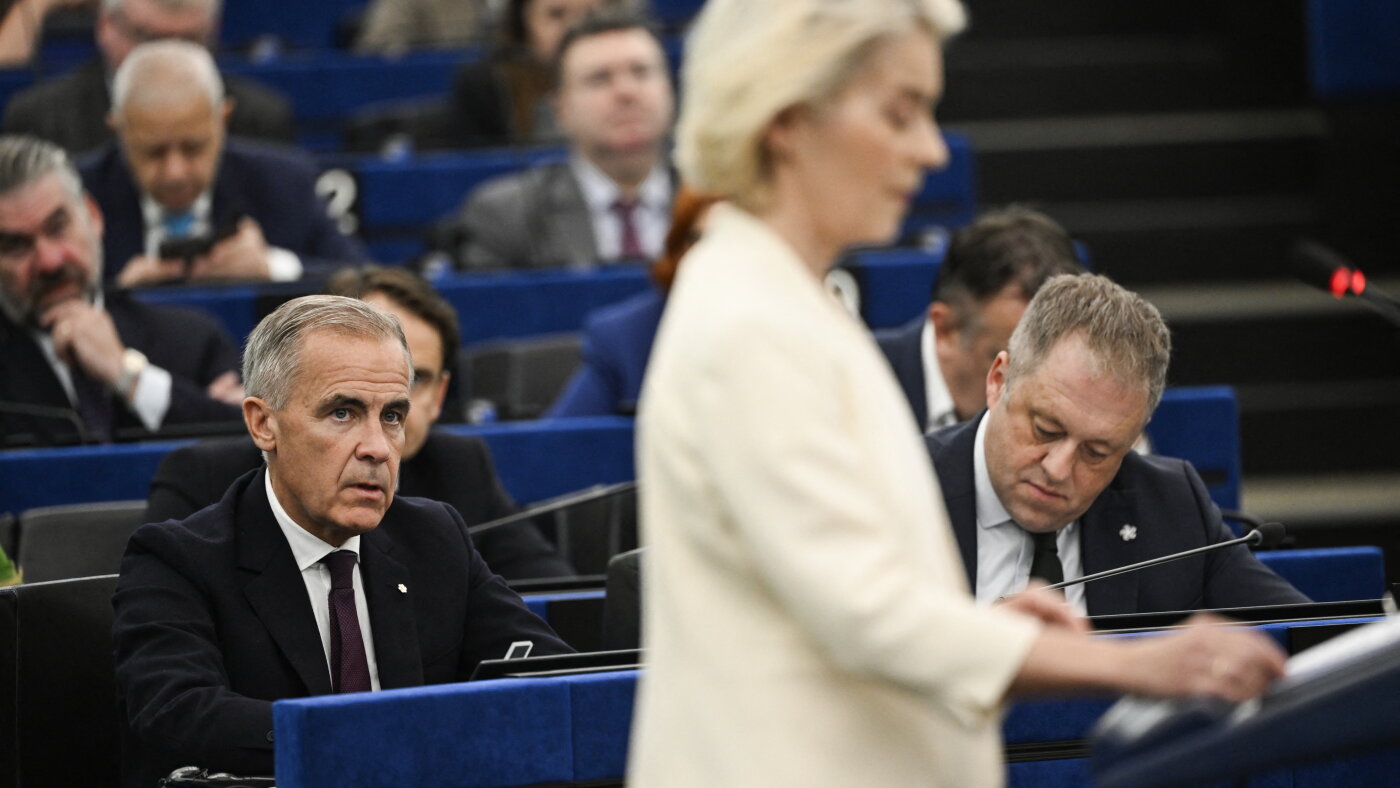
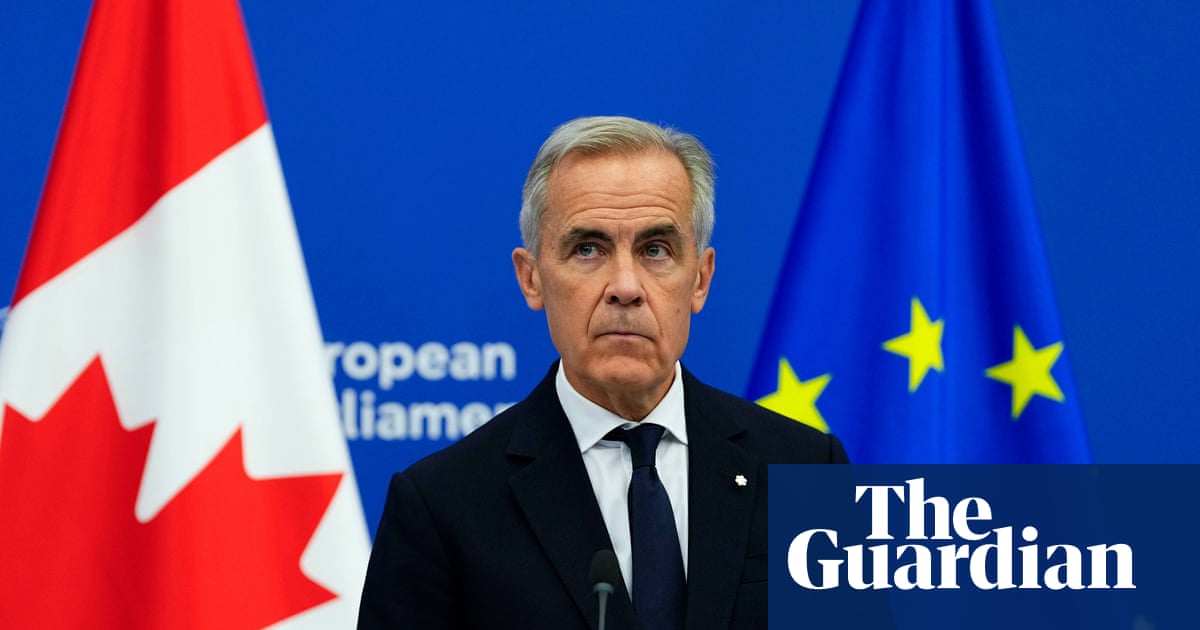
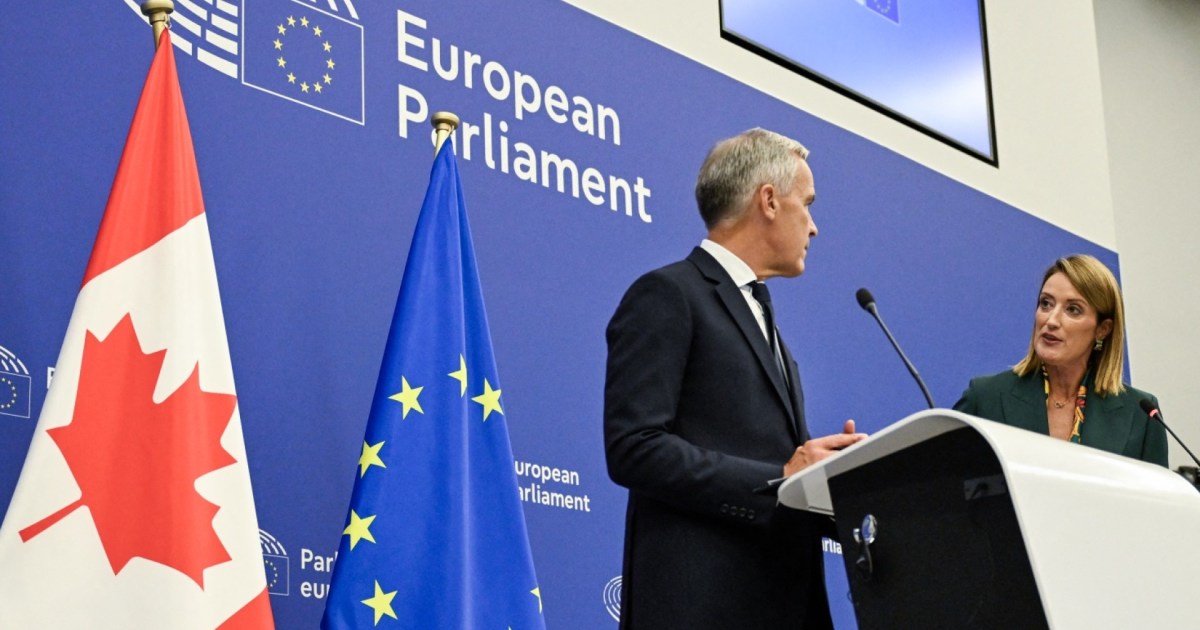
Canada's Prime Minister Mark Carney addressed the European Parliament on Thursday, responding warmly to an invitation from the European Commission President Ursula von der Leyen for Canada to become the EU’s first associate member. While emphasizing cooperative efforts in areas like energy security and defense to counterbalance superpowers like China and the U.S., Carney faced backlash from U.S. President Donald Trump who threatened tariffs if the agreement proceeded. The proposal aims to strengthen ties beyond existing trade deals but faces skepticism due to potential tensions with American interests.
Written locally by qwen2.5:14b on 2026-09-17,
using this article's own text rather than the other coverage of the
same event (that is the story summary below).
Story summary
Canadian Prime Minister Mark Carney announced plans to seek a "unique alliance" with the European Union (EU) during a speech at the Toronto International Film Festival on Sunday. The move comes amid escalating trade tensions between Canada and the US; in 2025, 72.5% of Canadian merchandise exports went to the U.S. Carney emphasized that this new alliance would not seek full EU membership but rather closer economic ties based on shared values and priorities. Talks will focus on allowing free movement for goods, services, and workers in strategic sectors like energy, AI, defense, and critical minerals without Canada becoming a formal member of the EU.
Written for “Canada EU Alliance Talks” on 2026-09-18,
grounded in this article and the 62 other(s) covering the same event.
Is Canada about to join the EU?
asserted
Canada → join → EU
Headlines across Europe indicate a lot of confusion right now.
asserted
Headlines → indicate → confusion
The EU constitution rules that possibility out as Canada is geographically outside Europe.
asserted
Canada → rule → Europe
But in a speech on Thursday to the European Parliament, Canada's Prime Minister Mark Carney said: "Canada and Europe should secure our strategic autonomy through deep cooperation in the full range of strategic capabilities."
asserted
Canada → say → capabilities
Mark Carney was responding – extremely warmly – to an invitation by European Commission President Ursula von der Leyen for Canada to become the EU's first associate member.
asserted
Canada → respond → member
The EU and Canada already have a far-reaching trade deal (Ceta) in place but Carney insisted additional cooperation on energy and economic security, on critical and raw materials, education, tech and AI innovation, and defence would help safeguard all countries involved.
asserted
cooperation → have → countries
Canada and the EU feel increasingly squeezed by the superpowers USA on the one side and China on the other – and by tech giants, too, that seem to operate supranationally.
asserted
that → squeeze → giants
The idea of associate EU membership, Carney emphasised, would not be to form a third superpower or to create a bloc against anyone else.
asserted
Carney → emphasise → anyone
"We do not pursue zero sum deals," he said.
asserted
he → pursue → deals
Instead he suggested like-minded nations should club together to create a new form of multilateral global governance in an increasingly turbulent world where – in the minds of some others - might is right.
uncertain
might → suggest → others
Only by countries joining forces and shunning isolationism, Carney suggested, could they close key capability gaps, build strength and ensure national sovereignty.
uncertain
they → join → sovereignty
Their slogans – whether "Italy First" or "France for the French" or "Make Poland Great Again" – echo Donald Trump's call to Make America Great Again.
asserted
America → make → call
On Wednesday, Donald Trump dismissed the EU associate membership proposal out of hand, threatened to impose "very heavy tariffs" if the agreement came to fruition and warned he may view it as a "hostile act".
uncertain
he → dismiss → act
But both sides have been stung by what they view as Washington's weaponisation of trade tariffs.
asserted
they → sting → tariffs
Ottawa is currently embroiled in what it calls an escalating trade "war" with the White House.
asserted
it → embroil → House
They also fear they can no longer fully rely on the US to have their back in terms of security and defence.
asserted
they → fear → security
Canada is not alone among Europe's far-flung allies, now seeking to cosy closer to the EU, as they worry the US is becoming too unpredictable a partner.
asserted
US → seek → EU
Japan and South Korea show an interest in sheltering under the EU umbrella too.
asserted
Japan → show → umbrella
For its part, the EU has recently hastened to secure a list of trade deals – with India, Indonesia and Japan for example – to intentionally diversify relationships.
asserted
EU → hasten → relationships
But there is no guarantee Canada's associate membership of the EU will ever get off the ground, never mind become a blueprint for other countries, like the UK wanting close of relations stopping short of full EU membership.
asserted
UK → be → membership
Any deal would have to be approved by each one of the EU's 27 countries.
asserted
deal → have → countries
No legal precedent exists, negotiations would be lengthy and potential conflicts of interest loom, over steel tariffs for example.
asserted
conflicts → exist → example
A suggestion in May by Germany to make Ukraine – a country desperate for full membership of the European Union – an associate member was rejected by others in the EU.
uncertain
Ukraine → make → EU
Some, including France's government, want to avoid EU non-members securing "too good" a deal.
asserted
members → include → deal
They fear eurosceptic forces at home and abroad could then encourage voters to clamour to leave the bloc.
uncertain
forces → fear → bloc
Buffeted by adverse winds – from China, the US and Russia, the normally rigid rules-based EU is coming under serious pressure to show more flexibility in accommodating countries wanting to stand by its side.
asserted
EU → buffet → side
 The Aporia