Photo via NPR

How to think about the midterms — and the political moment the country is in

Read the original at NPR ↗
Cite

Montanaro, D. (2026, November 1). How to think about the midterms — and the political moment the country is in. NPR. https://www.npr.org/2026/11/01/g-s1-151146/how-to-think-about-the-midterms-and-the-political-moment-the-country-is-in

Dated from the outlet's own feed. Check the original for its byline.

NPR · collected 2026-11-01 · by Domenico Montanaro

Quick Summary

This article discusses how President Trump's second term has been marked by economic issues and political challenges leading up to the midterms. Despite being elected with promises to lower prices, Trump faces record-low approval ratings due to continued inflation and economic struggles for regular Americans. The economy is described as bifurcated, with wealthier individuals benefiting from AI companies while others struggle with rising costs of living and tighter credit conditions. Polls indicate that most people feel their financial situations have worsened or stayed the same under Trump's leadership. Historically, the president’s party tends to lose seats in midterms, especially when the president is unpopular; thus, Republicans are likely to face losses in these elections. Democrats, having performed well in special and off-year elections, are now favored to win control of the House and have a chance at gaining the Senate due to voter dissatisfaction with Trump's policies and handling of the Iran war.
Written by AI on 2026-11-01, from this article's own text only (the story summary below draws on all the coverage).

AI analysis

Story summary

In the 2026 midterm elections, President Trump faces significant opposition due to his failure to control inflation despite his mandate to lower prices. Voters are increasingly critical of Trump's economic policies and the war with Iran, which they blame for rising costs on goods and energy. The economy has become more divided, with wealthy individuals benefiting from stock portfolios dominated by AI companies, while regular Americans struggle with wage stagnation and higher interest rates that make it difficult to purchase homes or cars. A recent NPR/PBS News/Marist poll indicated that 44% of respondents said their financial situation had mostly stayed the same or worsened since Trump took office for his second term.

Written for “Midterm Elections Analysis” on 2026-11-02, grounded in this article and the 0 other(s) covering the same event.

Story

📰 Midterm Elections Analysis
Politics · 1 article(s) covering the same event.

Compared with similar articles

This article reads leans left and hedges 11% of its claims. Each row says how that neighbour differs.
The Straits Times
⚖️ Leans left Hedges 6 of 95 claims Outlet record 66/100
“The articles discuss broader political contexts and trends involving President Trump rather than a single specific incident or occurrence.”
The Free Press
⚖️ Leans left Hedges 2 of 46 claims Outlet record 96/100
“The articles discuss general political sentiments and forecasts leading up to midterm elections but do not describe the same specific incident or occurrence.”
ABC News (AU)
⚖️ Leans left Hedges 5 of 38 claims Outlet record 68/100
“The articles discuss different aspects of President Trump's economic situation and approval ratings, not a single specific incident or occurrence.”
Washington Examiner
⚖️ Leans strongly left further left than this Hedges 0 of 8 claims Outlet record 70/100
“The articles discuss different aspects of the political climate leading up to the midterms, rather than describing a single specific incident.”
NPR
Hedges 9 of 87 claims Outlet record 60/100
“The articles discuss different aspects of the political climate and election concerns around the midterms, rather than describing a single specific event.”
Washington Examiner
⚖️ Leans left Hedges 0 of 4 claims Outlet record 70/100
“The articles discuss different aspects of political discourse surrounding midterms, but do not describe the same specific incident or occurrence.”
The Guardian
⚖️ Leans left Hedges 1 of 89 claims Outlet record 66/100
“The articles discuss different aspects of the midterm elections, with Article A focusing on voter opinions across the country and Article B providing analysis on President Trump's approval ratings and economic impacts. They do not describe the same specific incident or event.”
The Guardian
Hedges 6 of 74 claims Outlet record 66/100
“The articles discuss different aspects of the political context leading up to the midterms, rather than reporting on a single specific incident.”
The Guardian
⚖️ Leans left Hedges 5 of 57 claims Outlet record 66/100
“The articles discuss general sentiments about elections but do not describe the same specific incident or occurrence.”
CBS News
Hedges 8 of 46 claims Outlet record 66/100
“The articles discuss midterm elections generally but do not focus on a single specific election event or outcome.”
How this article was measured signals, leaning charts, publisher record, byline, topics and claims

Signals How these are calculated →

Claims extracted
55
sentences that state something as happening or true
Uncertain
11%
6 of 55 hedged ("reportedly", "may", "according to")
Leaning
Leans left
of the writing, not the subject · beta estimate
Publisher signals
60/100
NPR's corrections and hedging, across everything collected from it. Not a measure of accuracy.
Outlets on this story
1
Politics
Same framing elsewhere
1
articles that frame the event the way this one does
Analyzed 2026-11-01 · how these are computed

How this is being covered How these are calculated →

Article leaning vs. publisher reliability
Source leaning vs. consistency

Publisher

NPR · 1008 article(s) · 3 correction(s) detected
Running correction rate · 3 correction(s)

Who wrote this

Domenico Montanaro
6 article(s) here · 1 carrying a prediction
🔮 Depending on how Latinos in South Texas, in particular, vote those gains might be lower.
🔮 Get the latest on the midterms & more in the NPR App Ahead of Election Day, there are a lot of questions about what might happen, what the implications of different outcomes might be and even what it's like to cover elections.
🔮 Mississippi and Nebraska are also more competitive than Republicans would like, but GOP candidates are favored there.
🔮 But, there are indications of why a potential wave could be limited, a new NPR/PBS News/Marist poll finds.
🔮 If a poll has a 3 percentage-point margin of error, this means that candidate could have a 5-point lead or be losing by a point.
🔮 The Cook Political Report forecasts a five-to-15-seat net gain for Democrats at this point.
Also by Domenico Montanaro
Nothing else under this byline is closely related to this article, so these are simply their most recent.
All 6 articles by Domenico Montanaro →

Topics

Democrats House Iran NPR Republicans

Subjects

Trump PERSON · 7× Democrats NORP · 5× Republicans NORP · 5× House ORG · 3× NPR ORG · 3× GOP ORG · 2× Iran GPE · 2× Americans NORP · 1× Marist ORG · 1× PBS News ORG · 1×

Narrative

The economy is increasingly bifurcated with the wealthy doing well, in large part, because of increasing stock portfolios dominated by AI companies, while regular Americans are turning against AI data centers, struggling because of inflation that is outpacing wages, a middling labor market and interest rates that are creeping higher.
framing: assertive · carried by 1 article(s) · first seen 2026-11-01
🔮 Depending on how Latinos in South Texas, in particular, vote those gains might be lower.

Claims (55 extracted, 6 hedged)

How to think about the midterms — and the political moment the country is in 📲 asserted
country → think → midterms
Get the latest on the midterms & more in the NPR App President Trump was elected in 2024, in large measure, with a mandate to bring down prices. asserted
Trump → get → prices
But that hasn't happened. asserted
that → happen → ?
Instead, Trump is facing record-low approval ratings, record-high intensity of opposition, and voters are blaming him for prices that have continued to rise since he took office this second time around. asserted
he → face → office
Most presidents get more blame and credit than they deserve for the economy. asserted
they → get → economy
But the war with Iran and Trump's tariffs were choices that have directly led to increased prices on goods and energy. asserted
that → lead → goods
The economy is increasingly bifurcated with the wealthy doing well, in large part, because of increasing stock portfolios dominated by AI companies, while regular Americans are turning against AI data centers, struggling because of inflation that is outpacing wages, a middling labor market and interest rates that are creeping higher. asserted
that → bifurcate → wages
Those rates are making it harder to buy a home or a car, making millions of people feel like they're treading water. asserted
they → make → water
The latest NPR/PBS News/Marist poll showed a plurality — 44% — said their finances have mostly stayed the same and another 38% saying their economic situations have worsened. asserted
situations → show → ?
Only 15% said things have actually gotten better for them from a money standpoint. asserted
things → say → standpoint
Add to that the disapproval of the administration's hard-line immigration enforcement tactics, cuts to domestic spending on programs like Medicaid and other health care programs, and the slashing of regulations and the government workforce, and it's angering swing voters and firing up Democrats. asserted
it → add → Democrats
As a result, the president's party is likely to pay the price. asserted
party → pay → price
Midterms are usually difficult for the president's party to begin with. asserted
party → begin → ?
History is not on Republicans' side this year Only twice since World War II has the president's party gained seats in the House in a midterm election. asserted
party → gain → election
On average, the president's party loses 26 seats in midterm years, and it's worse when a president's approval rating is below 50%, as Trump's has been. asserted
Trump → lose → %
When that's the case, the presidents' parties have lost an average of 35 seats. asserted
parties → lose → seats
When they're above 50%, they still lose seats but only 15 on average, 20 seats better than when a president is unpopular. asserted
president → lose → seats
The fact that presidents' parties lose seats in midterms is something Trump himself has acknowledged multiple times at campaign events. asserted
Trump → lose → events
Meanwhile, Democrats have had political success in this Trump term. asserted
Democrats → have → term
They have consistently overperformed in special elections, which are indicators of midterm prowess, and they cleaned up in the 2025 off-year elections. asserted
they → overperforme → elections
Since then, the political landscape has only gotten worse for Republicans because of the unpopular Iran war that has led to skyrocketing gas prices. asserted
that → get → prices
All of that points to Democratic gains this cycle. asserted
All → point → gains
They are favored to win control of the House, and they are in striking distance of winning the Senate, something that had been seen as a longshot at the beginning of this cycle. asserted
that → favor → cycle
Democrats have potential limitations asserted
Democrats → have → limitations
While the landscape has undoubtedly moved more in Democrats' direction over the last several months, the extent of the likely potential gains is not clear. asserted
extent → move → gains
When looking at the Cook Political Report's ratings, there are about 30 fewer competitive districts — ones rated as lean or toss up — this year than in 2018 when Democrats won a net gain of more than 40 seats in the House. asserted
Democrats → look → House
Mid-decade redistricting has also helped to insulate Republicans this cycle, even if marginally. asserted
redistricting → help → Republicans
After all the redistricting fights across the country, with Trump explicitly pushing GOP-led state legislatures to get more Republican seats, an NPR analysis shows Republicans netted an estimated 8-seat advantage out of redistricting. asserted
Republicans → push → redistricting
Depending on how Latinos in South Texas, in particular, vote those gains might be lower. uncertain
gains → depend → Texas
While Republicans face significant headwinds and the GOP is not viewers favorably, the Democratic Party is also not viewed positively. asserted
Party → face → headwinds
Democrats have had trouble wrangling a base of voters who should be Democrats but are restive and unsatisfied by the party. asserted
who → have → party
That said, the latest NPR poll showed that self-identified "democratic socialists" were very engaged in these midterms and hotly disapprove of the job Trump is doing. asserted
Trump → say → job
As the old saying goes, the enemy of my enemy is my friend. asserted
enemy → go → enemy
This group of voters may vote in big numbers in this election as a check on Trump — 44% of poll respondents said their vote was a vote against Trump while 21% said it was a vote for him. uncertain
it → vote → him
But there's a likely clash of ideals and approach coming on the left over the next several months, as the Democratic presidential primaries. And make no mistake, the 2028 election begins almost immediately after these midterms. asserted
election → be → midterms
Candidates who want to make a splash and need a national boost tend to announce earlier rather than later. asserted
who → want → boost
It's important to remember nothing is a done deal until the results are in. asserted
results → remember → ?
A lot of this is going to come down to Republican turnout. asserted
lot → go → turnout
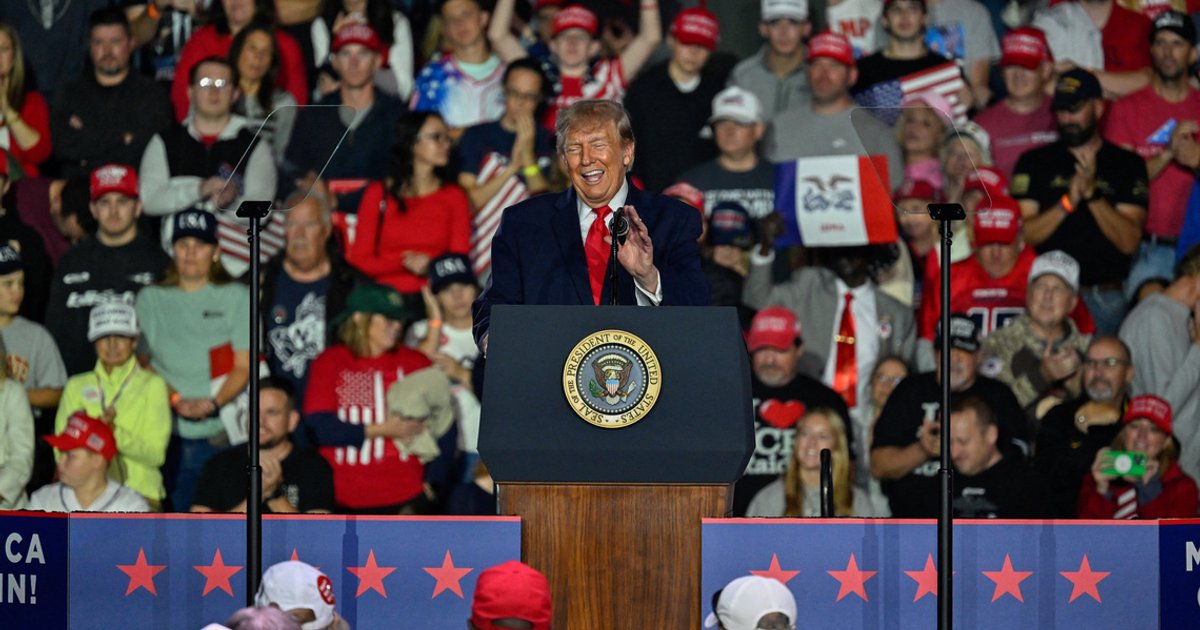
That's why Trump has been deployed to red states to try and push and plead with his base to get out and vote. asserted
Trump → deploy → base
Without a big GOP turnout in these places, a one- or two-seat pick up for Democrats in the Senate can quickly turn into six or seven. asserted
pick → turn → six
…and 15 more, not listed.

💬Give feedback
🕘History 🎫Support